







Double click image to enlarge
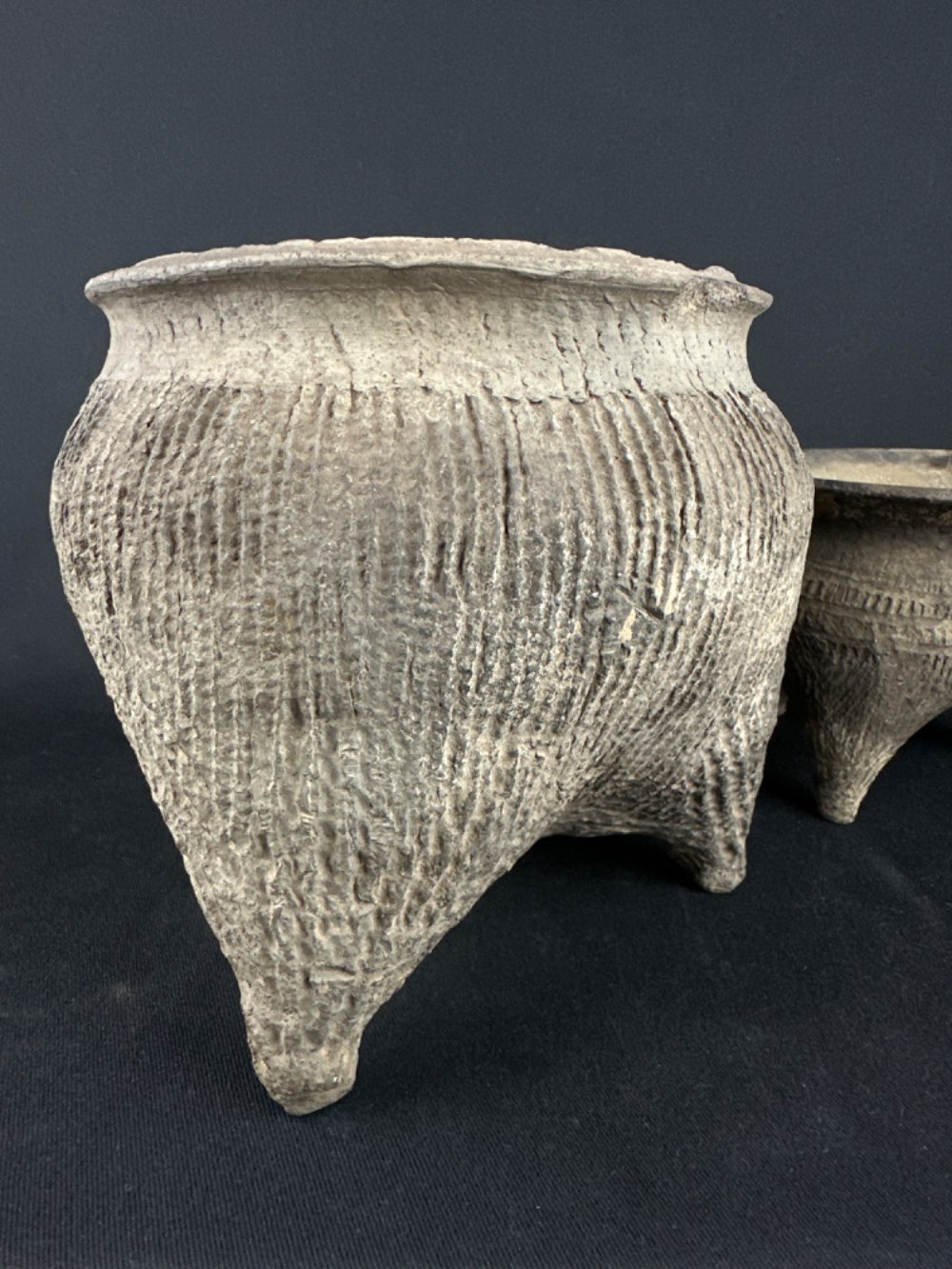
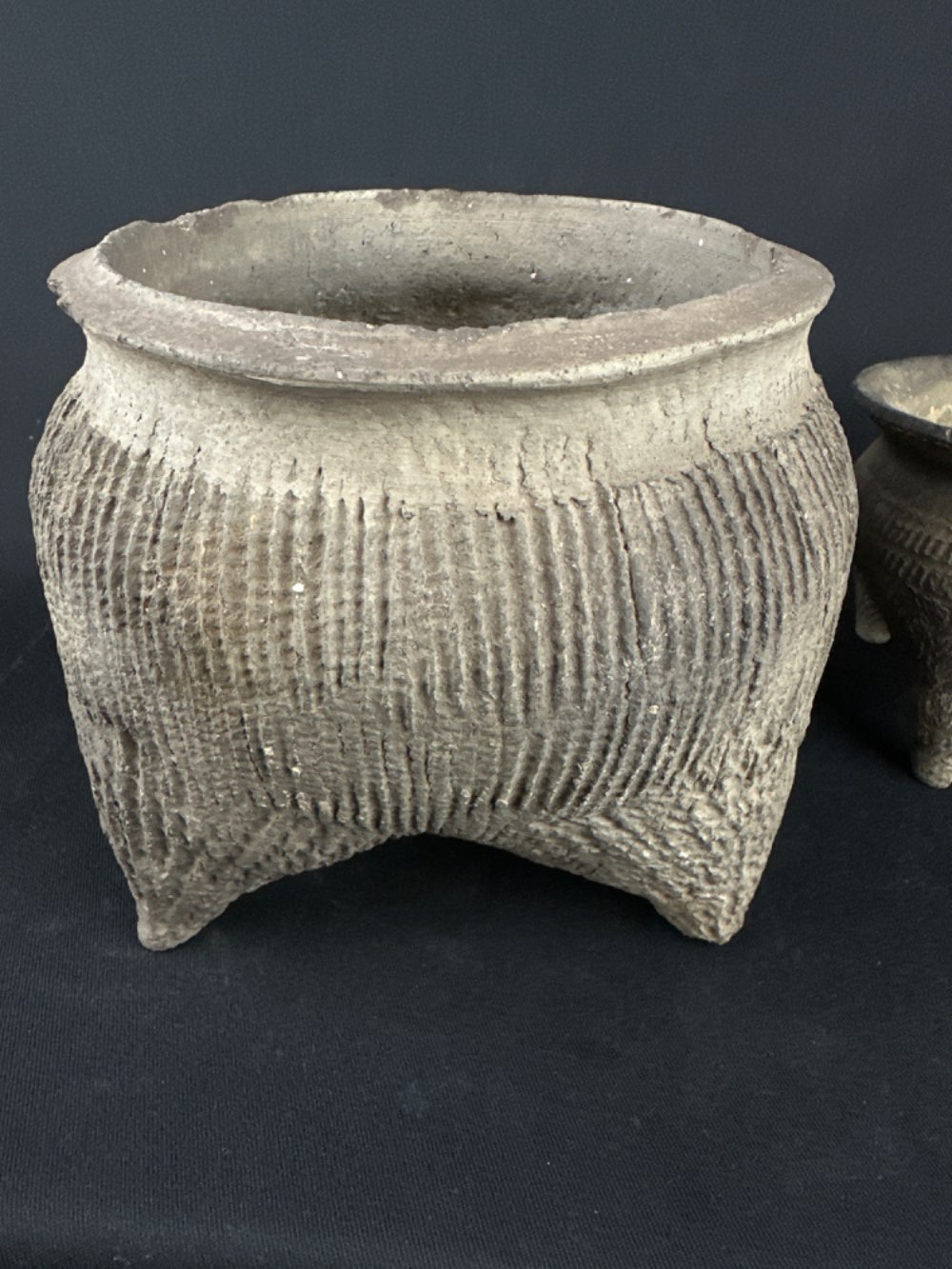
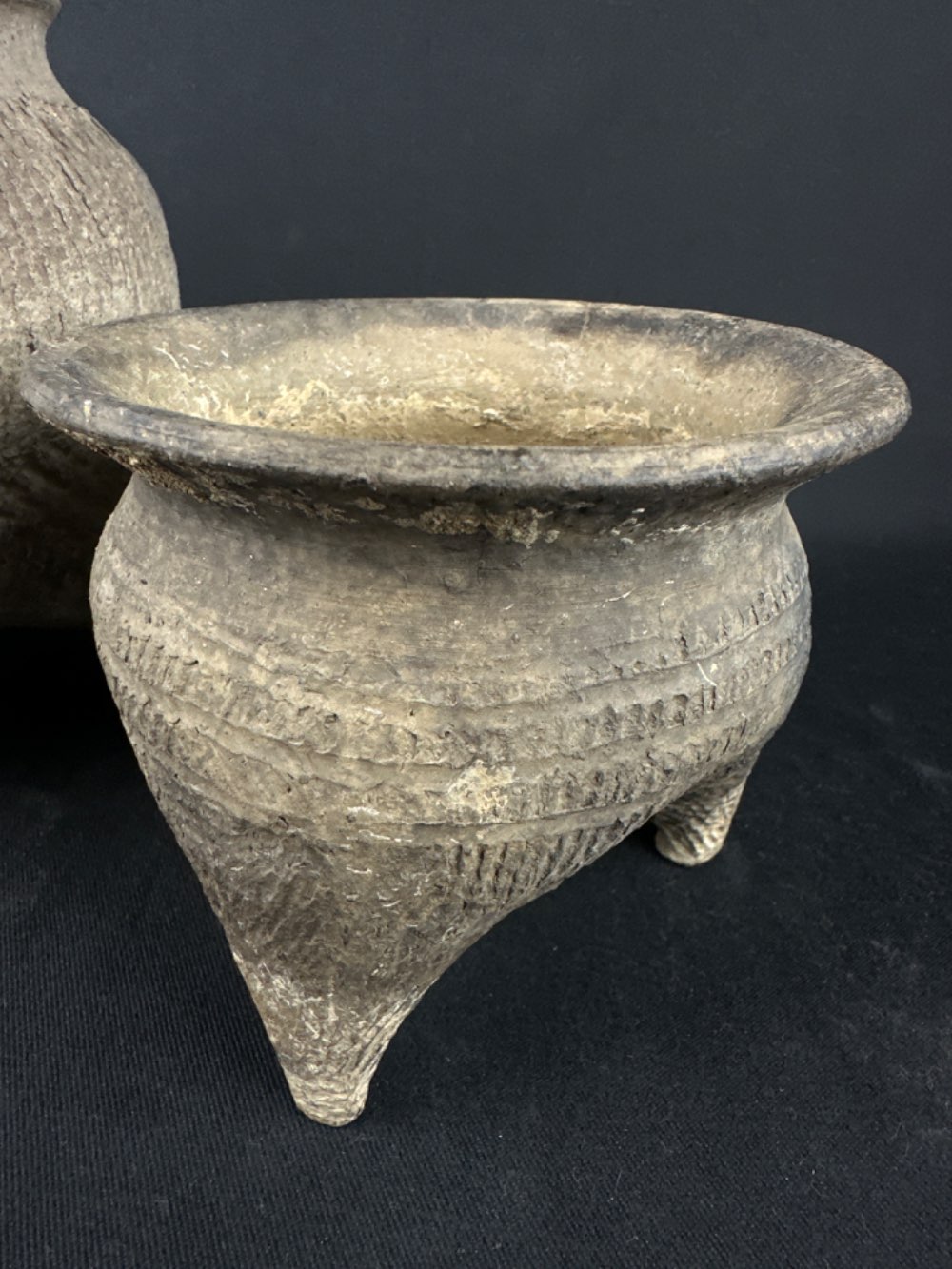
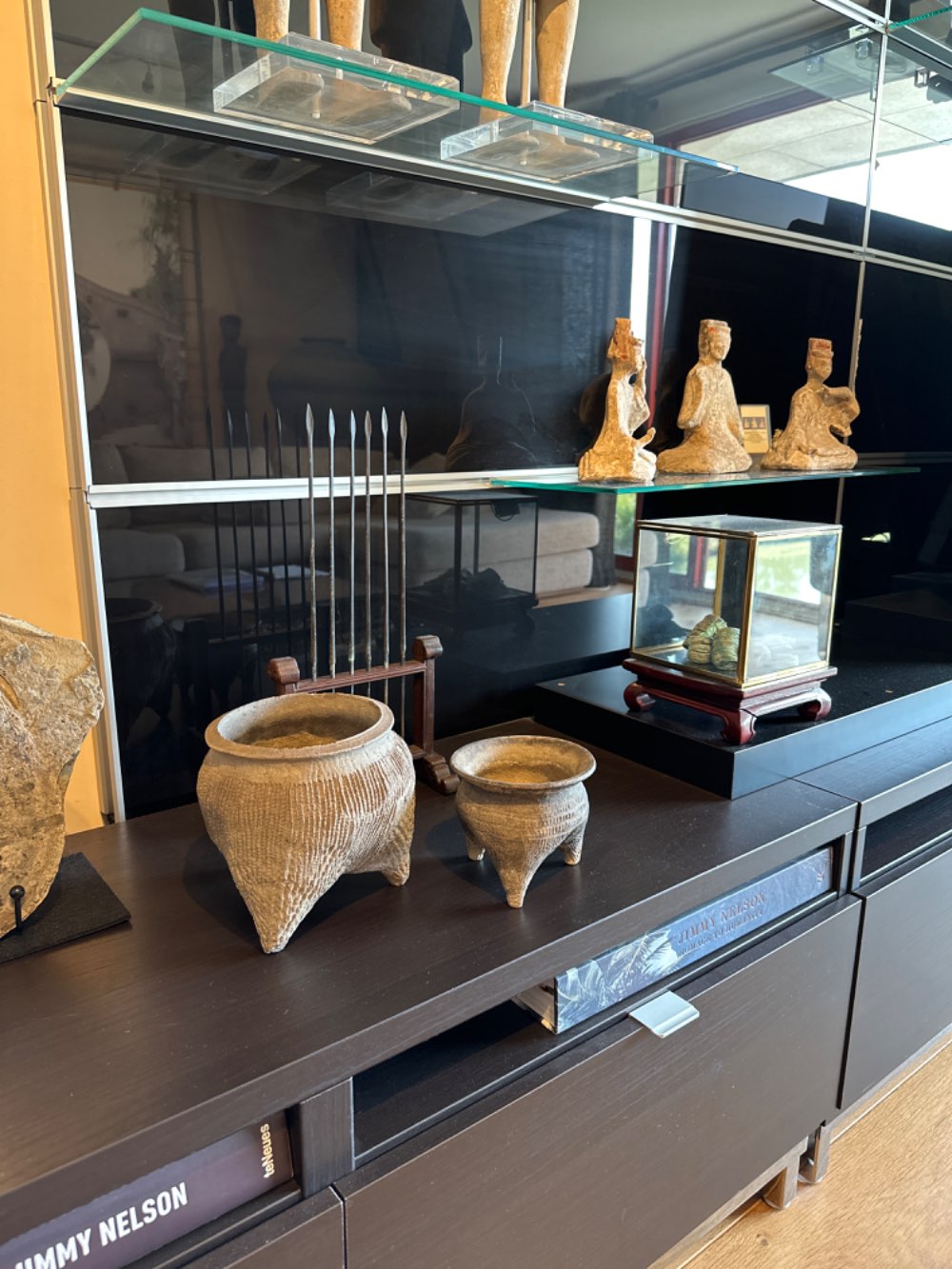
2 very nice pottery tri pots (called Li) from the Zhou Dynasty (1046-221 BC) China, TL tested
2 very nice pottery tri pots (called Li) from the Zhou Dynasty (1046-221 BC) China, TL tested
- Country: China
- Period: Zhou Dynasty (1046-221 BC)
- Size: 16 + 10.5 cm
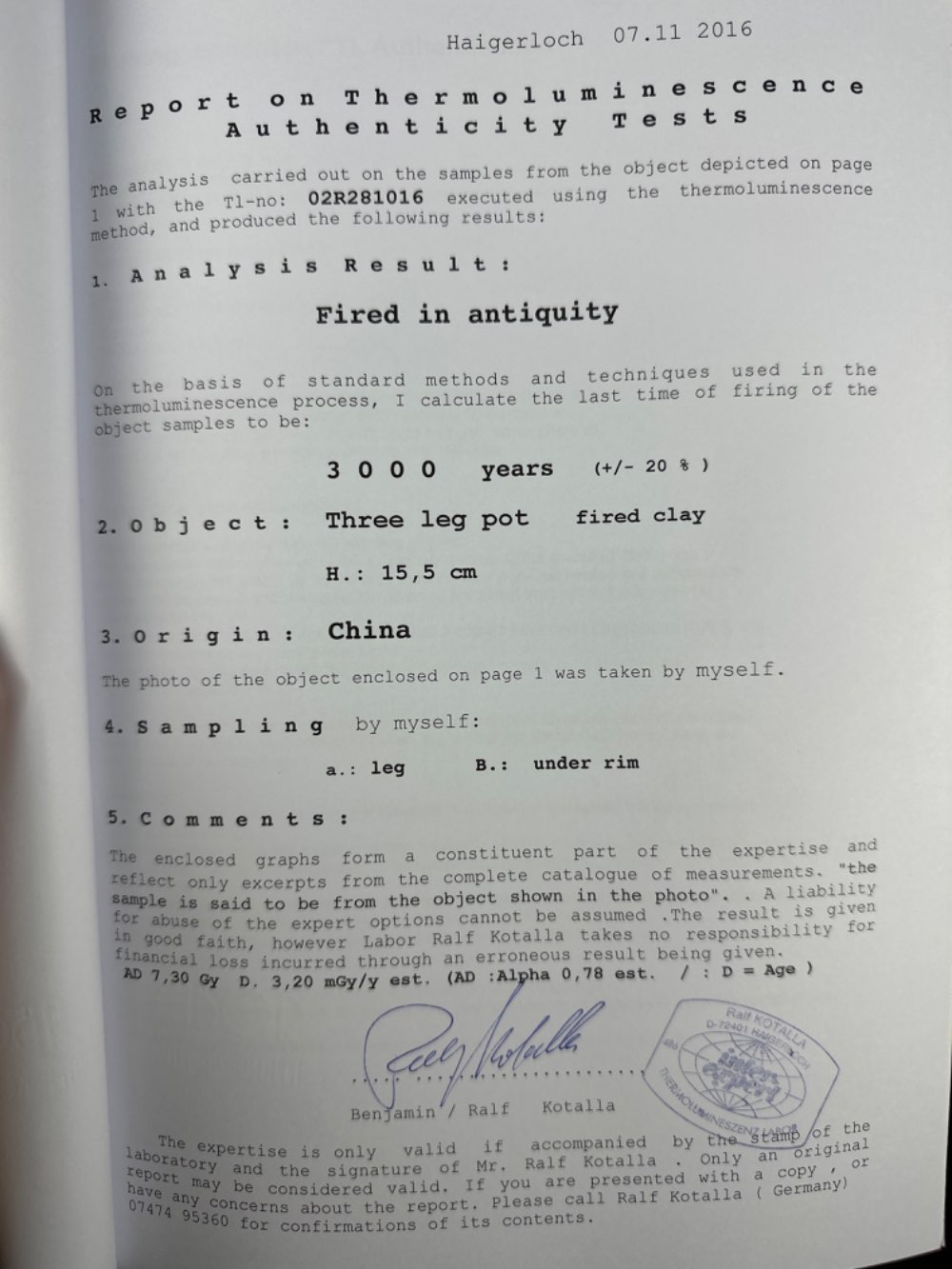
- TL tested by Laboratory Kotalla, picture out of the report included
- Both are impressed with a basketweave design
- The smaller Li has a stable crack on one side
The li (鬲) was a distinctive type of pottery vessel used in ancient China, particularly during the Zhou Dynasty (1046–256 BCE). It had a characteristic tripod shape, with three hollow, pointed legs that allowed it to be placed over an open fire, making it ideal for cooking. The design of the li dates back to even earlier periods, including the Neolithic and Shang Dynasty, but it continued to be widely used during the Zhou period due to its practicality and cultural significance.
Key Characteristics:
-
Three Legs: The li's most notable feature was its three legs, which were typically pointed at the ends. These legs not only provided stability but also allowed for efficient heat transfer when placed over a fire. The tripod design made the pot very practical for cooking in open hearths.
-
Belly or Bowl Shape: The body of the li was usually rounded, with a deep bowl-like shape, allowing it to hold liquids or grains. Some examples were larger for communal cooking, while others were smaller for personal or ceremonial use.
-
Materials: Early li pots were made from clay or pottery, but during the Zhou Dynasty, bronze li vessels also became common, especially for ceremonial purposes. Bronze li were often ornately decorated, symbolizing status and power, while pottery li remained functional, everyday objects.
-
Symbolism and Use: Beyond its practical function, the li held cultural and symbolic meaning. In Zhou society, food and ritual were deeply intertwined, and the act of cooking with a li was often part of ancestral worship and religious ceremonies. Offering cooked food in these pots to deities and ancestors was a way to show respect and ensure blessings for the community. In this context, the li reflected the Zhou belief in maintaining harmony between the heavens, earth, and their ancestors.
-
Decoration: While early versions of the li were plain, Zhou Dynasty li pots could feature intricate designs and patterns, especially in the bronze versions. Common motifs included geometric patterns, animal figures, or cloud-like designs, symbolizing nature and the connection between heaven and earth.
The li was not just a functional cooking tool but also a symbol of societal structure and ritual importance. Its use in both daily life and sacred ceremonies highlighted the Zhou Dynasty's emphasis on tradition, continuity, and the balance between practicality and spirituality. Today, li vessels are important archaeological artifacts that offer insight into the daily and ceremonial lives of ancient Chinese people.
Please send an e-mail via below form, WhatsApp or call to order or get more information about this object.
We can communicate in English, Deutsch and Nederlands!
2 very nice pottery tri pots (called Li) from the Zhou Dynasty (1046-221 BC) China, TL tested