


Double click image to enlarge
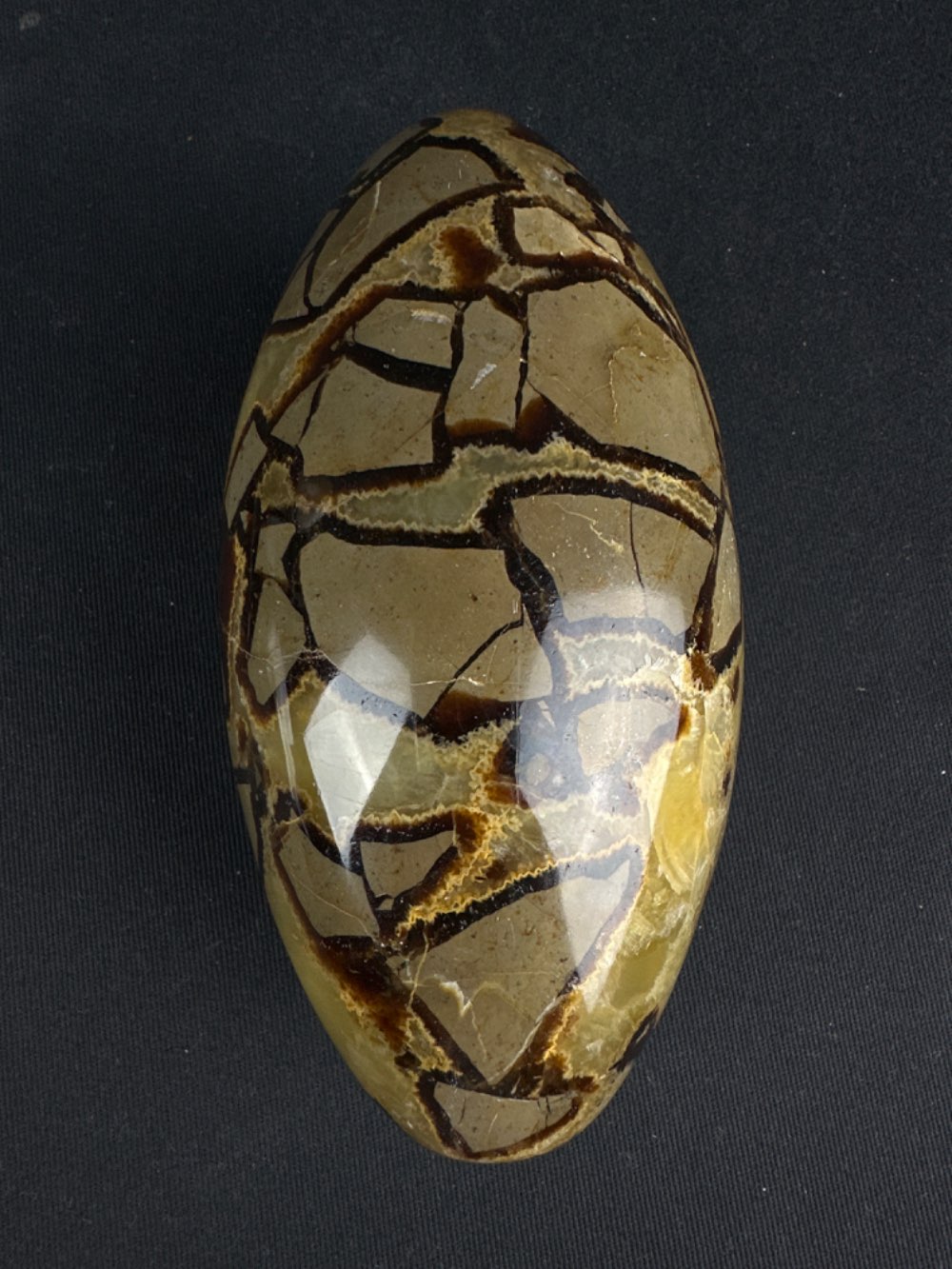
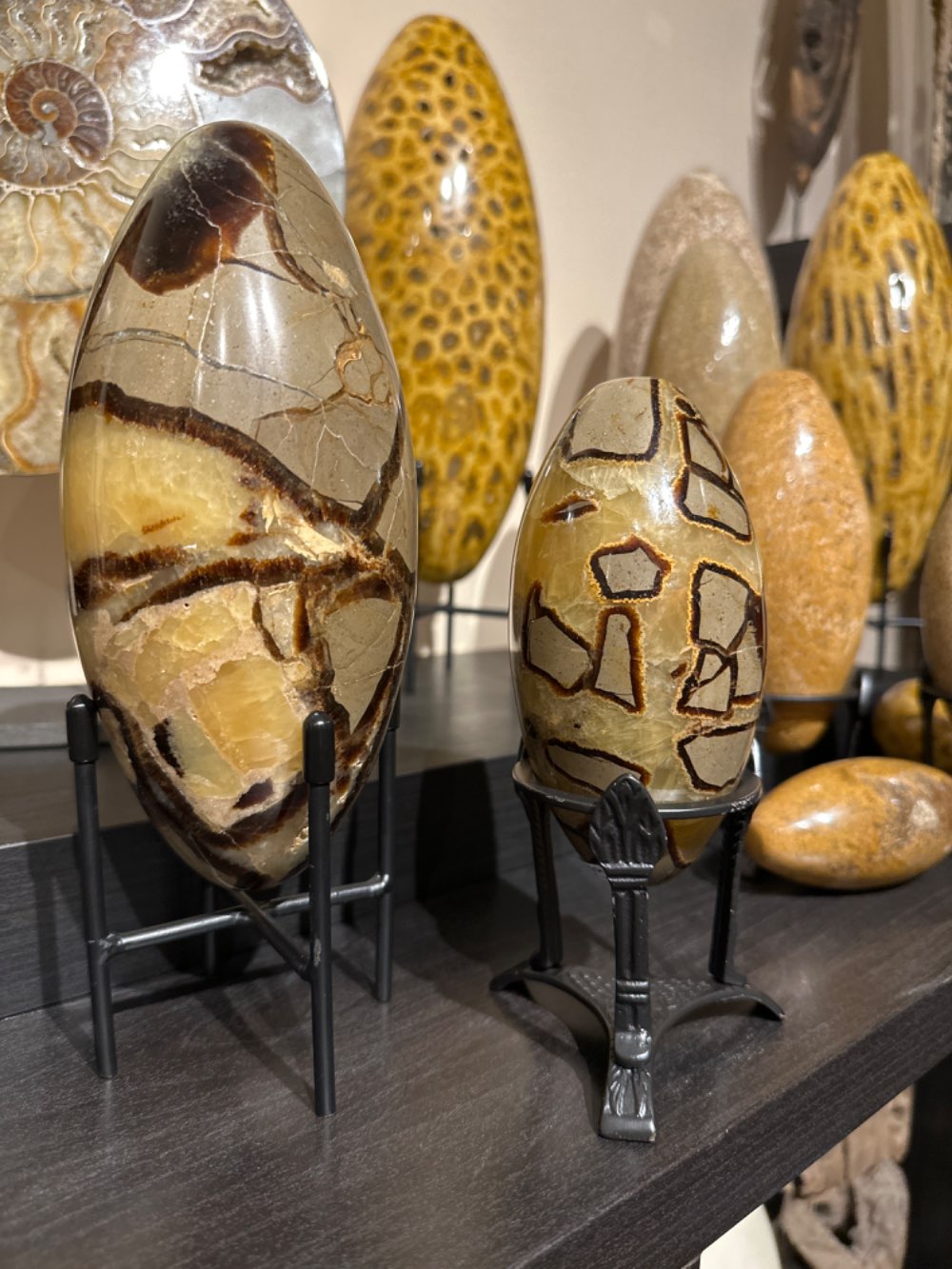
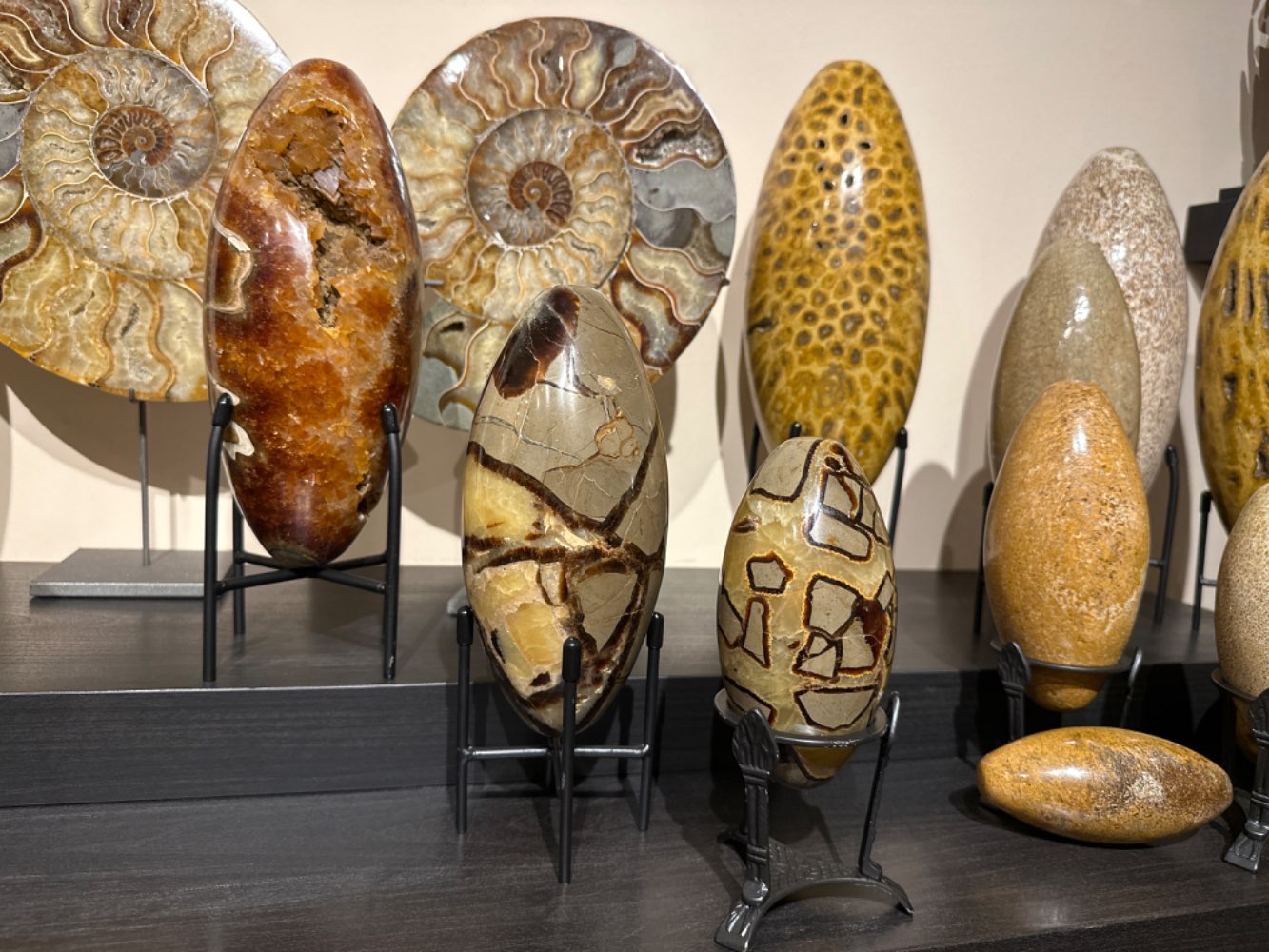
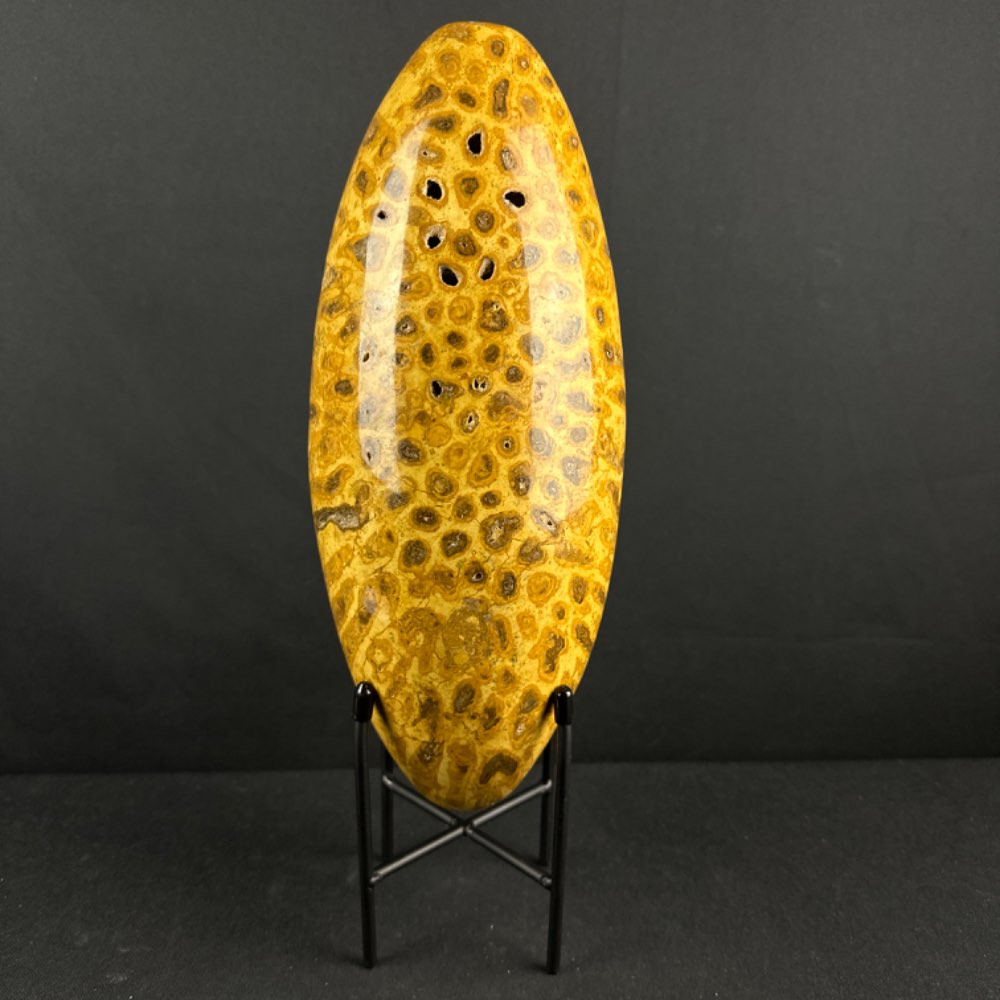
Polished Septaria in Lingam shape from Madagascar
Polished Septaria in Lingam shape from Madagascar
- Country: Madagascar
- Period: cretaceous (100.5-66 million years ago)
- Material: Septaria fossil
- Size: 15 x 7.5 cm
- Weight: 852 gram
- Stand can be included
-
Fossil septaria from Madagascar are geological marvels that captivate both collectors and scientists with their unique and intricate patterns. Septaria, also known as septarian nodules or concretions of sedimentary rocks that have undergone a fascinating process of formation over millions of years.
These exceptional formations are primarily found in Madagascar's rich geological landscape, often emerging from ancient marine sediments. Fossil septaria are characterized by their round or oval shapes, with a cracked or septum-filled interior. What makes these specimens particularly captivating are the captivating patterns that emerge within these cracks.
The name "septaria" is derived from the Latin word "septum," meaning "partition" or "enclosure." These partitions are what set septaria apart from typical rocks. They form as minerals, often calcite, aragonite, or gypsum, precipitate out of groundwater and slowly fill the cracks and voids within the sediment. Over time, these minerals crystallize, creating intricate networks of colorful veins, often in eye-catching shades of brown, yellow, gray, and blue.
The geological processes that give rise to septaria are complex, involving a combination of sedimentary, chemical, and diagenetic processes. Each septarian nodule is a unique record of its geological history, and the patterns within them are like nature's artwork, offering a glimpse into the ancient conditions and environments in which they formed.
Fossil septaria are not just geological curiosities; they are also valuable tools for scientific study. Paleontologists, geologists, and researchers often examine these nodules to gain insights into past environments, sedimentary processes, and even to discover well-preserved fossils within them. In some cases, septaria can encase and protect ancient marine life, such as ammonites or other mollusks, offering a precious window into prehistoric ecosystems.
Collectors and enthusiasts are drawn to fossil septaria not only for their scientific significance but also for their aesthetic appeal. These unique geological wonders make for stunning decorative pieces, jewelry, and conversation starters, and they are highly sought-after in the world of mineral and fossil collecting.
In conclusion, fossil septaria from Madagascar are captivating geological formations that tell a fascinating story of Earth's history. Their intricate patterns, scientific importance, and visual allure make them cherished treasures for both collectors and researchers, offering a tangible connection to the ancient world and the geological processes that have shaped our planet over millions of years.
- SEPTARIAN STONE is a combination of yellow calcite, brown aragonite, grey limestone and white/clear barite, thus it has properties of each of its component minerals as well as its own. Provides calming energies which have a nurturing feel, and can bring feelings of joy and spiritual uplifting. Is used to enhance and nurture communication within groups, making public speaking easier.
- Shiva Lingam or also called Cosmic Egg are unique and are made and polished by hand. Shiva Lingams have an esoteric effect and are very spiritual stones.
Please send an e-mail via below form, WhatsApp or call to order or get more information about this object.
We can communicate in English, Deutsch and Nederlands!
Related products
 Natural Dinosaur bone fossil in Lingam shape from Madagascar
 Natural Dinosaur bone fossil in Lingam shape from Madagascar
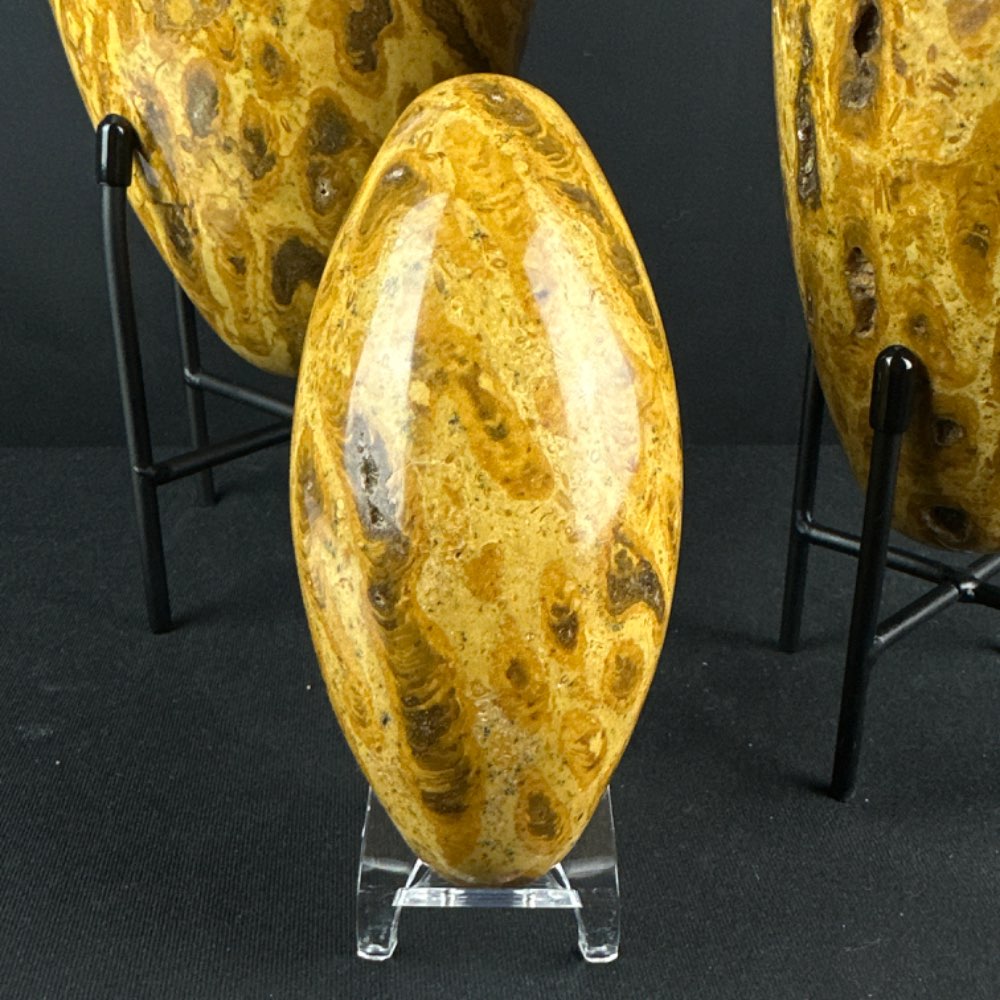 Natural coral fossil in Lingam shape from Madagascar
 Very large Natural coral fossil in Lingam shape from Madagascar
 Very large Natural ammonite fossil in Lingam shape from Madagascar
 Natural ammonite fossil in Lingam shape from Madagascar
 Polished Septaria in Lingam shape from Madagascar
Polished Septaria in Lingam shape from Madagascar