
Double click image to enlarge
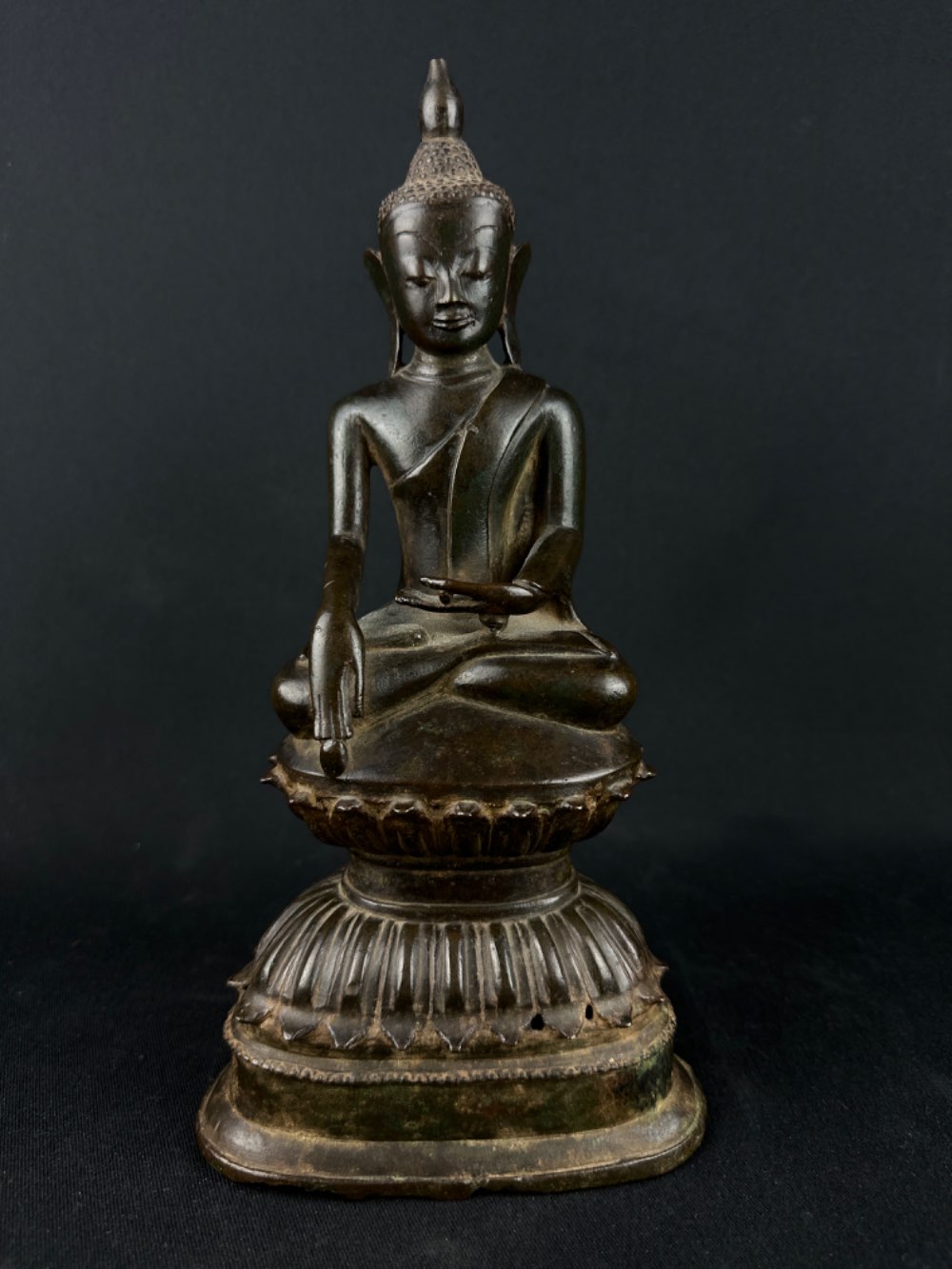
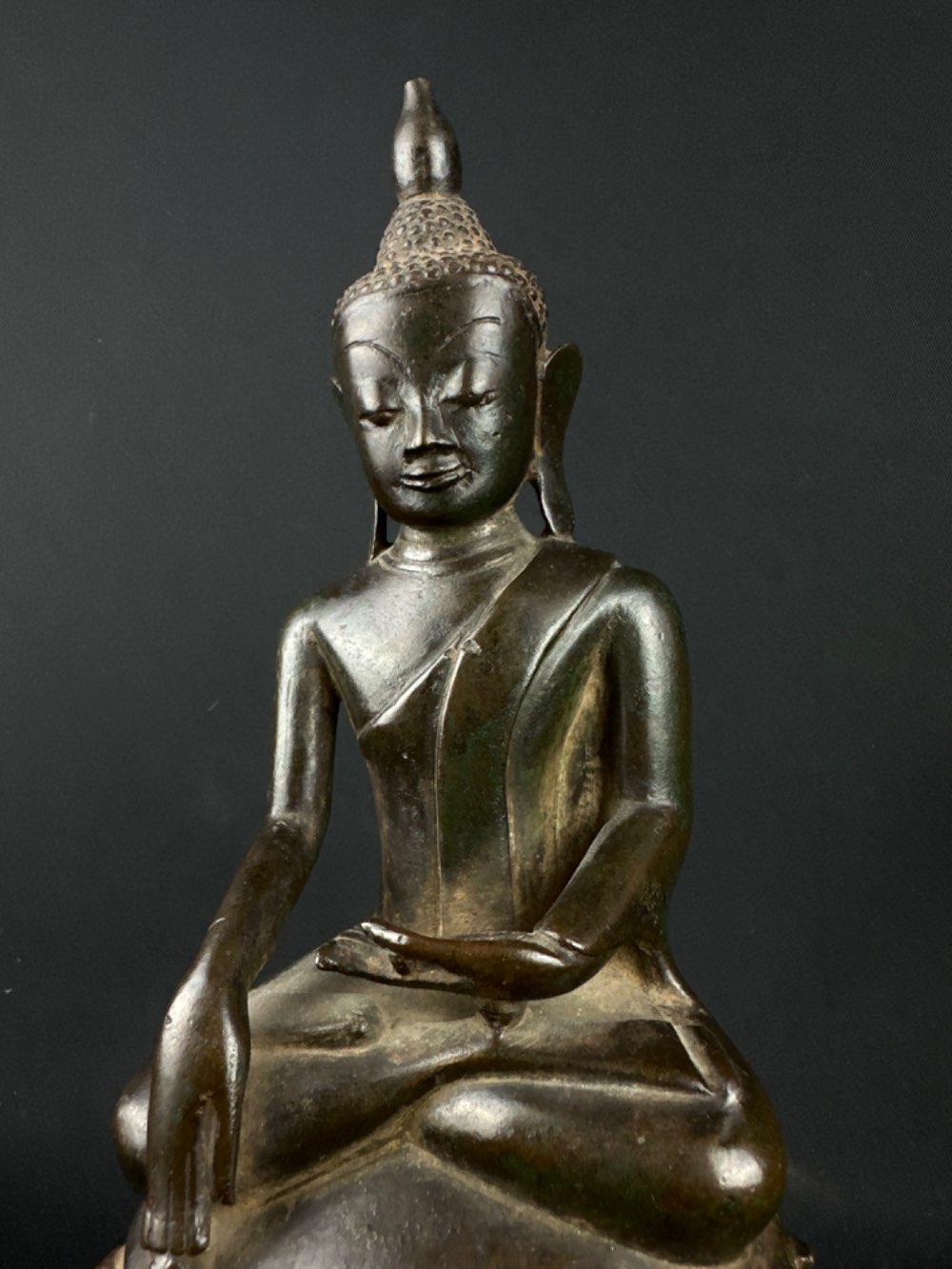
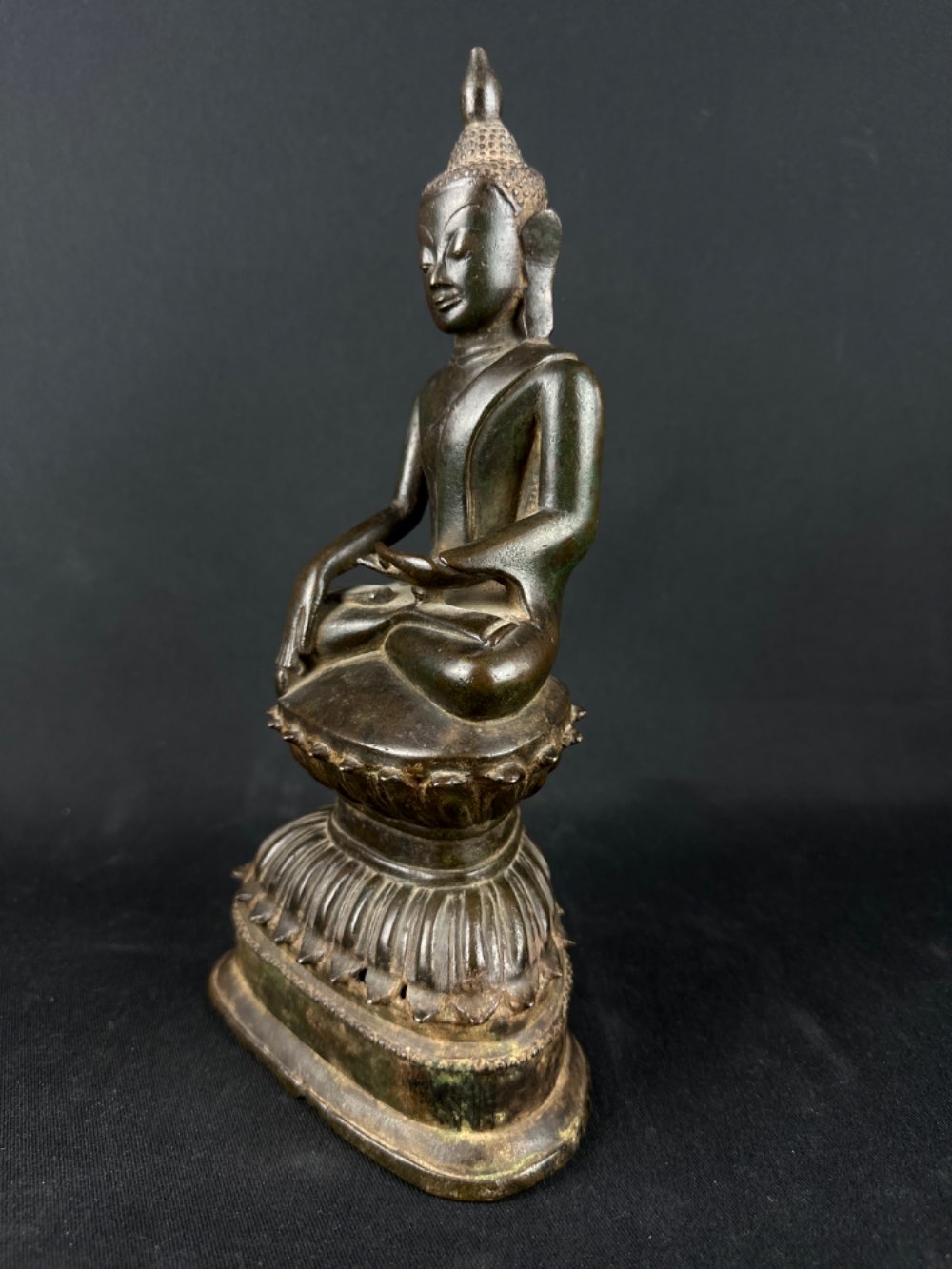
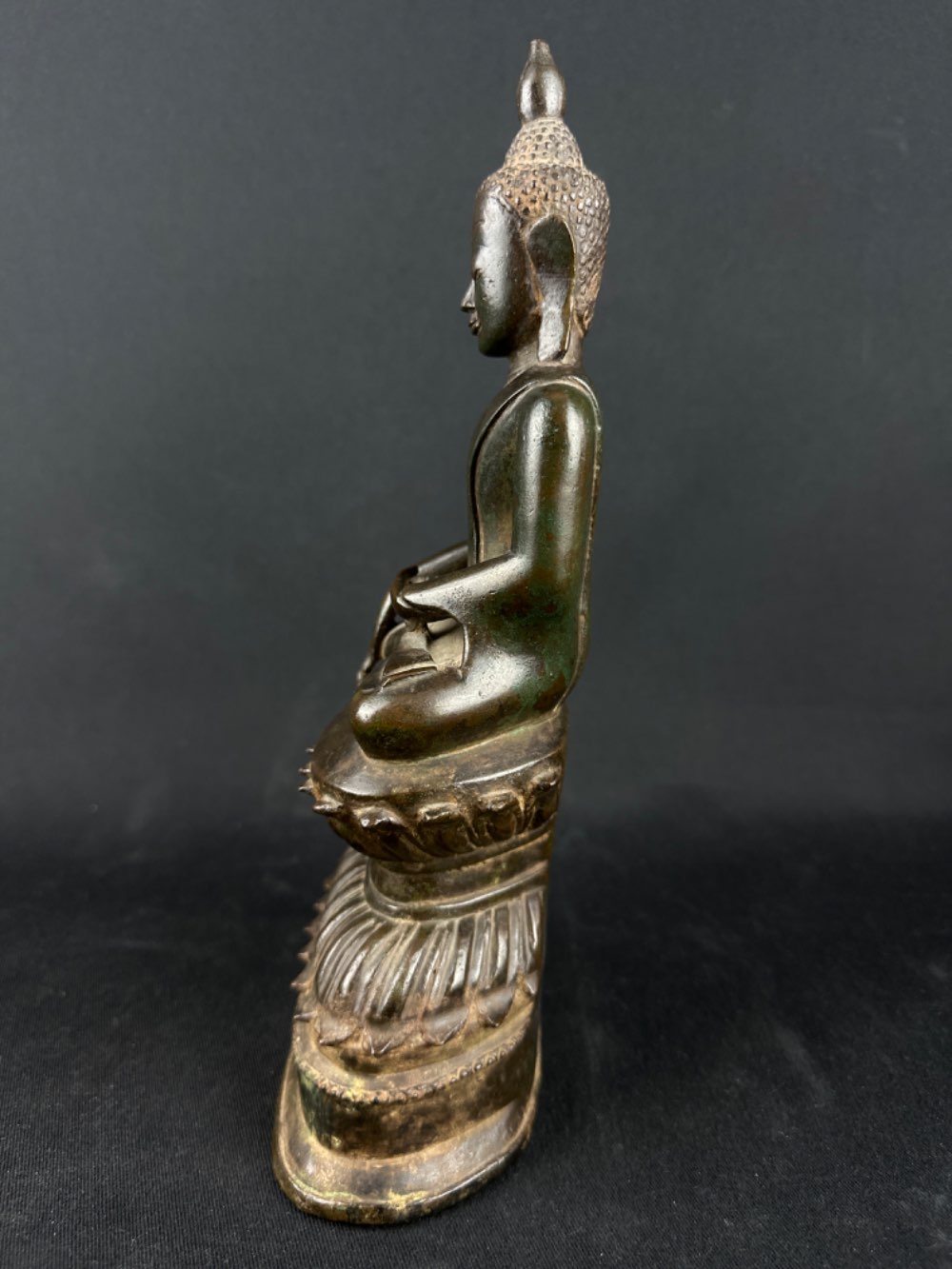
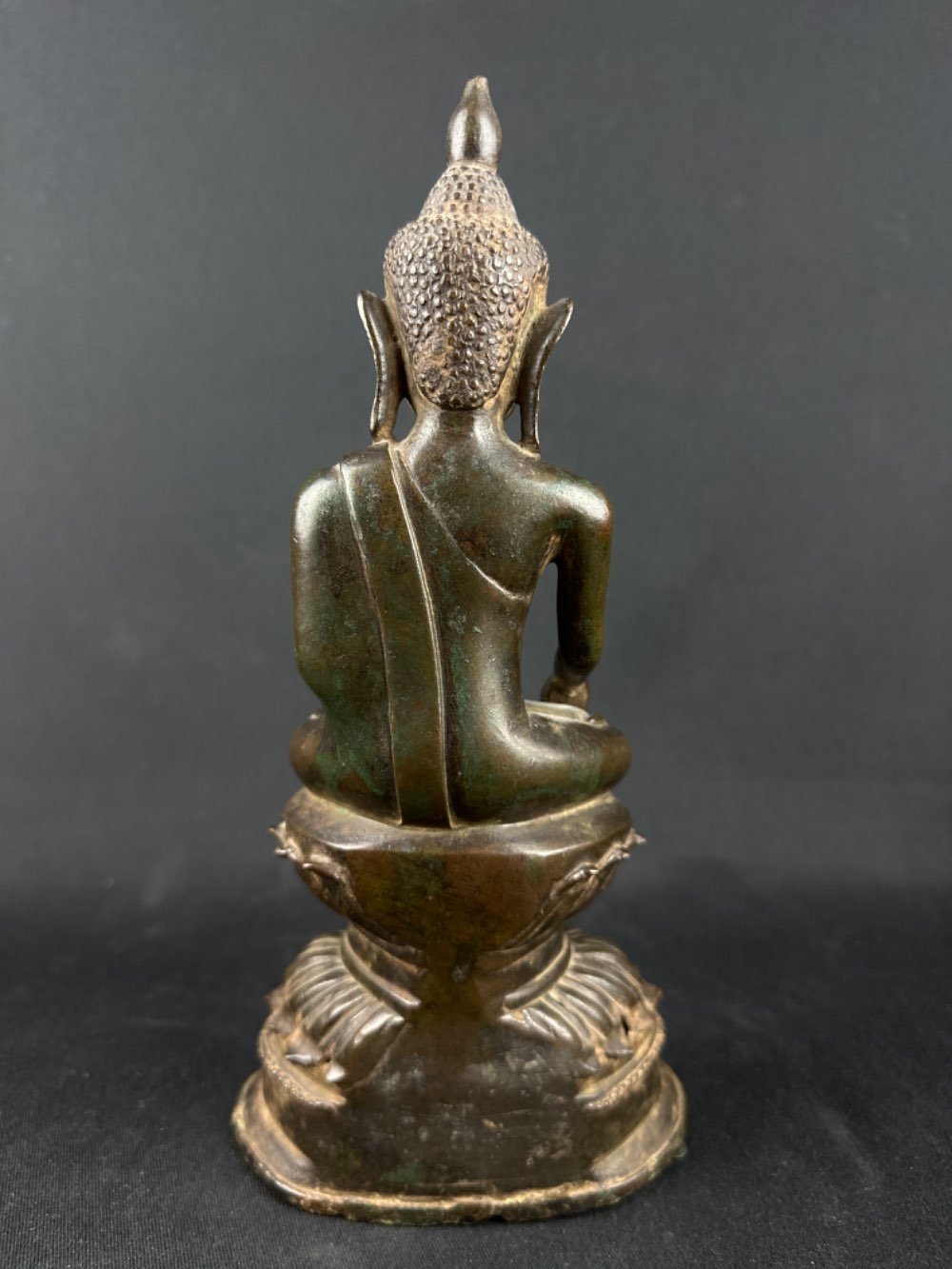
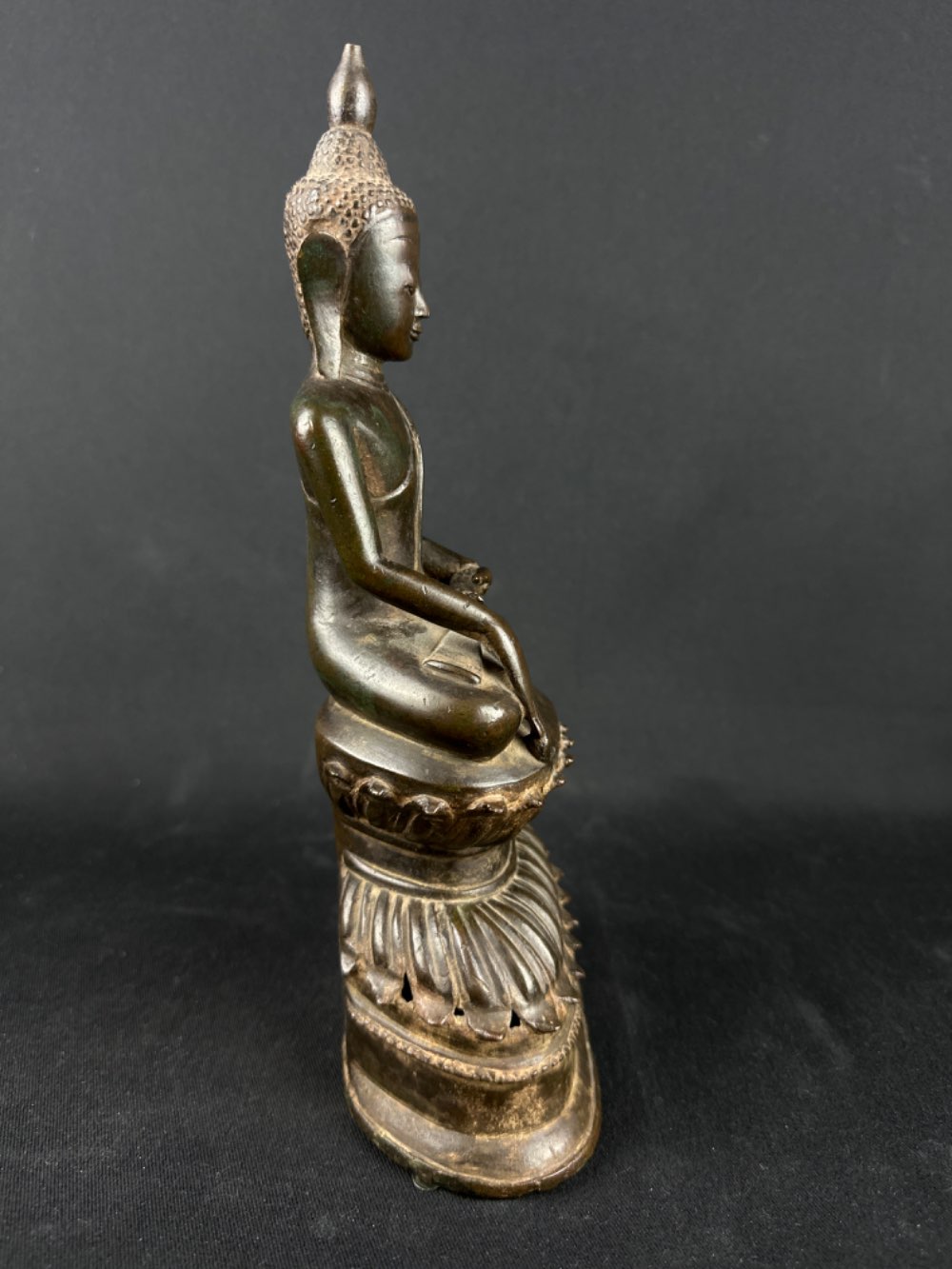
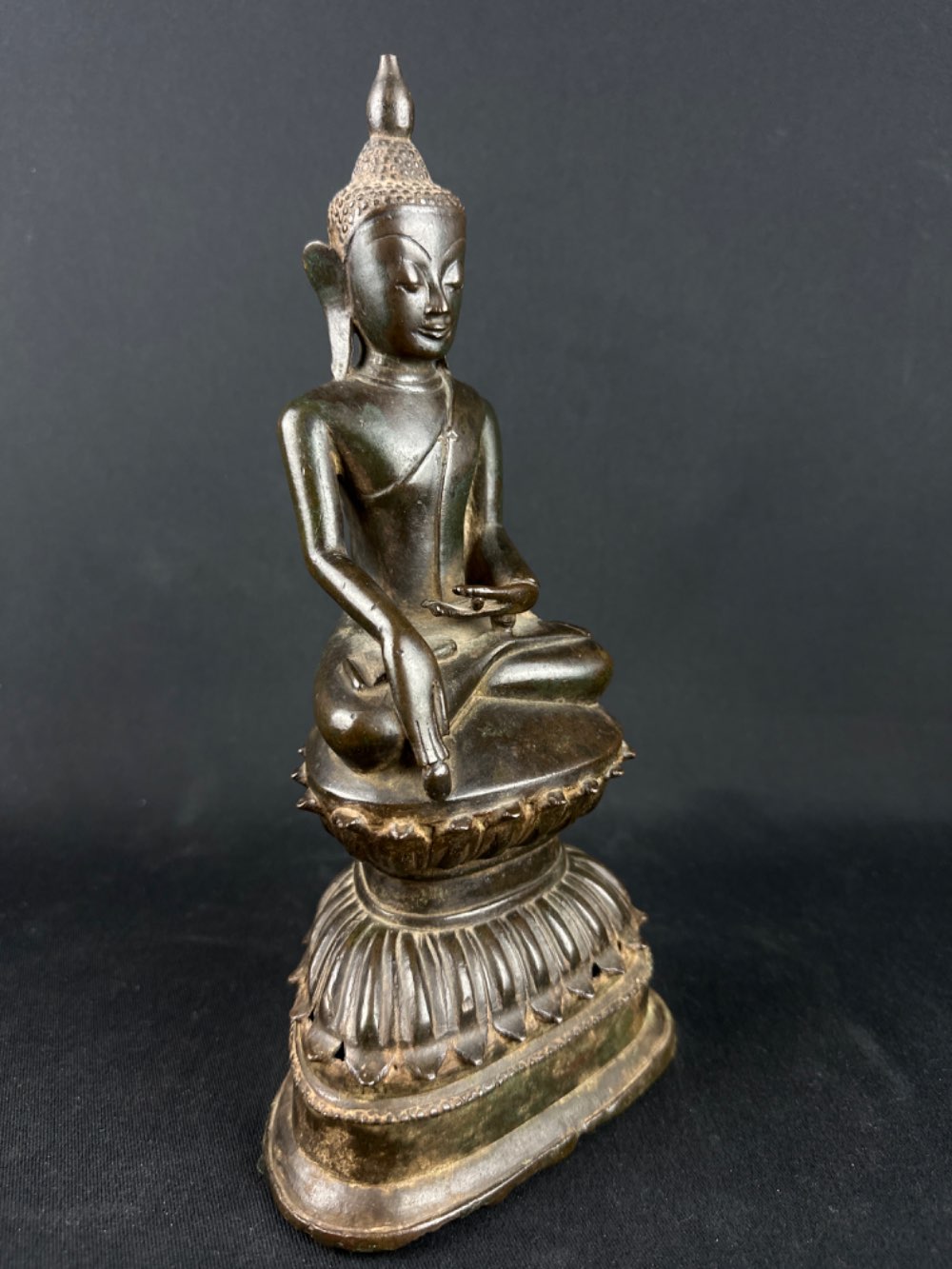
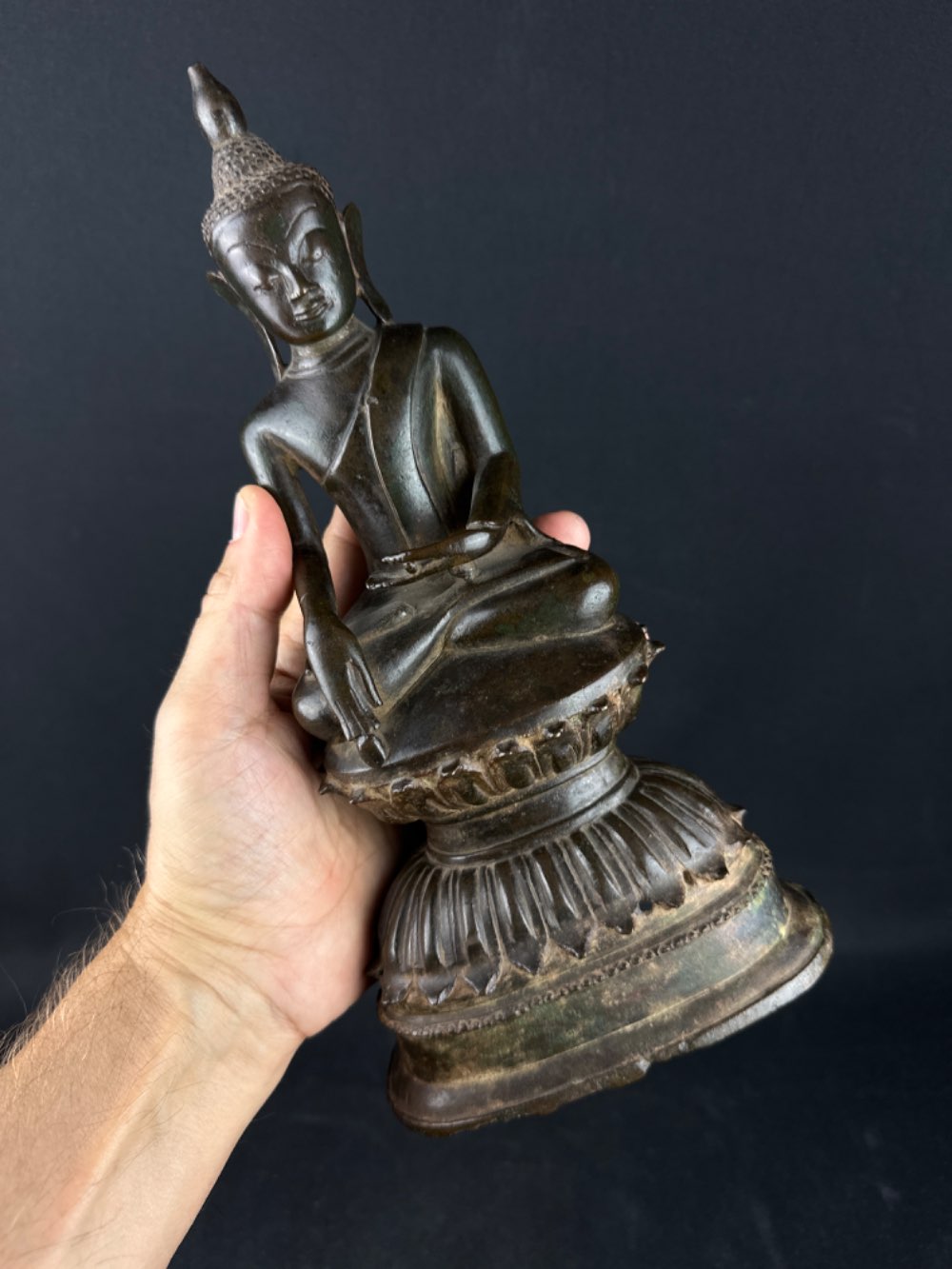
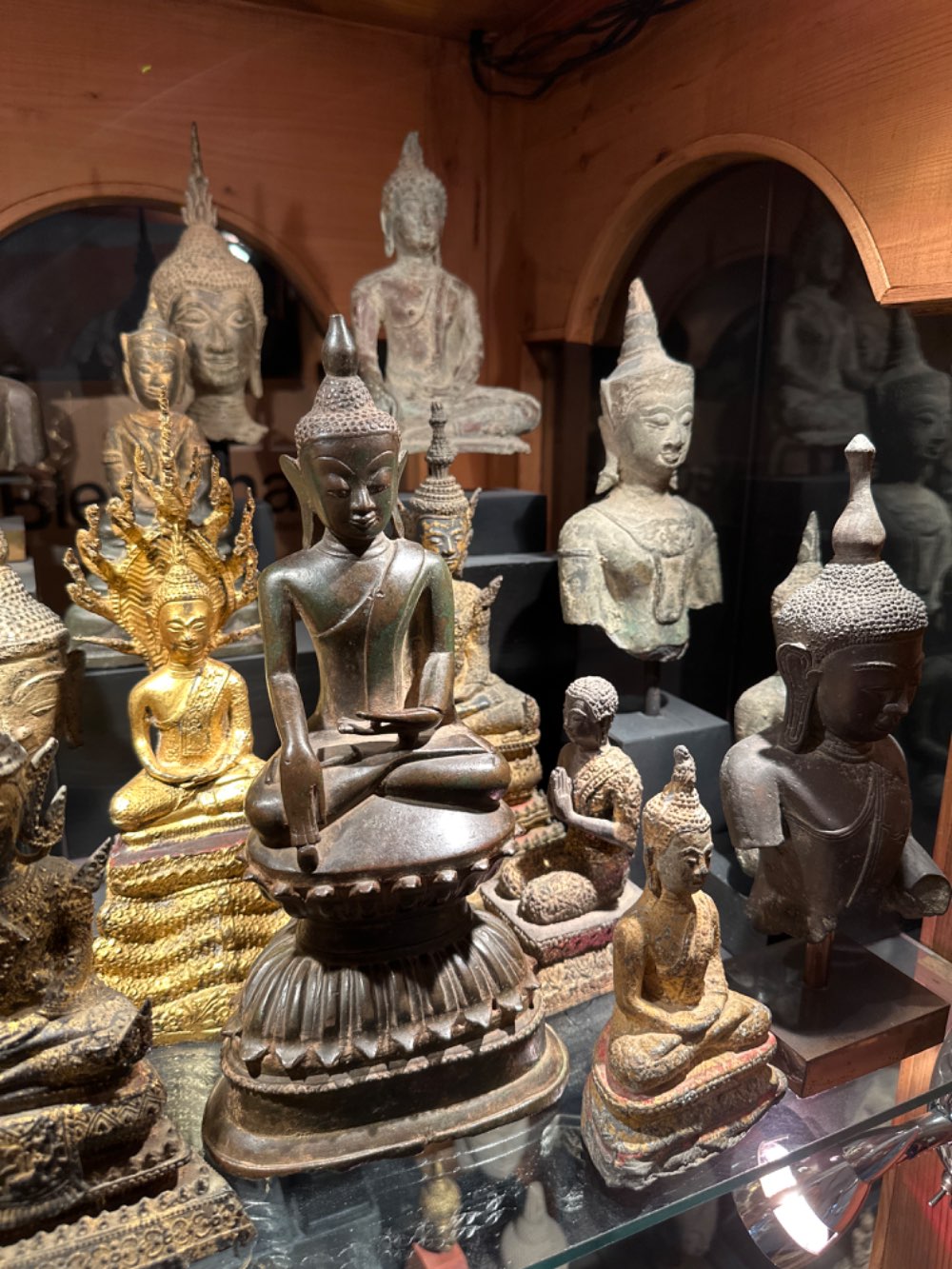
A bronze seated Buddha Shakyamuni, late 18th century Myanmar
A bronze seated Buddha Shakyamuni, late 18th century Myanmar
- Country: Myanmar (former Birma)
- Period: late 18th century
- Culture: Shan
- Material: bronze
- Size: 27 cm
- Buddha seated on a double lotus throne
- Buddha sitting in the bhumisparsha mudra earth touching position.
- Comes out of the collection Asiatic Art from Erik Maten and Hans van der Veer (city Deventer, the Netherlands). This statue was bought at Galerie de Ruimte in Eersel, the Netherlands.
- Maten (Indologist and lawyer) and Van der Veer (metalographer) primarily collected South and South-East Asian sculptures, especially bronzes, supplemented with a number of tangkas and Japanese scroll paintings and prints.
- Interest in Asian art emerged early, particularly for Erik Maten, who studied Sanskrit between 1964 and 1970 at Utrecht University under the renowned Professor Gronda. He also took Art History as a minor at the Municipal University of Amsterdam, where he studied with the notable Professor Van Lohuizen. Additionally, he pursued Law at the University of Amsterdam. In 1974, the partners met in Arnhem and began collecting together. Their first acquisition was a large stone Buddha head from Thailand, purchased from the Siam Gallery, which was run by former pilot Frits Vlieger. They became regular buyers there, often benefiting from the option to pay in installments – an important advantage for new collectors with modest incomes.
The image of Buddha sitting on a lotus in the Bhumisparsha Mudra is one of the most iconic and spiritually significant depictions in Buddhist art and iconography, rich with symbolism reflecting profound philosophical and spiritual meanings. The lotus flower in this imagery represents purity, spiritual enlightenment, and resilience. It grows in muddy water, yet emerges pristine and beautiful, symbolizing the ability to rise above defilements and suffering. The lotus is often associated with the purification of the body, speech, and mind. Seeing the Buddha seated on a fully bloomed lotus signifies his awakened state and the realization of Nirvana.
The Buddha is typically shown in a cross-legged position (Padmasana), which represents a stable and grounded meditative state. His posture conveys tranquility, inner peace, and unwavering focus, symbolizing the Buddha’s deep meditative absorption.
The Bhumisparsha Mudra, or "Earth Touching Gesture," is performed by the Buddha sitting with his right hand reaching down to touch the ground, while his left hand rests on his lap, palm facing upward. This mudra symbolizes the moment of the Buddha's enlightenment under the Bodhi tree, where he called upon the Earth to witness his attainment of enlightenment. According to Buddhist tradition, before achieving enlightenment, the Buddha (then Siddhartha Gautama) was confronted by Mara, the personification of temptation and illusion. To dispel Mara's doubts and claim his right to enlightenment, Siddhartha reached down and touched the Earth with his right hand, calling upon it to bear witness to his countless lifetimes of virtuous actions. The Earth responded, quelling Mara and his forces, thereby affirming the Buddha's resolve and purity. The Bhumisparsha Mudra symbolizes unshakable faith, determination, and the Buddha’s victory over temptation and distractions. It represents the moment when Siddhartha transcended worldly attachments and achieved enlightenment, becoming the Buddha. The gesture also emphasizes the interconnectedness of all beings with the Earth, highlighting a deeper ecological and spiritual unity.
The combination of the Buddha on a lotus with the Bhumisparsha Mudra is a representation of transcendence over worldly suffering and the achievement of spiritual awakening. Artists often depict the Buddha with a serene and compassionate expression, emphasizing his state of bliss and wisdom. Surrounding elements like halos, bodhi leaves, or a calm background might be included to further enhance the sacred atmosphere.
This depiction of the Buddha is not just a piece of art but a visual meditation on the path to enlightenment, encouraging practitioners to stay grounded, pure, and determined in their spiritual journey.
Please send an e-mail via below form, WhatsApp or call to order or get more information about this object.
We can communicate in English, Deutsch and Nederlands!
A bronze seated Buddha Shakyamuni, late 18th century Myanmar