Double click image to enlarge
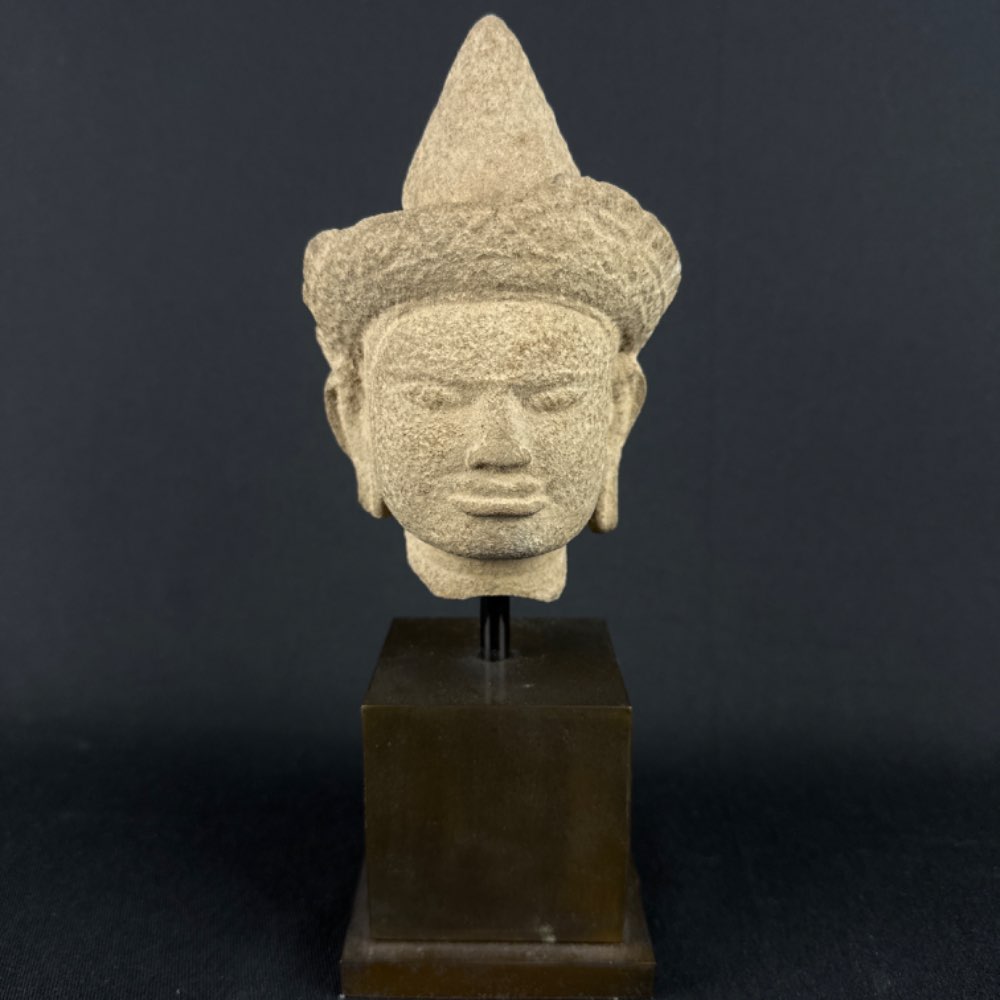
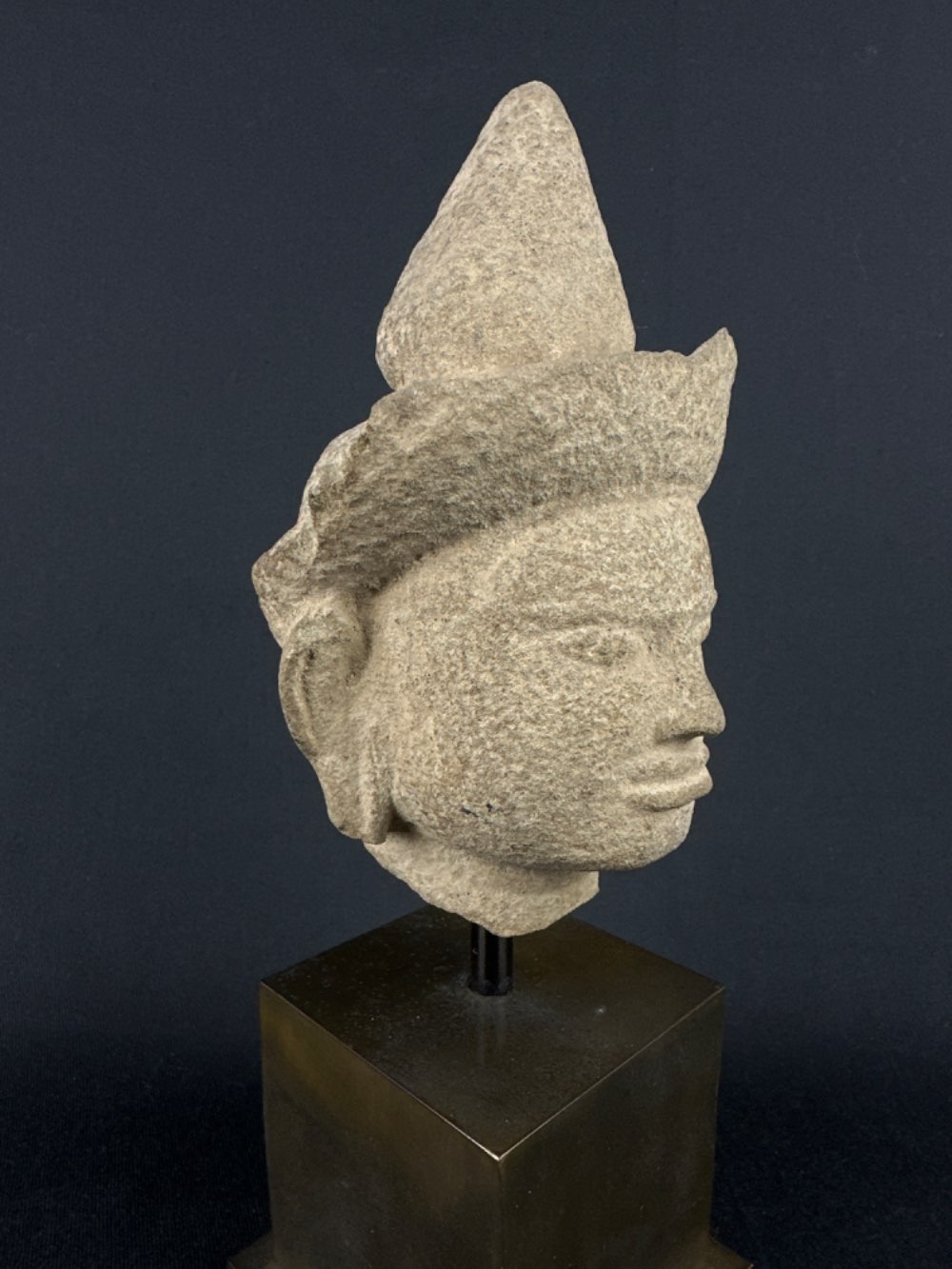
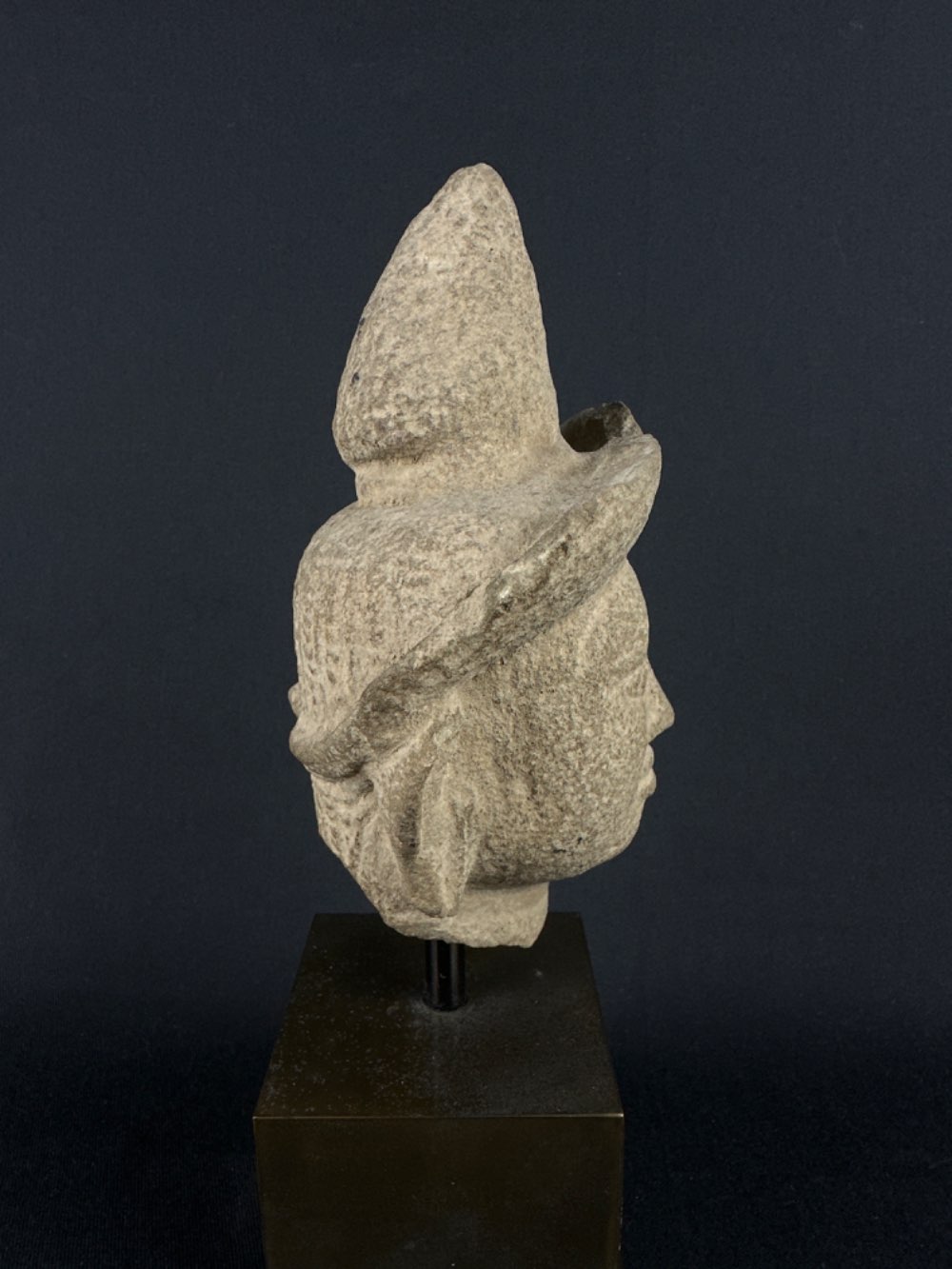
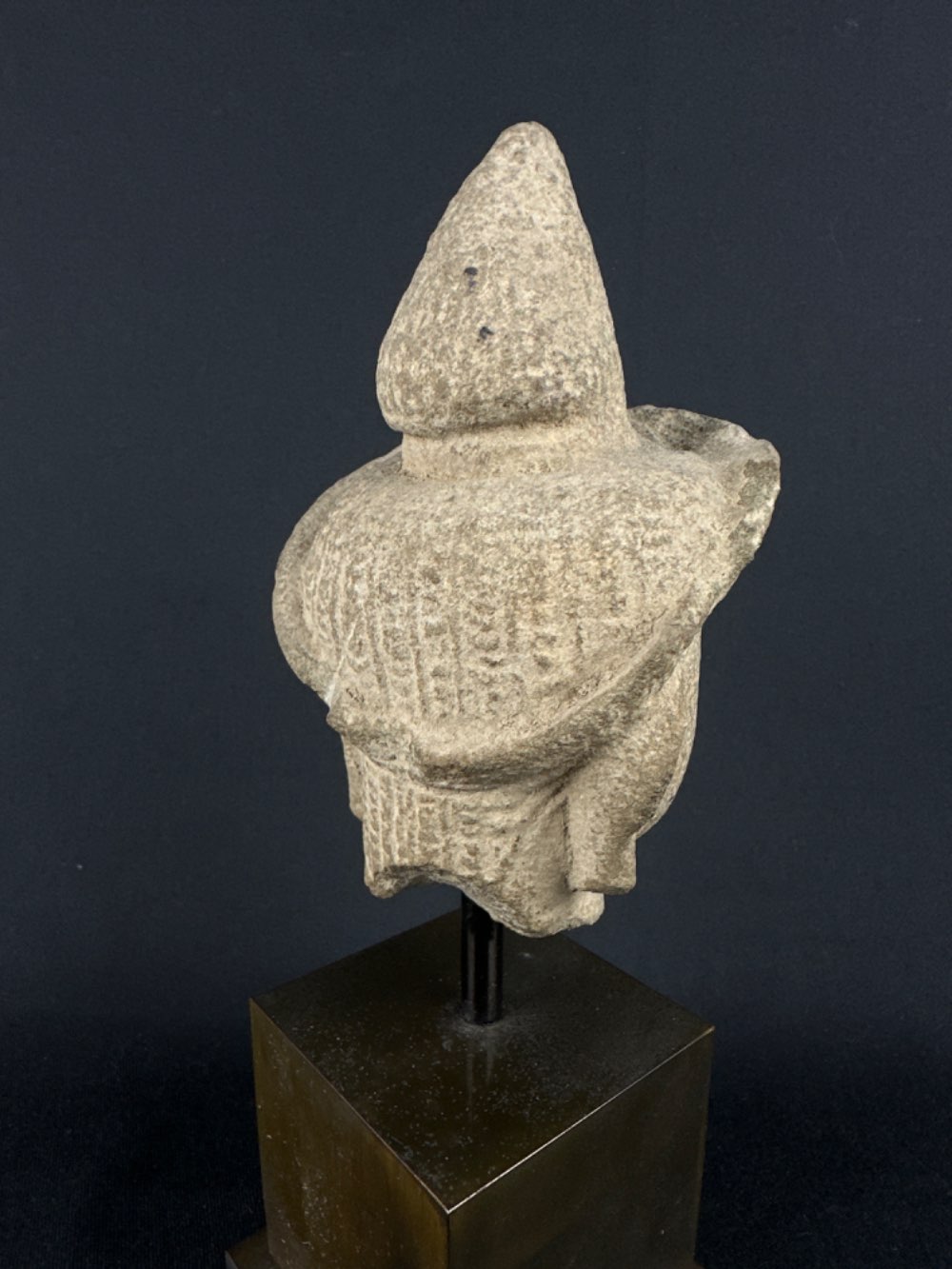
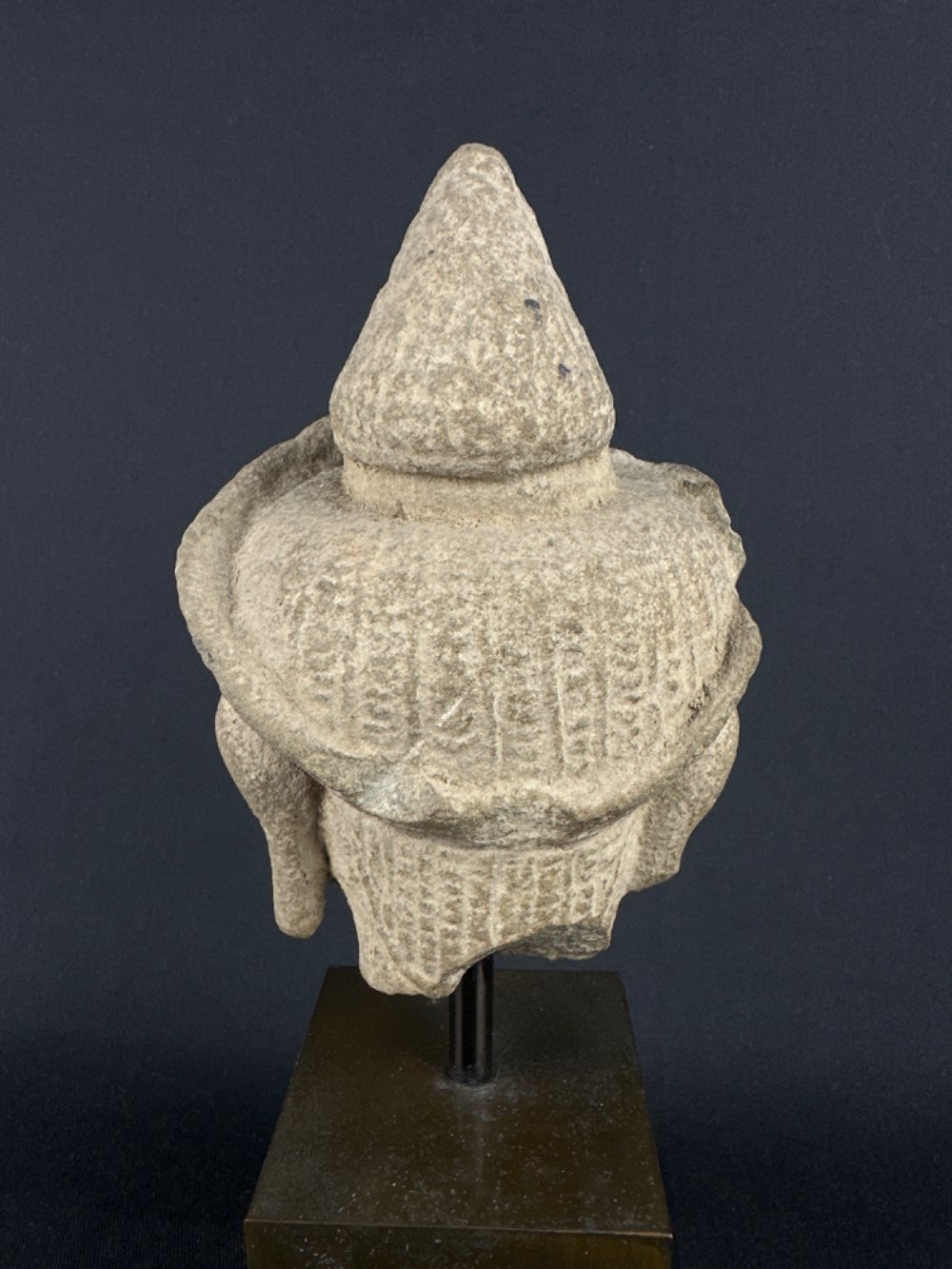
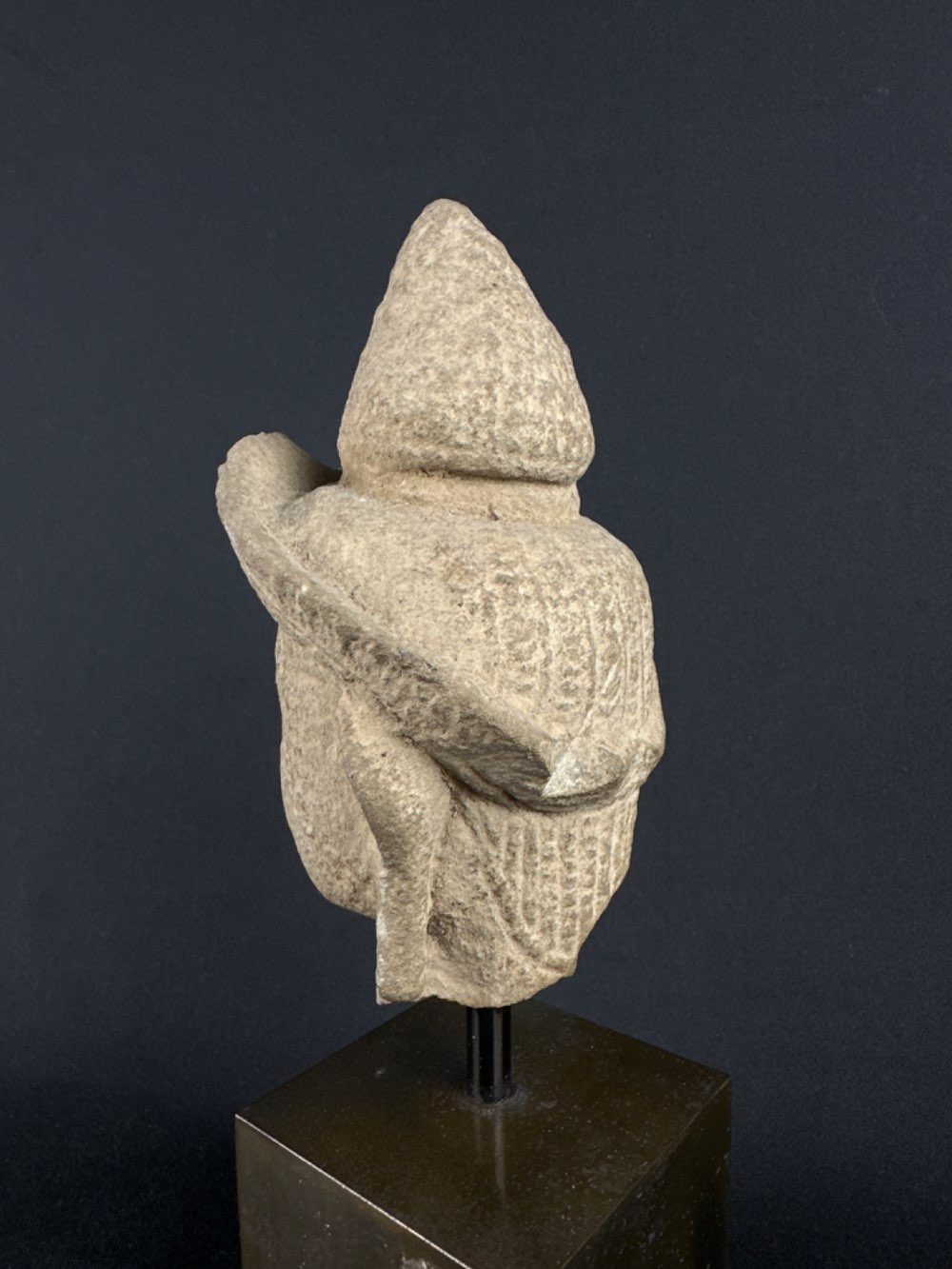
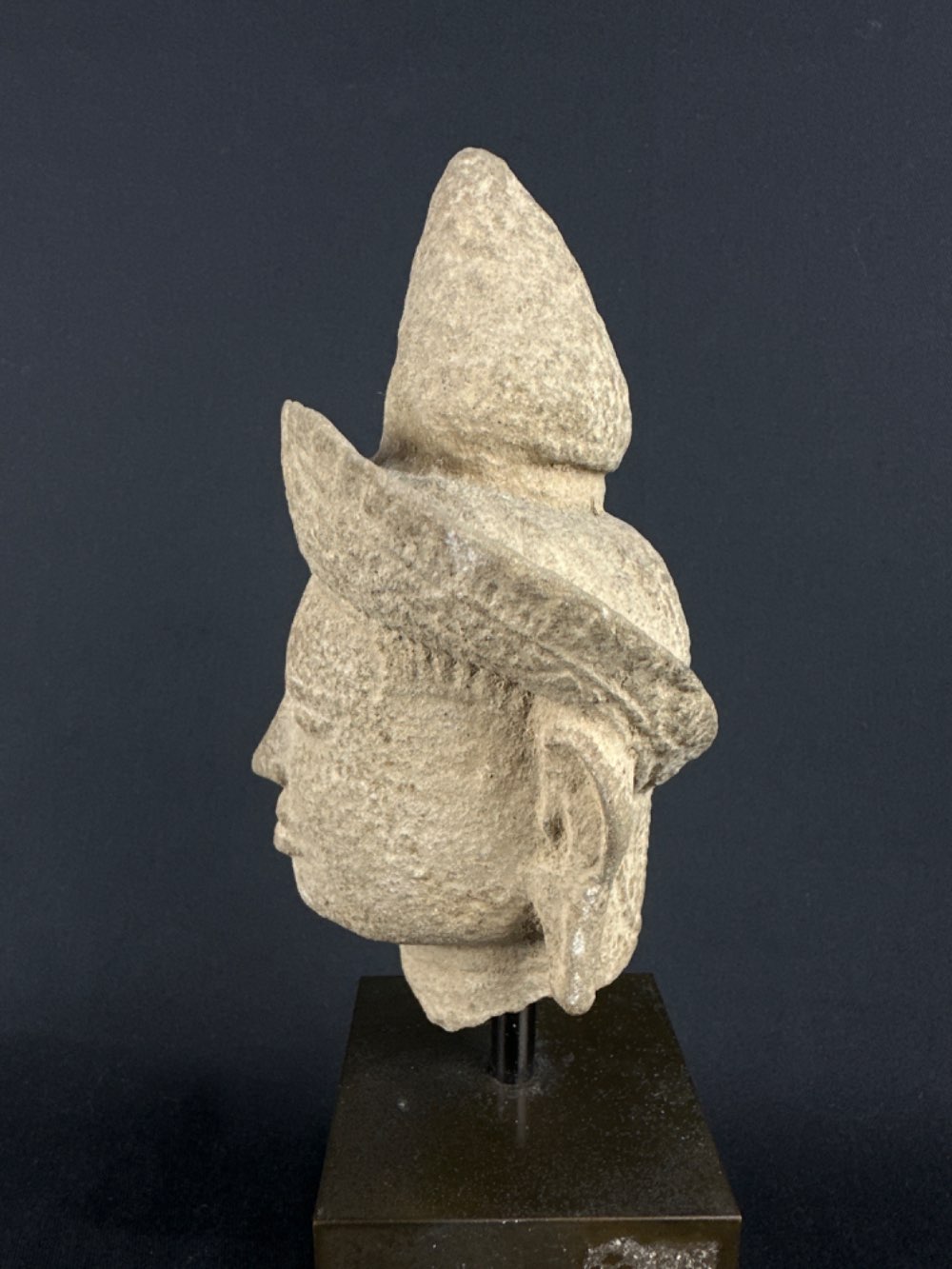
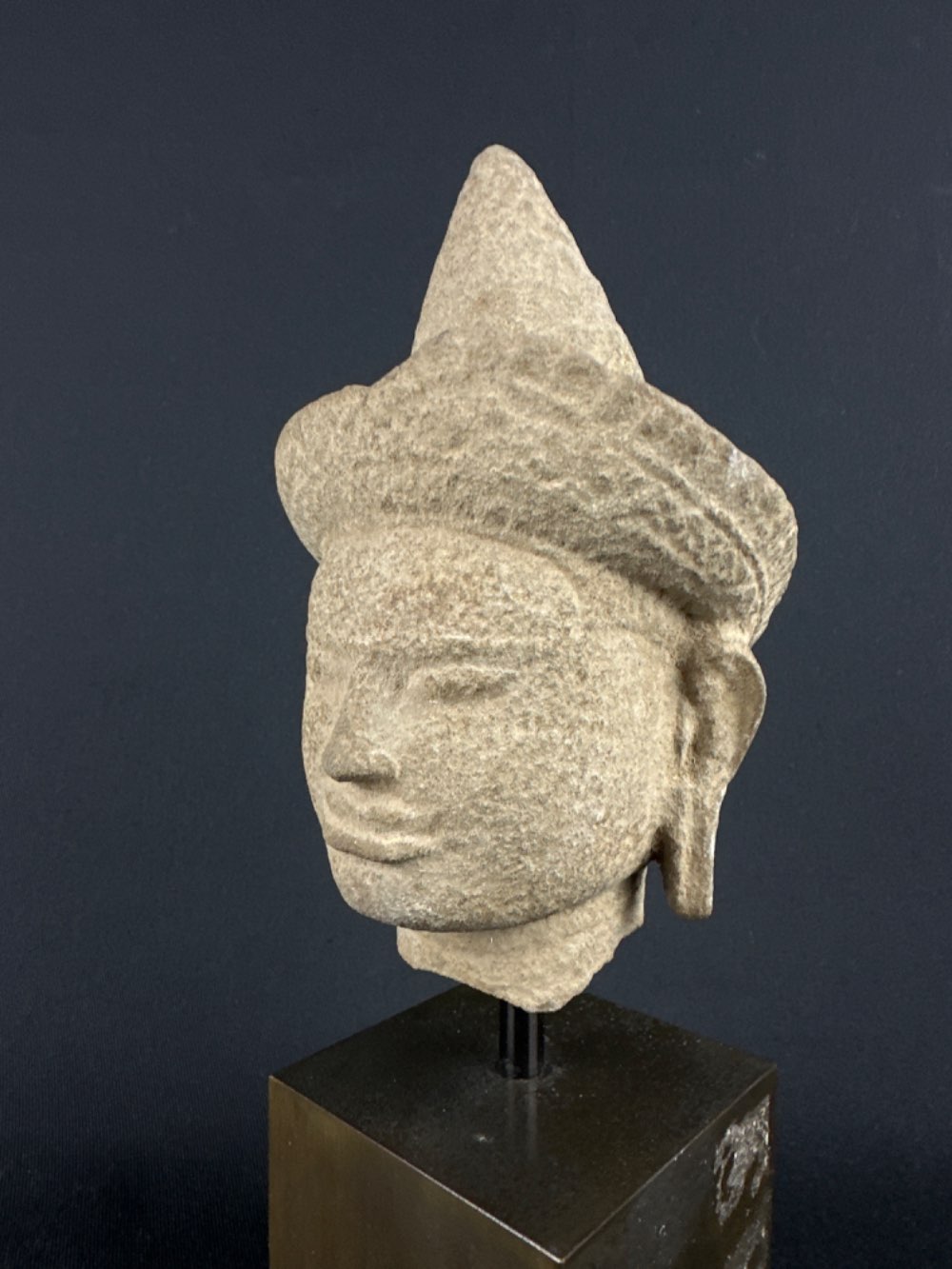
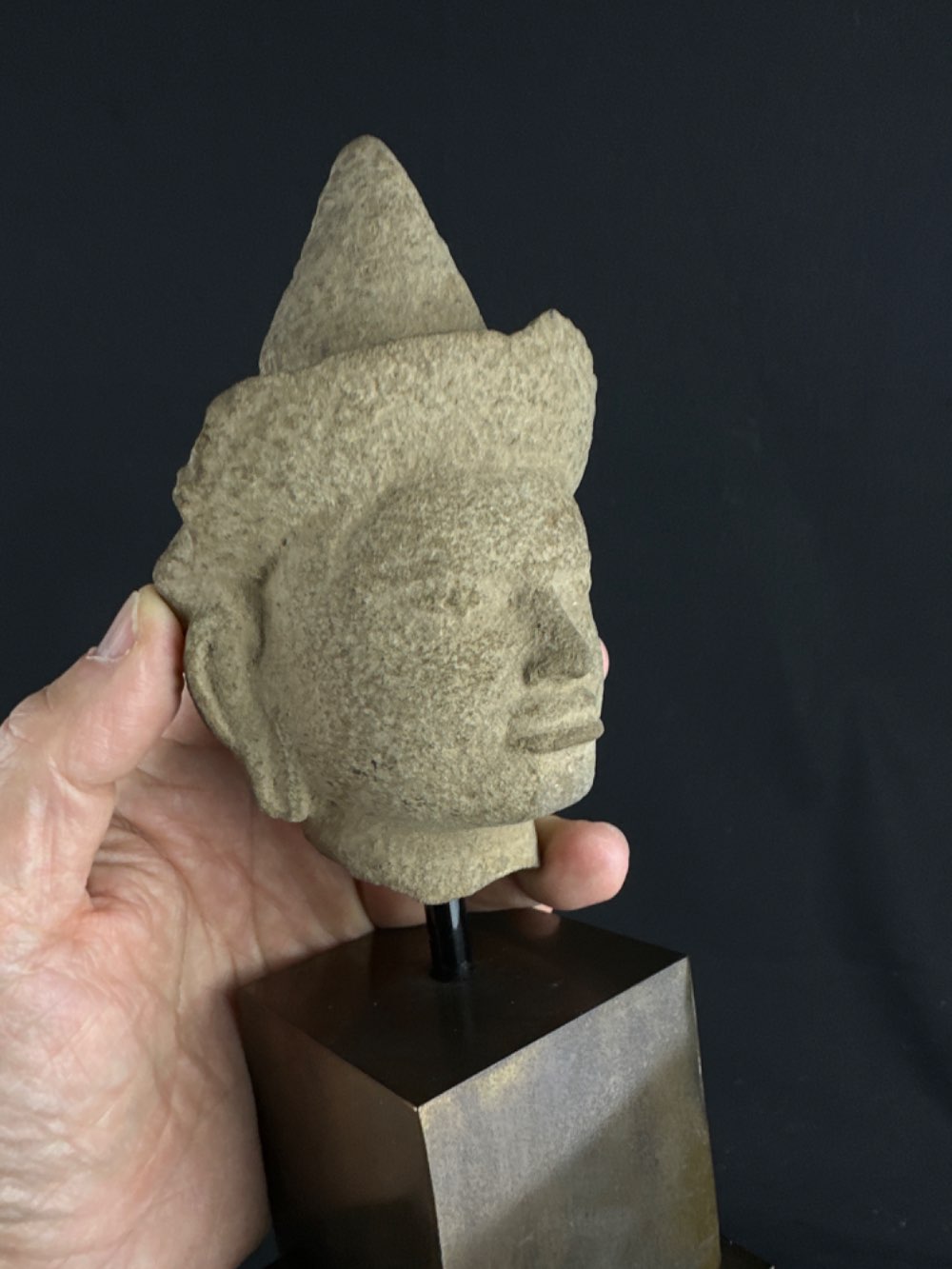
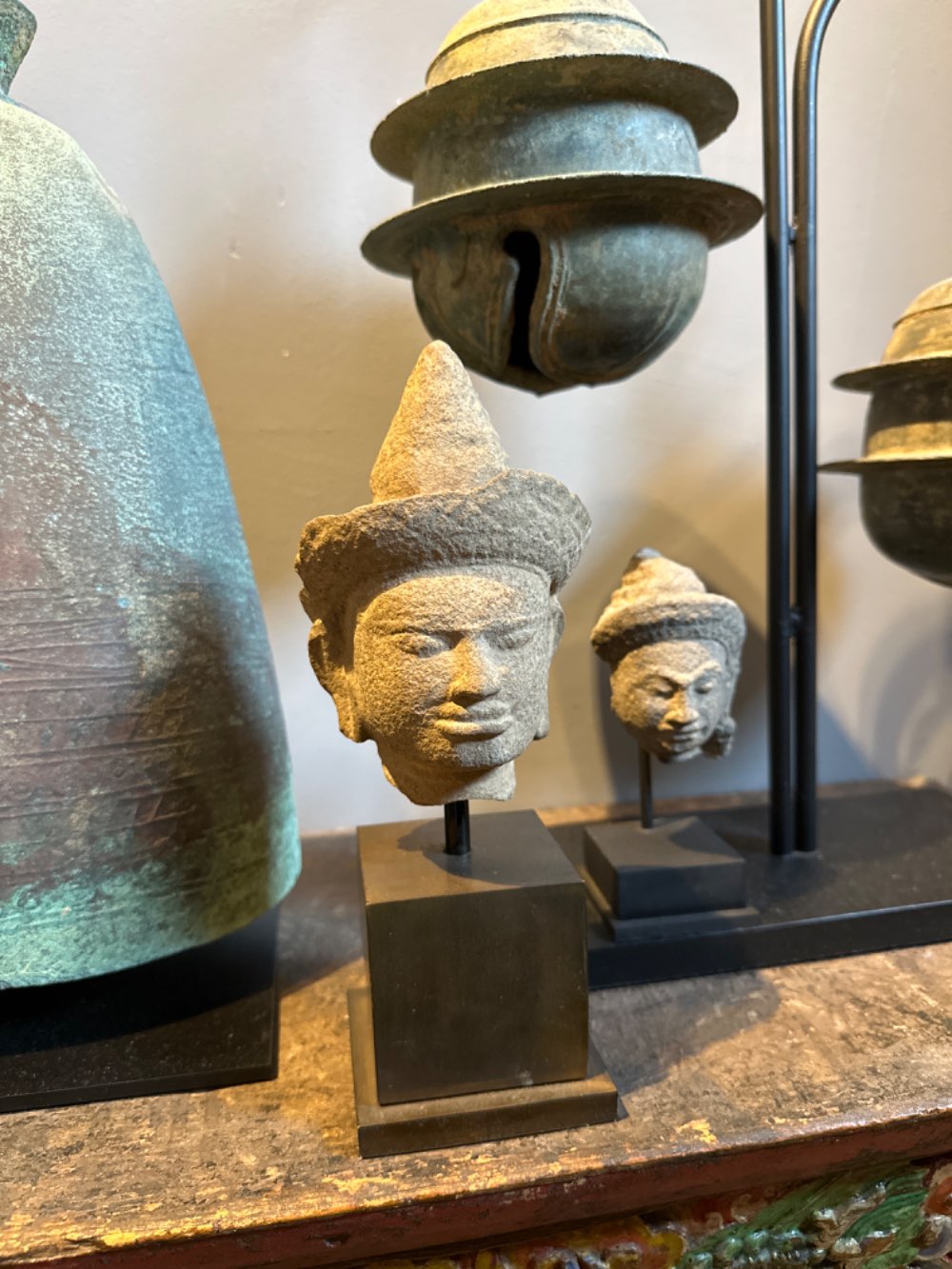
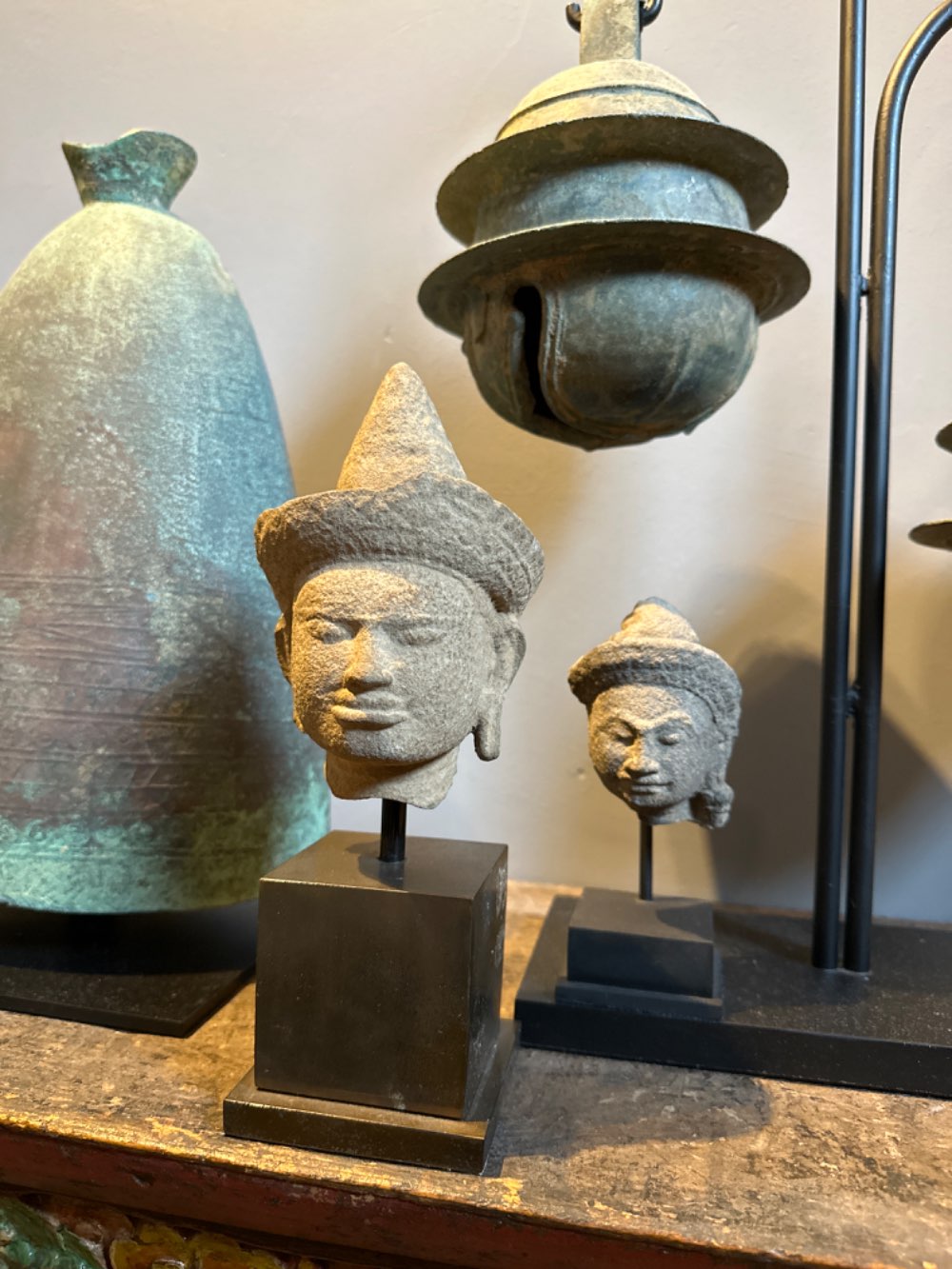
A sandstone head of Shiva from the Angkor period Cambodia, 12-13th century
A sandstone head of Shiva from the Angkor period Cambodia, 12-13th century
- Country: Cambodia
- Period: Angkor Wat (12th-13th Century)
- Material: Sandstone
- Size: 14 x 7.5 x 9.5 cm (23 cm incl. stand)
- Very nice head with good patina.
- At the back of the head there is a cut which probably is from some kind of farmer shovel who found this head while working the land.
-
During the Angkor Wat period, which spanned the 9th to 15th centuries, the Khmer Empire was a predominantly Hindu society. The rulers of the Khmer Empire were known for their patronage of Hinduism, and this is reflected in the religious iconography of the temples they constructed, including Angkor Wat.
While Angkor Wat is primarily dedicated to the Hindu god Vishnu, there are also depictions of other Hindu deities, including Shiva. Shiva, one of the principal deities in Hinduism, is often portrayed in various forms and manifestations in the art and sculptures of the Angkor period.
The most famous depiction of Shiva at Angkor is found in the temple complex of Angkor Thom, specifically in the Bayon temple. The Bayon is known for its iconic stone faces that are believed to represent bodhisattvas or perhaps the king himself in the guise of a deity. Some of these faces are thought to resemble the calm and serene face of Shiva.
In addition to the Bayon, other temples within the Angkor complex also feature representations of Shiva in various forms, reflecting the syncretic nature of Khmer religious beliefs during that time. It's important to note that while Angkor Wat itself is primarily dedicated to Vishnu, the broader Angkor complex includes several temples that depict a diverse range of Hindu deities, including Shiva. The coexistence of various deities in the temple complexes reflects the eclectic religious practices of the Khmer Empire during the Angkor period.
Please send an e-mail via below form, WhatsApp or call to order or get more information about this object.
We can communicate in English, Deutsch and Nederlands!
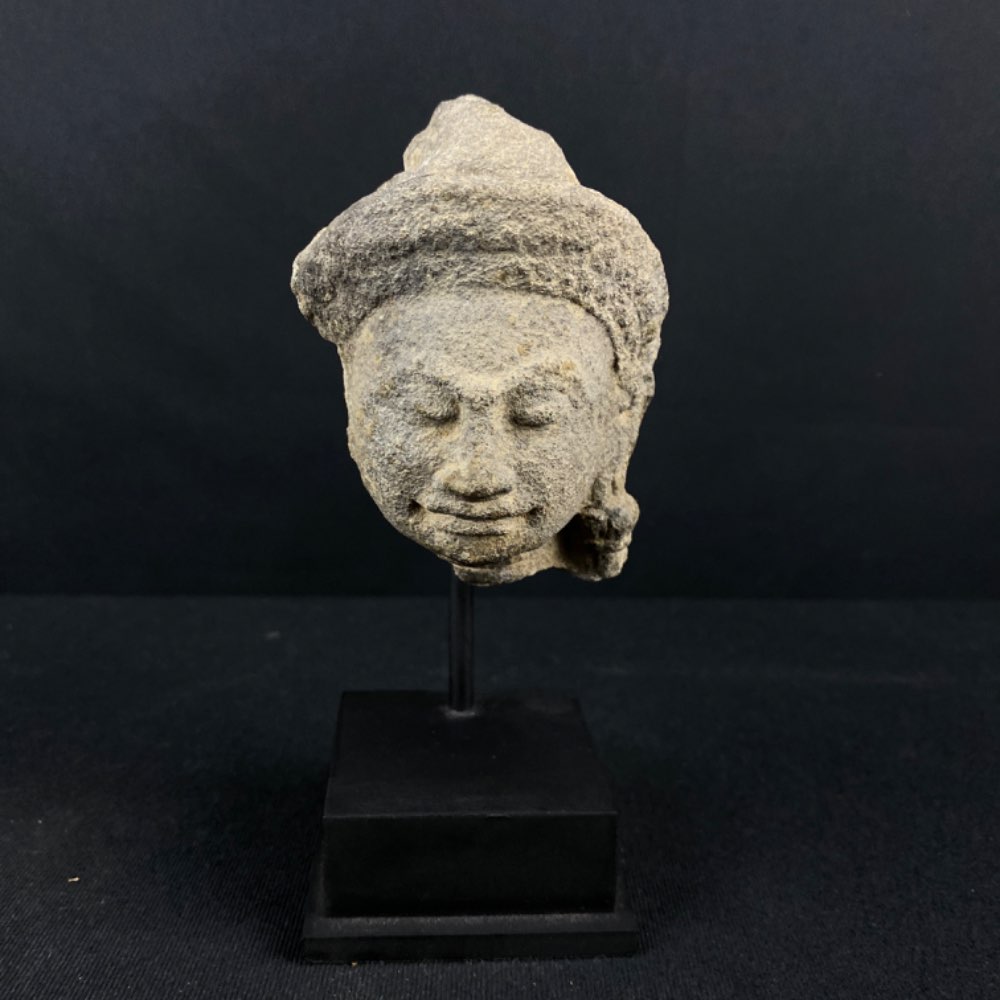 A sandstone head of Vishnu from Angkor Wat Cambodia, 12th century
 Very nice Sandstone fragment of an Apsara from Cambodia, 12-13th century
 Beautiful sandstone Khmer Buddha head from Cambodia, post Bayon 14-15th century
A sandstone head of Shiva from the Angkor period Cambodia, 12-13th century