
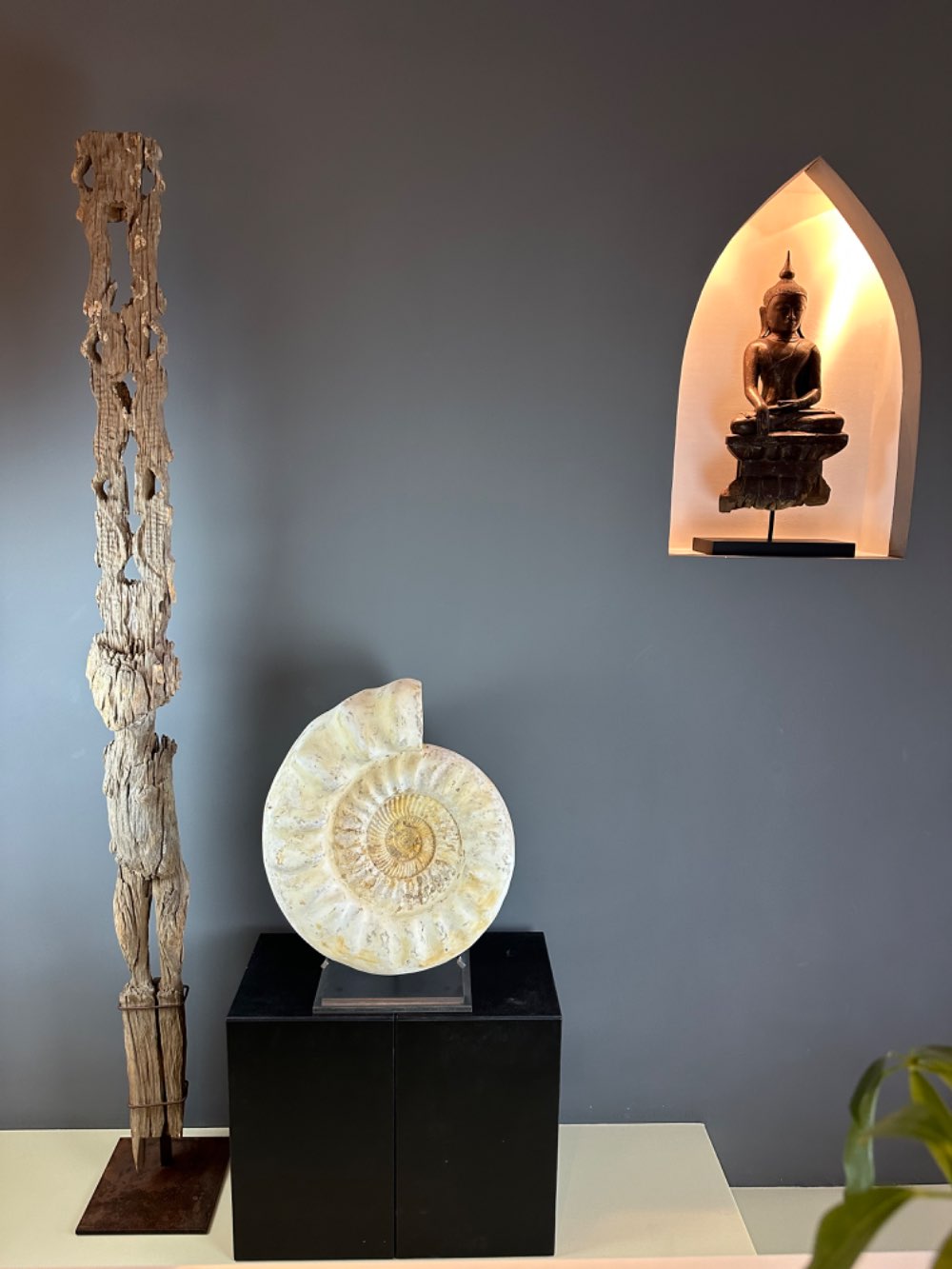
Double click image to enlarge
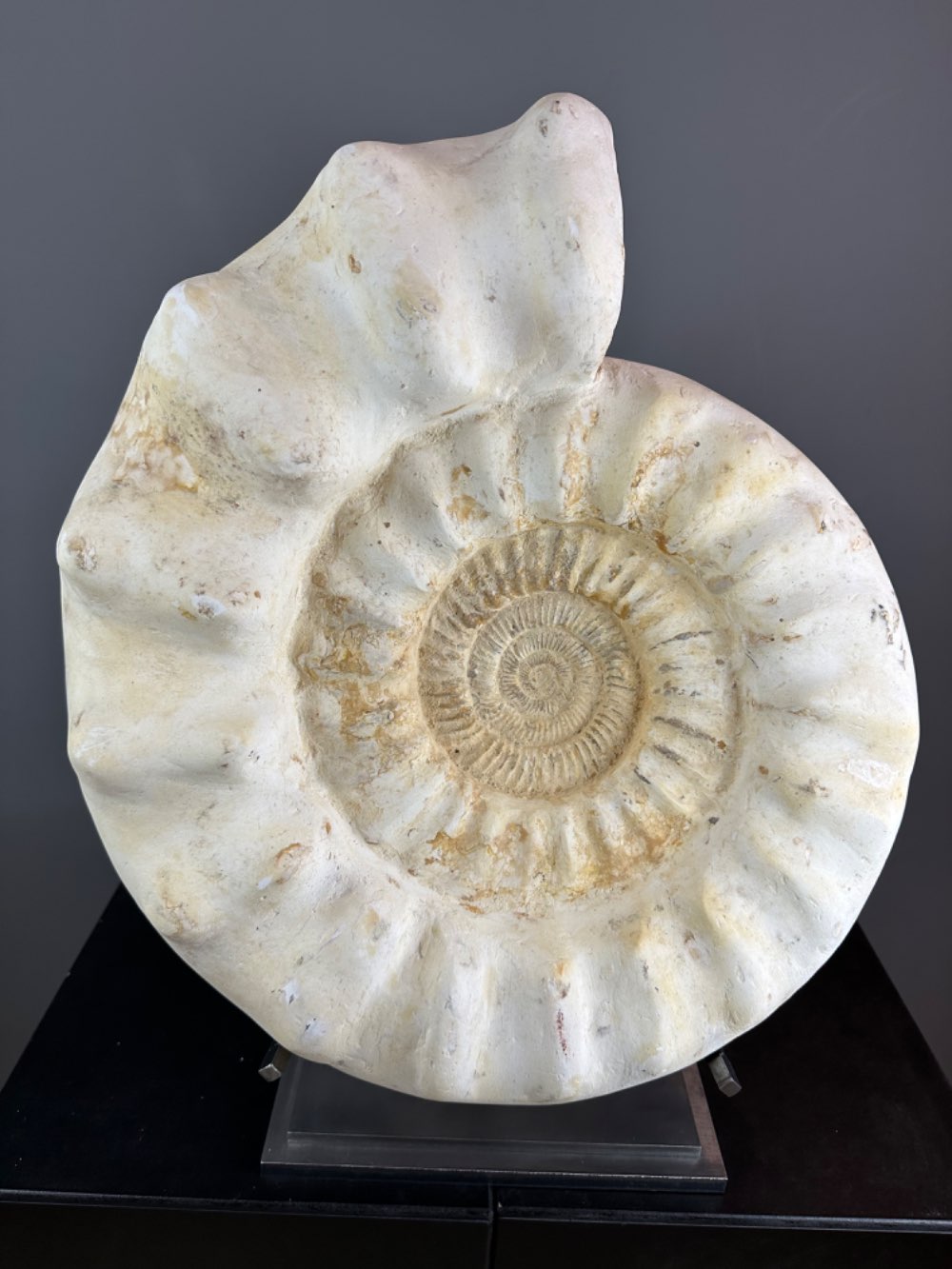
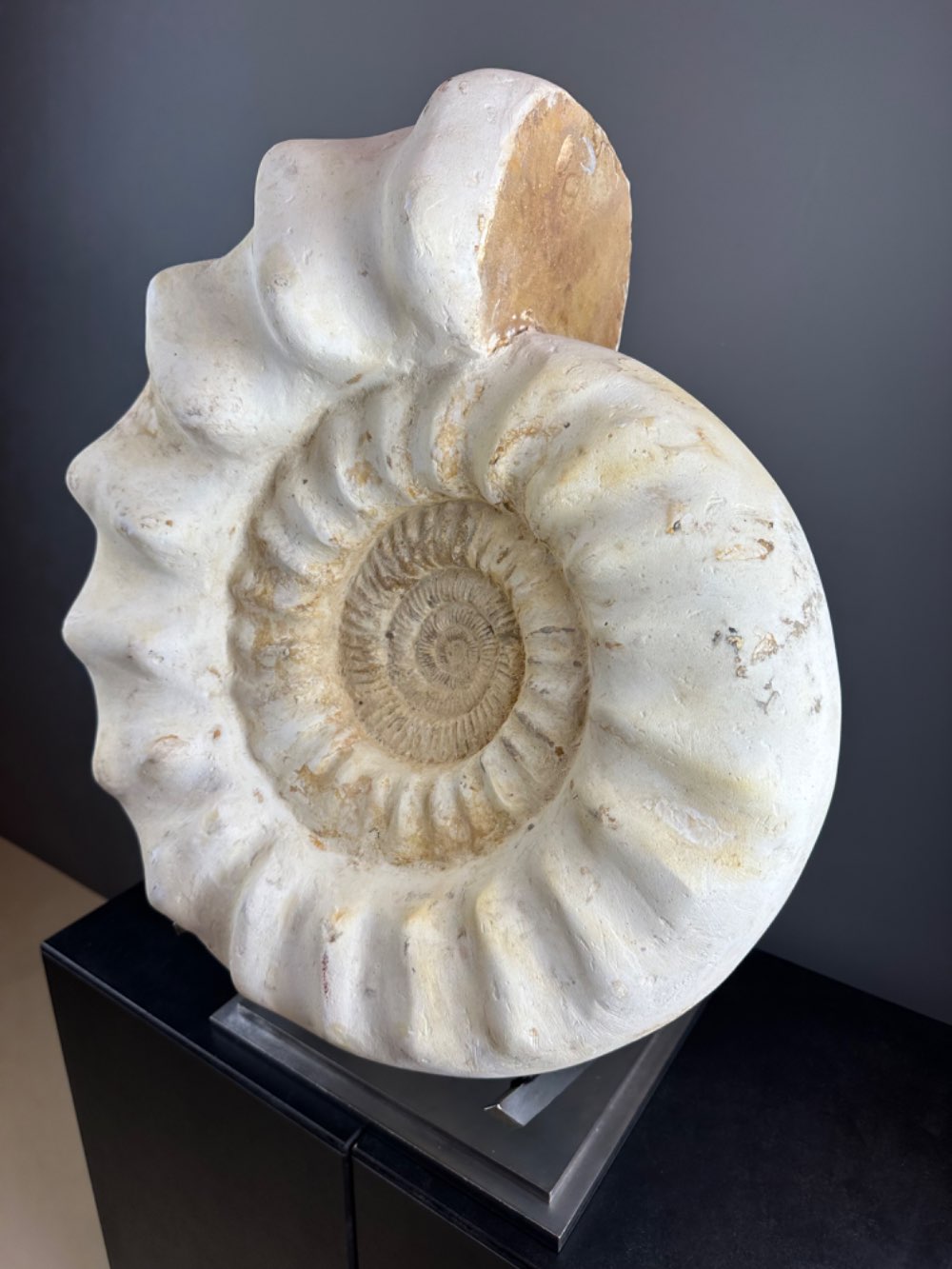
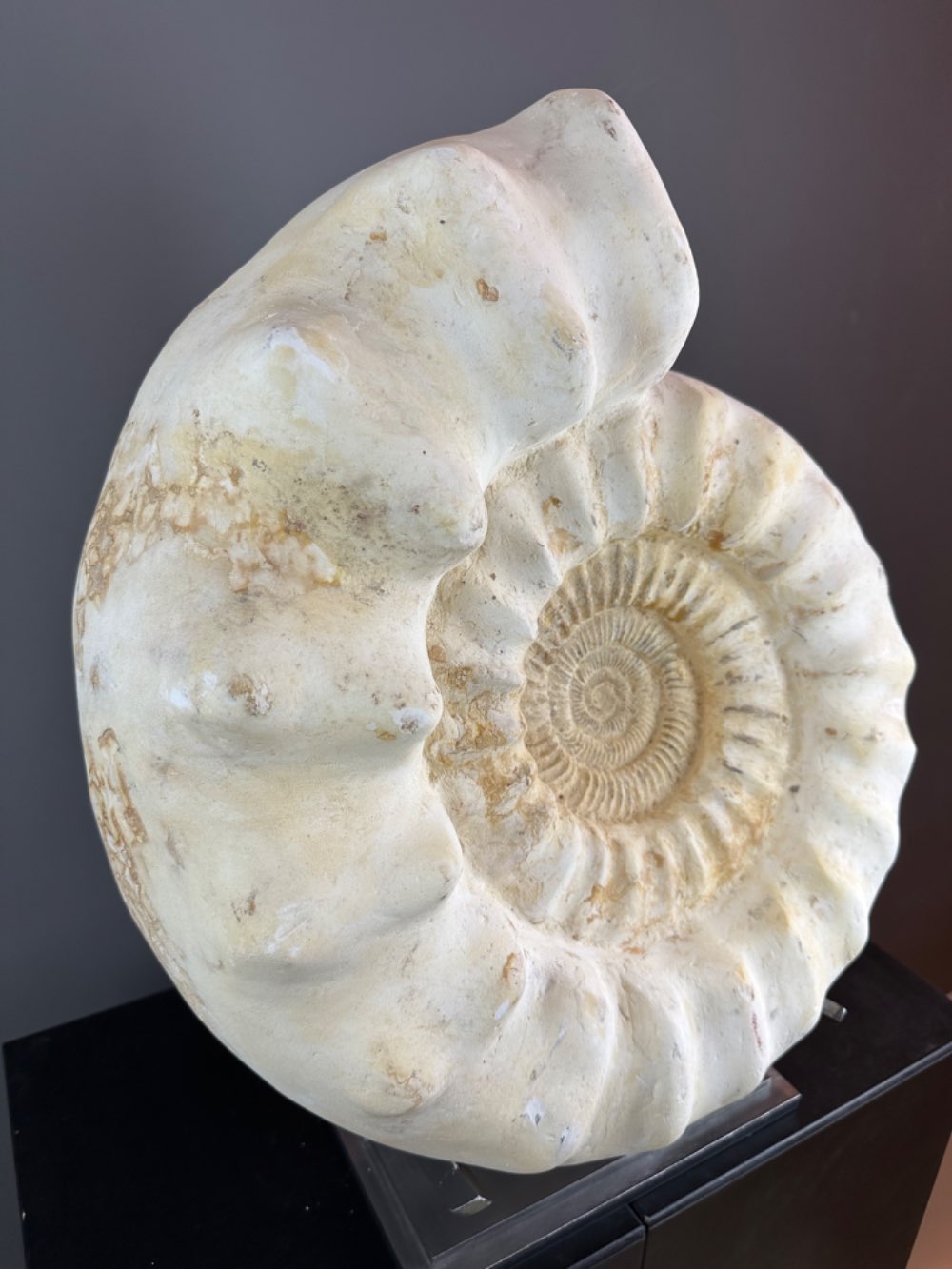
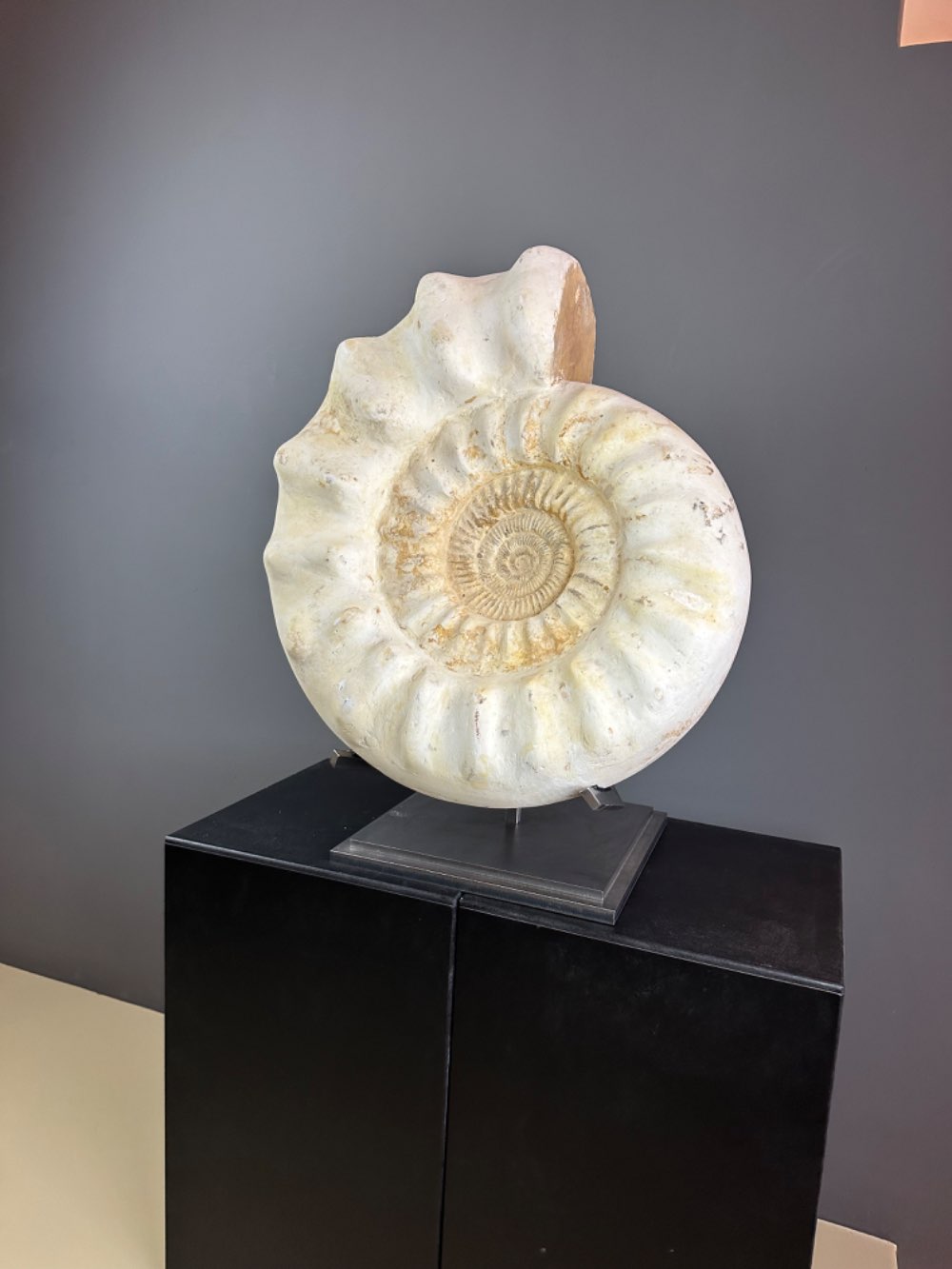
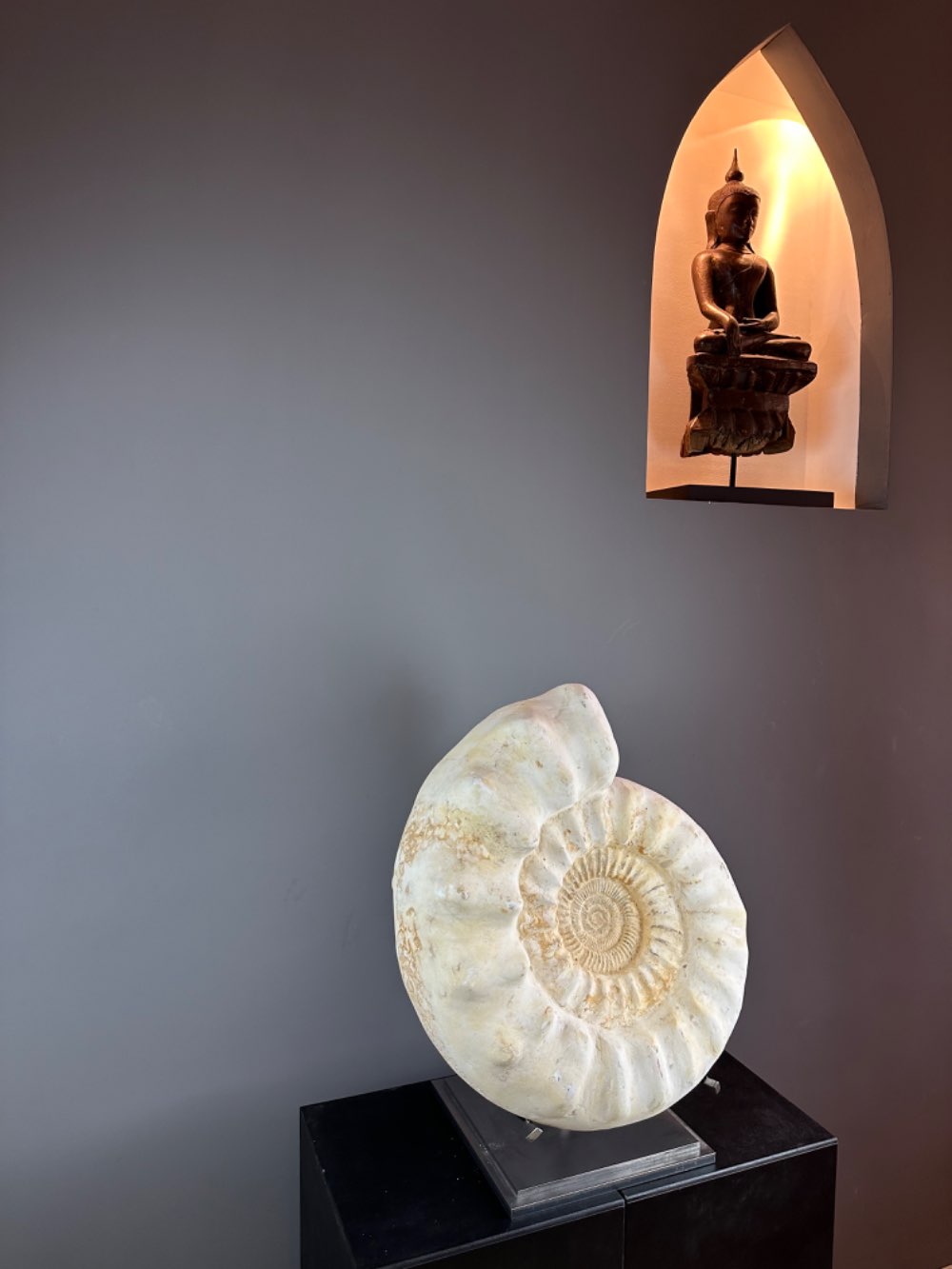
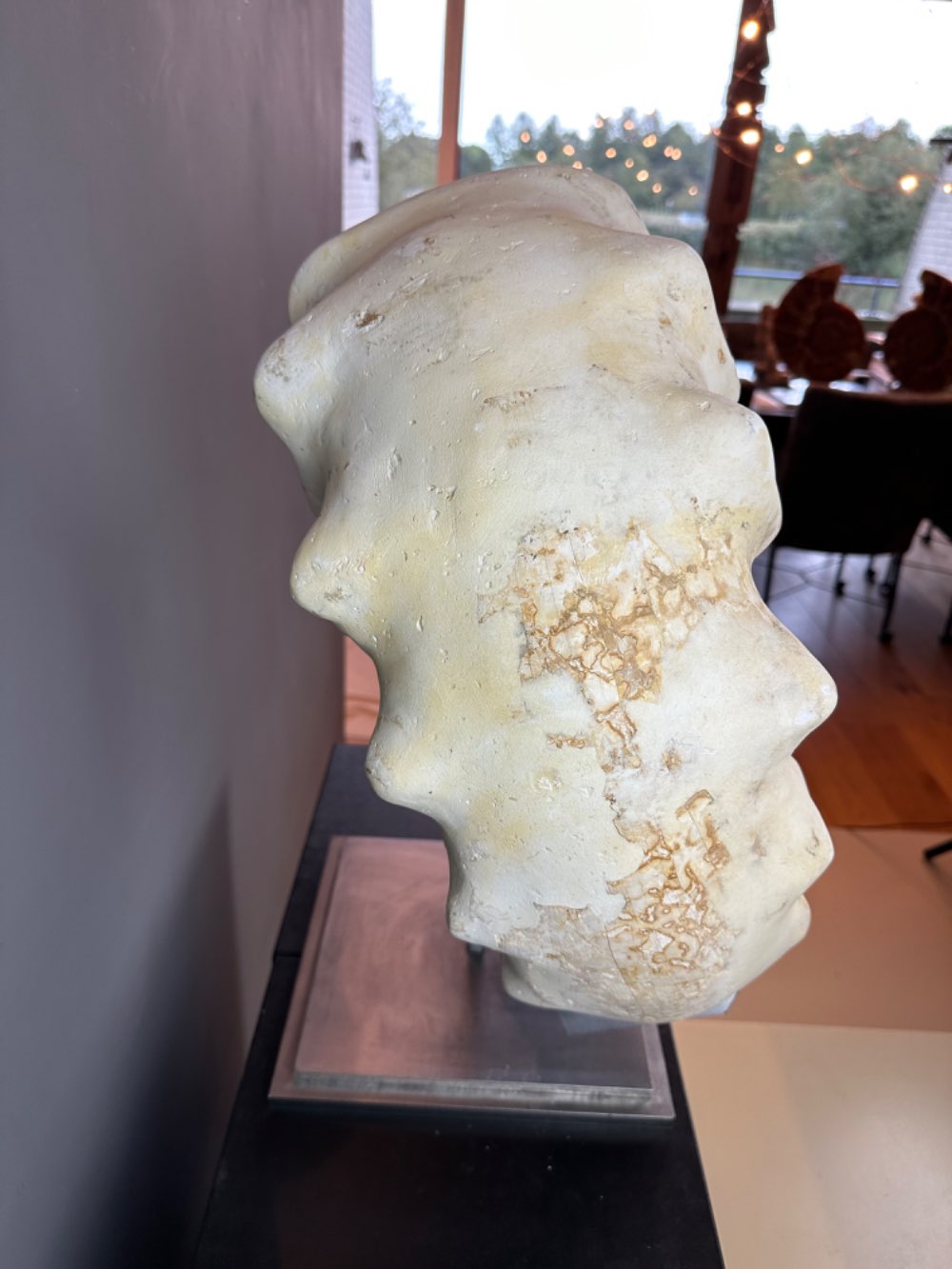
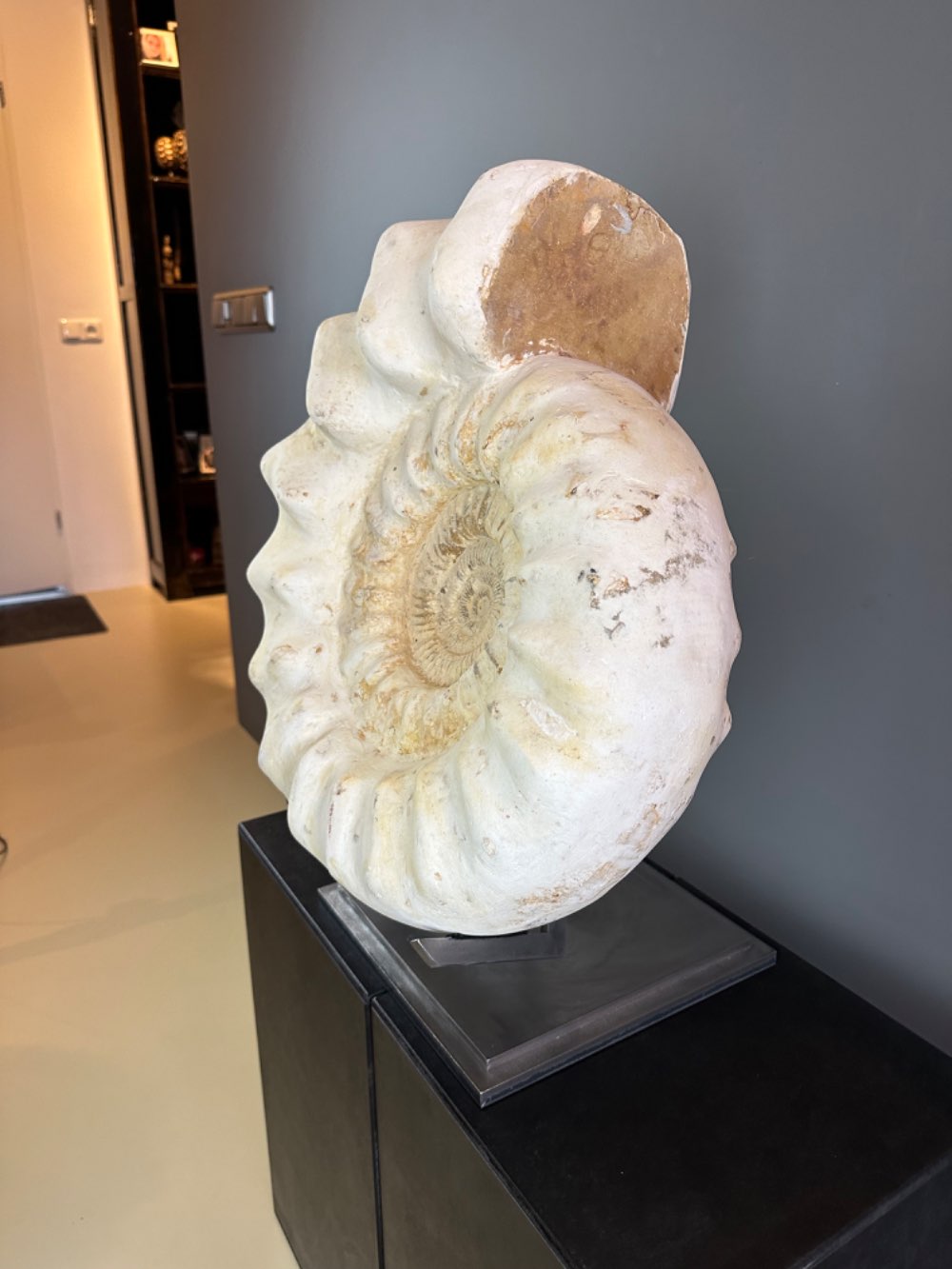
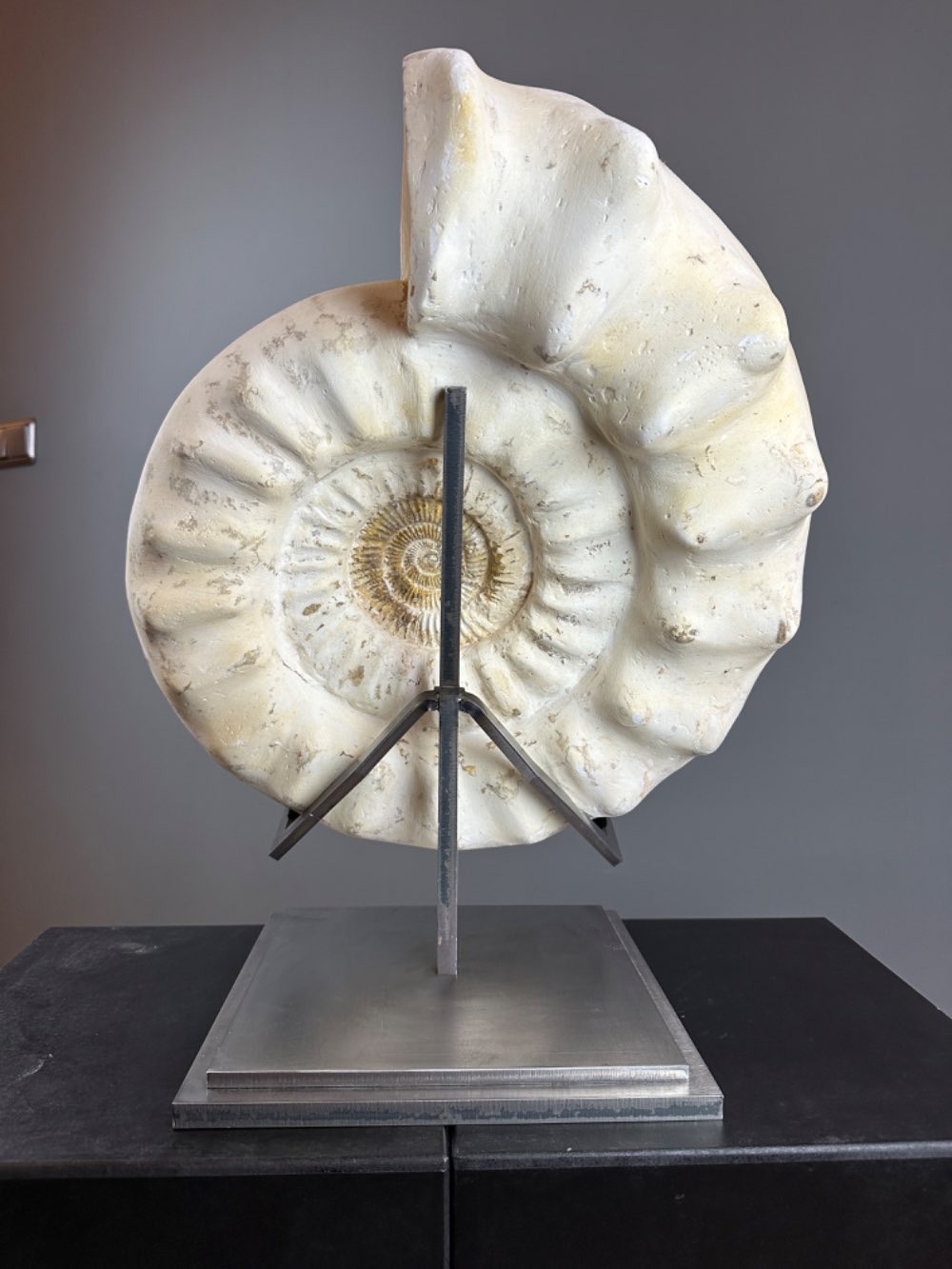
Amazing big ammonite Kranaosphinctes from Madagascar on stand
Amazing big ammonite Kranaosphinctes from Madagascar on stand
- Country: Madagascar
- Region: Sakaraha
- Period: Upper Cretaceous (145 till 66 million years old)
- Material: Ammonite Kranaosphinctes fossil
- Size: 46.5 x 40 x 22.5 cm
- Weight: 39 kg
Custom made stand is included. Can be made black or have it rust to get the industrial feel.
- Kranaosphinctes is a genus of ammonites that lived during the Cretaceous period, a time of great geological and biological change. These ancient marine creatures are particularly interesting for paleontologists and enthusiasts due to their distinctive characteristics and the information they provide about the Earth's history. Here is some information about Ammonite Kranaosphinctes, including its notable features:
-
Appearance: Kranaosphinctes ammonites had a spiral, coiled shell with a relatively high spire and distinctive ridges or keels. These ridges added to the structural strength of the shell, providing protection from predators. The shells could grow to a range of sizes, from a few inches to several feet in diameter.
-
Geological Age: Kranaosphinctes existed during the Cretaceous period, which spanned from approximately 145 to 66 million years ago. They were marine animals and inhabited the oceans of this era.
-
Range: While these ammonites have been found in various parts of the world, including Madagascar, they are particularly well-known for their presence in the Mahajanga Basin in Madagascar. This region has been a prolific source of ammonite fossils.
-
Paleoecology: Like other ammonites, Kranaosphinctes were likely carnivorous and preyed on small marine organisms, such as fish and crustaceans. Their intricate, coiled shells provided buoyancy, enabling them to move through the water efficiently.
-
Extinction: Kranaosphinctes ammonites, like many other marine species, went extinct at the end of the Cretaceous period, around 66 million years ago. This mass extinction event, known as the Cretaceous-Paleogene (K-Pg) extinction event, marked the end of the Cretaceous period and had a significant impact on life on Earth.
-
Scientific Value: Fossils of Kranaosphinctes and other ammonites are valuable to paleontologists and geologists. They provide insights into the ancient marine ecosystems, the evolution of cephalopods, and the geological history of the Earth. These fossils can help scientists reconstruct the environments and conditions of the distant past.
Ammonite Kranaosphinctes, like other ammonites, offers a window into the ancient oceans of the Cretaceous period. The detailed study of these fossils helps scientists and researchers understand the past, track the evolution of marine life, and gain insights into the Earth's geological history. Madagascar, with its rich fossil deposits, continues to be a significant location for the discovery and study of these remarkable creatures.
Please send an e-mail via below form, WhatsApp or call to order or get more information about this object.
We can communicate in English, Deutsch and Nederlands!
Related products
 Beautiful ammonite fossil divided into two parts from Madagascar
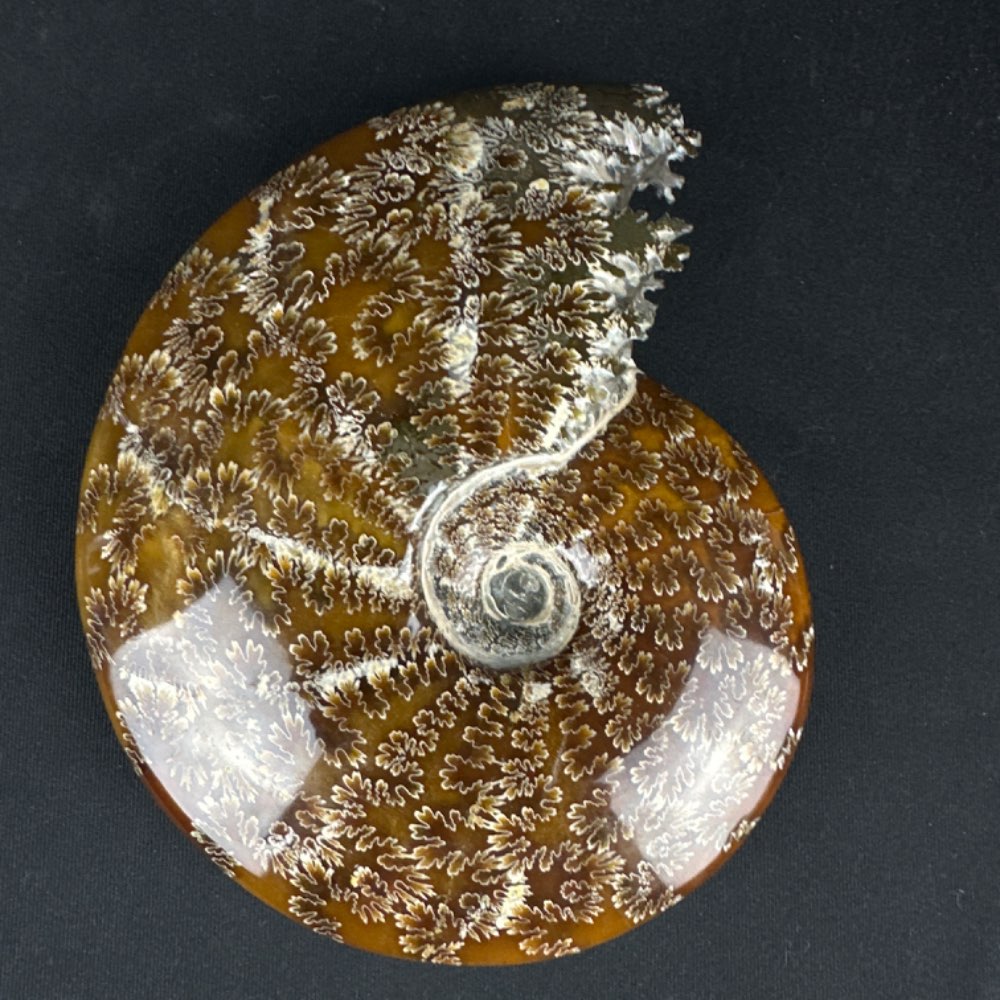 Nice ammonite Cleoniceras with mouth fossil from Madagascar
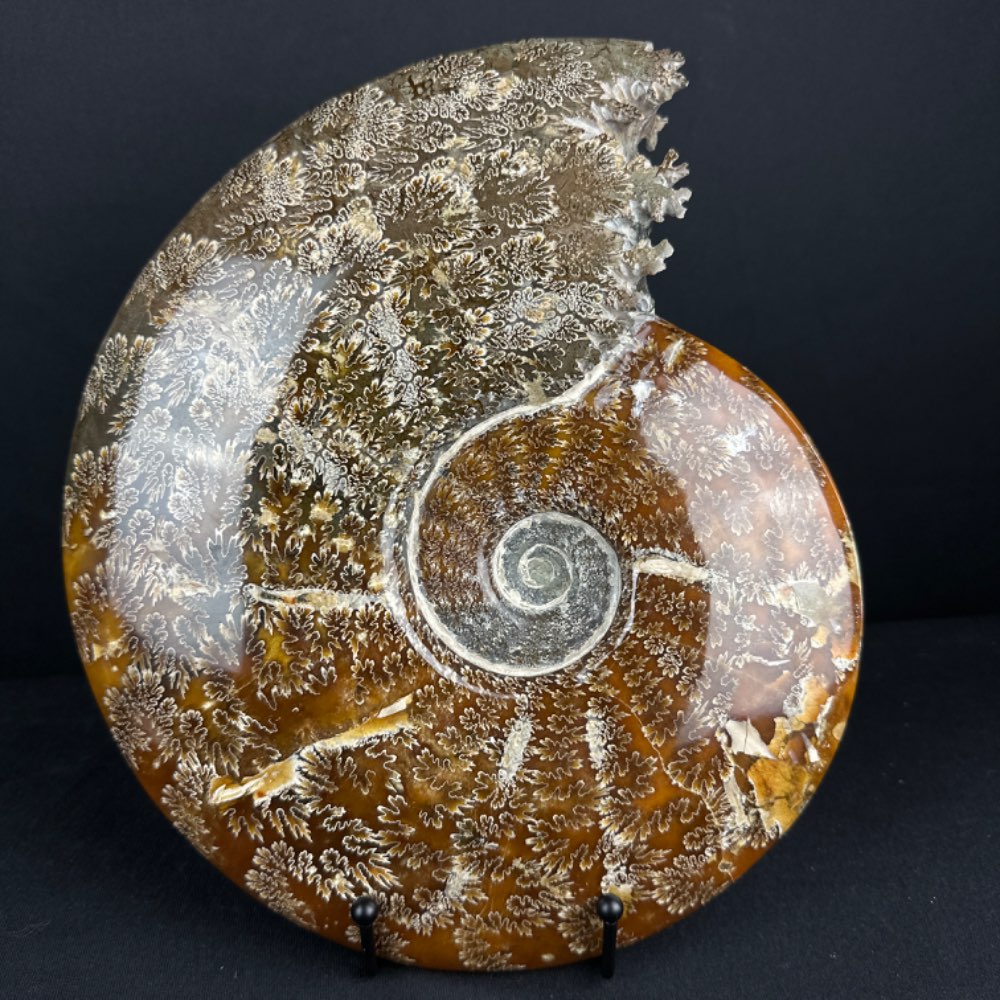 Beautiful large ammonite Cleoniceras with mouth fossil from Madagascar
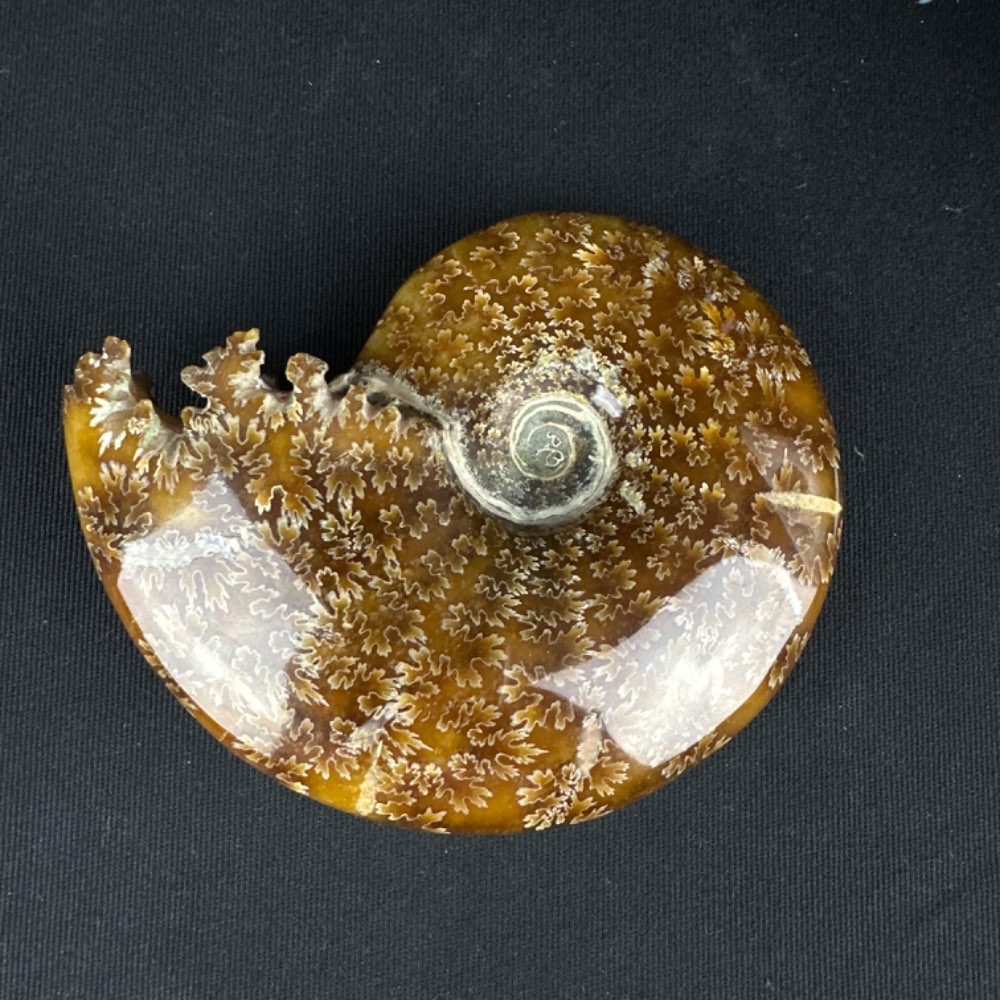 Cute ammonite Cleoniceras with mouth fossil from Madagascar
 Incredible big ammonite Kranaosphinctes from Madagascar on stand
Amazing big ammonite Kranaosphinctes from Madagascar on stand