




Double click image to enlarge
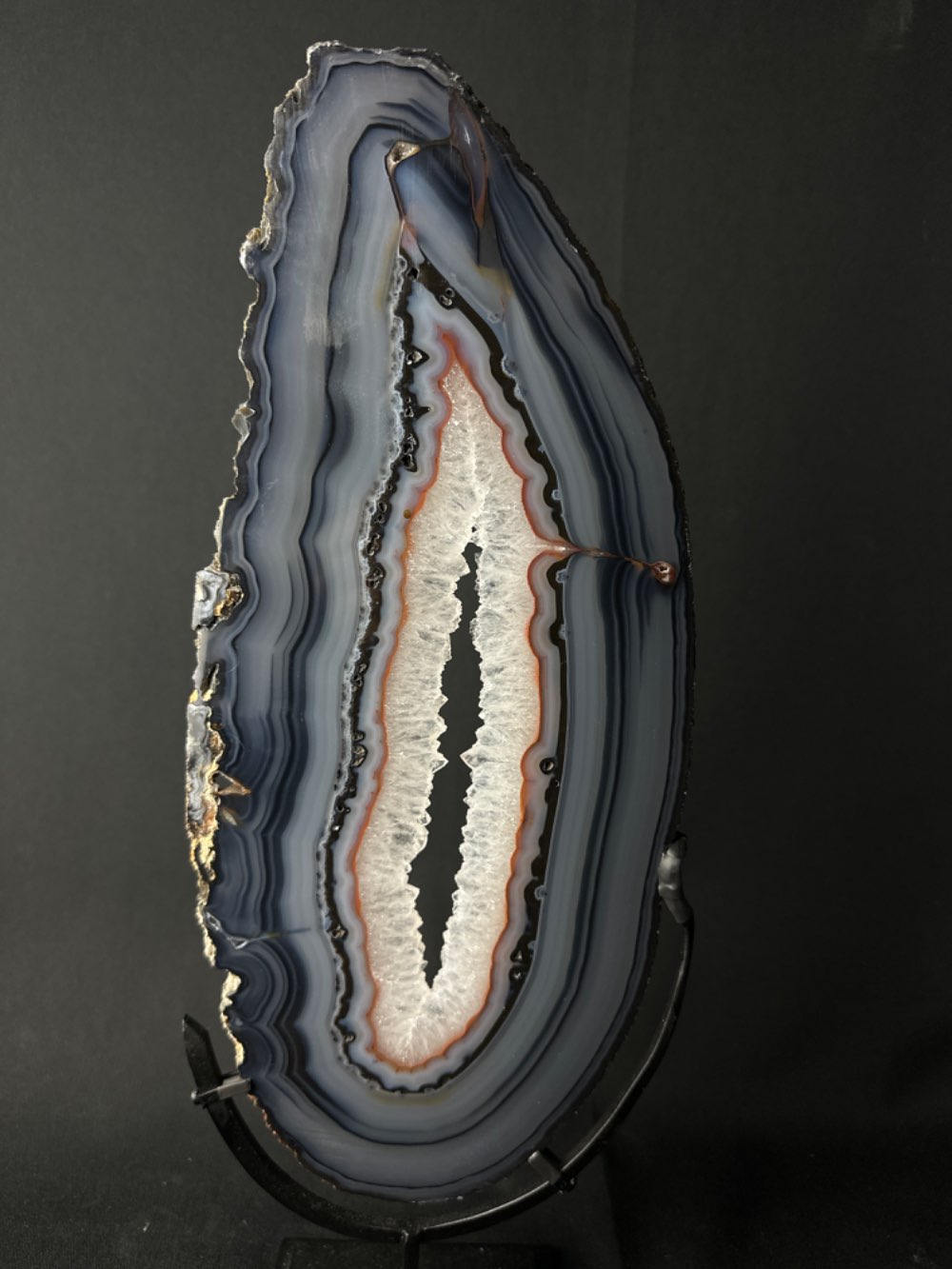
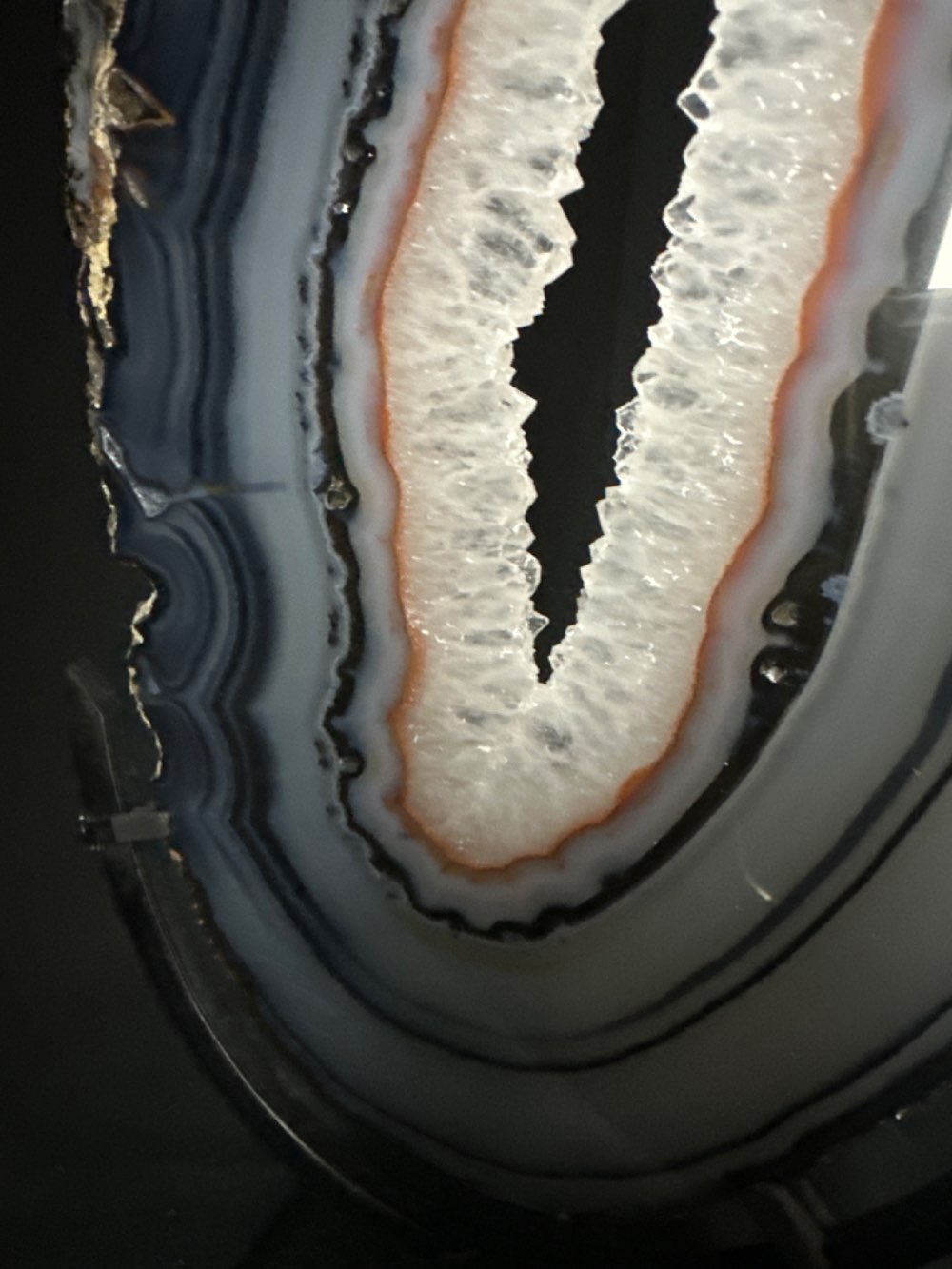
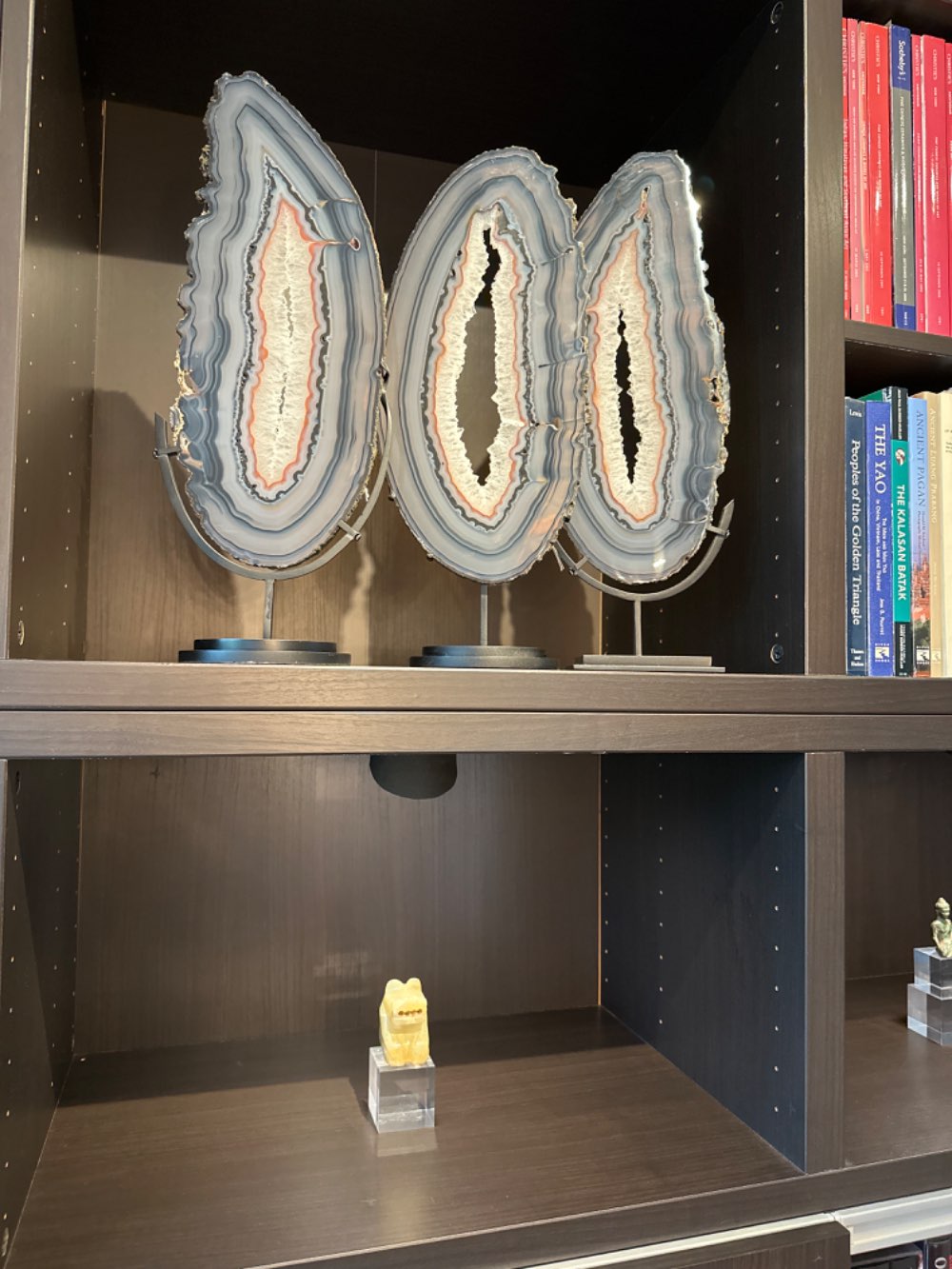
Beautiful banded polished agate slice with quartz in the center from Brazil
Beautiful banded polished agate slice with quartz in the center from Brazil
- Country: Brazil
- Material: brown jasper with blue agate
- Size: 37 x 16 cm (45 cm incl. stand)
- Weight: 806 gram
- Very nice decorative piece
- Concentric bands of black, grey and some reddish/brown in the transition from agate to quartz. High quality due to the intense patterning and translucency.
-
Agate is a type of chalcedony, which is a microcrystalline variety of quartz. It forms primarily through a process involving volcanic activity, where silica-rich solutions fill cavities within volcanic rocks. Here's a step-by-step explanation of the formation process of agate:
Formation Process of Agate
-
Volcanic Activity:
- Formation of Cavities: Agate typically forms in cavities within volcanic rocks like basalt. These cavities, also known as vesicles, are created when gas bubbles are trapped in cooling lava.
-
Silica-Rich Solutions:
- Silica Deposition: Over time, silica-rich water solutions percolate through the rock. This silica can come from the weathering of volcanic rocks or from hydrothermal fluids associated with volcanic activity.
- Precipitation of Silica: As the silica-rich water seeps into the cavities, it begins to precipitate, depositing layers of microcrystalline quartz. The deposition occurs due to changes in temperature, pressure, and the evaporation of water.
-
Layer Formation:
- Layering Process: Agate forms in layers, often creating beautiful banded patterns. The differences in the conditions during the deposition process (such as changes in the chemical composition of the solution, temperature, and impurities) result in the various colors and banding seen in agate.
- Coloration: The presence of trace minerals and impurities like iron, manganese, and other elements can cause the wide range of colors found in agate. These minerals can enter the cavity at different times, leading to the formation of colorful bands.
-
Crystal Growth:
- Crystal Structure: The agate continues to grow as long as the silica-rich solutions are available and conditions remain favorable. The layers of quartz crystals that form are very fine-grained and can be so tiny that they are only visible under a microscope.
- Completion: The process can take millions of years, and eventually, the cavity is completely filled with microcrystalline quartz, resulting in a solid agate nodule.
-
Exposure and Erosion:
- Erosion of Host Rock: Over time, geological processes such as erosion and tectonic activity may expose the agate. The host rock weathers away, leaving the harder, more resistant agate behind.
Types of Agate
- Banded Agate: Characterized by its distinct bands of varying colors.
- Moss Agate: Contains green, moss-like inclusions within the stone.
- Fire Agate: Exhibits a play of colors similar to opal, caused by layers of iron oxide within the stone.
Uses of Agate
- Jewelry: Agate is popular in jewelry making due to its wide range of colors and patterns.
- Decorative Items: Carved into ornaments, bookends, and other decorative pieces.
- Industrial Uses: Sometimes used for its hardness and resistance to chemical attack in industrial applications.
Summary
Agate forms through the deposition of silica from groundwater in cavities within volcanic rocks. This process involves the precipitation of silica-rich solutions, resulting in the formation of microcrystalline quartz layers that create the characteristic banded patterns and colors of agate. Over time, geological processes expose these beautiful and durable stones, making them accessible for use in various decorative and industrial applications.
-
Please send an e-mail via below form, WhatsApp or call to order or get more information about this object.
We can communicate in English, Deutsch and Nederlands!
 brown jasper with blue agate in egg shape from Madagascar
 Beautiful banded polished agate slice with quartz in the center from Brazil
 Beautiful banded polished agate slice with quartz in the center from Brazil
Beautiful banded polished agate slice with quartz in the center from Brazil