Double click image to enlarge
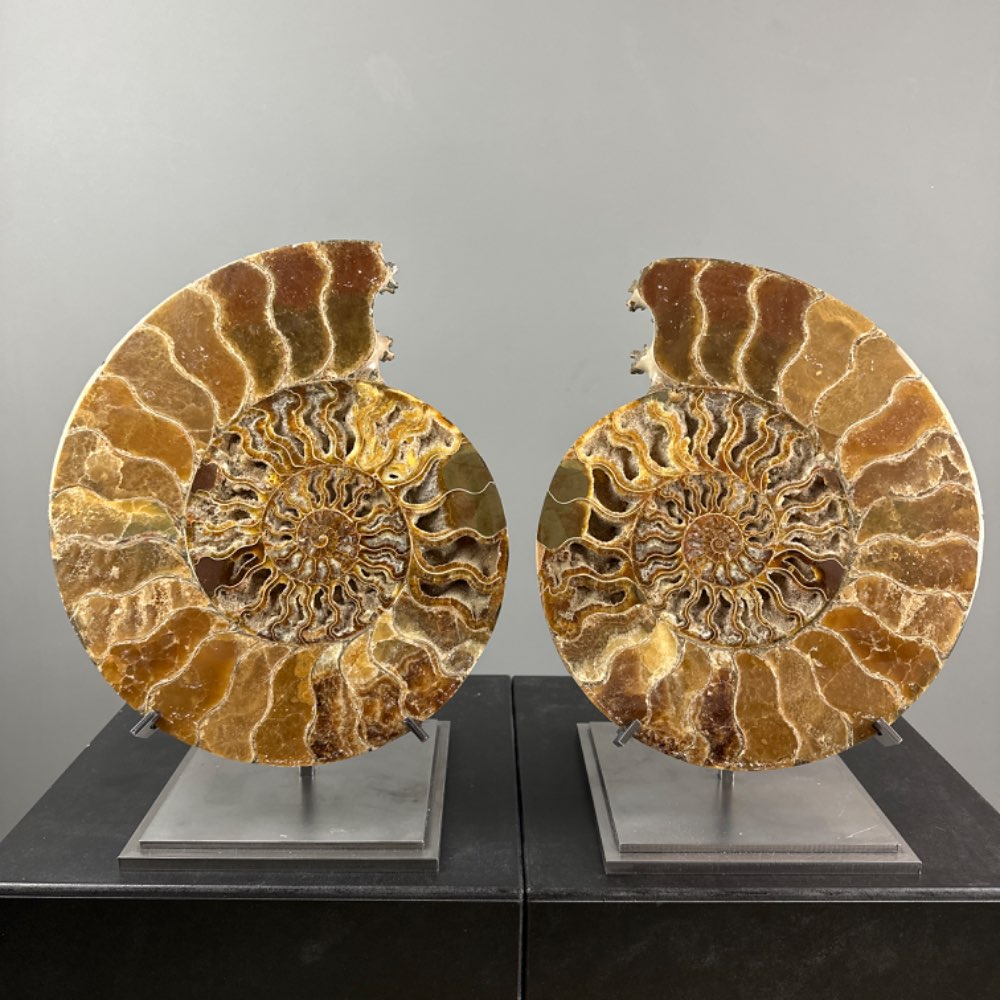
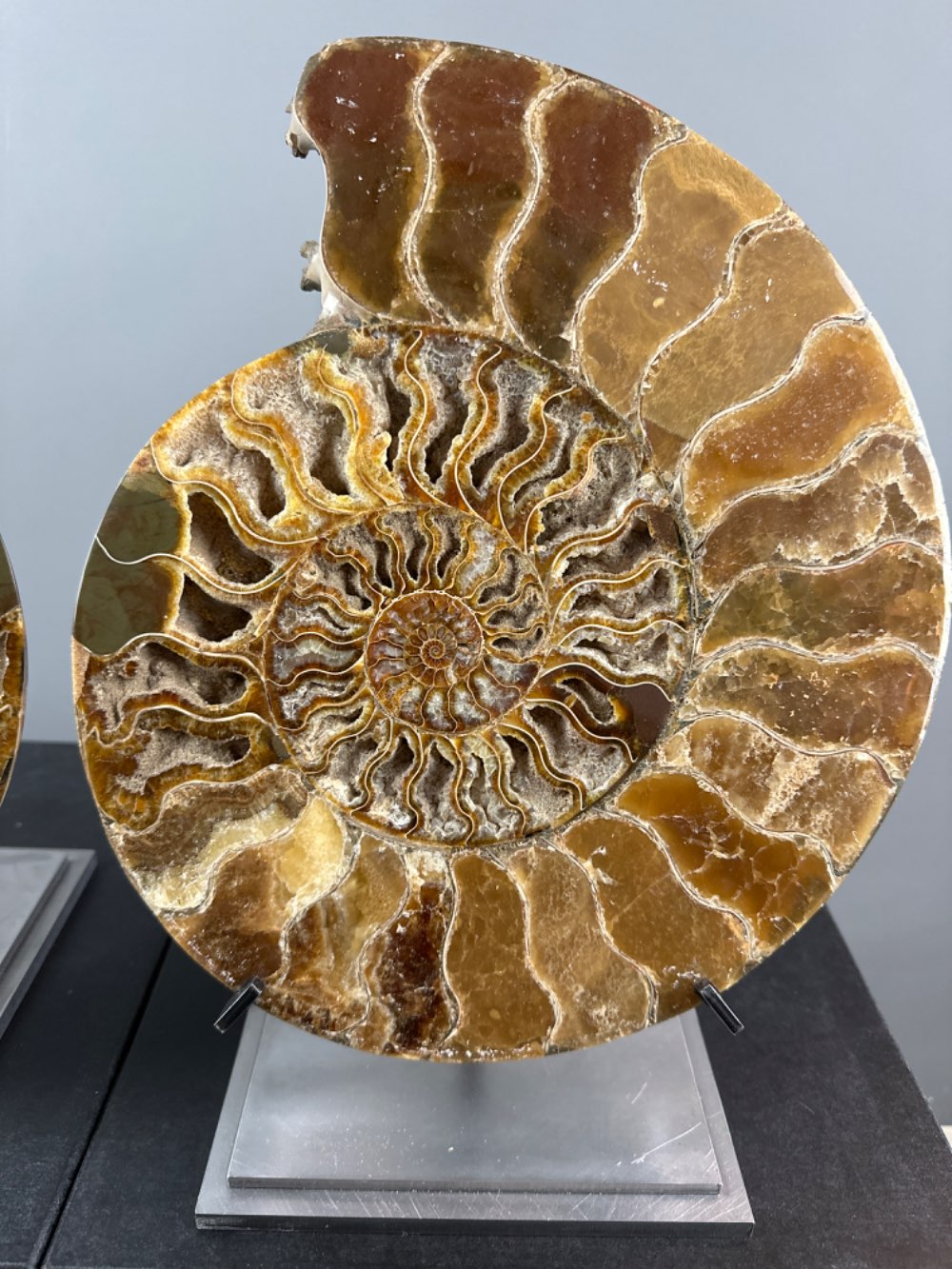
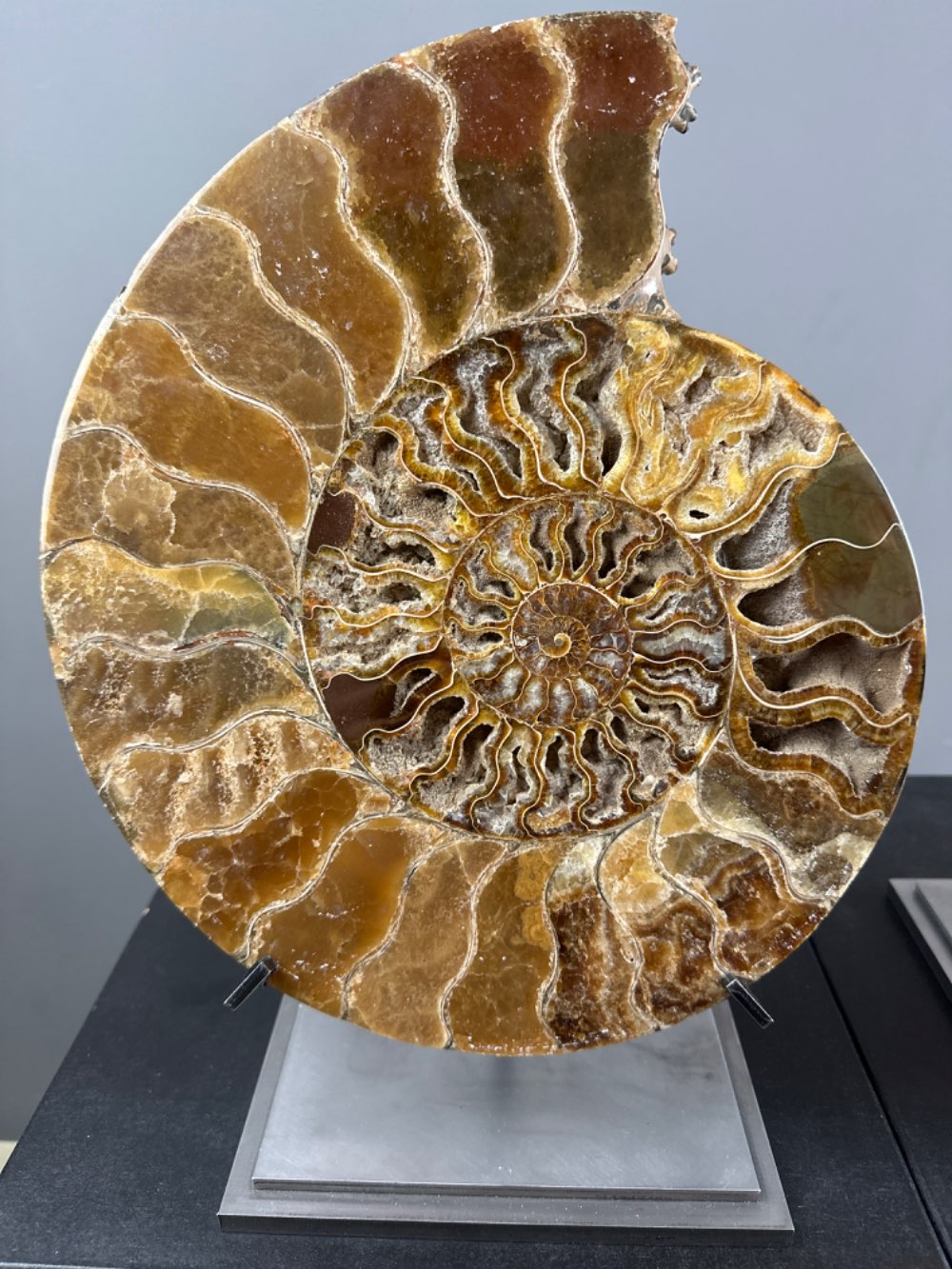
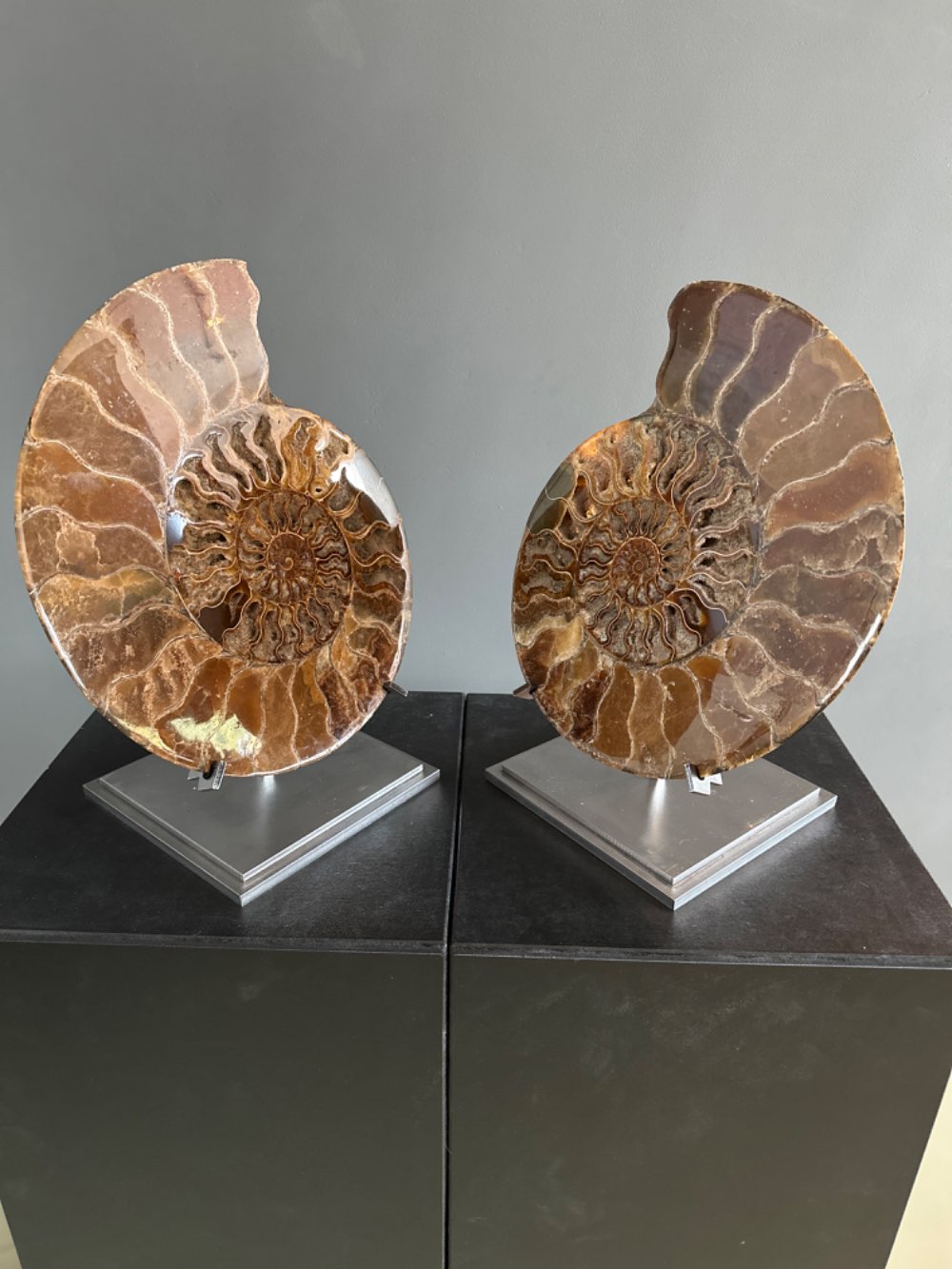
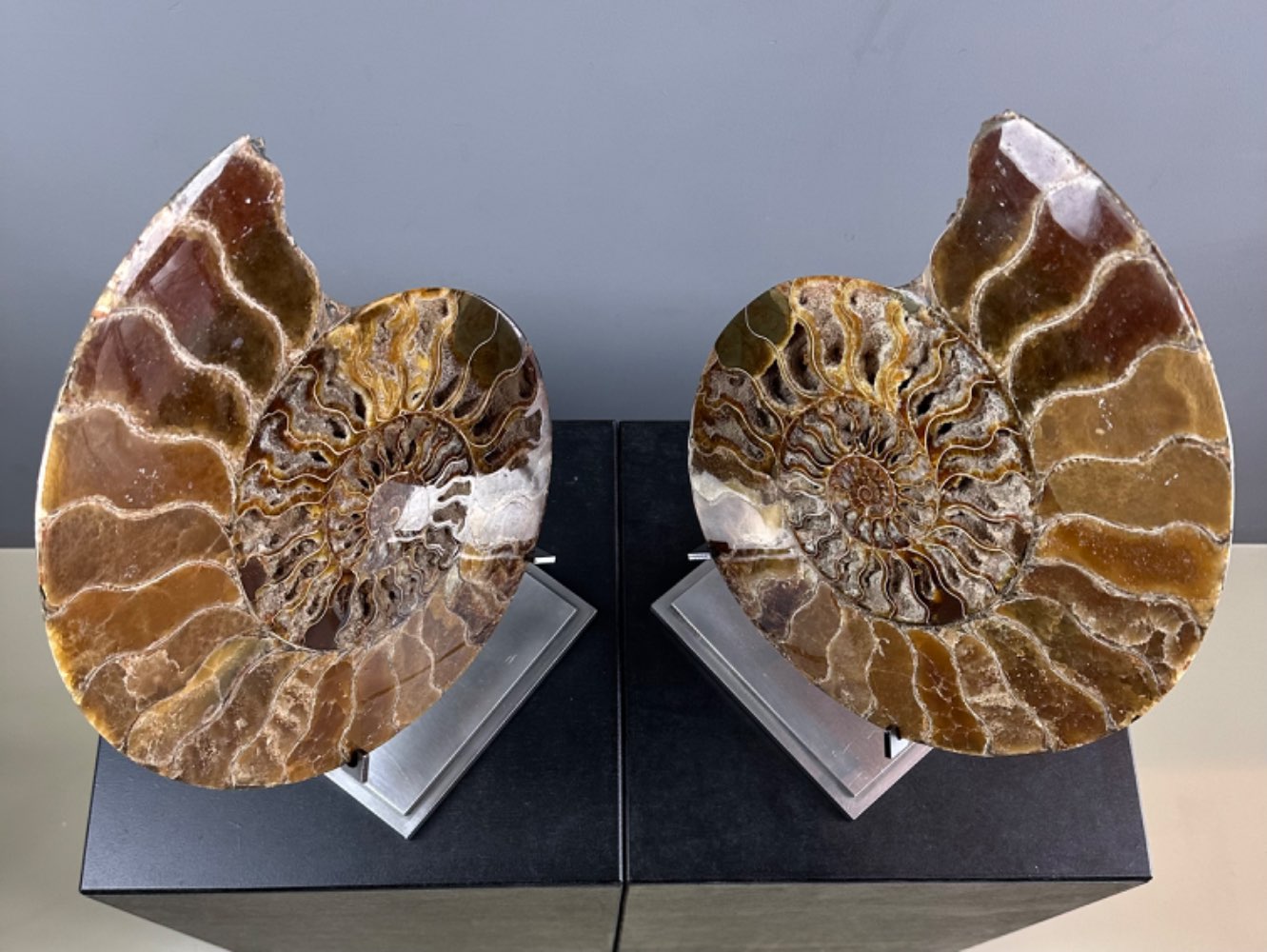
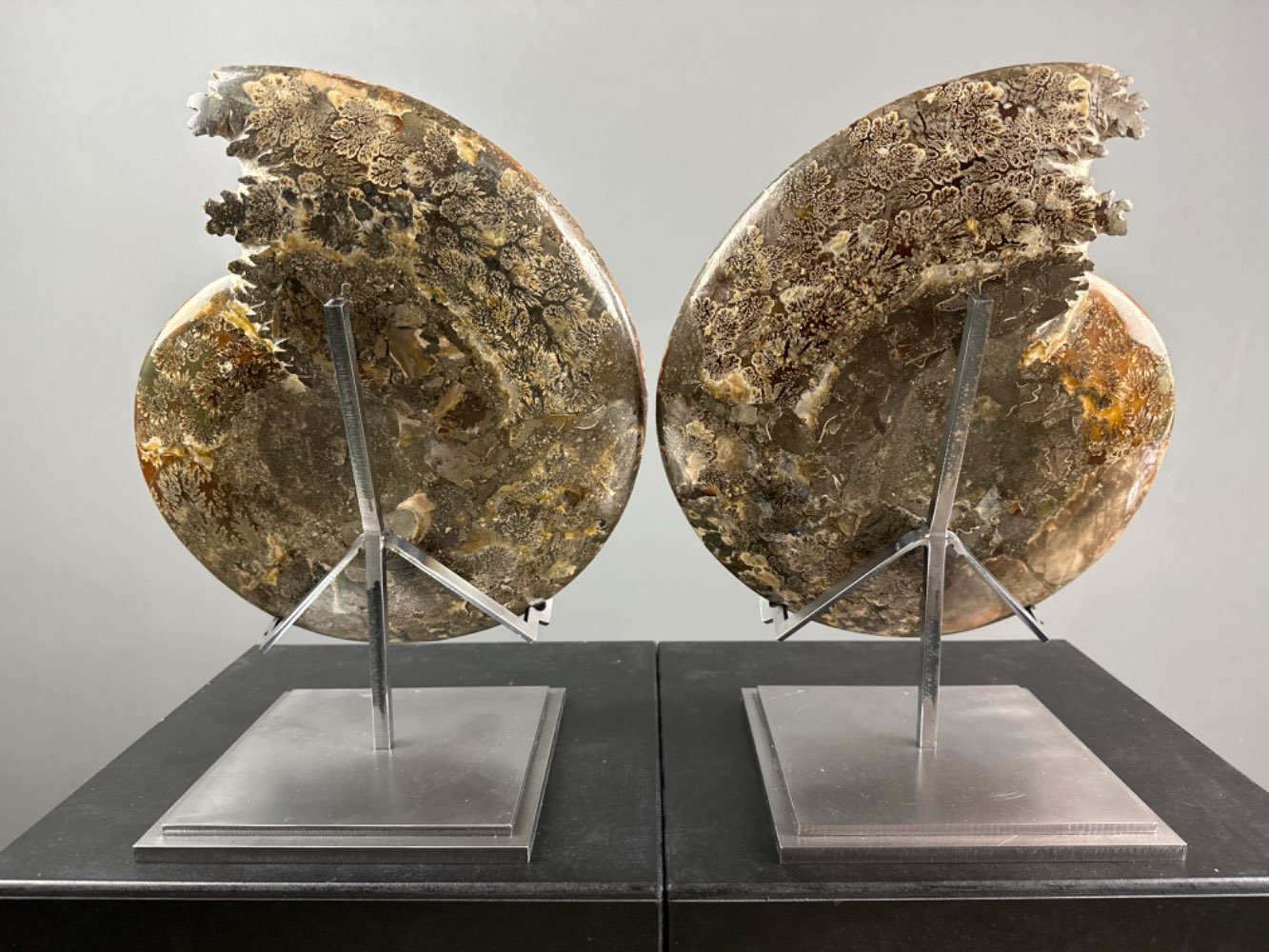
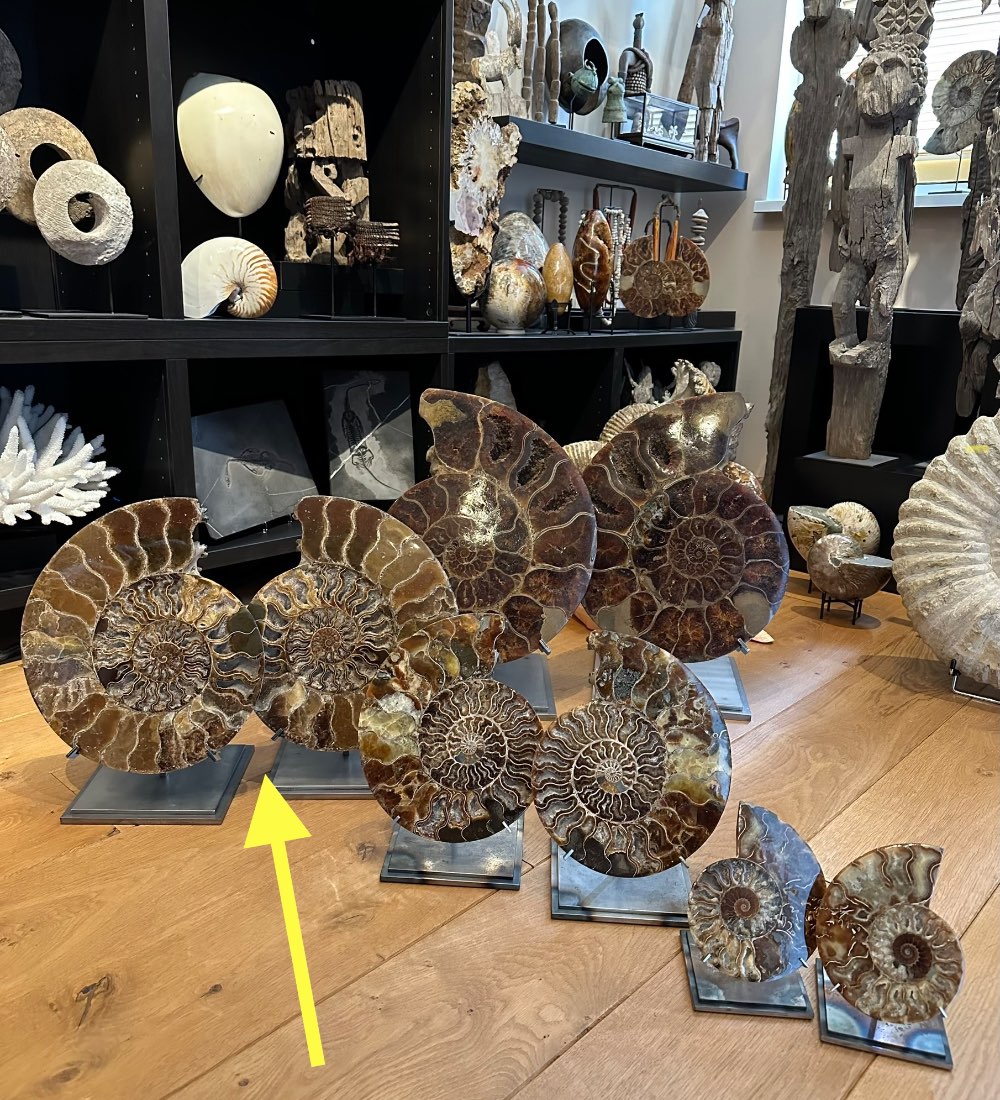
Beautiful large dissected ammonite Cleoniceras fossil from Madagascar
Beautiful large dissected ammonite Cleoniceras fossil from Madagascar
- Country: Madagascar
- Period: Lower Cretaceous (113 till 100.5 million years old)
- Material: Ammonite Cleoniceras fossil polished
- Size: 31 x 26 cm
- Weight: 5,068 gram
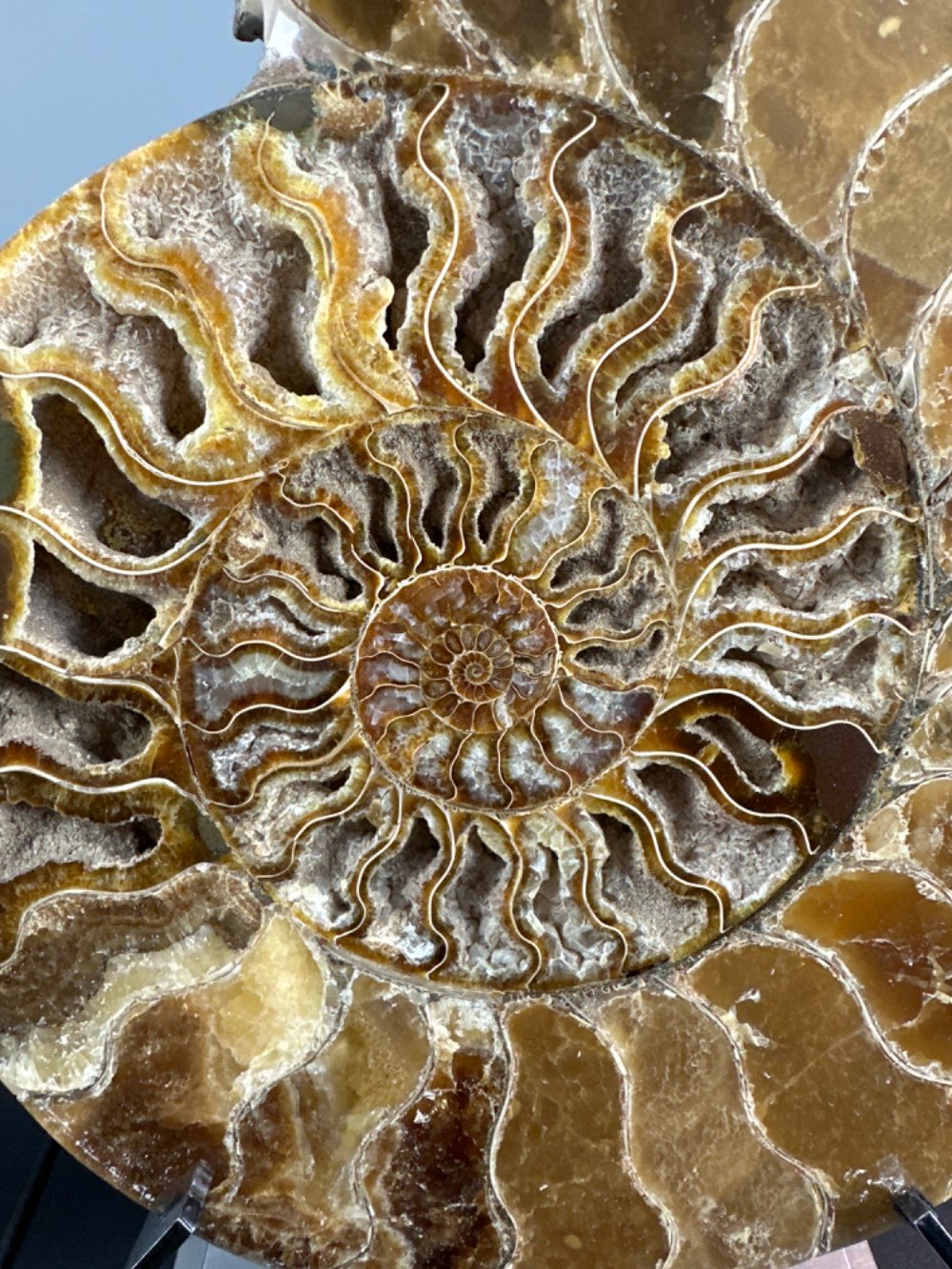
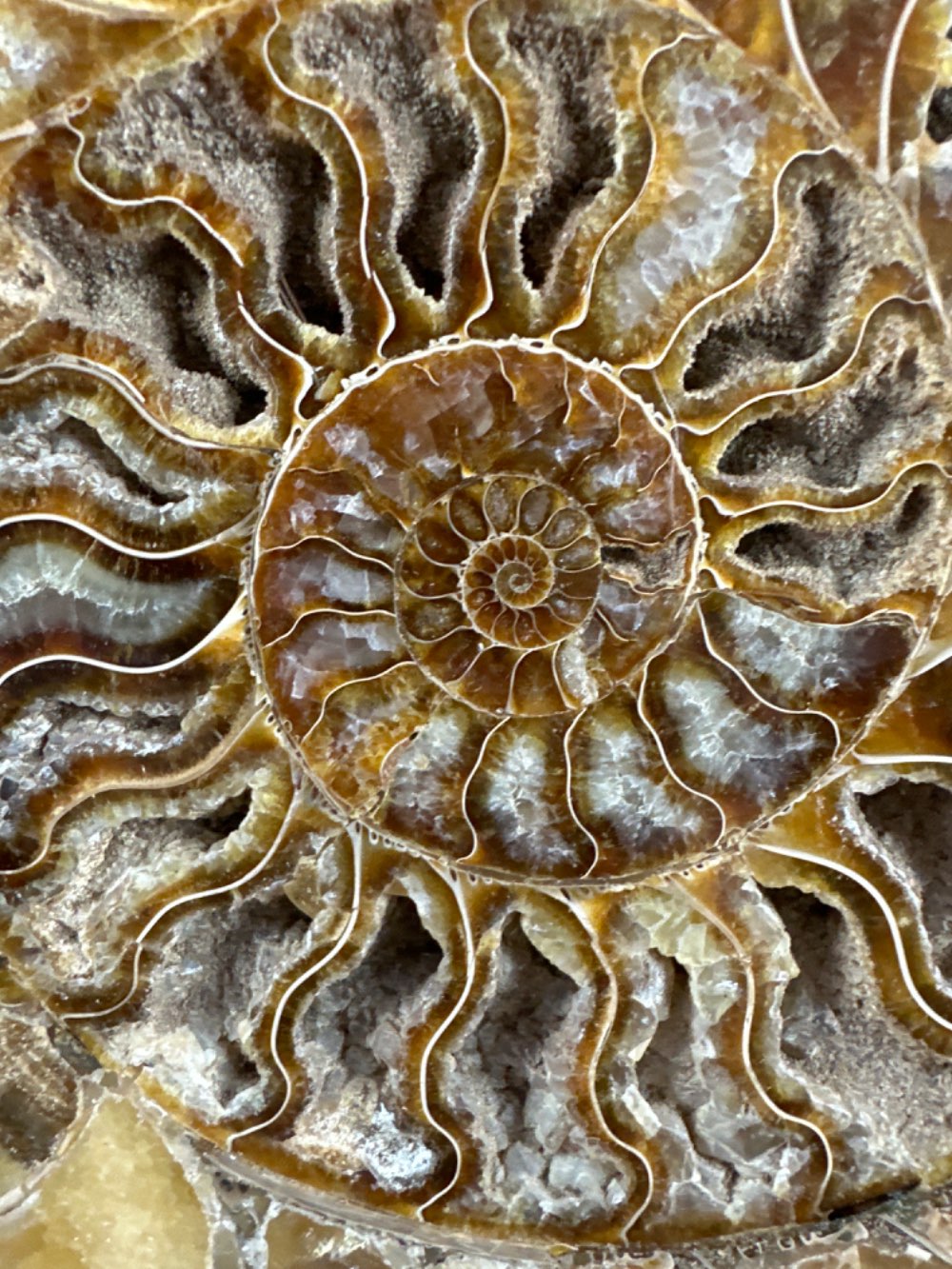
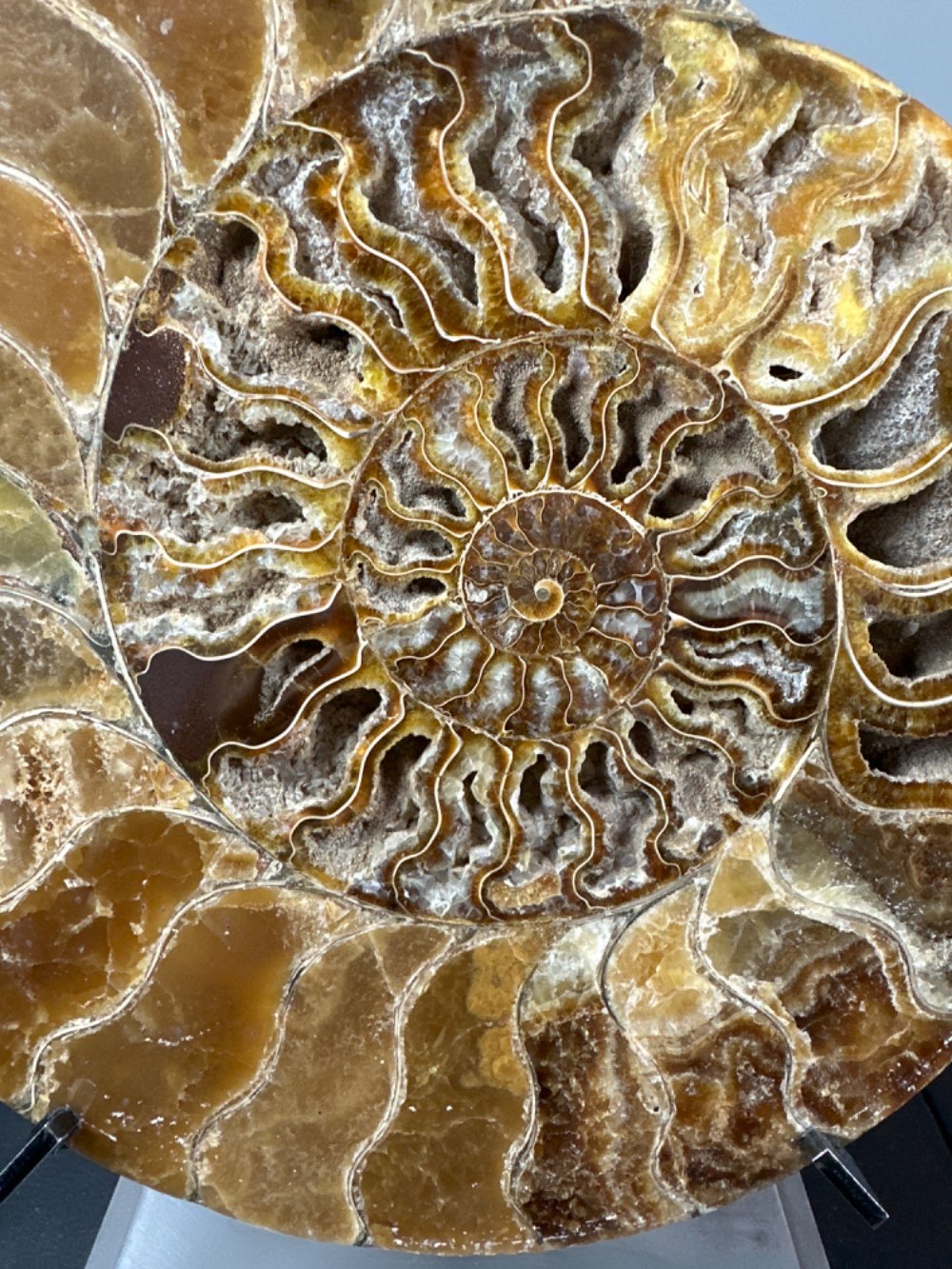
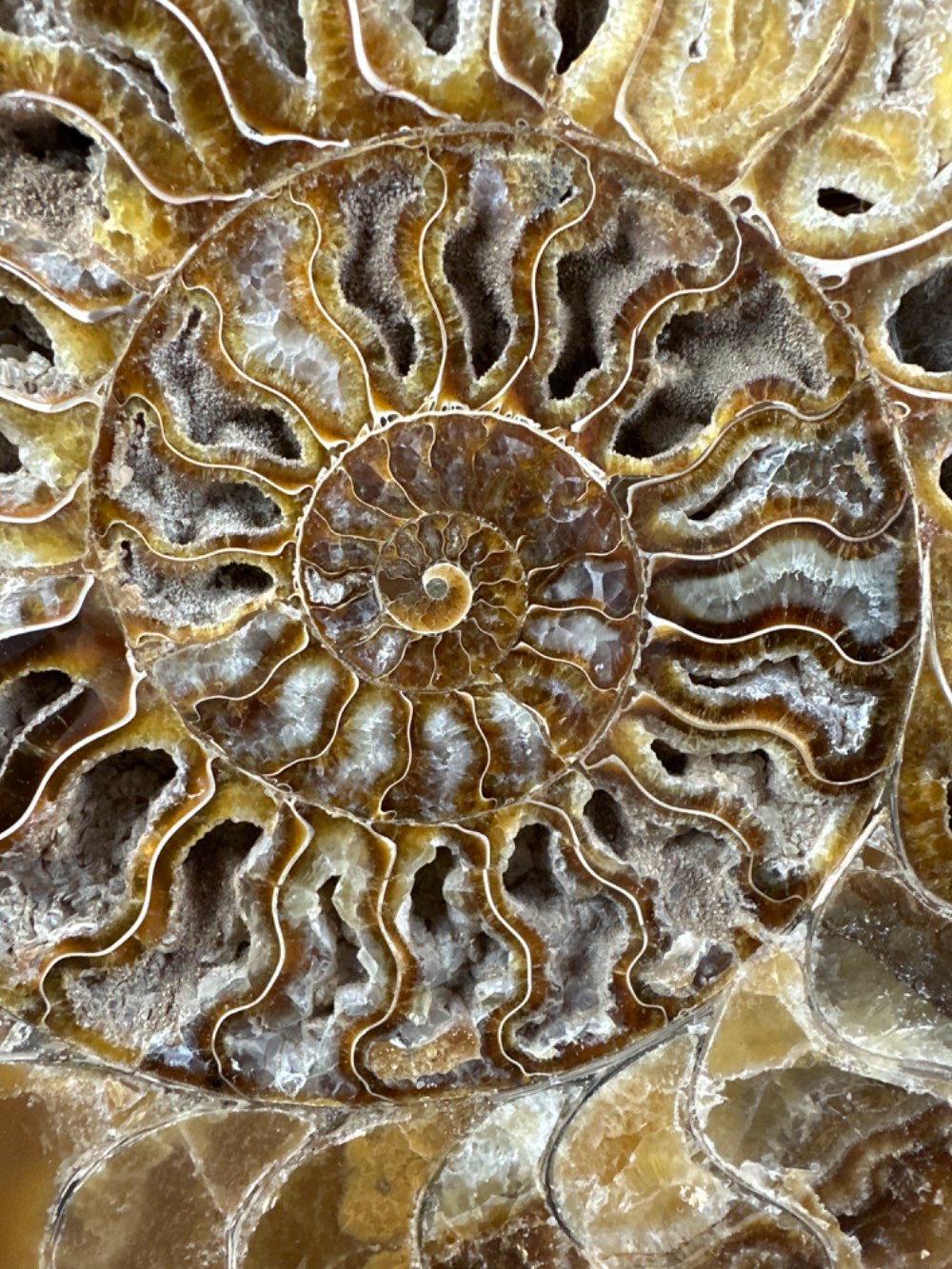
- This is an impressively large and exceptionally well-preserved specimen, has been meticulously dissected to reveal its intricate beauty. This ancient marvel exhibits a remarkable arrangement of Aragonite layers within its intricate chambers. The entire specimen has been skillfully polished to a mirror-like finish, transforming this historical relic into a flawless decorative masterpiece and a coveted collector's gem.
Custom made stand is included. Can be made black or have it rust to get the industrial feel.
-
Cleoniceras is a genus of extinct ammonites that lived during the Cretaceous period, which spanned from approximately 145 to 66 million years ago. Among the various ammonites, Cleoniceras is particularly notable for its distinctive shell morphology and its role in helping paleontologists understand the Earth's ancient oceans and ecosystems.
Here are some key facts and information about Cleoniceras ammonites:
1. Appearance: Cleoniceras ammonites possessed coiled shells with a beautifully intricate and symmetrical pattern. These shells could vary in size, with some reaching up to 8 inches (20 centimeters) in diameter, while others were smaller. The coiled shells of Cleoniceras featured numerous intricate, ribbed chambers.
2. Taxonomy: Cleoniceras belongs to the family of ammonites known as the "Desmoceratidae." These ammonites are characterized by the development of complex sutures, which are the lines where the internal chambers of the shell meet the outer shell wall.
3. Geological Range: Cleoniceras ammonites lived during the Cretaceous period, which encompassed a significant portion of the Mesozoic Era. They are particularly associated with the Upper Cretaceous period, which occurred roughly between 100 and 66 million years ago.
4. Distribution: Fossils of Cleoniceras ammonites have been discovered in various parts of the world, including North Africa, Madagascar, India, and the Middle East. Their wide distribution is indicative of the vast oceans and seaways that existed during the Cretaceous period.
5. Paleobiology: Like other ammonites, Cleoniceras is believed to have been a marine organism that inhabited ancient oceans. They likely had tentacles with which they captured prey, including small fish and plankton. Ammonites are thought to have been skilled swimmers, using jet propulsion to navigate through the water.
6. Extinction: Cleoniceras ammonites, like many other ammonite species, went extinct at the end of the Cretaceous period, around 66 million years ago. This mass extinction event, known as the Cretaceous-Paleogene (K-Pg) extinction event, wiped out a significant portion of Earth's biodiversity, including the dinosaurs.
7. Scientific Value: Cleoniceras fossils, like other ammonites, hold immense scientific value for paleontologists and geologists. The study of Cleoniceras shells provides valuable insights into the ancient oceans, climate, and evolutionary history of marine life during the Cretaceous period.
Today, Cleoniceras ammonites are treasured specimens in the field of paleontology and are highly sought after by fossil collectors and enthusiasts for their exquisite beauty and scientific significance. These ancient marine creatures continue to inspire our understanding of the Earth's distant past and the diverse life forms that once thrived in prehistoric oceans.
Please send an e-mail via below form, WhatsApp or call to order or get more information about this object.
We can communicate in English, Deutsch and Nederlands!
Related products
 Beautiful ammonite fossil divided into two parts from Madagascar
 Nice ammonite Cleoniceras with mouth fossil from Madagascar
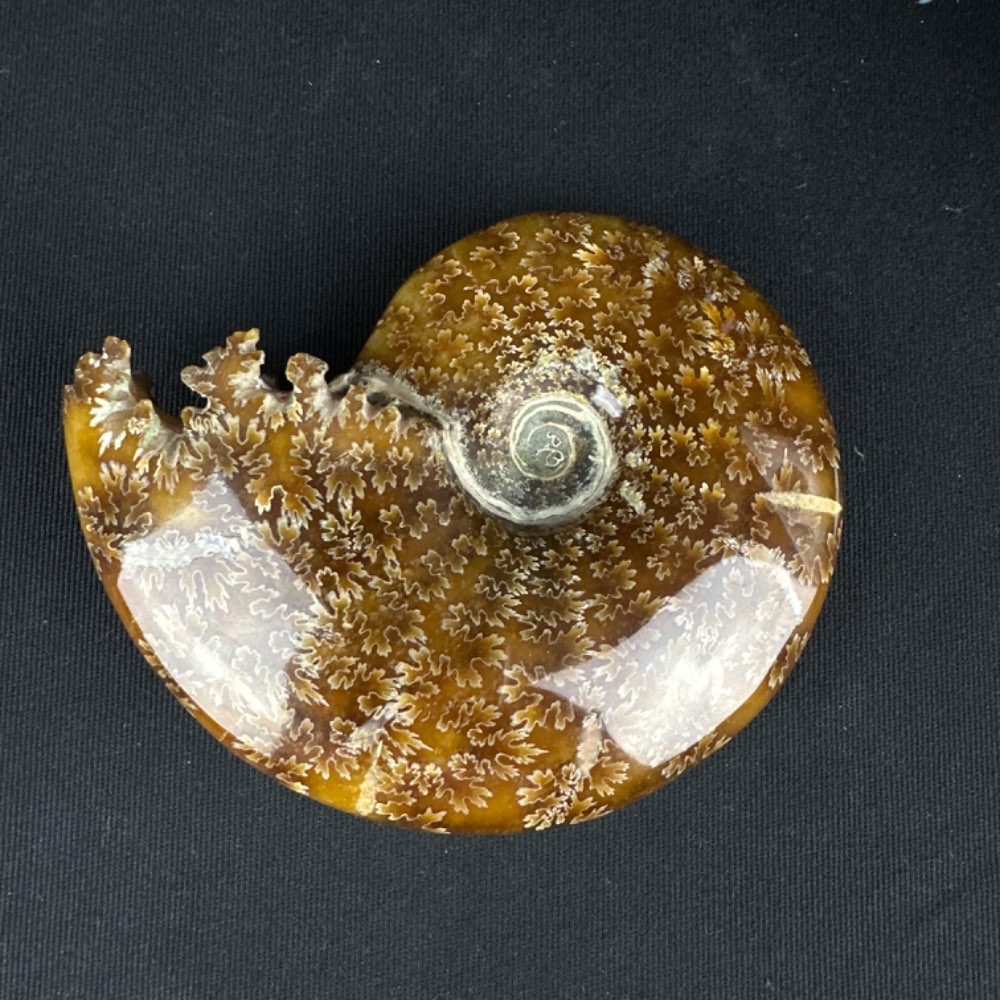 Cute ammonite Cleoniceras with mouth fossil from Madagascar
 Nice ammonite Cleoniceras with mouth fossil from Madagascar
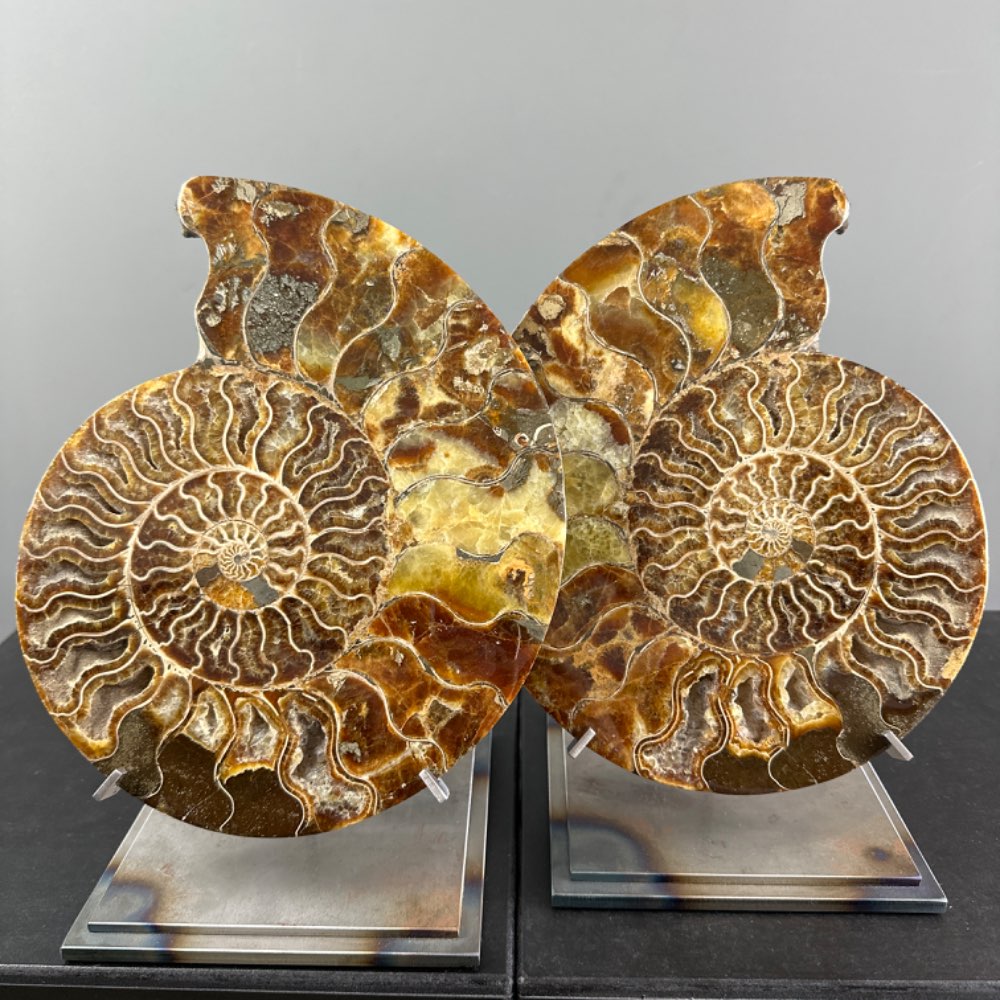 Beautiful dissected ammonite Cleoniceras fossil from Madagascar
Beautiful large dissected ammonite Cleoniceras fossil from Madagascar