
Double click image to enlarge
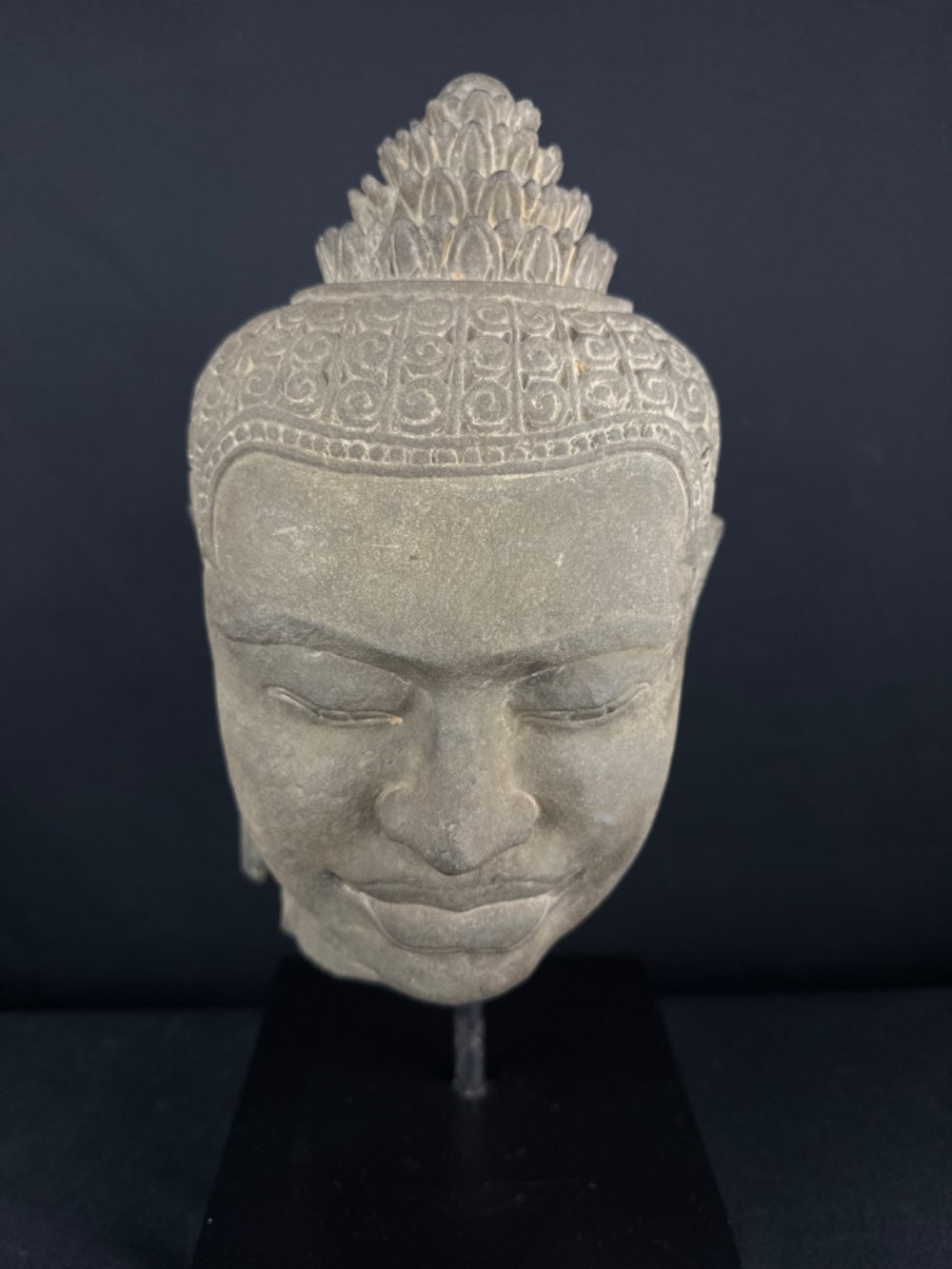
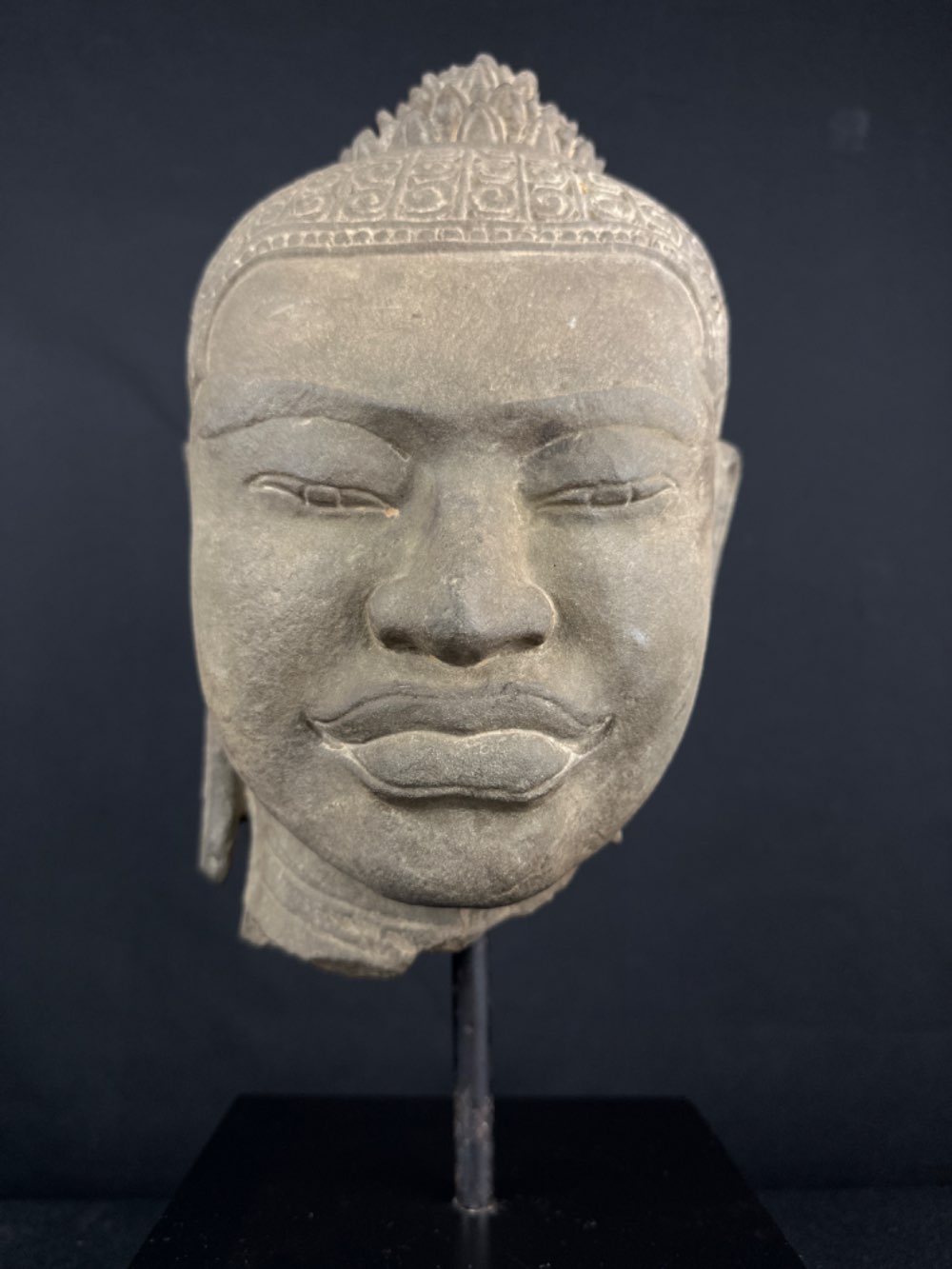
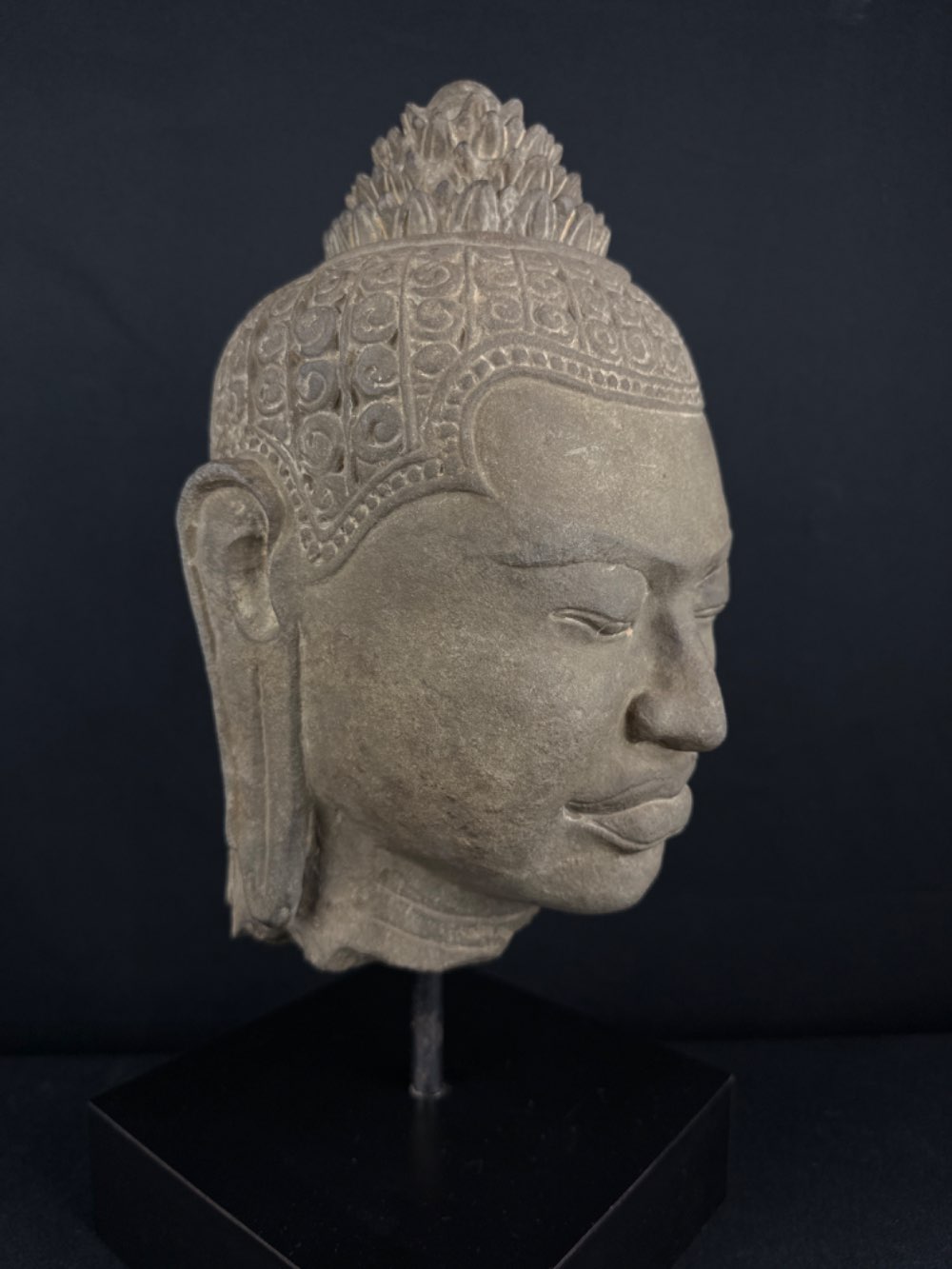
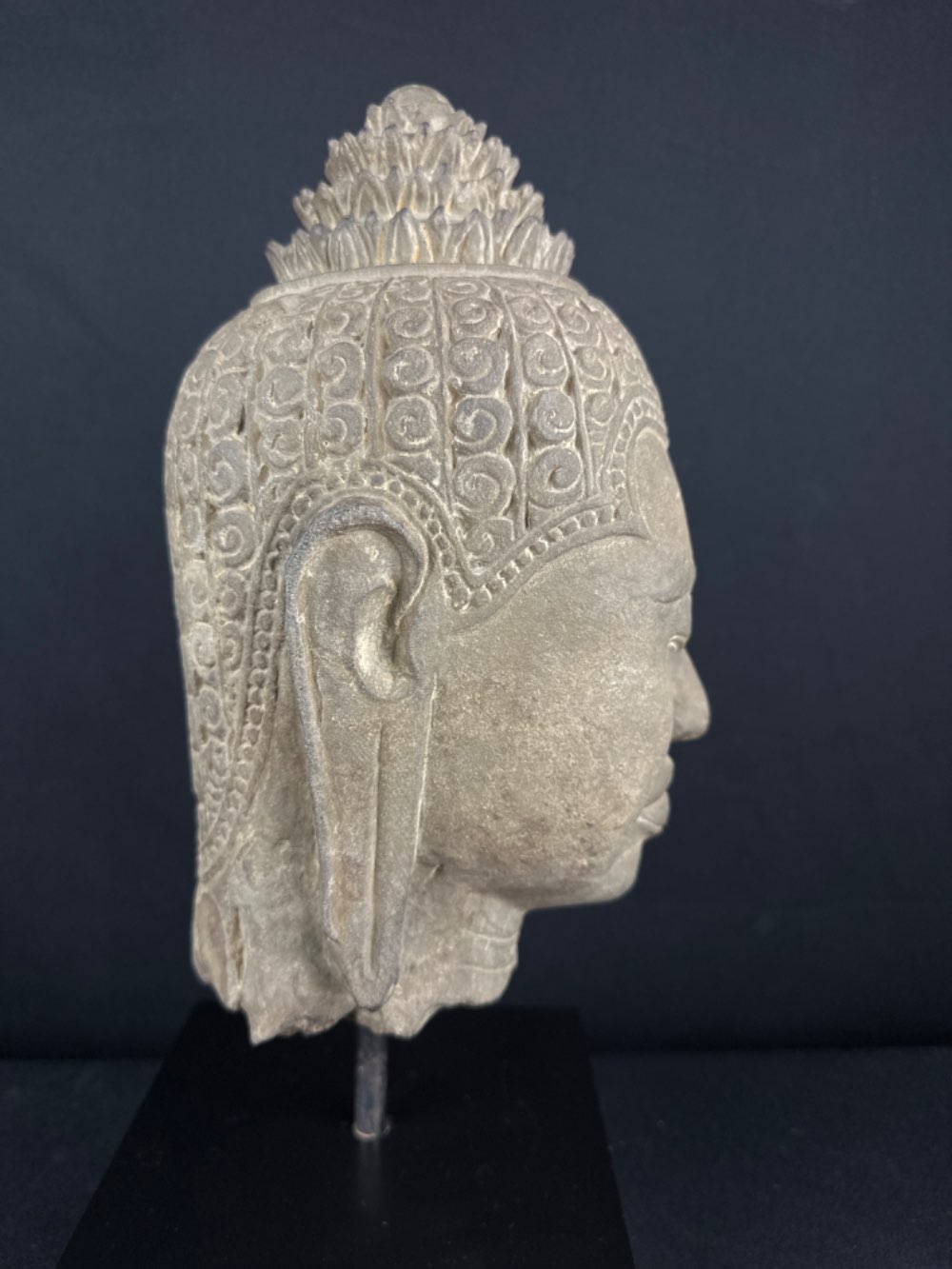
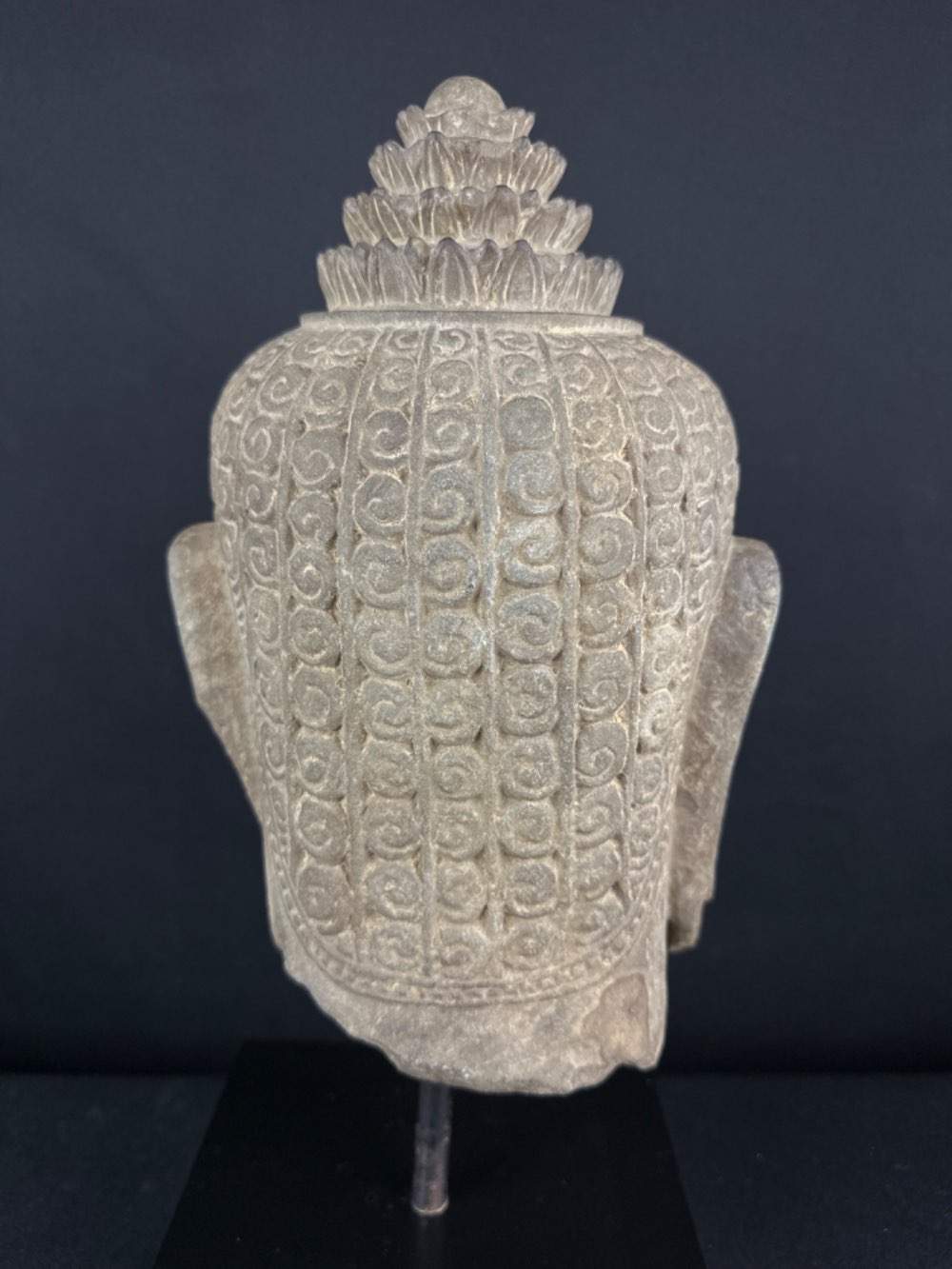
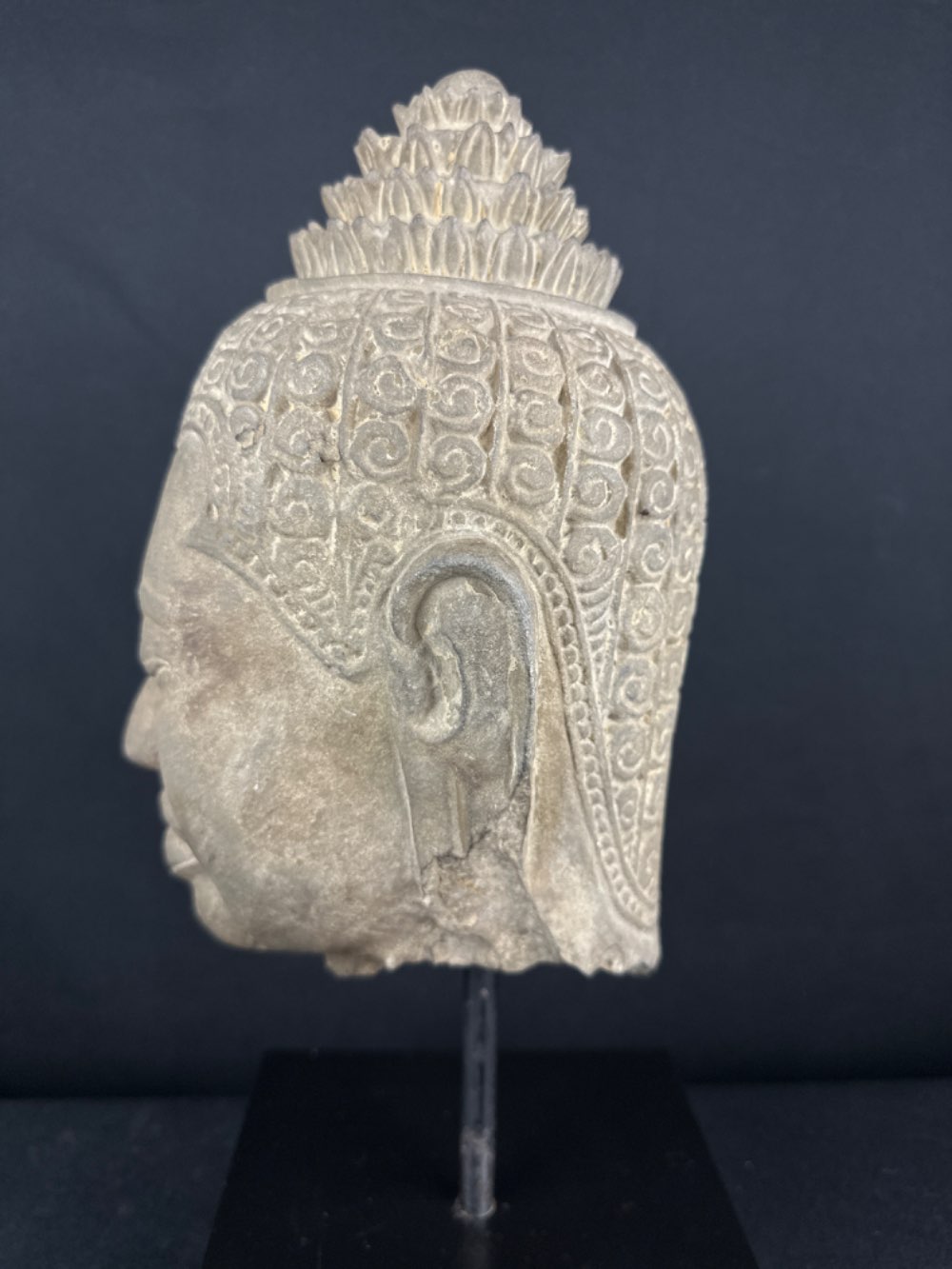
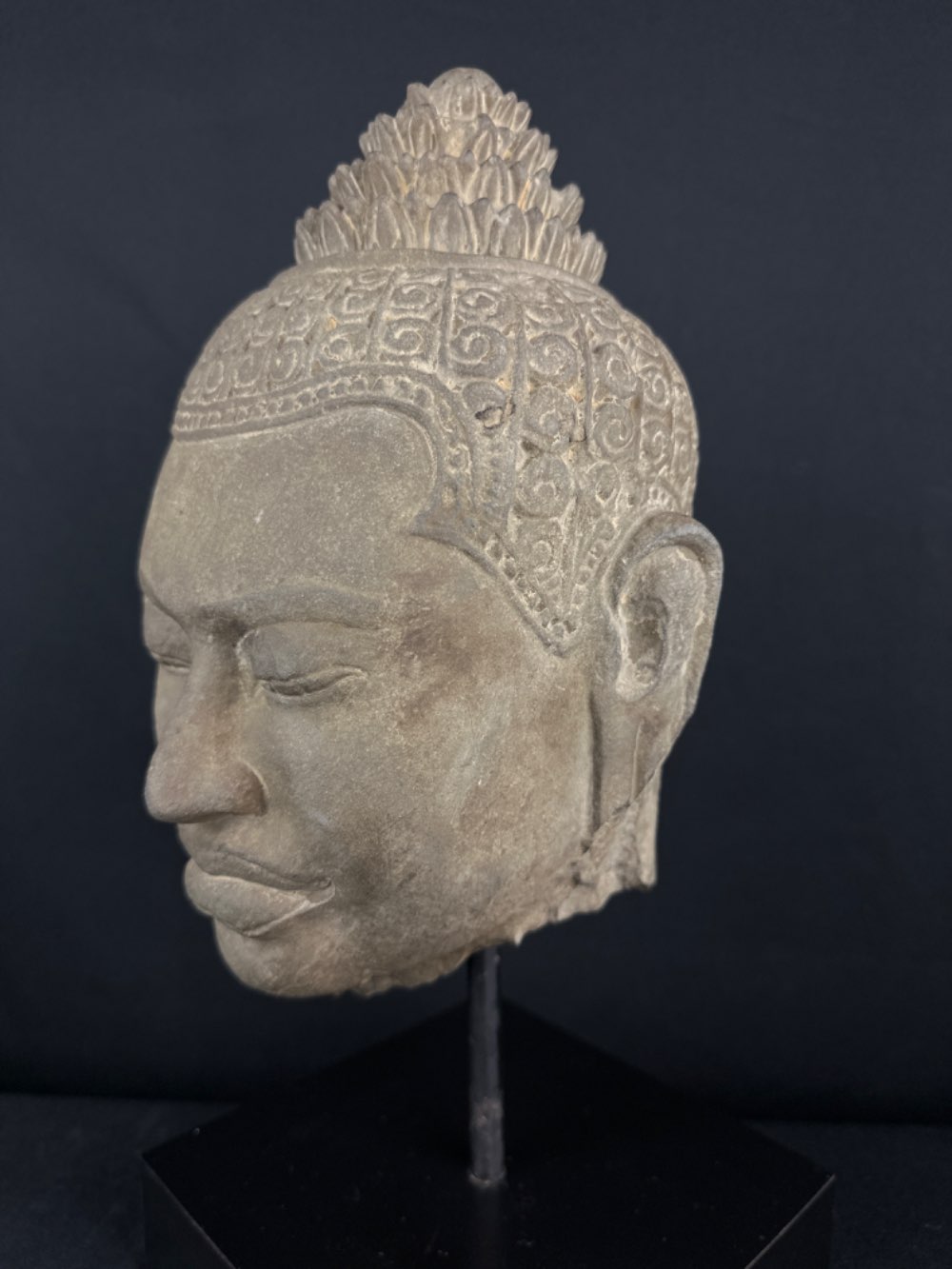
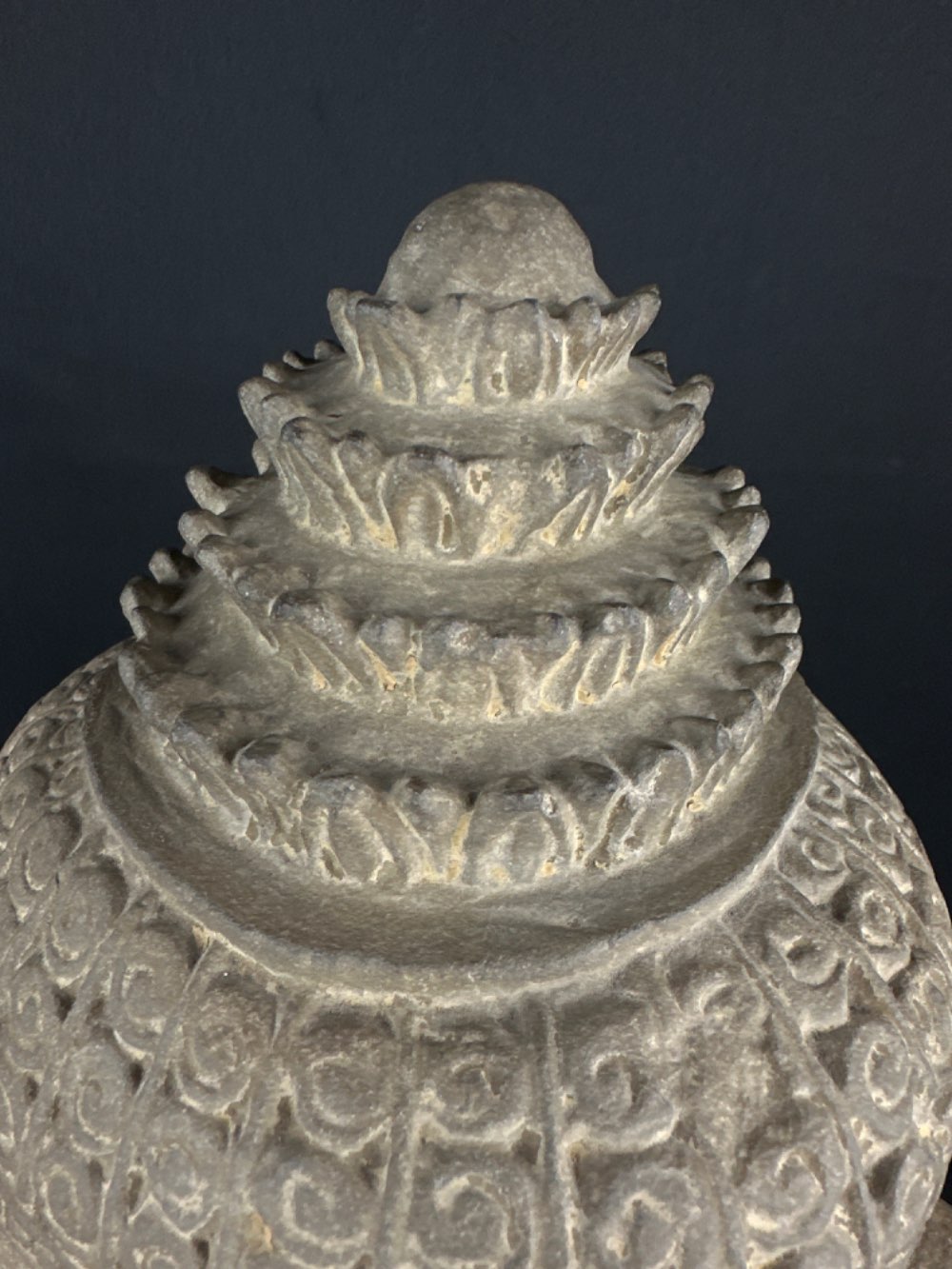
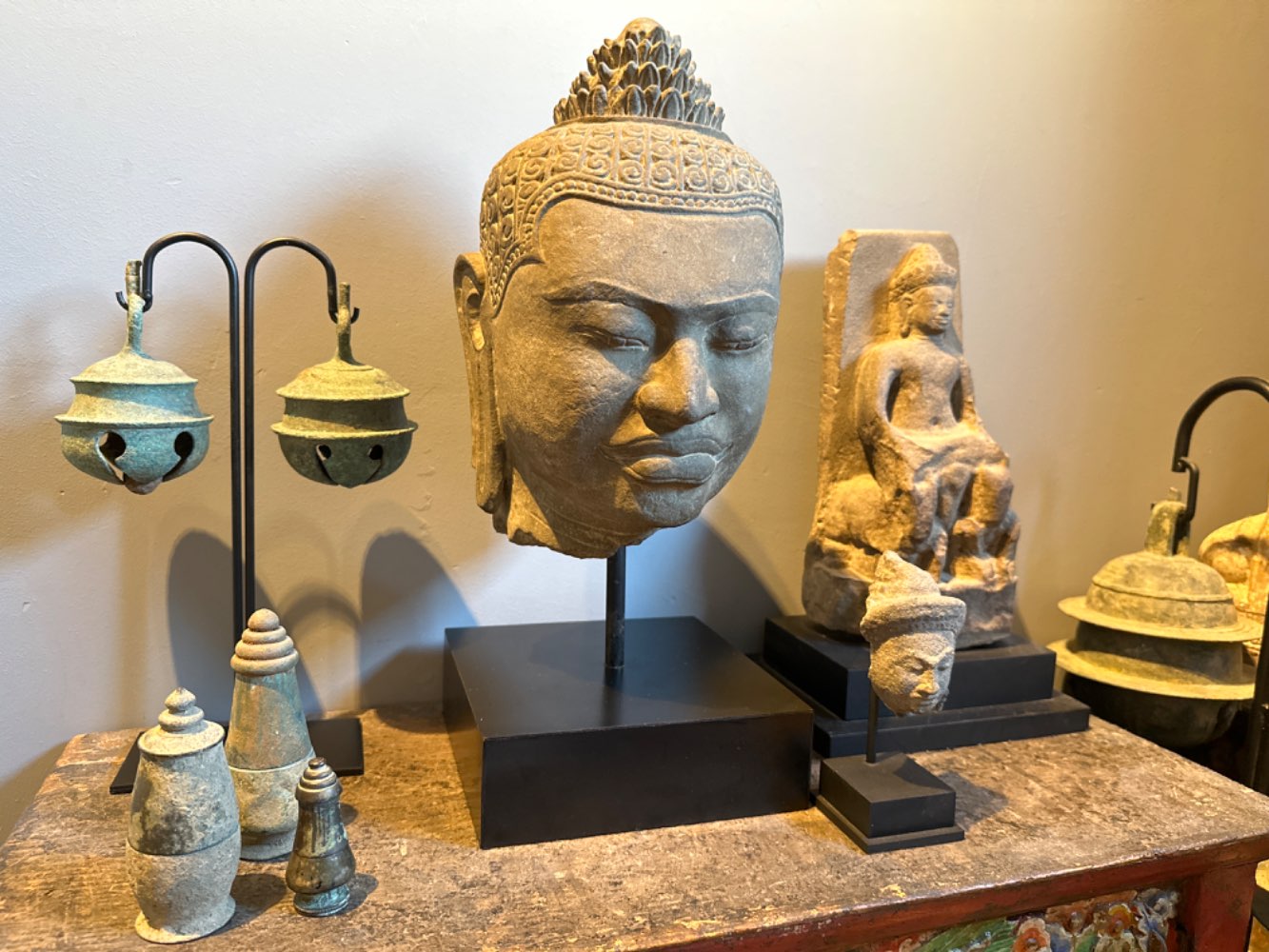
Beautiful sandstone Khmer Buddha head from Cambodia, post Bayon 14-15th century
Beautiful sandstone Khmer Buddha head from Cambodia, post Bayon 14-15th century
- Country: Cambodia, Khmer
- Period: 14-15th Century, post Bayon
- Material: Sandstone
- Size: 29 x 18 cm (43 cm stand)
- Khmer Buddha heads are a notable and distinctive form of sculpture that originated in the Khmer Empire, an ancient civilization that thrived in Southeast Asia, particularly in what is now modern-day Cambodia, from roughly the 9th to the 15th century. These sculptures are highly regarded for their artistic and cultural significance, as they represent a unique blend of Hindu and Buddhist traditions and reflect the rich religious and artistic history of the Khmer people.
Here are some key characteristics and information about Khmer Buddha heads:
-
Iconography: Khmer Buddha heads typically depict the head of the Buddha, often shown with serene and meditative expressions. These sculptures emphasize the spiritual aspect of the Buddha, focusing on the wisdom, compassion, and inner peace associated with him.
-
Style: Khmer Buddha heads are known for their exquisite craftsmanship and attention to detail. They exhibit a distinct style characterized by elongated faces, almond-shaped eyes, arched eyebrows, a high, domed forehead, and a topknot or ushnisha, which symbolizes the Buddha's spiritual awakening.
-
Material: These sculptures were typically carved from stone, with sandstone being a commonly used material. The choice of stone allowed for intricate detailing and provided durability to withstand the test of time.
-
Cultural Significance: The creation of Khmer Buddha heads reflects the syncretism of religious beliefs in the Khmer Empire. While Buddhism became the predominant religion, elements of Hinduism continued to influence Khmer art and culture. As a result, some Khmer Buddha heads may display attributes of both Hindu and Buddhist deities, such as the third eye associated with Shiva.
-
Historical Context: Khmer Buddha heads were created during the height of the Khmer Empire's power, particularly during the reign of King Jayavarman II and his successors. These sculptures were often commissioned for use in religious temples and shrines, serving as objects of veneration and devotion.
-
Archaeological Discoveries: Many Khmer Buddha heads have been discovered at archaeological sites throughout Cambodia, particularly at the famous temple complex of Angkor Wat. These discoveries have provided valuable insights into the religious practices and artistic achievements of the Khmer civilization.
-
Preservation and Repatriation: In recent years, there have been efforts to preserve and protect Khmer Buddha heads, as some have been illegally removed from their original locations and sold on the international art market. Cambodia has sought the repatriation of these stolen artifacts to return them to their cultural and historical context.
Khmer Buddha heads are not only significant for their artistic beauty but also for the insights they offer into the spiritual and cultural history of the Khmer Empire. They continue to be admired and studied by art historians, archaeologists, and those interested in the rich heritage of Southeast Asia.
Please send an e-mail via below form, WhatsApp or call to order or get more information about this object.
We can communicate in English, Deutsch and Nederlands!
Beautiful sandstone Khmer Buddha head from Cambodia, post Bayon 14-15th century