


Double click image to enlarge
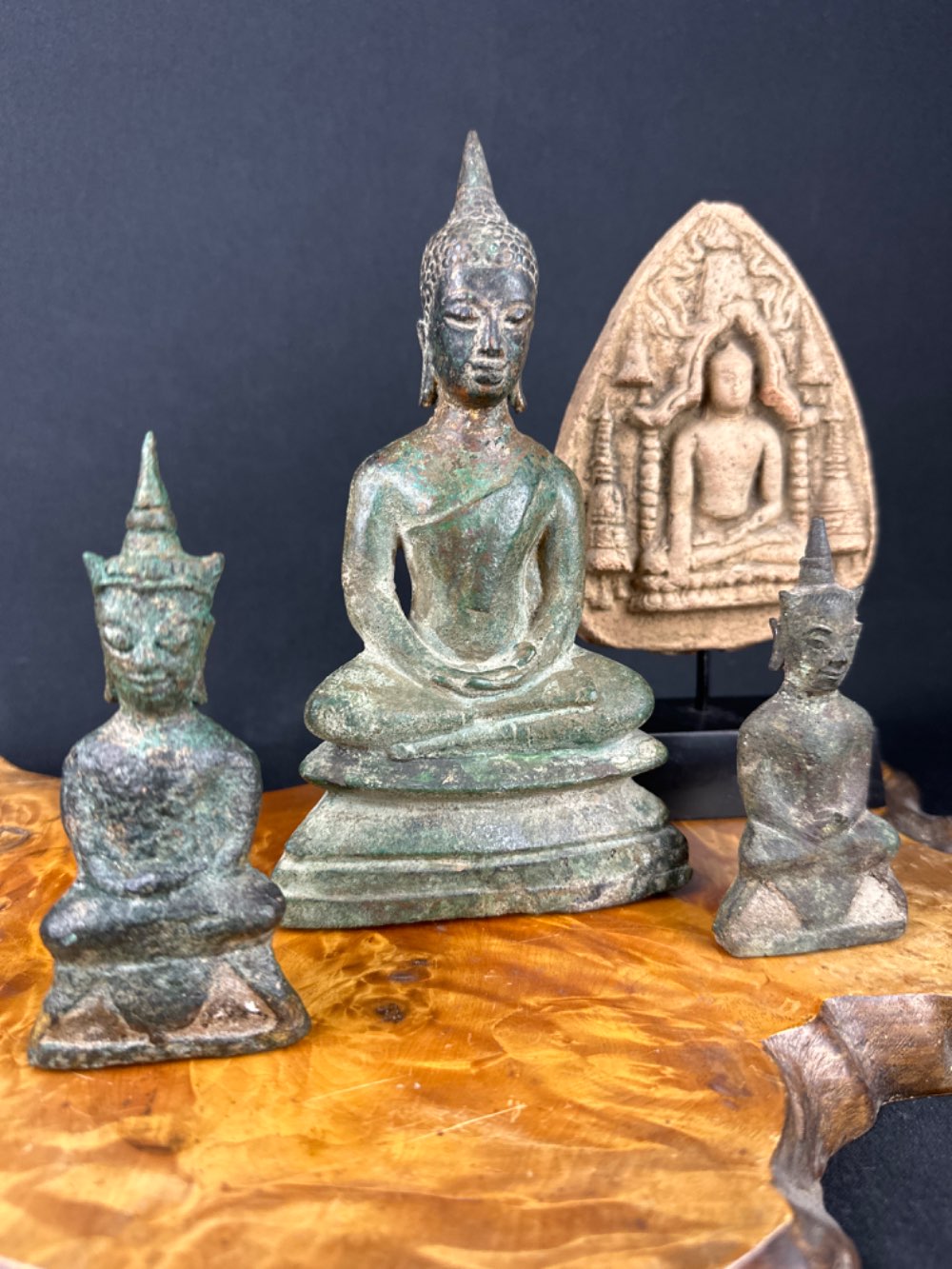
Bronze Thai Ayutthaya Buddha, around 17-18th Century
Bronze Thai Ayutthaya Buddha, around 17-18th Century
- Country: Thailand
- Period: around 17-18th century, Ayutthaya
- Material: Bronze
- Size: 16.5 cm
- Buddha is sitting in the Dhyana Mudra
- Head has been rejoined and the base at the back has some restauration.
- Comes from an old Dutch collection.
Dhyana Mudra (Meditation): The Dhyana mudra represents deep concentration and meditation. Both hands rest in the lap, palms facing upward, right hand atop the left, with thumbs touching in a circular form. It signifies tranquility, focus, and inner peace.
During the Ayutthaya period in Thailand (1351–1767 AD), the art of crafting Buddha statues underwent distinct stylistic evolutions, reflecting cultural, religious, and artistic elements prevalent during that era.
Characteristics of Buddha Statues in the Ayutthaya Period:
-
Artistic Representation: Buddha statues from the Ayutthaya period embodied specific characteristics that set them apart. These statues often depicted a tranquil countenance, elongated earlobes, downcast eyes, and a serene smile, symbolizing meditative peace, wisdom, and compassion.
-
Mudras and Postures: These statues showcased various hand gestures (mudras) and body postures reflecting different aspects of the Buddha's life and teachings. Mudras like the "Calling the Earth to Witness" and postures such as sitting, standing, walking, or reclining were common, each carrying specific spiritual meanings.
-
Attire and Adornments: Buddha statues were typically clothed in draped robes with intricate folds, displaying the grace and beauty of Thai textile artistry. They might be adorned with decorative accessories, including crowns, necklaces, and other embellishments, symbolizing the Buddha's regal heritage.
-
Materials and Techniques: Skilled artisans crafted Buddha statues using various materials such as bronze, stone, or stucco. Techniques like casting, carving, and sculpting were employed to create these statues, showcasing the artisans' craftsmanship and attention to detail.
-
Spiritual Significance: Buddha statues of the Ayutthaya period were revered as objects of veneration and spiritual inspiration. They were enshrined in temples, serving as focal points for religious devotion, rituals, and ceremonies, and acted as embodiments of the Buddha's teachings.
-
Cultural Synthesis: These statues were influenced by a blend of indigenous Thai artistic traditions, Theravada Buddhist philosophy, and regional artistic influences from neighboring regions, resulting in a distinctive and culturally rich artistic style.
Buddha statues from the Ayutthaya period symbolize not just artistic finesse but also spiritual and cultural significance. They stand as enduring representations of devotion, enlightenment, and the rich heritage of Thai Buddhism during that era.
Please send an e-mail via below form, WhatsApp or call to order or get more information about this object.
We can communicate in English, Deutsch and Nederlands!
Bronze Thai Ayutthaya Buddha, around 17-18th Century