

Double click image to enlarge
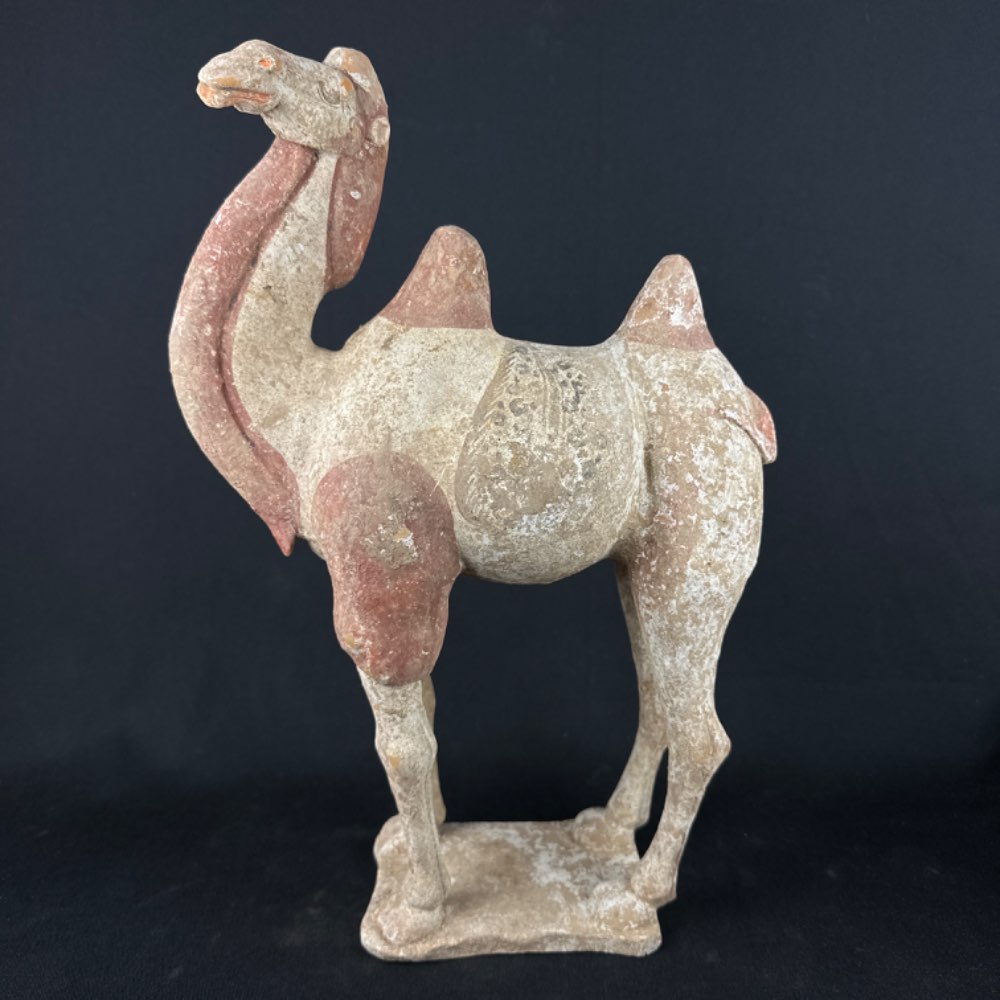
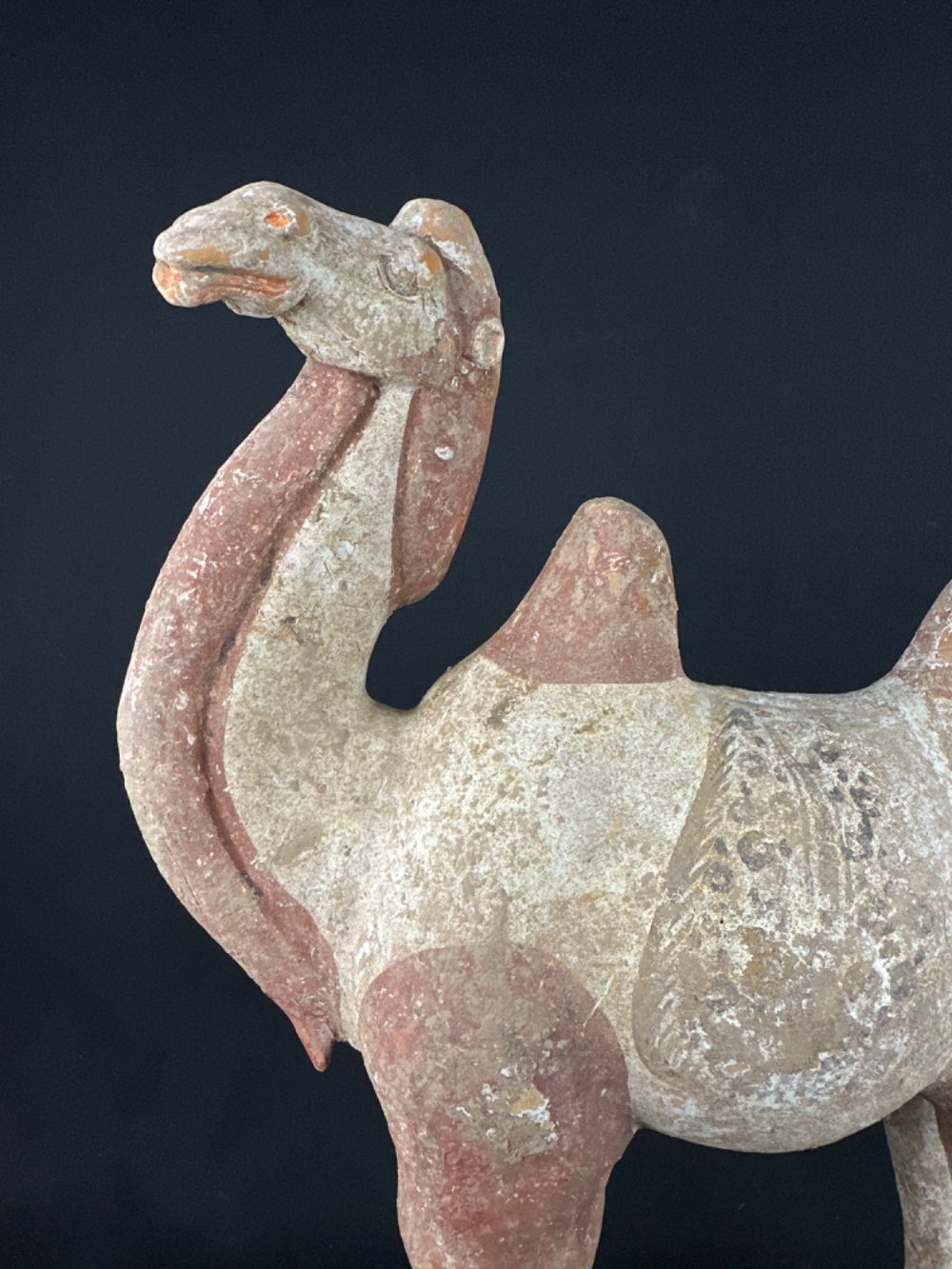
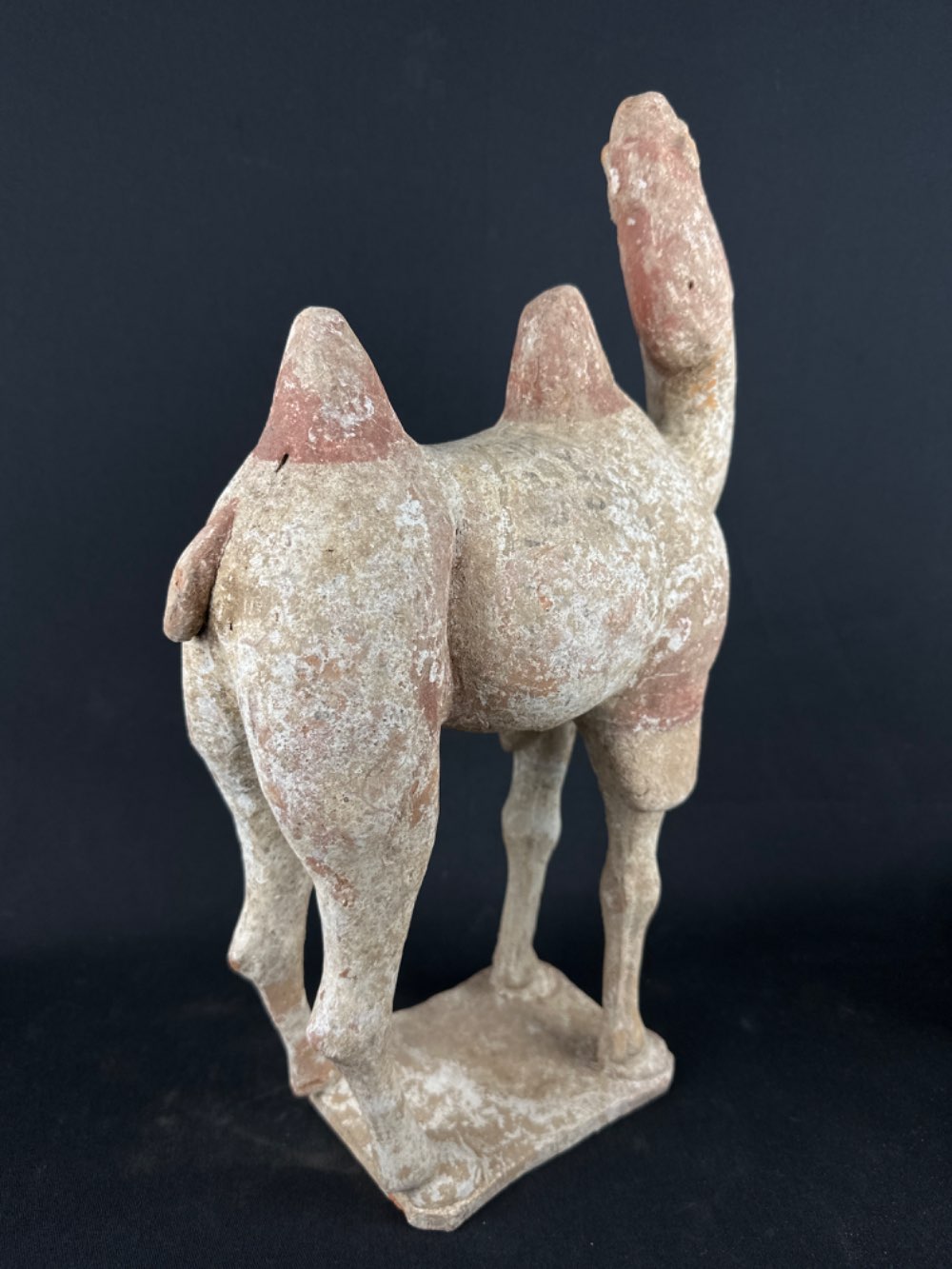
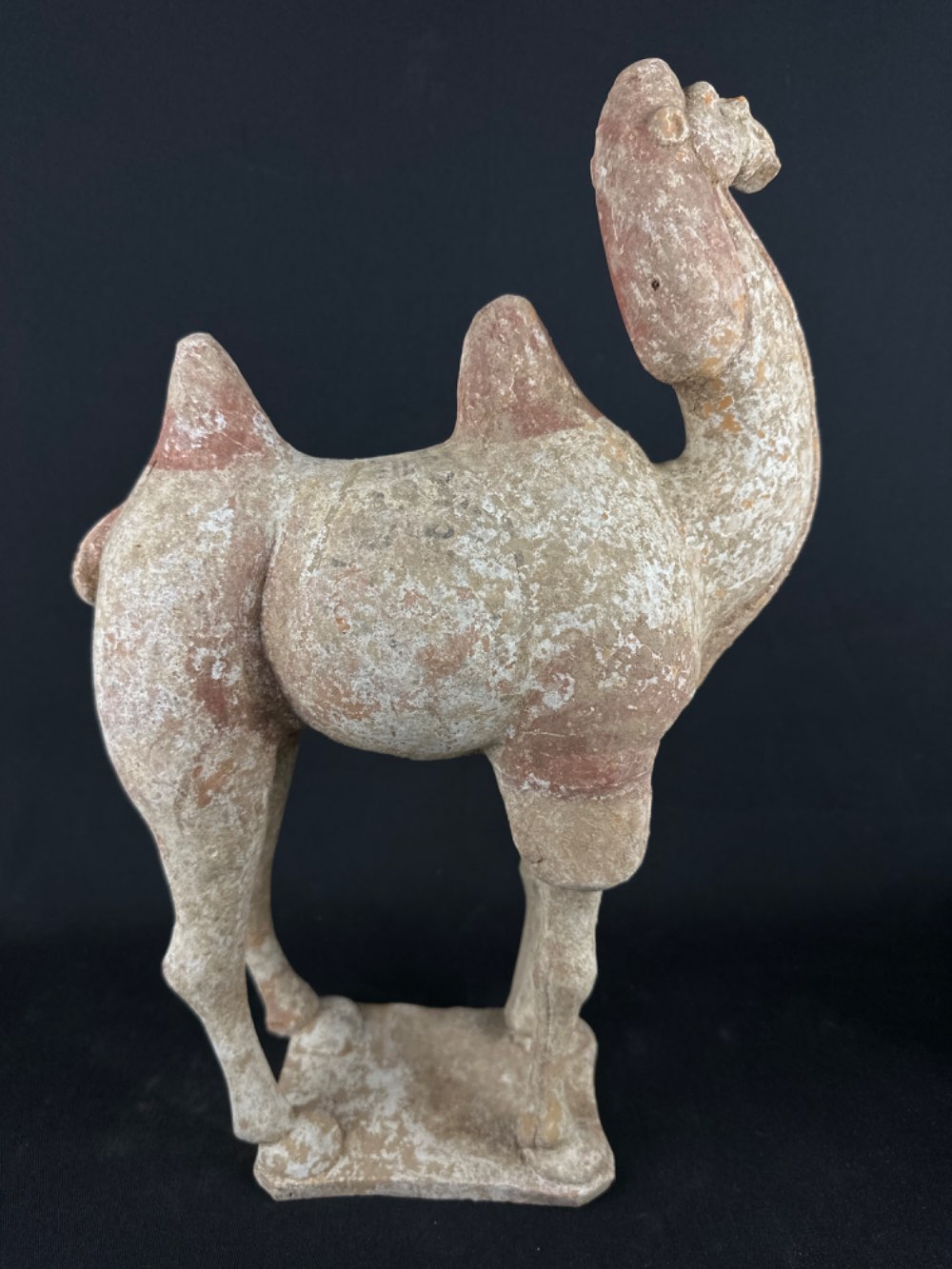
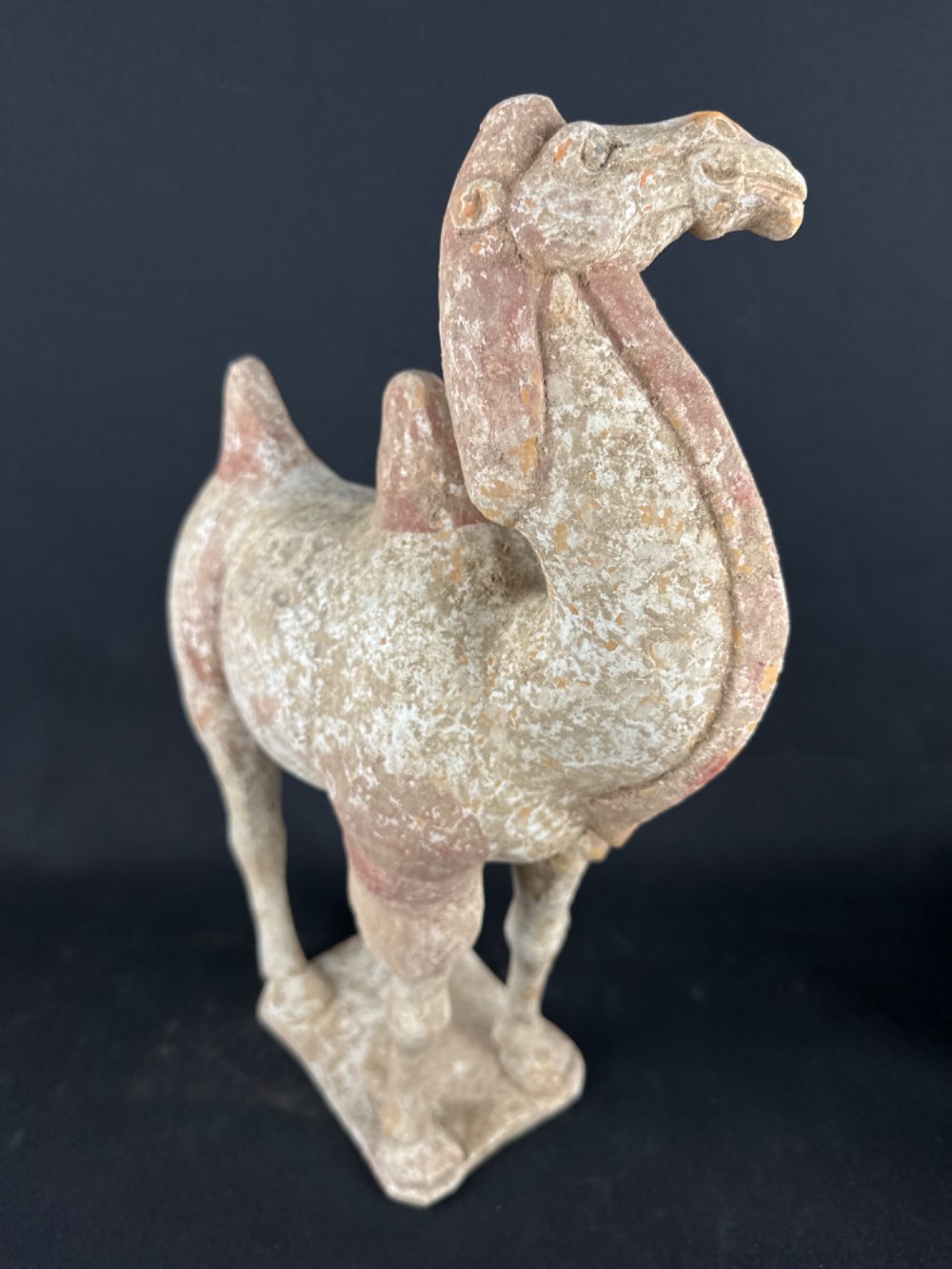
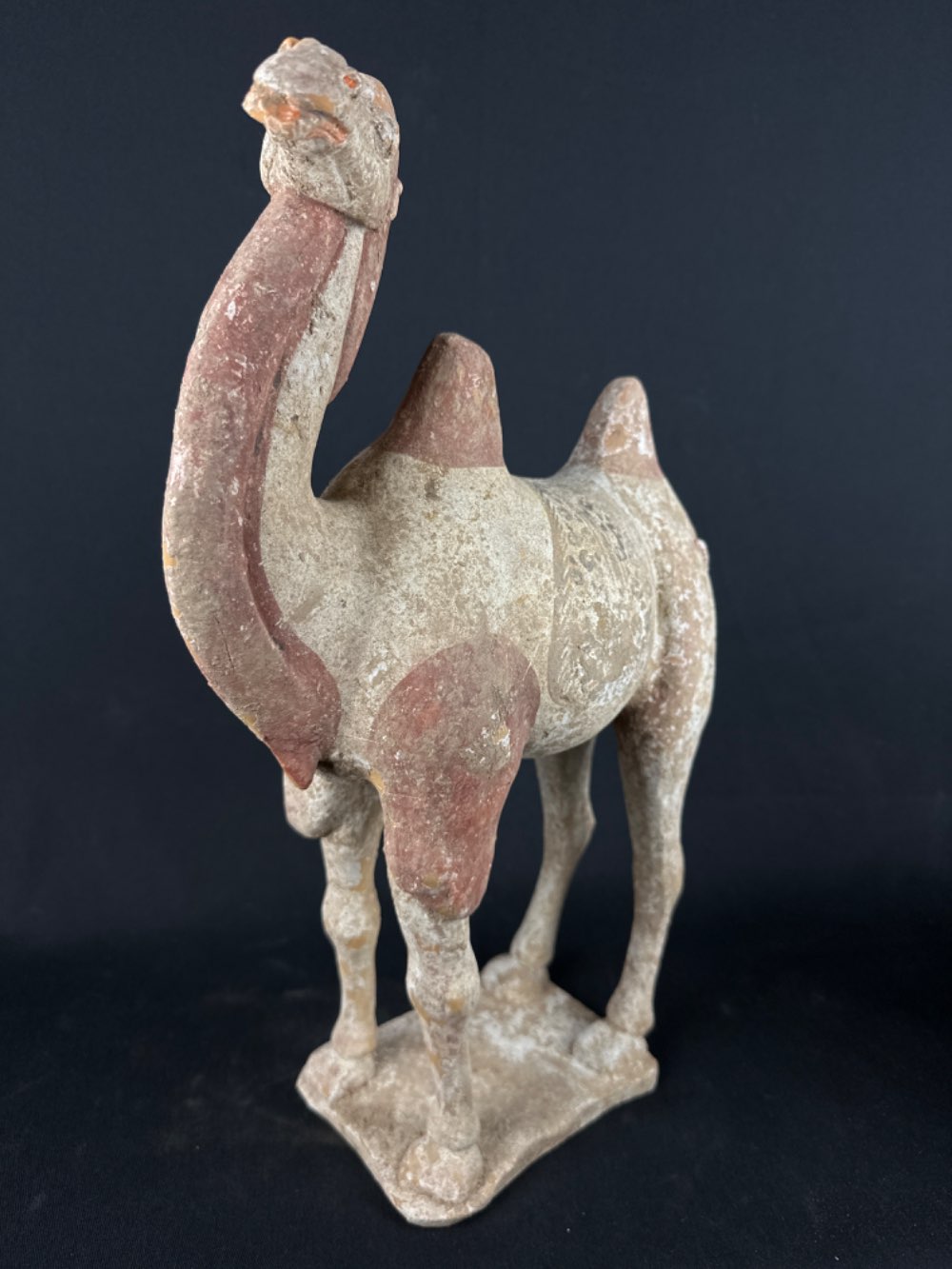
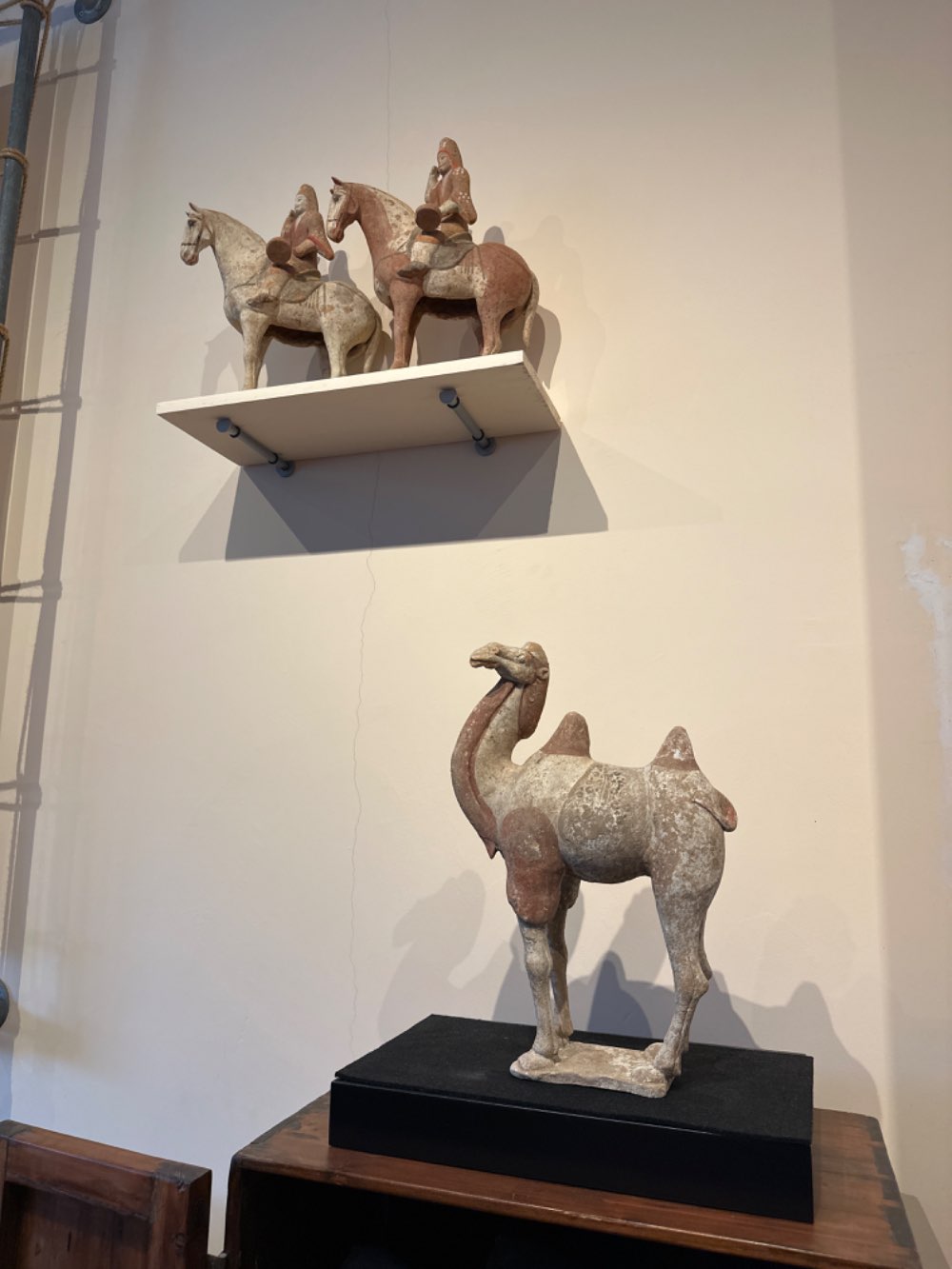
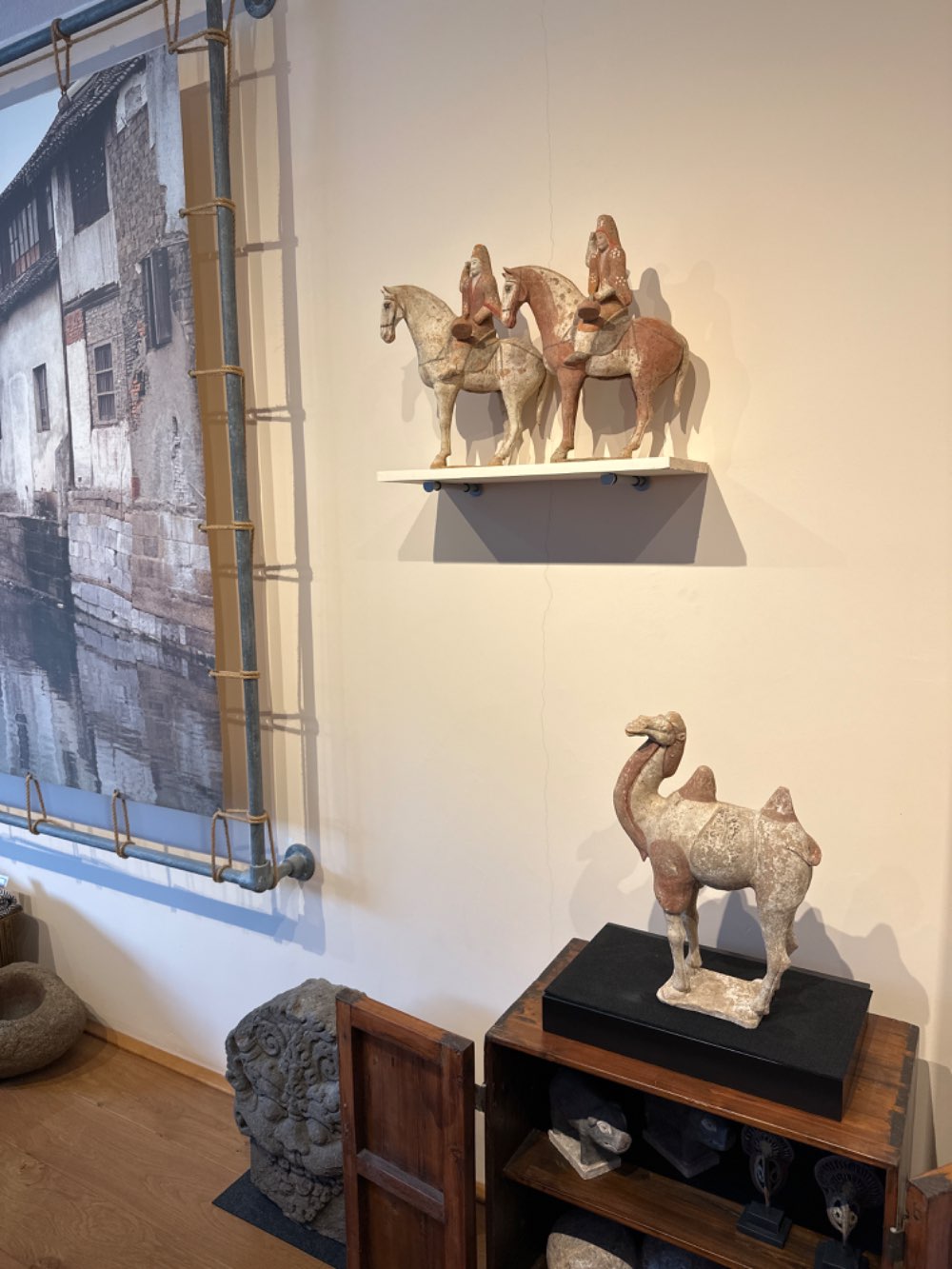
Camel of terracotta from the Tang Dynasty (618-907 AD), TL tested
Camel of terracotta from the Tang Dynasty (618-907 AD), TL tested
- Country: China
- Province: Shaanxi, Xian
- Period: Tang Dynasty (618-907 AD)
- Material: Terracotta with white, red and black pigments
- Size: 40.5 x 27.5 cm
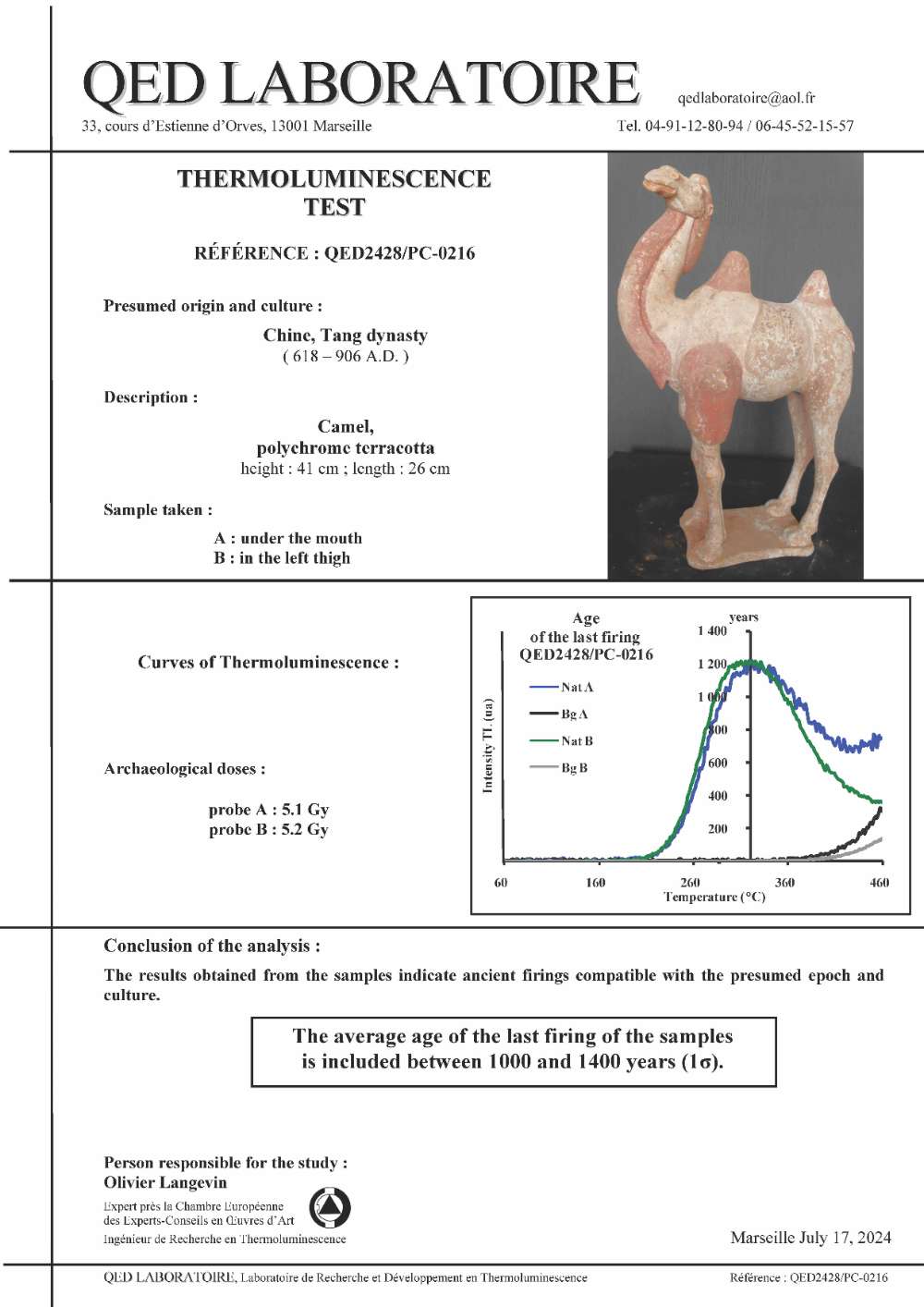
- TL test included
- The colors are still nicely present and looks like it has a fur blanket on over the back.
- Comes from an old Spanish collection.
_____________________________________________________________________________________________________
Camels have played a significant role in Chinese history and culture, particularly as depicted in Chinese art. Their presence is a testament to the importance of the Silk Road and the interactions between China and various regions of Central Asia and the Middle East. Here’s an overview of the role of camels in Chinese history and their representation in art:
Historical Importance
Silk Road Trade: Camels were vital to the success of the Silk Road, the ancient trade routes connecting China to the Mediterranean. Bactrian camels, with their ability to carry heavy loads and endure harsh desert conditions, were the primary means of transportation across the vast deserts and rugged terrains. They enabled the exchange of goods such as silk, spices, tea, and precious metals, fostering economic and cultural exchanges between China and distant lands .
Military Use: Camels were also used in military logistics, transporting supplies and troops across difficult terrains where horses and other animals were less effective. Their resilience made them indispensable in supporting the movements of armies and trade caravans.
Artistic Representation
Tang Dynasty (618-907 CE): The Tang Dynasty is particularly renowned for its depictions of camels in art. During this period, camel figurines became popular as part of tomb offerings. These ceramic figurines, often glazed in the sancai (three-color) technique, are some of the most famous and well-preserved representations of camels in Chinese art. They typically show camels laden with goods, symbolizing the prosperous trade and cultural exchanges of the era.
Murals and Paintings: Camels are also depicted in murals and paintings, particularly in Buddhist cave temples along the Silk Road, such as those at Dunhuang. These artworks often illustrate caravans traveling through the deserts, highlighting the role of camels in facilitating long-distance trade and cultural exchange. The detailed representations of camels and their handlers provide insights into the attire, goods, and interactions of the time.
Poetry and Literature: Camels appear in Chinese poetry and literature as well, often symbolizing endurance, resilience, and the vastness of the desert landscapes they traverse. These literary references enhance the cultural significance of camels beyond their practical uses, embedding them in the Chinese cultural and artistic imagination.
Symbolic Meanings
In Chinese art, camels symbolize more than just trade and transportation. They represent the connection between different cultures and the resilience needed to endure long and arduous journeys. The artistic depictions often emphasize these symbolic meanings, portraying camels as noble and enduring creatures that bridge the vast distances between civilizations.
Conclusion
Camels hold a prominent place in Chinese history and art, reflecting their crucial role in trade, military logistics, and cultural exchange. The artistic depictions from the Tang Dynasty and other periods provide a vivid picture of their importance and the high regard in which they were held. These representations continue to be a testament to the enduring legacy of camels in the cultural and historical narrative of China.
Please send an e-mail via below form, WhatsApp or call to order or get more information about this object.
We can communicate in English, Deutsch and Nederlands!
Camel of terracotta from the Tang Dynasty (618-907 AD), TL tested