Double click image to enlarge
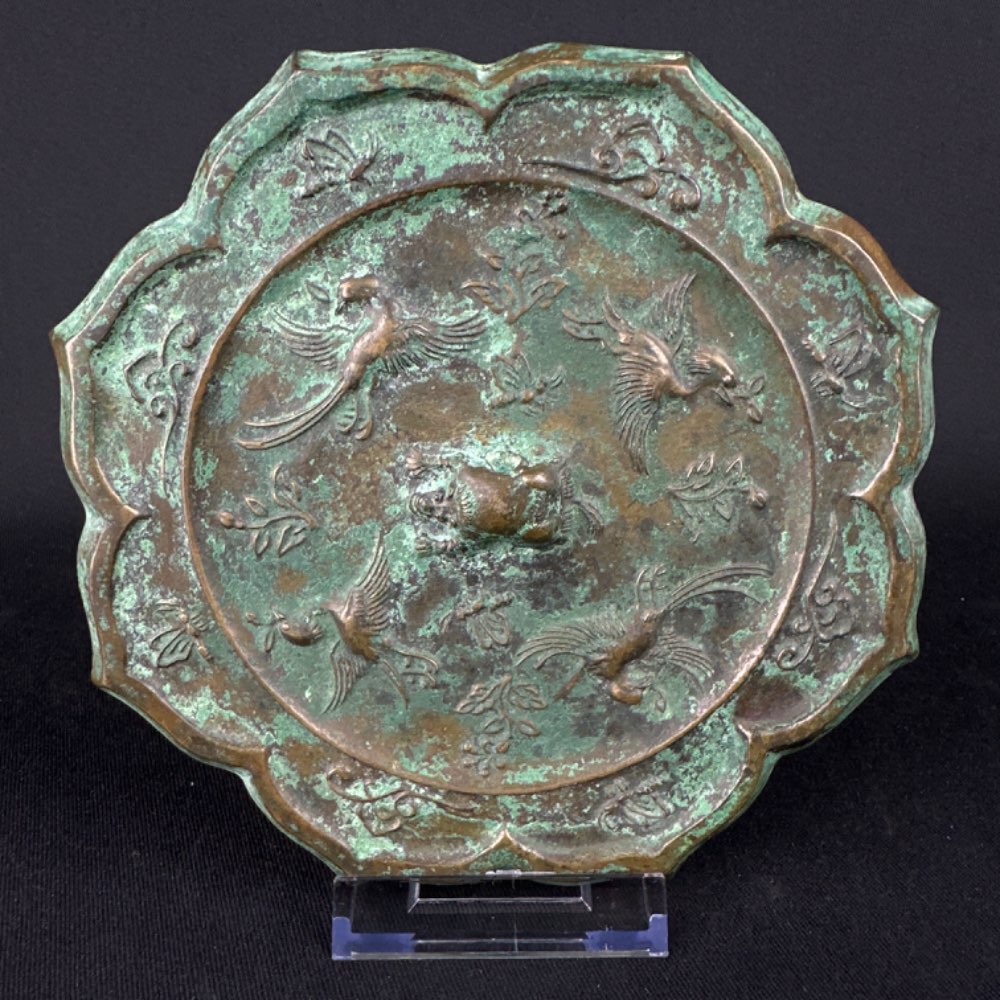
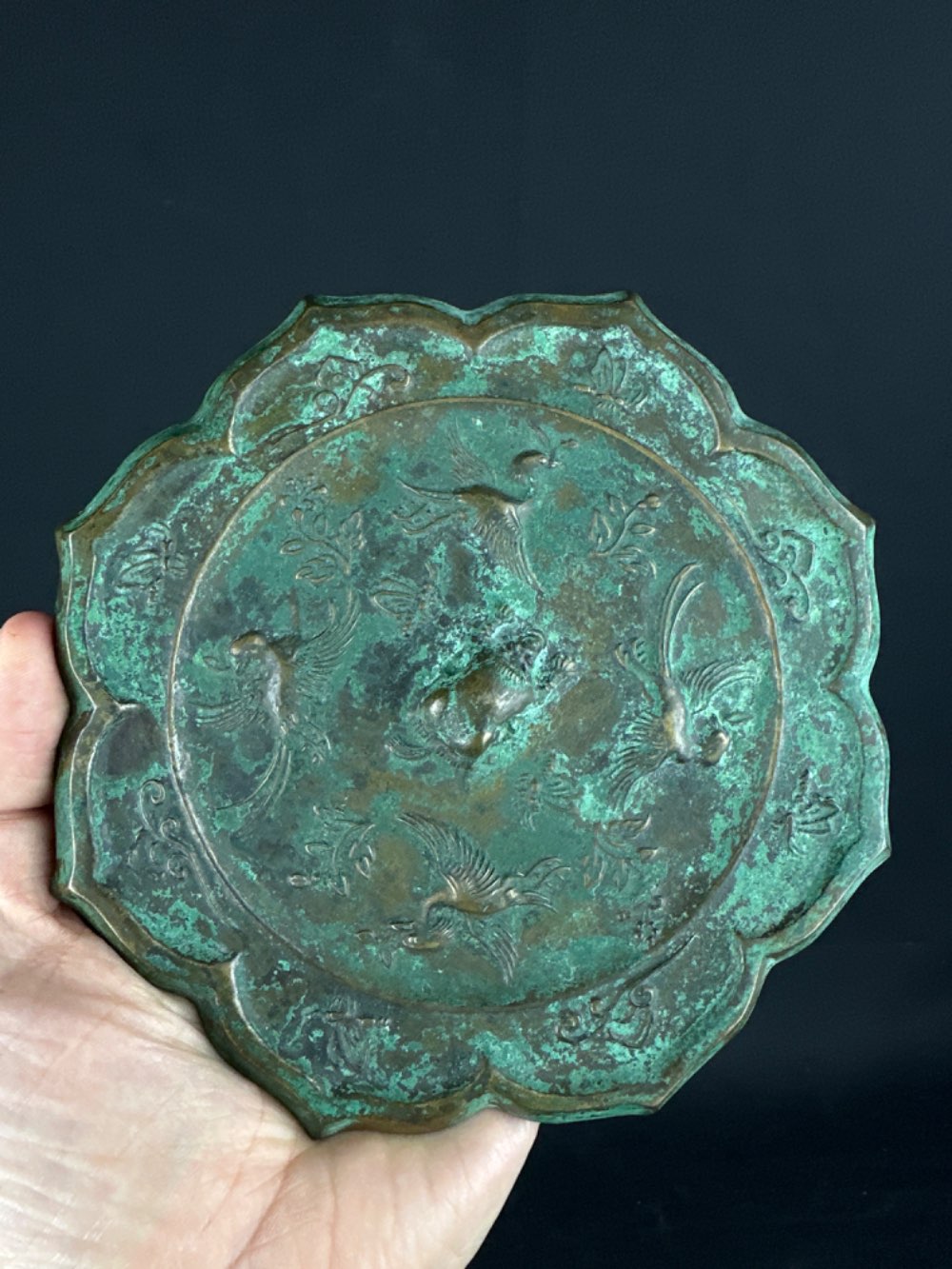
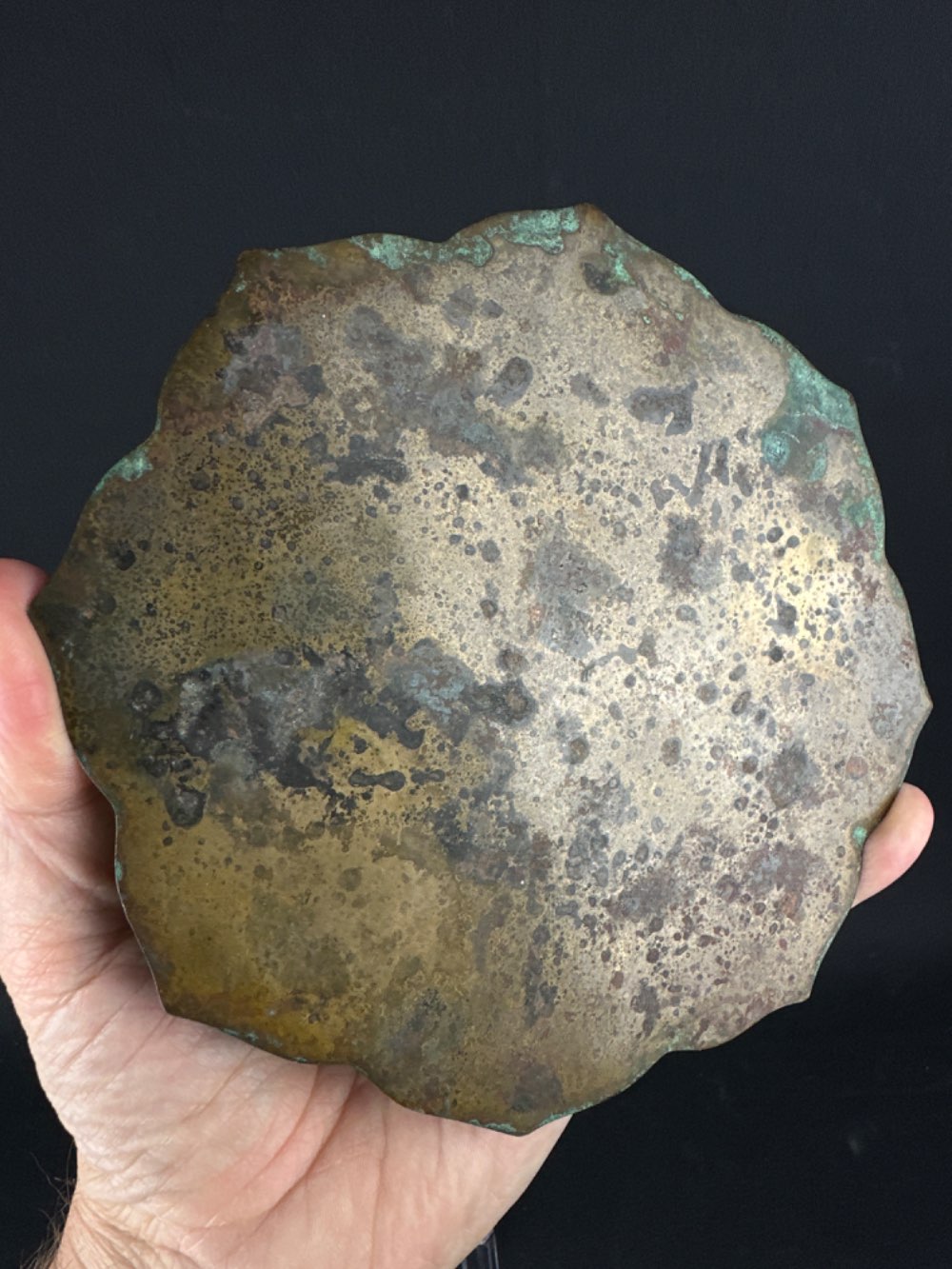
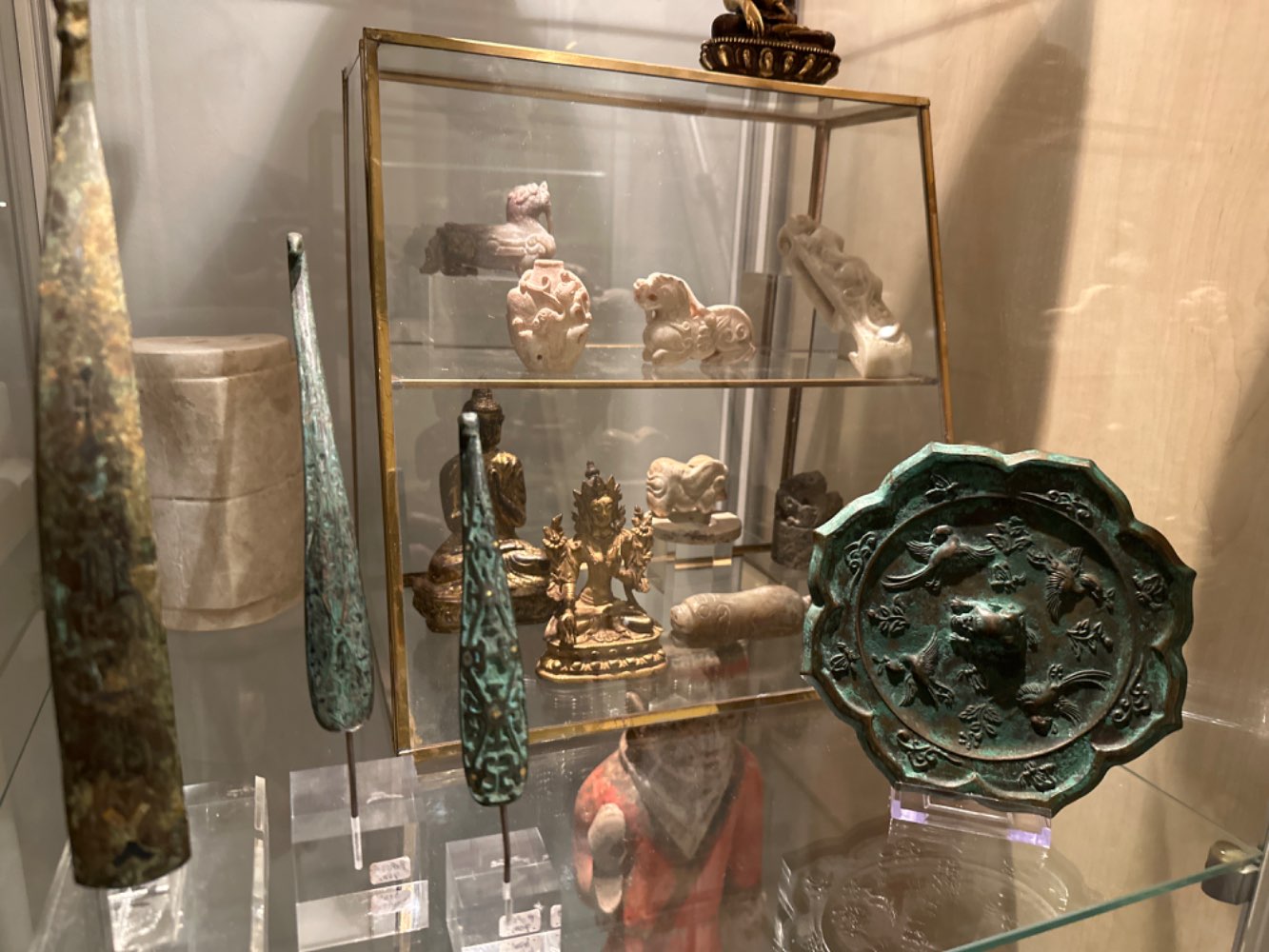
Chinese bronze foliate mirror from the Tang Dynasty (618-907 AD)
Chinese bronze foliate mirror from the Tang Dynasty (618-907 AD)
- Country: China
- Period: Tang Dynasty (618-907 AD)
- Material: Bronze
- Size: 16 cm
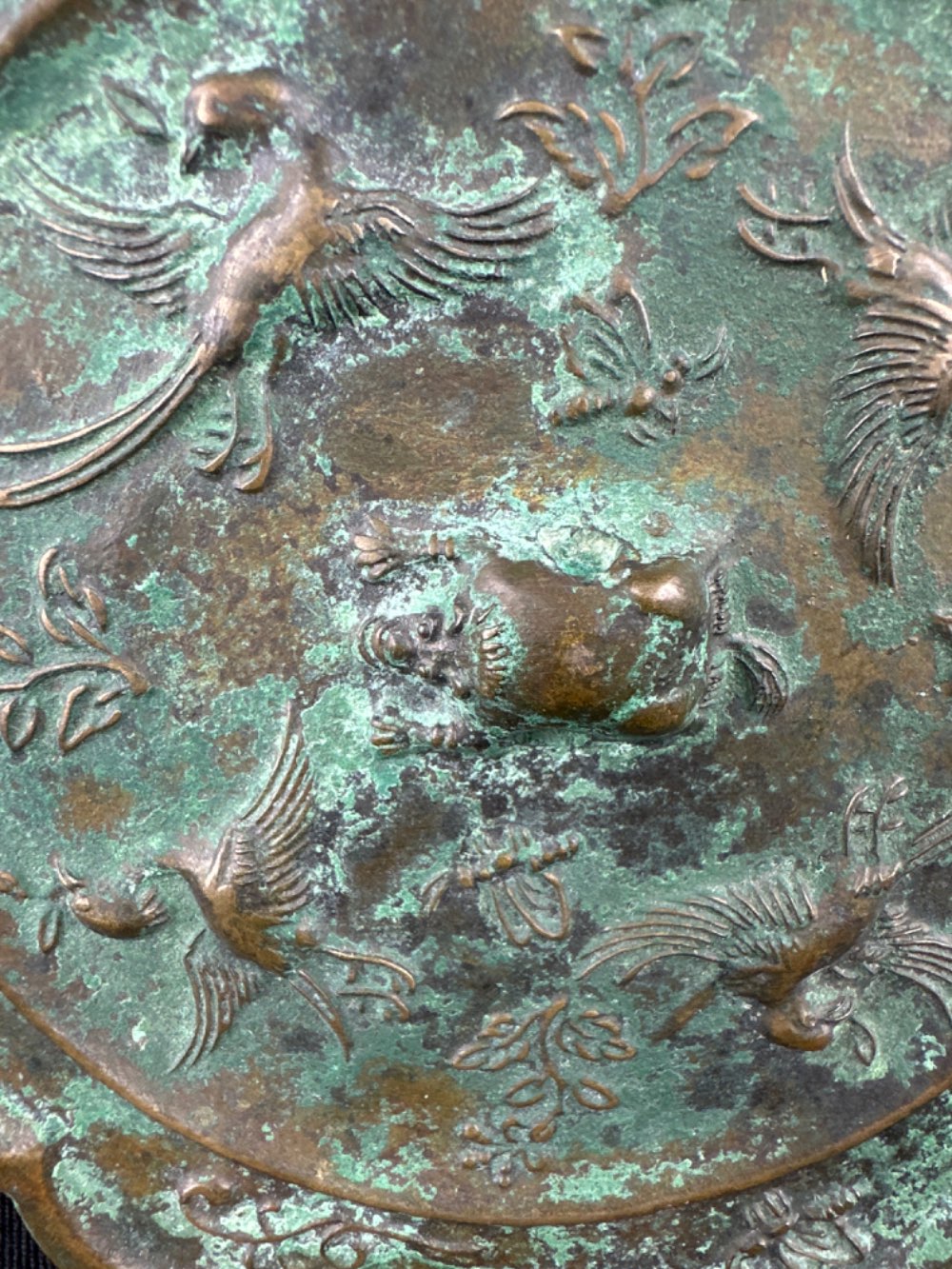
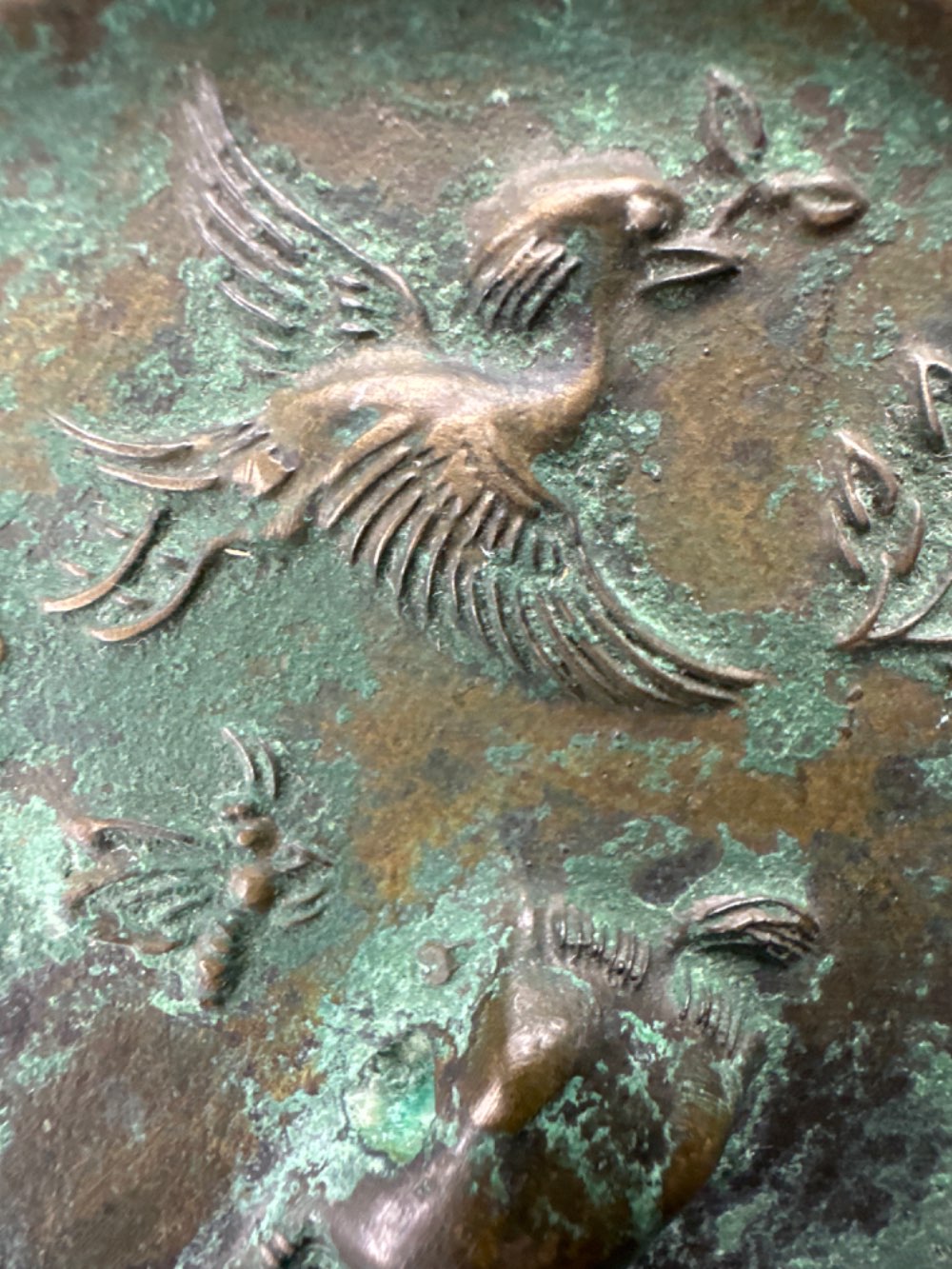
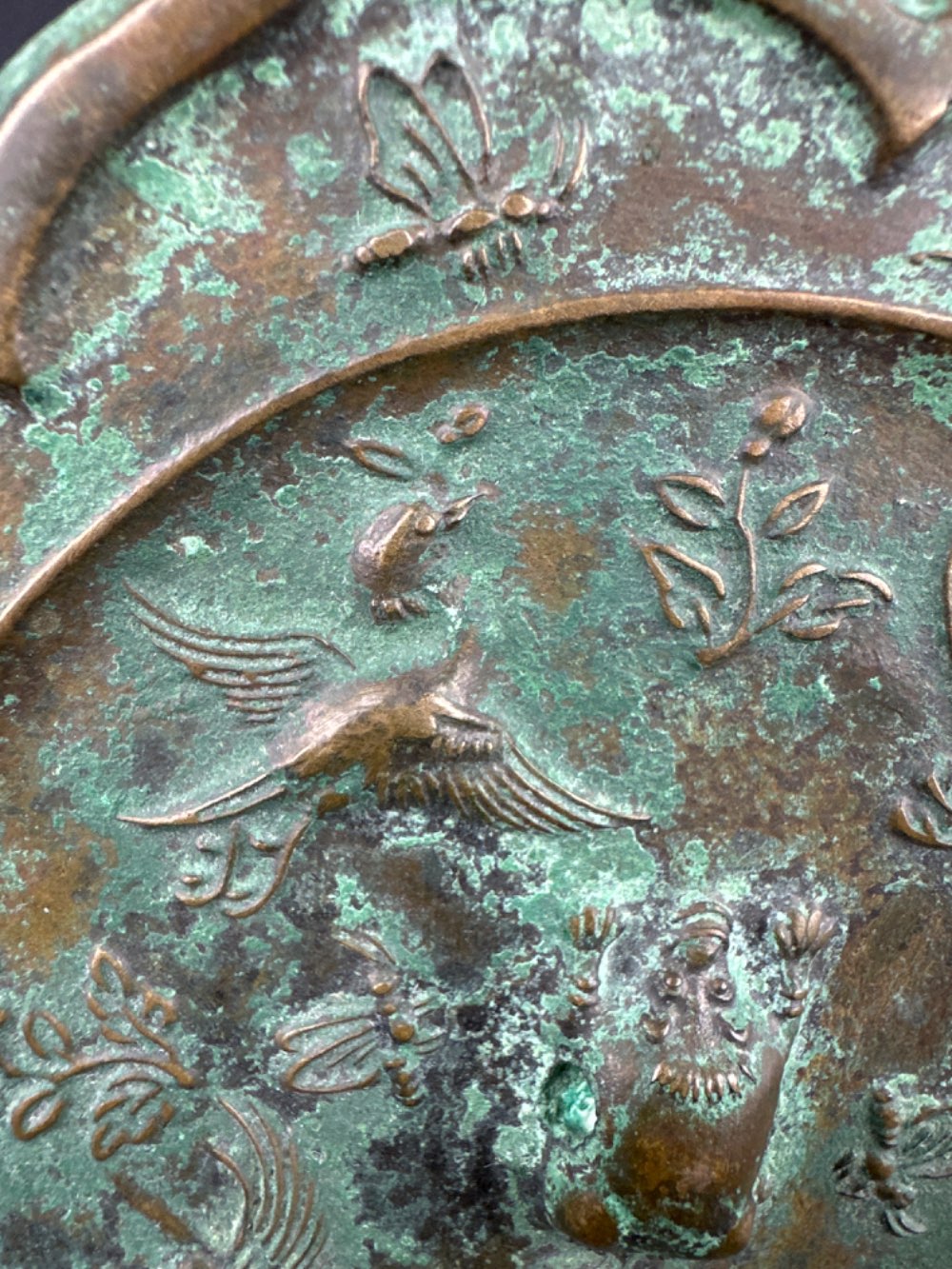
- The octafoil mirror cast with 4 phoenix birds, 6 butterflies and floral motives, all centered with a bear forming the knob and enclosed by a foliate scroll on the rim.
- Comes out of an old Dutch collection.
During the Tang Dynasty (618–907 AD), bronze mirrors held immense cultural, social, and artistic significance in China. These mirrors were not just functional items for reflecting images but also represented symbols of wealth, status, and artistic excellence, reflecting the rich cultural heritage of the Tang Dynasty.
Key Aspects of Bronze Mirrors in the Tang Dynasty:
-
Artistic Craftsmanship: Bronze mirrors of the Tang Dynasty were renowned for their exceptional artistry and craftsmanship. They were often circular or occasionally octagonal in shape, with intricate designs and ornate decorations on the reverse side.
-
Material and Manufacturing: These mirrors were predominantly made of bronze, a durable and valuable material. Skilled artisans used sophisticated casting techniques to create these mirrors, often incorporating elaborate patterns, mythical creatures, floral motifs, and inscriptions.
-
Symbolism and Cultural Significance: Bronze mirrors held symbolic importance beyond their utilitarian function. They were considered auspicious and symbolized spiritual beliefs such as protection against evil spirits, bringing good luck, and warding off negativity.
-
Social Status and Prestige: Owning bronze mirrors was a mark of social status and wealth during the Tang Dynasty. Mirrors were cherished possessions of the elite and were often exchanged as prestigious gifts among nobility or presented as valuable offerings.
-
Archaeological Significance: Excavations and archaeological findings across China have unearthed numerous Tang Dynasty bronze mirrors, providing insights into ancient Chinese aesthetics, technology, and social customs. These mirrors often reveal details about the era's artistic styles and cultural influences.
-
Reflective Properties: Apart from their symbolic and artistic significance, bronze mirrors were functional objects used for grooming, ritualistic purposes, and as decorative items in homes and palaces.
-
Inscriptions and Designs: Some bronze mirrors featured inscriptions with dates, poetic verses, or the names of their owners, offering historical and cultural information. The designs varied, featuring auspicious symbols, animals, flowers, celestial motifs, and intricate geometric patterns.
The bronze mirrors of the Tang Dynasty serve as tangible artifacts reflecting the artistic sophistication, cultural symbolism, and social customs of ancient China. Their exquisite designs, cultural significance, and historical context continue to fascinate historians, art enthusiasts, and collectors, offering a glimpse into the thriving cultural and artistic achievements of the Tang Dynasty.
Please send an e-mail via below form, WhatsApp or call to order or get more information about this object.
We can communicate in English, Deutsch and Nederlands!
Chinese bronze foliate mirror from the Tang Dynasty (618-907 AD)