




Double click image to enlarge
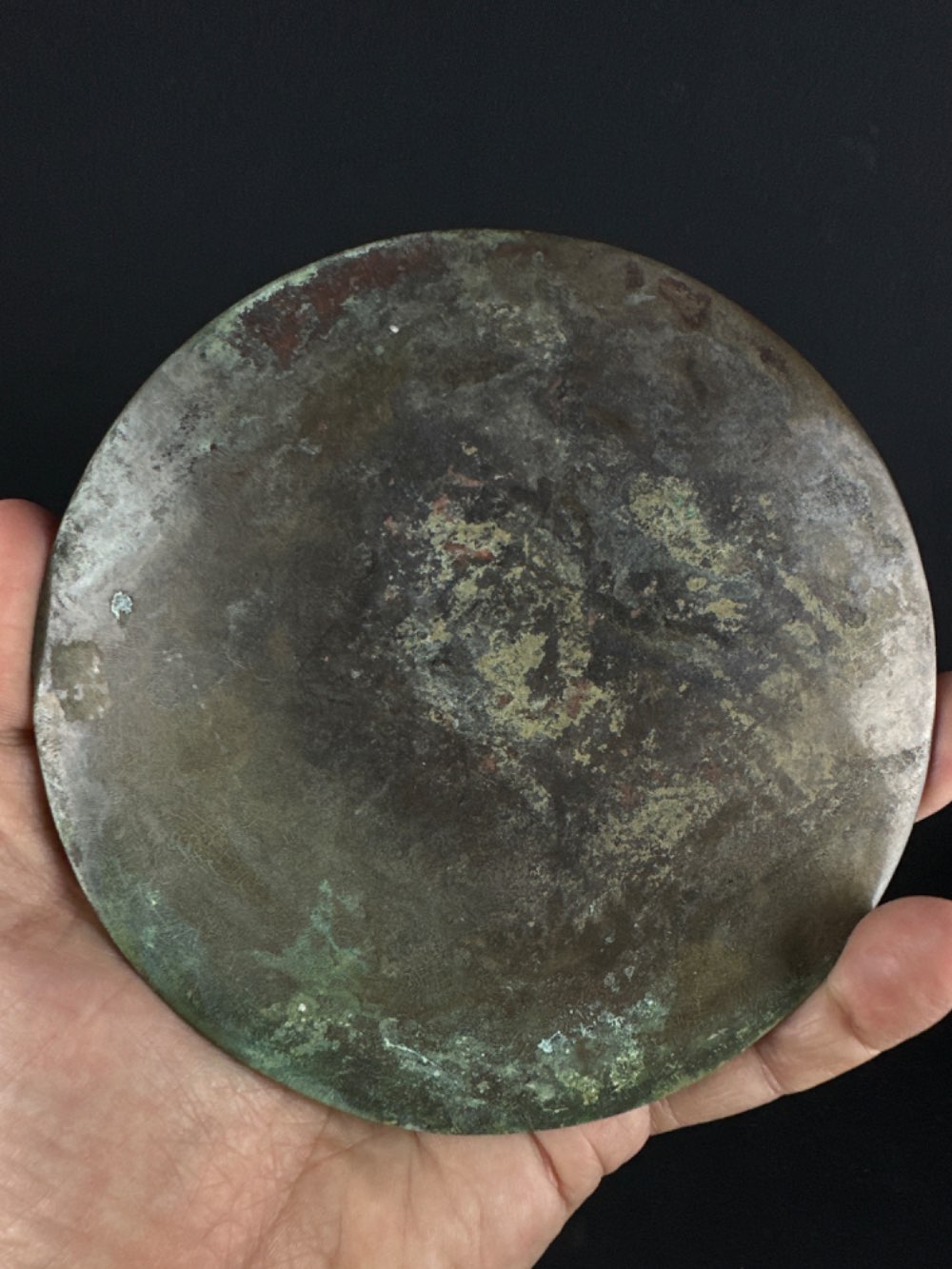
Double layer bronze Khmer mirror from the Angkor Wat period in Cambodia 12th-13th century
Double layer bronze Khmer mirror from the Angkor Wat period in Cambodia 12th-13th century
- Country: Cambodia
- Period: Angkor Wat (12th-13th Century)
- Material: Double layer bronze with green patina
- Size: 13.7 cm
- Originally these mirrors had a bronze handle connected to the mirror and this is clearly to see at the back side and less clear on the frond.
- Comes out of an old German collection.
Bronze Khmer mirrors from the 12th to 13th centuries are remarkable artifacts that reflect both the sophisticated metallurgical skills and the cultural practices of the Khmer Empire during the Angkorian period. These mirrors were not merely functional objects but also held symbolic and aesthetic significance.
Historical and Cultural Context
The 12th and 13th centuries were a period of great prosperity and cultural development in the Khmer Empire, with significant achievements in art, architecture, and craftsmanship. The era saw the reigns of influential kings such as Suryavarman II, who commissioned Angkor Wat, and Jayavarman VII, under whom the capital Angkor Thom was built. Artisans of this period excelled in metalwork, creating intricate and beautiful objects, including bronze mirrors.
Artistic Characteristics
Material and Technique:
- Bronze: Khmer mirrors were typically crafted from bronze, a durable alloy of copper and tin, sometimes mixed with small amounts of lead or other metals. This choice of material allowed for a polished, reflective surface.
- Casting and Polishing: The mirrors were created using sophisticated casting techniques. After casting, the surface was meticulously polished to achieve a reflective quality. The level of craftsmanship ensured a smooth and highly polished finish.
Design and Decoration:
- Shape and Size: Bronze mirrors were usually circular, though some could be oval or even rectangular. They varied in size from small, handheld mirrors to larger, ceremonial ones.
- Decorative Elements: The backs of these mirrors often featured intricate designs and motifs, such as floral patterns, geometric shapes, or mythological scenes. The decorative aspects showcased the artistic skills of the Khmer metalworkers and often included symbolic imagery.
Cultural and Social Significance
Functionality:
- Personal Use: Mirrors were used in daily grooming and personal care, reflecting the importance of appearance and hygiene in Khmer society.
- Ceremonial Use: Larger mirrors likely had ceremonial functions, possibly used in religious rituals or as status symbols during important events.
Symbolism:
- Symbol of Wealth and Status: Ownership of intricately designed bronze mirrors indicated wealth and high social status. They were often luxury items, cherished for their beauty and utility.
- Religious and Cultural Significance: Mirrors also held symbolic meanings in various religious and cultural contexts. They could represent clarity, truth, and self-reflection, themes important in both Hinduism and Buddhism, which were practiced in the Khmer Empire.
Preservation and Legacy
Archaeological Findings:
- Excavations: Bronze mirrors have been uncovered in various archaeological sites across Cambodia, including temple complexes and residential areas. These findings help historians and archaeologists understand the daily life and cultural practices of the Khmer people.
- Research: Studies of these mirrors provide insights into the technological advancements and artistic achievements of the Khmer Empire.
Museum Collections:
- Exhibitions: Many bronze mirrors are displayed in museums around the world, where they are appreciated for their historical and artistic value. They are often featured in exhibitions focusing on Southeast Asian art and the Khmer civilization.
Cultural Heritage:
- National Pride: These mirrors are celebrated as part of Cambodia’s rich cultural heritage. They symbolize the advanced craftsmanship and artistic sensibilities of the Khmer people.
Conclusion
Bronze Khmer mirrors from the 12th to 13th centuries are outstanding examples of the Khmer Empire's metallurgical and artistic prowess. These artifacts, characterized by their intricate designs and polished surfaces, served both practical and symbolic purposes. They provide valuable insights into the daily life, social hierarchies, and cultural practices of the Khmer people, making them significant historical treasures and enduring symbols of Cambodia’s rich cultural legacy.
Please send an e-mail via below form, WhatsApp or call to order or get more information about this object.
We can communicate in English, Deutsch and Nederlands!
 Double layer bronze Khmer mirror from the Angkor Wat period in Cambodia 12th-13th century
 Double layer bronze Khmer mirror from the Angkor Wat period in Cambodia 12th-13th century
Double layer bronze Khmer mirror from the Angkor Wat period in Cambodia 12th-13th century