






Double click image to enlarge
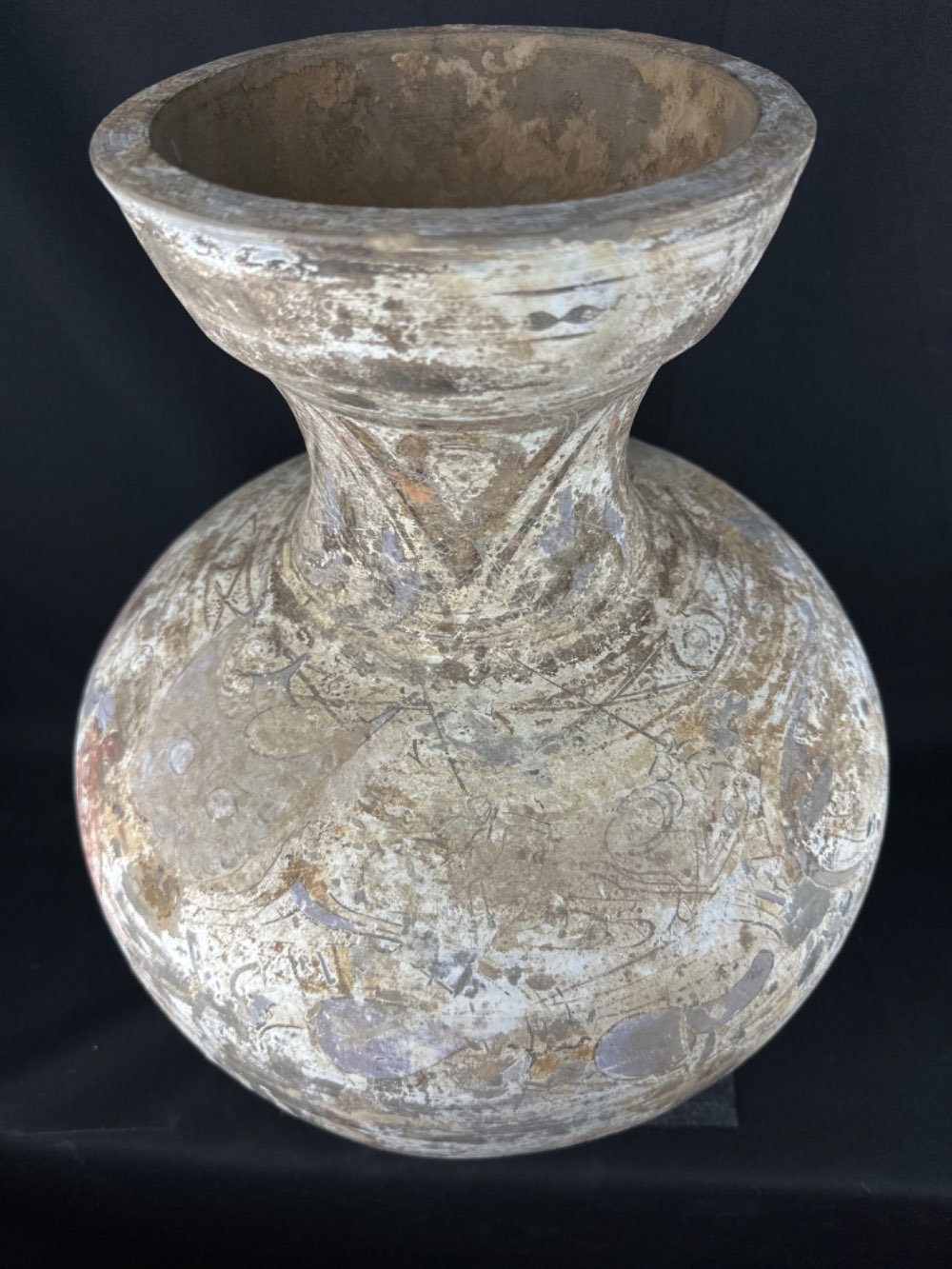
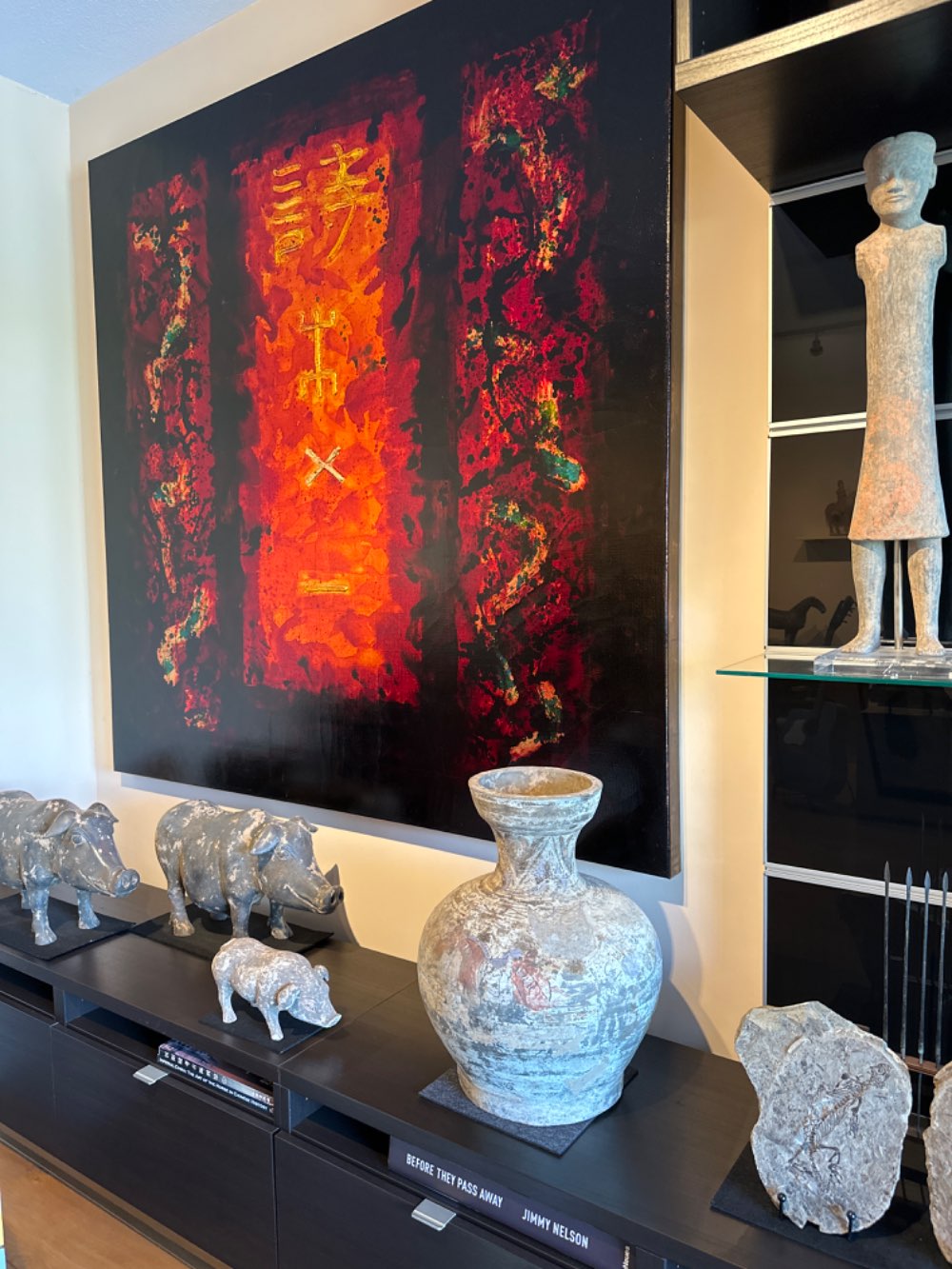
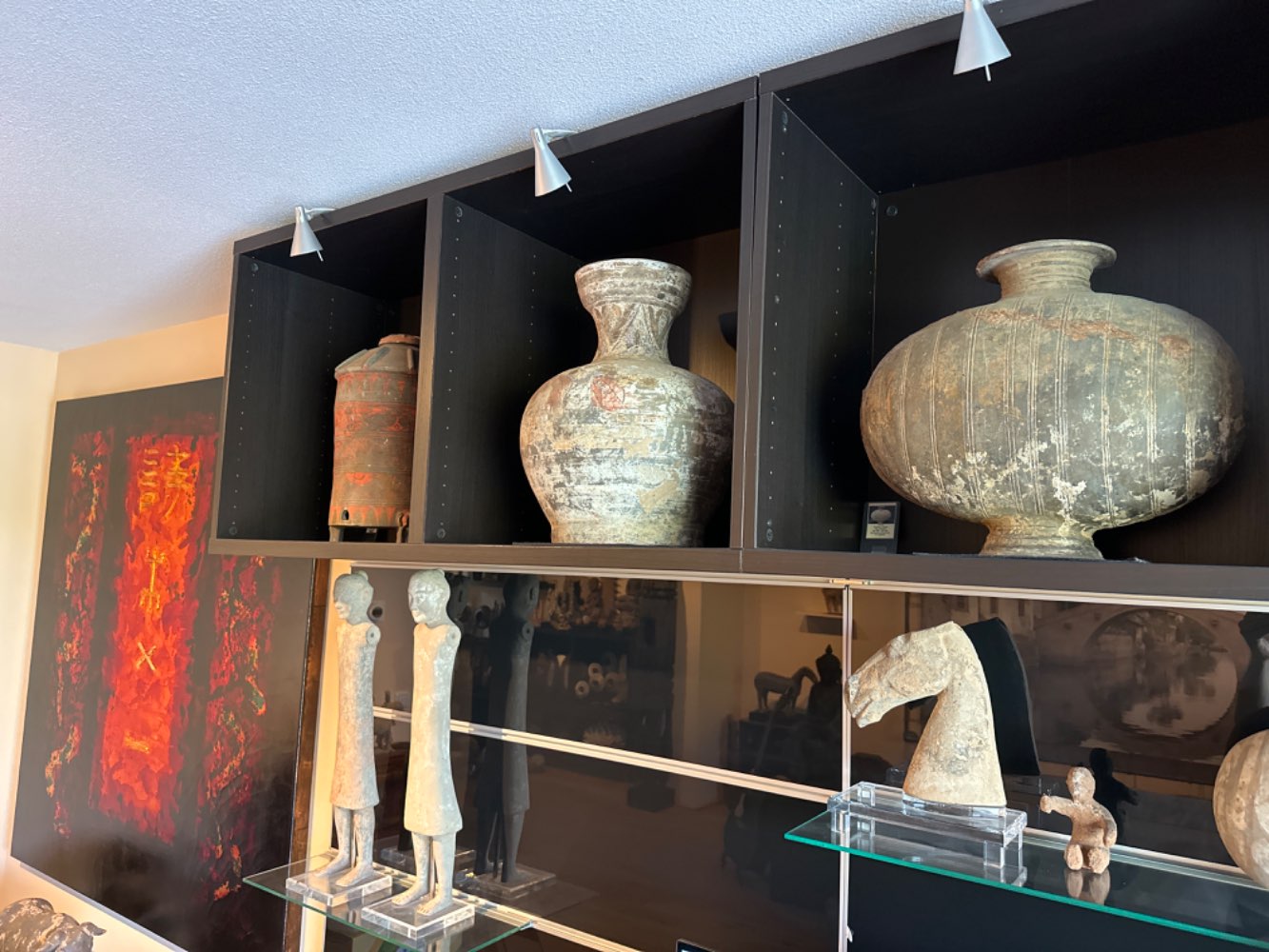
Enormous grey pottery vase from the Han Dynasty (206BC-220AD) with bulbous sides, TL tested
Enormous grey pottery vase from the Han Dynasty (206BC-220AD) with bulbous sides, TL tested
- Country: China
- Period: Han Dynasty (206 BC-220 AD)
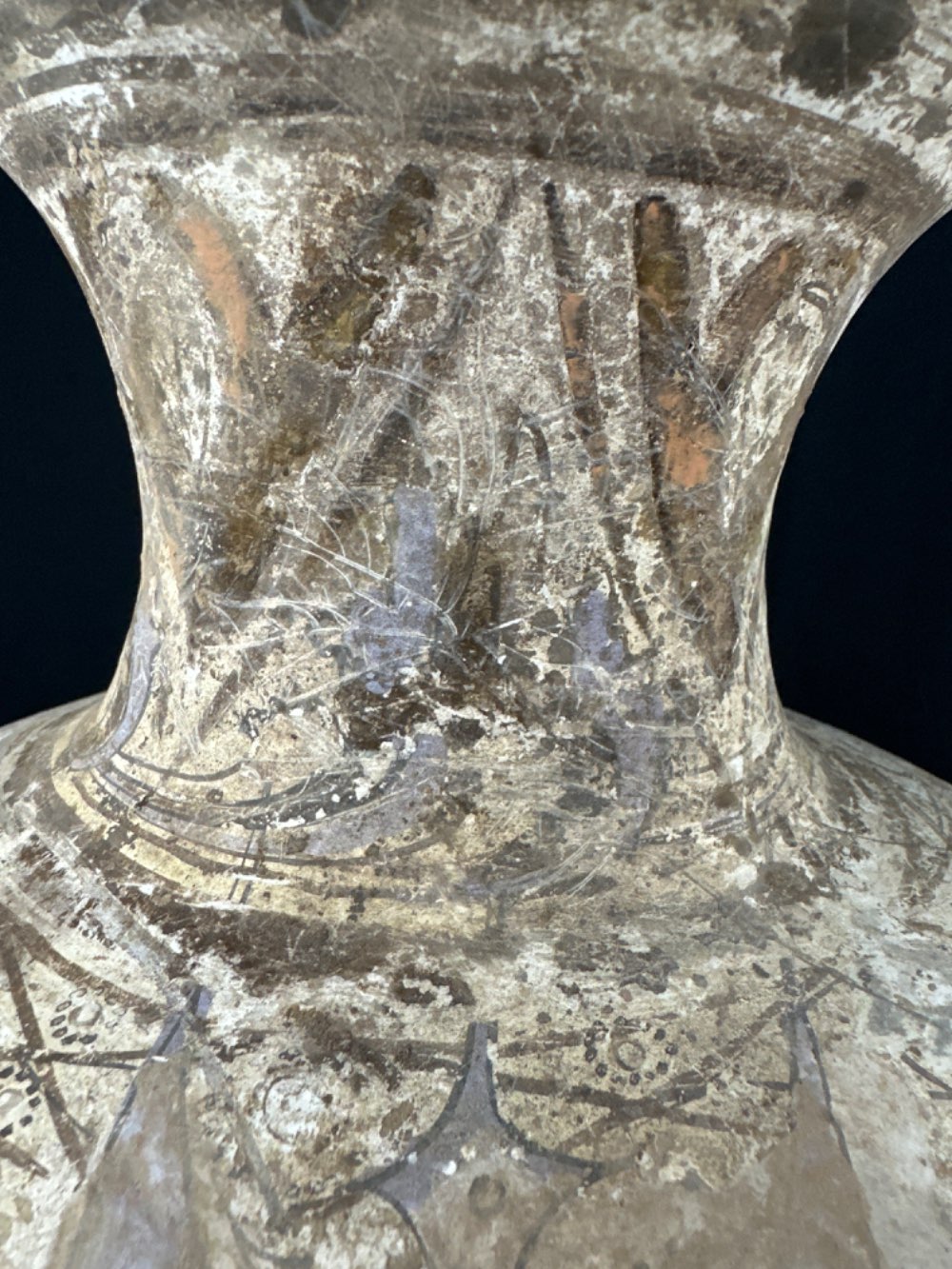
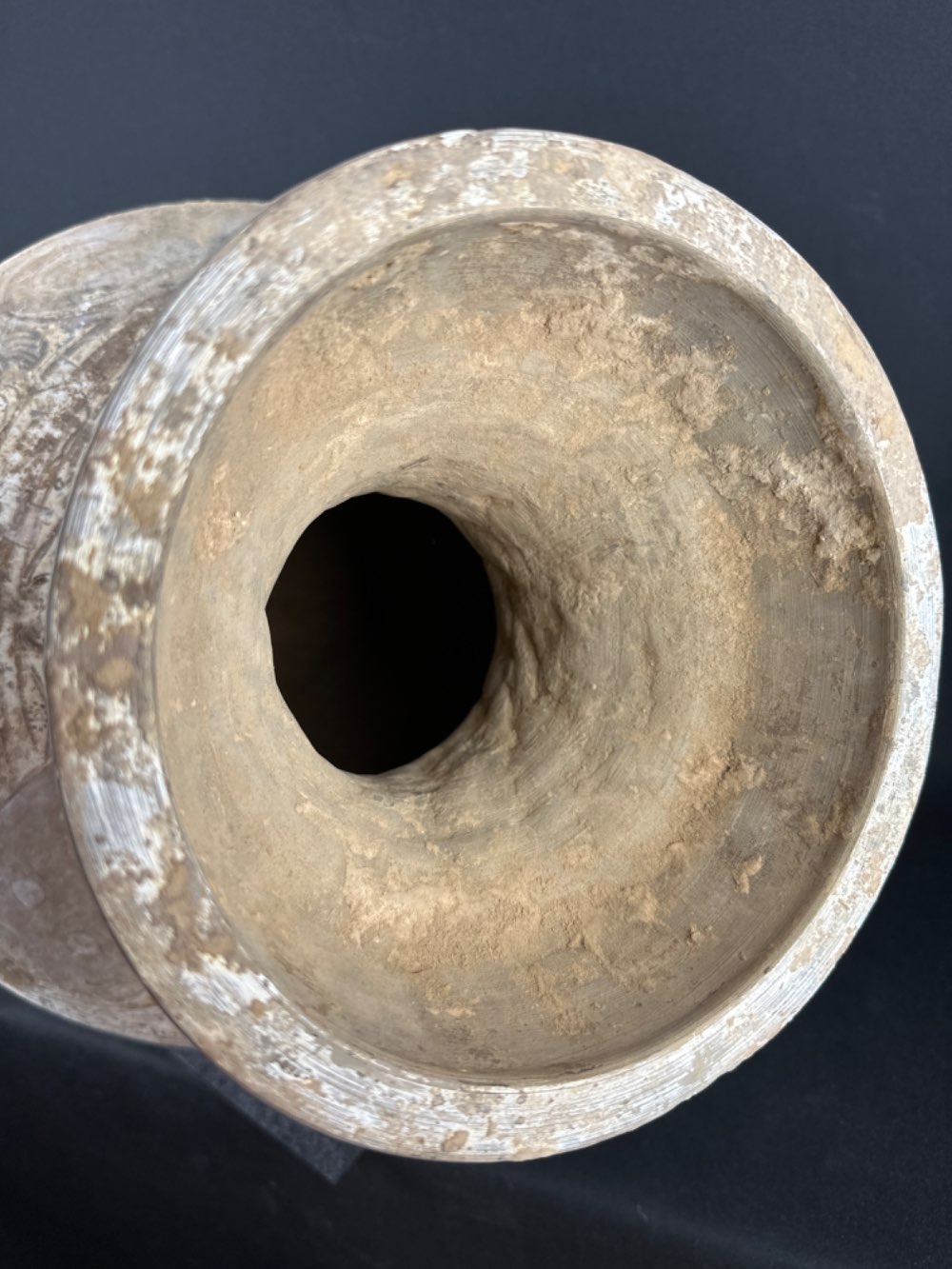
- Material: Grey terracotta with white, black and purple pigments
- Size: 44 x 33 cm
- TL test included
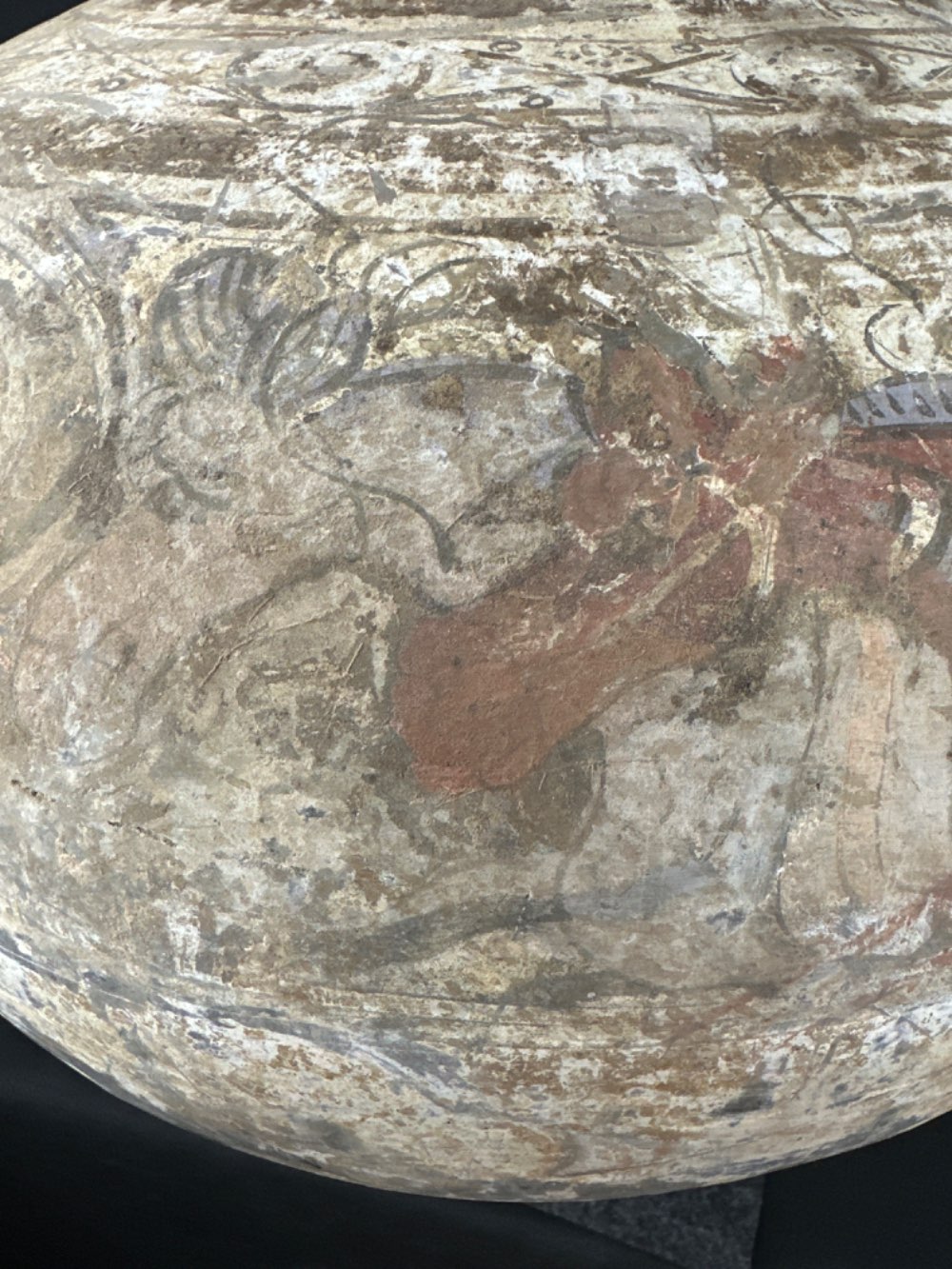
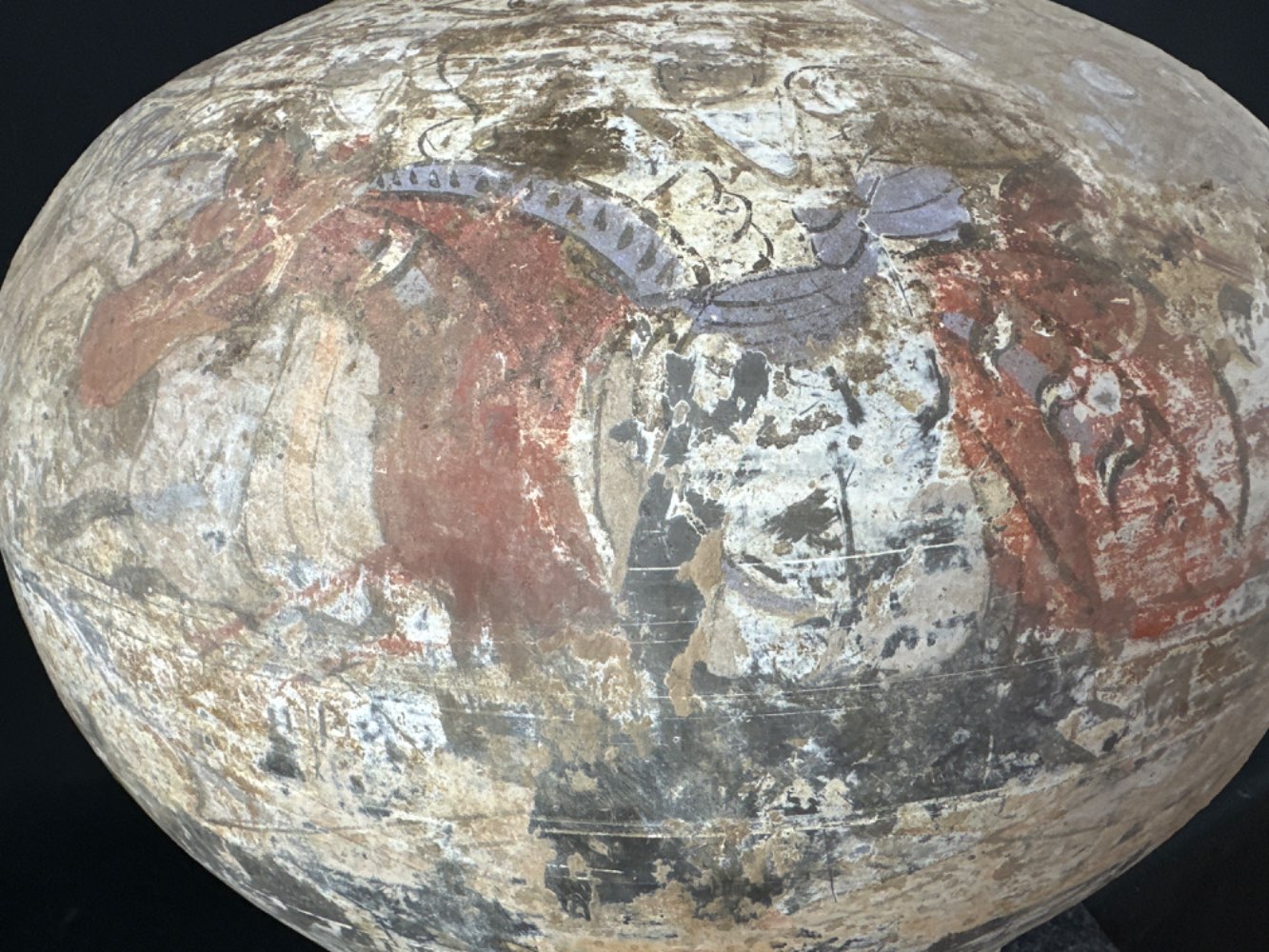
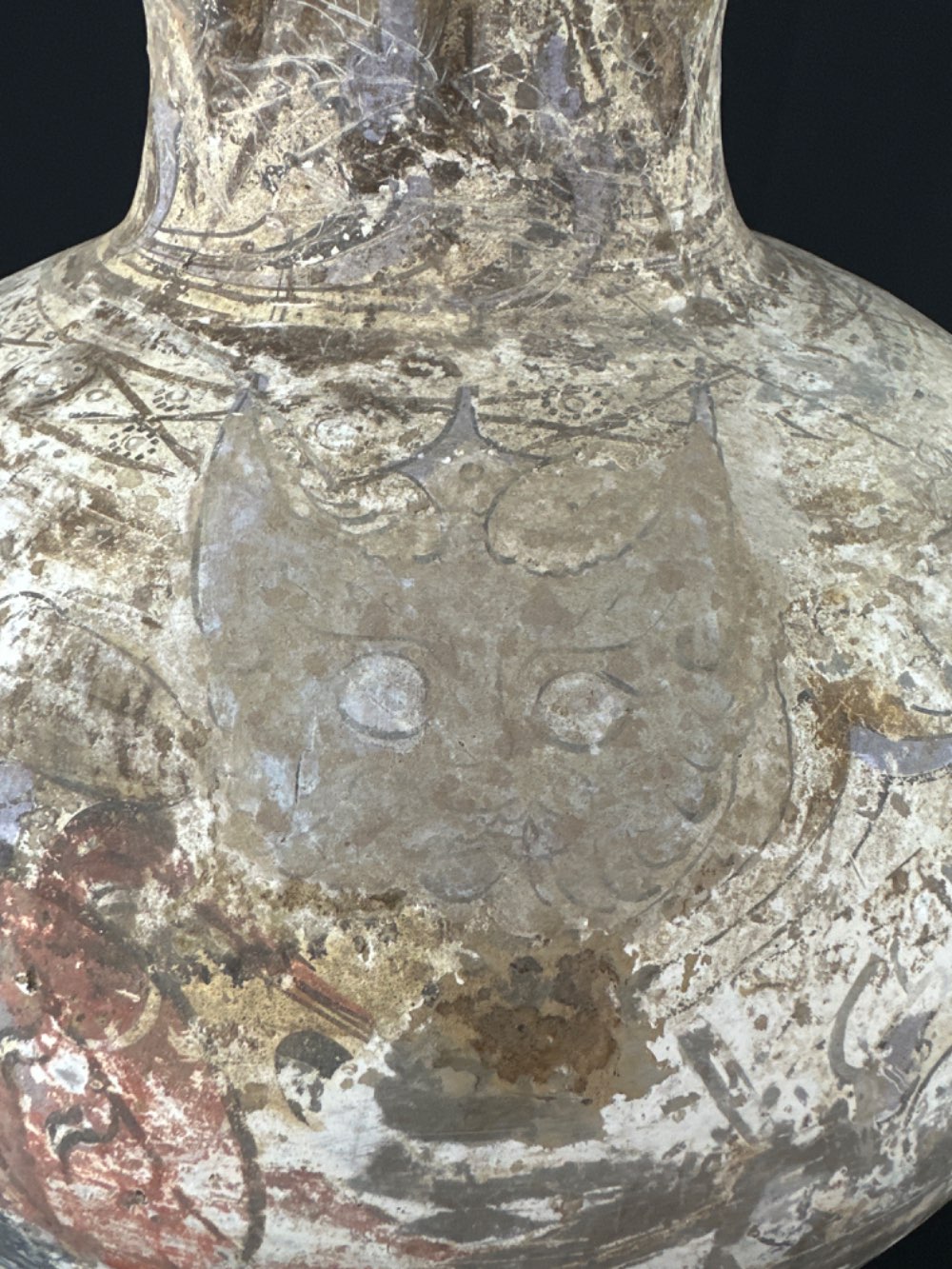
- Very nice cartoon like decoration of two warrior horse riders, two Taotie masks and other decoration.
- It's quite of unique piece.
- Comes out of an old Dutch collection.
- An old price tag still at the bottom of the vase with a price of probably Hfl. 7,500.
Vases from the Han Dynasty (206 BCE - 220 CE) in China are a significant representation of the artistic and cultural achievements of the period. These vases, often made of pottery, reflect the sophistication of Han ceramics and provide insights into the daily life, rituals, and artistic sensibilities of the era.
Typically characterized by their pear-shaped body with a wide, rounded belly and a narrow neck, hu vases were influenced by earlier bronze vessels used for rituals and storage. During the Han Dynasty, they were predominantly made of pottery, with some featuring more advanced ceramic techniques that included glazing. Many hu vases were decorated with intricate patterns, including geometric designs, animal motifs, and scenes from nature. These decorations were often incised, stamped, or painted onto the surface of the vase.
Hu vases were primarily used for storing liquids such as wine and water, as well as grains and other foodstuffs. They also played a significant role in religious and funerary practices, often included in tombs as grave goods to accompany the deceased in the afterlife, reflecting the Han belief in an afterlife where the deceased would need various provisions. In addition to their ceremonial uses, hu vases were also functional items in households, used for everyday purposes.
The decorations on hu vases often carried symbolic meanings. For instance, dragons and phoenixes depicted on these vases symbolized power, immortality, and the cosmos. The production of hu vases demonstrates the advanced ceramic technology of the Han Dynasty, with techniques such as high-temperature kilning and glazing perfected during this period. The hu vase form and its decorative styles influenced subsequent Chinese pottery and ceramics, with the emphasis on detailed and symbolic decoration seen in later Chinese ceramic traditions.
Many hu vases have been discovered in Han tombs, providing archaeologists with valuable information about Han burial practices, trade, and daily life. The style and decoration of hu vases can vary significantly across different regions of China, reflecting local traditions and influences.
Hu vases from the Han Dynasty are a testament to the artistic, technological, and cultural achievements of ancient China. Their enduring legacy can be seen in the continued appreciation and study of Chinese ceramics, highlighting the importance of these artifacts in understanding China's rich historical and cultural heritage.
Please send an e-mail via below form, WhatsApp or call to order or get more information about this object.
We can communicate in English, Deutsch and Nederlands!
Enormous grey pottery vase from the Han Dynasty (206BC-220AD) with bulbous sides, TL tested