

Double click image to enlarge
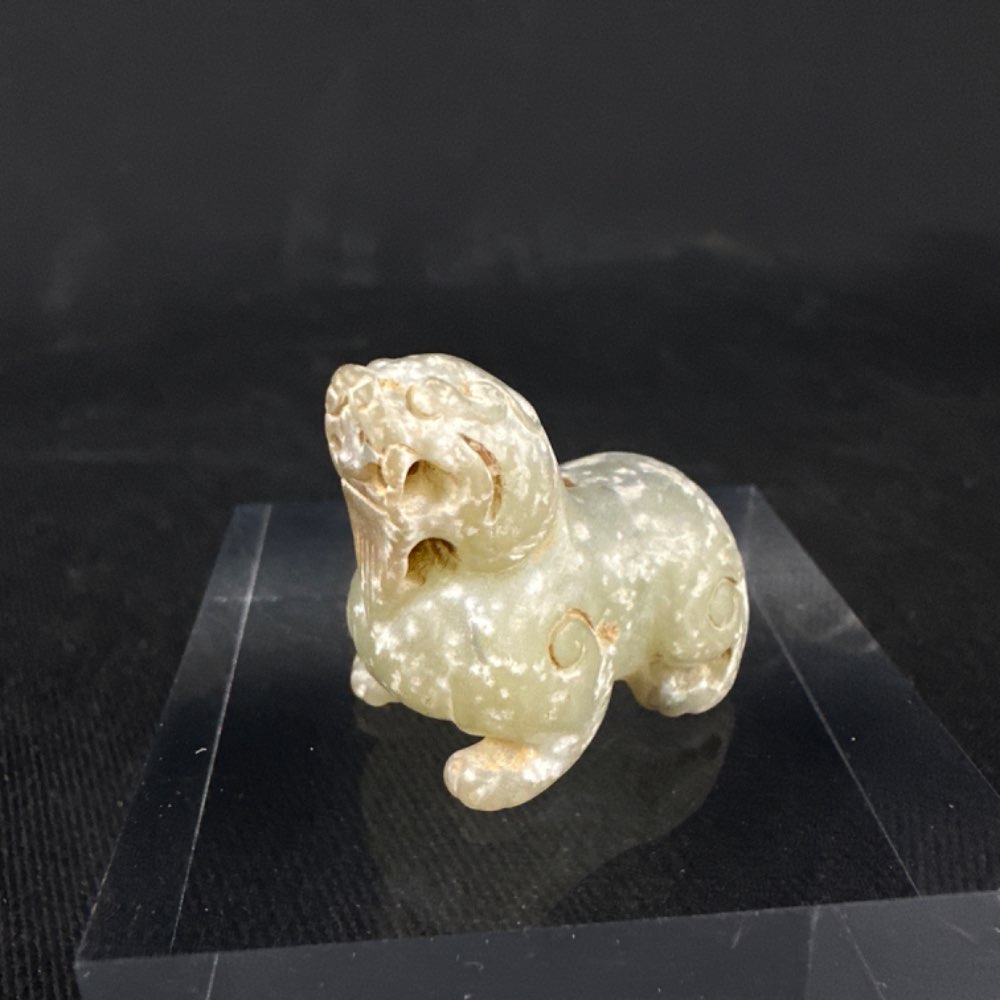
Jade mythical beast bead from the Han Dynasty, China, 206 BC-220 AD
Jade mythical beast bead from the Han Dynasty, China, 206 BC-220 AD
- Country: China
- Period: Han Dynasty (206 BC-220 AD)
- Material: green jade with some calcification
- Size: 26 x 30 mm
- Weight: 12 gram
- A very nice small bead amulet with great details
In Chinese culture, mythical beasts play a significant role in folklore, religion, art, and literature. These creatures embody various aspects of the natural world, cosmic forces, and moral values. Many are seen as protectors, symbols of good fortune, or even manifestations of divine will. Here are some of the most famous mythical beasts in Chinese culture:
1. Dragon (龙, Lóng)
The Chinese dragon is one of the most iconic and revered creatures in Chinese mythology. Unlike the fearsome dragons in Western mythology, Chinese dragons are seen as benevolent, wise, and powerful. They are associated with water, rain, rivers, and seas, and are believed to control the weather. The dragon is a symbol of imperial power, strength, and good fortune. Emperors were often considered the incarnation of the dragon, and the dragon symbolized the emperor’s divine authority.
The dragon is also one of the Twelve Chinese Zodiac Animals, representing strength, courage, and a connection to the heavens.
2. Phoenix (凤凰, Fènghuáng)
The Fènghuáng, often referred to as the Chinese phoenix, symbolizes grace, virtue, and the union of yin and yang. Unlike its Western counterpart, which rises from the ashes, the Chinese phoenix does not symbolize death or rebirth. Instead, it represents high moral standards, peace, and prosperity. Traditionally, the phoenix is paired with the dragon to represent the balance of feminine (phoenix) and masculine (dragon) forces in the universe. It is also considered a symbol of the empress, just as the dragon symbolizes the emperor.
3. Qilin (麒麟)
The Qilin is a mythical creature with a composite form, often described as having the body of a deer, the tail of an ox, hooves like a horse, and a single horn. It is sometimes depicted with the scales of a fish. The Qilin is known for its gentle nature and appears during times of peace and prosperity or when a wise ruler is in power. It is believed to only appear in places governed by kindness and wisdom. Despite its somewhat fierce appearance, the Qilin is seen as a bringer of good fortune, a symbol of benevolence, and a protector against evil.
4. Tortoise (龟, Guī)
In Chinese mythology, the tortoise is one of the Four Celestial Animals (along with the dragon, phoenix, and tiger) and represents longevity, stability, and endurance. The tortoise is often depicted carrying the world on its back, symbolizing the slow, steady progression of time. It is also associated with wisdom and knowledge, particularly in relation to the cosmic order and the universe. The tortoise’s long lifespan made it a natural symbol of immortality in Taoist practices.
5. White Tiger (白虎, Bái Hǔ)
The White Tiger is one of the Four Symbols, or celestial guardians, in Chinese cosmology. It represents the west and the season of autumn. As a creature of the elements, the White Tiger symbolizes power, strength, and military might. In Chinese mythology, it is a guardian of the celestial realms and often regarded as a protector against evil spirits. In feng shui, the White Tiger is believed to bring protection to homes and communities.
6. Nian (年, Nián)
The Nian is a beast linked to the origins of the Chinese New Year. According to legend, the Nian was a terrifying creature that lived in the mountains or the sea and would descend upon villages to devour crops, livestock, and people. It is said that the Nian was scared away by loud noises, firecrackers, and the color red. This myth is the basis for many Chinese New Year traditions, including setting off fireworks and decorating homes in red to ward off evil spirits and bad luck.
7. Nine-Tailed Fox (九尾狐, Jiǔwěihú)
The Nine-Tailed Fox, or Huli Jing, is a fox spirit with magical powers that grow as it ages. The most powerful of these spirits can have up to nine tails, each one representing an increase in power and wisdom. These fox spirits are often shape-shifters, capable of transforming into beautiful women. In some stories, they are benevolent and assist humans, while in others, they are portrayed as tricksters or even malevolent creatures. The Nine-Tailed Fox is closely associated with immortality and transformation.
8. Bashe (巴蛇, Bāshé)
The Bashe is a giant snake or serpent-like creature found in Chinese mythology. According to legend, it is said to be so large that it can swallow an elephant whole. After eating, the Bashe rests for years before needing to feed again. This creature embodies the fear and mystery surrounding massive, unknown beasts, often linked to rivers and lakes. While less benevolent than some other creatures, the Bashe is still part of the rich tapestry of Chinese mythological creatures representing nature’s immense and untamed power.
9. Four Symbols (四象, Sìxiàng)
In Chinese mythology, the Four Symbols are four mythical creatures that represent different directions and elements:
- Azure Dragon (青龙, Qīnglóng): Represents the east and the wood element, symbolizing strength and protection.
- White Tiger (白虎, Bái Hǔ): Represents the west and metal, symbolizing power and righteousness.
- Vermilion Bird (朱雀, Zhūquè): Represents the south and fire, symbolizing renewal and rebirth.
- Black Tortoise (玄武, Xuánwǔ): Represents the north and water, symbolizing endurance and stability.
These four creatures are often used in feng shui and other traditional Chinese practices to maintain balance and harmony.
Conclusion
Mythical beasts in Chinese culture reflect deep connections between the natural and supernatural worlds, embodying moral lessons, cosmic principles, and divine power. From the revered dragon to the protective Qilin, these creatures continue to play a significant role in Chinese festivals, art, and spiritual practices, enriching the cultural landscape with their symbolism and stories.
Please send an e-mail via below form, WhatsApp or call to order or get more information about this object.
We can communicate in English, Deutsch and Nederlands!
Jade mythical beast bead from the Han Dynasty, China, 206 BC-220 AD