

Double click image to enlarge
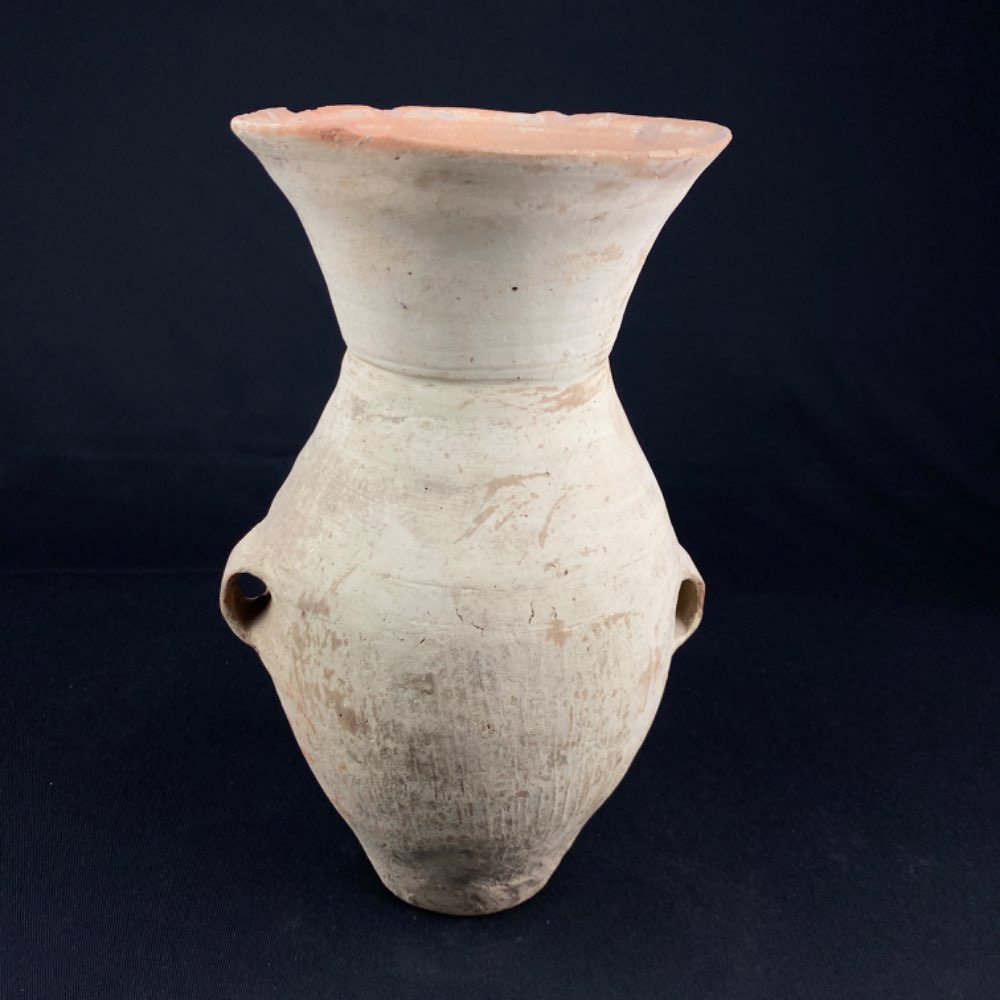
Neolithic Chinese amphora from the Qijia culture, pre 1600 BC
Neolithic Chinese amphora from the Qijia culture, pre 1600 BC
- Country: China
- Period: Neolithic (2200-1600 BC)
- Culture: Qijia
- Material: Terracotta with white pigments
- Size: 27.5x16 cm
- Little damaged but in a good condition
- Very elegant shape
- TL tested, see picture.
The Qijia culture, named after the site of Qijiaping in Gansu Province, China, represents an ancient archaeological culture that existed during the late Neolithic period and the early Bronze Age, roughly from around 2200 BCE to 1600 BCE. It is primarily known for its distinctive pottery, artifacts, and its role in the cultural development of prehistoric China.
Key Features of Qijia Culture:
-
Geographical Distribution: The Qijia culture was primarily concentrated in the upper Yellow River region, encompassing parts of present-day Gansu and Qinghai provinces in northwestern China. It was positioned between the earlier Yangshao and Longshan cultures and had interactions with neighboring cultures like the Majiayao.
-
Pottery and Artifacts: Qijia culture is notable for its pottery, which often displayed black or brown designs on a creamy or reddish background. Pottery artifacts include items like tripod vessels, pots, and other vessels, often decorated with intricate geometric patterns or animal motifs. Additionally, objects crafted from bronze, stone tools, and ornaments made of jade and other materials have been unearthed at Qijia culture sites.
-
Burial Practices: The burial customs of the Qijia people were diverse. Some burials were individual, while others were collective, containing multiple individuals. Archaeological findings suggest a complex funerary ritual that included grave goods such as pottery, bronze objects, and jade ornaments, emphasizing beliefs in an afterlife and possibly social hierarchy.
-
Agriculture and Livelihood: Qijia culture was predominantly agricultural, relying on millet farming and animal husbandry. Evidence suggests that they cultivated crops and raised animals such as pigs and cattle. They also engaged in hunting, fishing, and gathering activities.
-
Social Structure and Technology: The Qijia culture exhibited advanced metallurgical skills, evident in their bronze artifacts. These skills indicate a level of technological advancement in metalworking during this period. The presence of bronze objects, along with the variety of pottery and burial practices, suggests a relatively complex social structure and cultural sophistication.
-
Cultural Interactions: The Qijia culture had interactions and cultural exchanges with neighboring cultures, which influenced and shaped their material culture, pottery styles, and societal practices.
The Qijia culture, while relatively lesser-known compared to some contemporaneous cultures, has provided crucial insights into the technological advancements, cultural practices, and societal developments during the late Neolithic and early Bronze Age periods in northwestern China. Archaeological discoveries at Qijia culture sites continue to contribute to our understanding of the ancient history and cultural diversity of prehistoric China.
Please send an e-mail via below form, WhatsApp or call to order or get more information about this object.
We can communicate in English, Deutsch and Nederlands!
Neolithic Chinese amphora from the Qijia culture, pre 1600 BC