
Double click image to enlarge
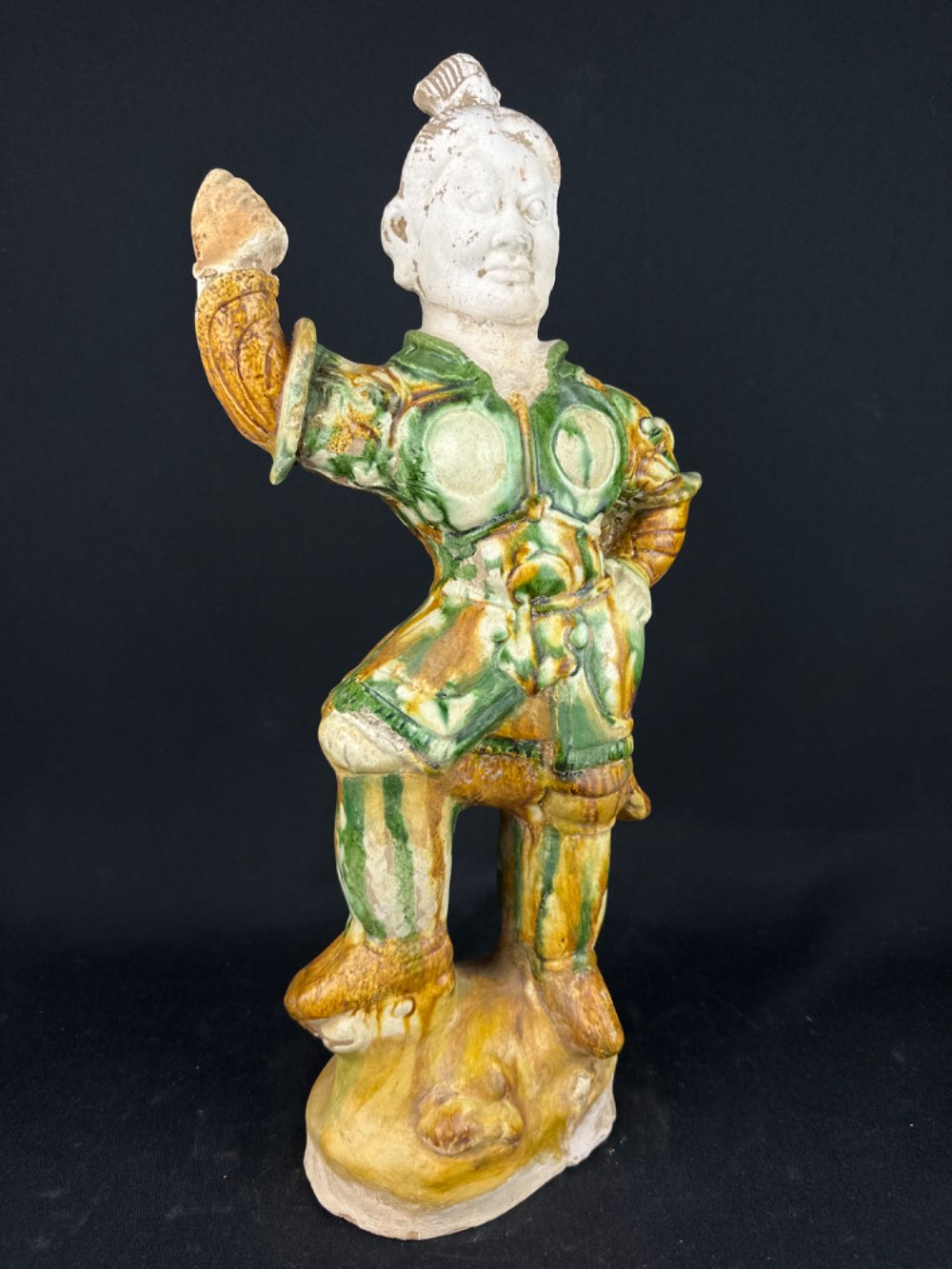
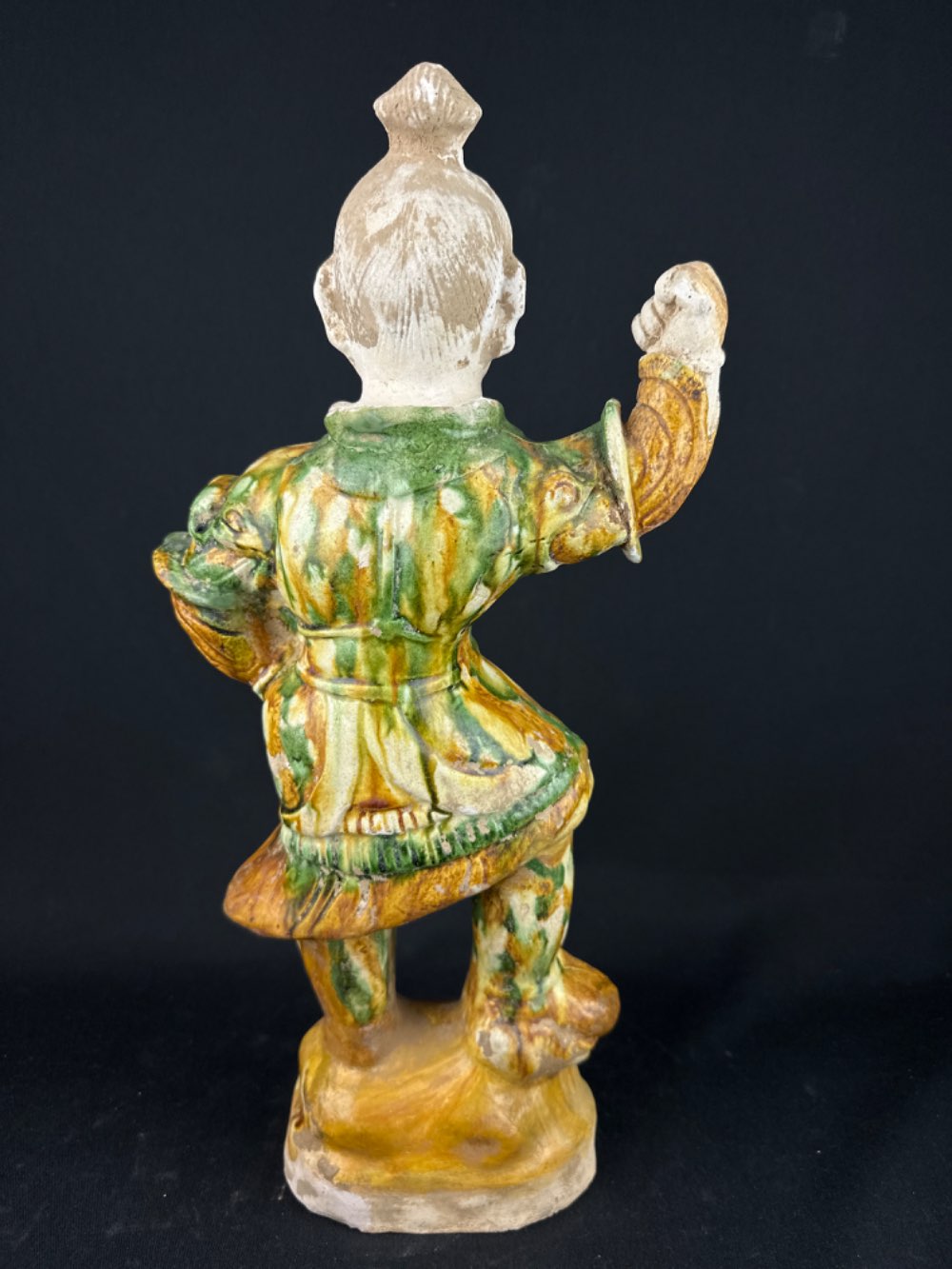
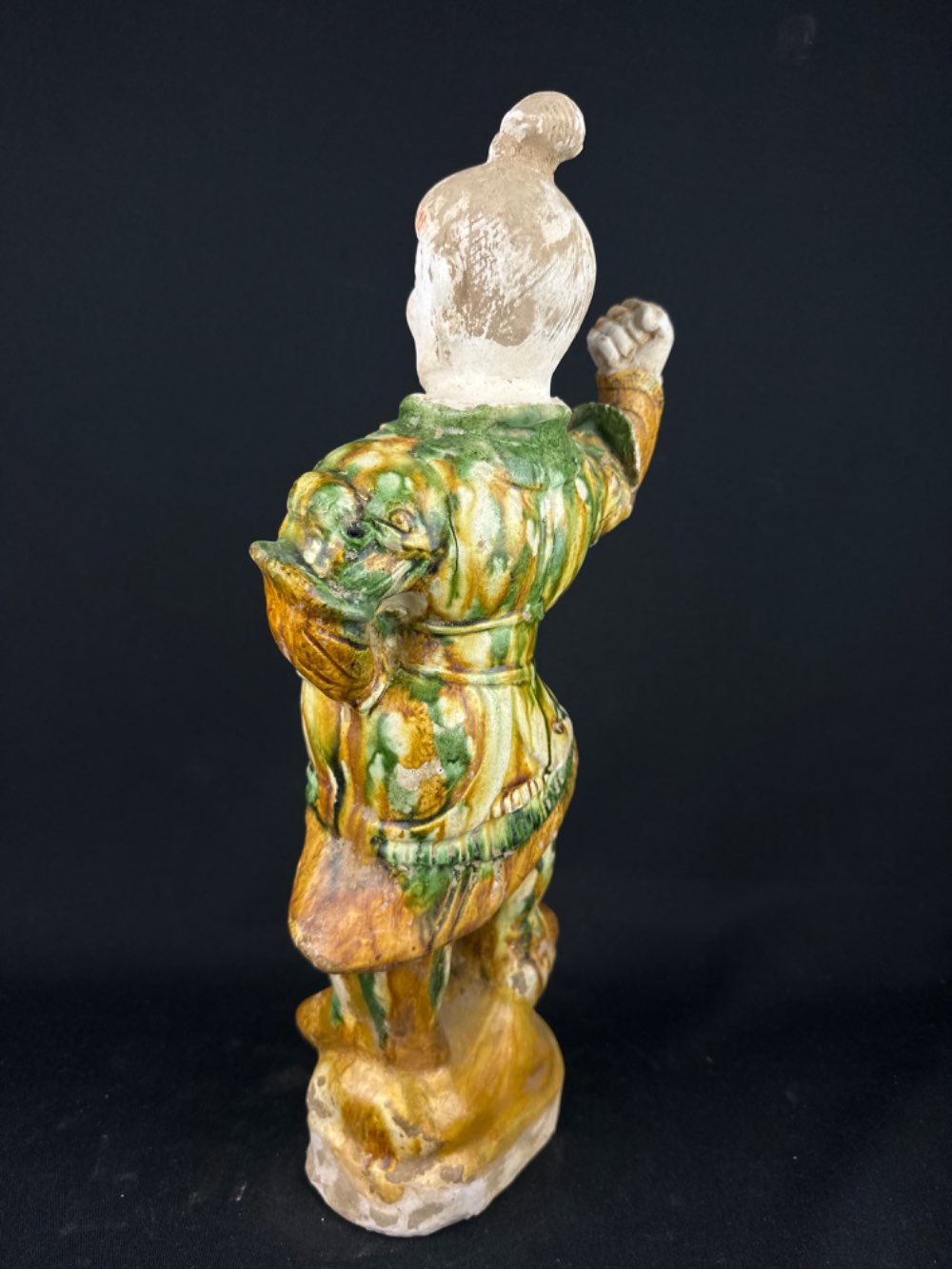
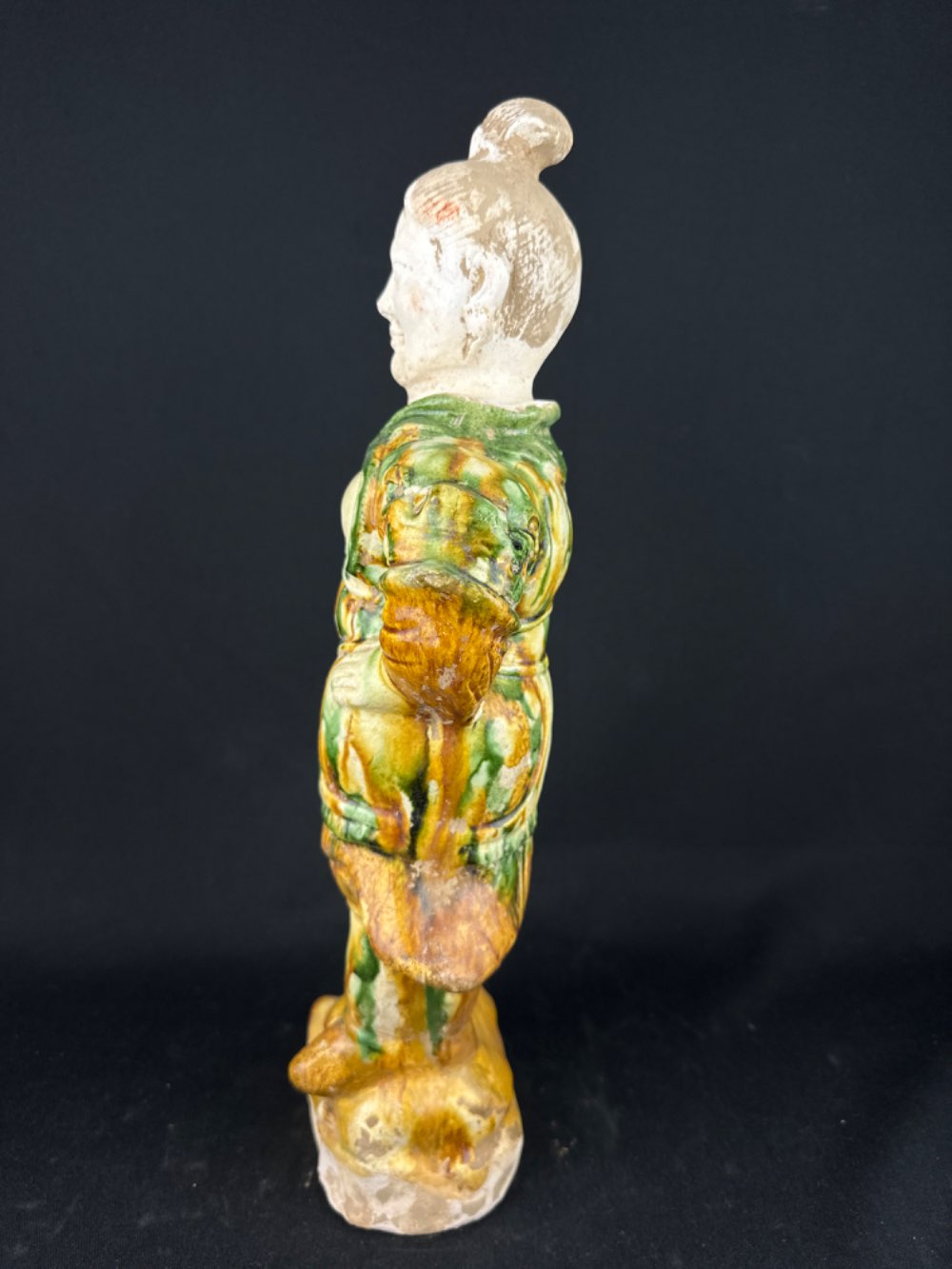
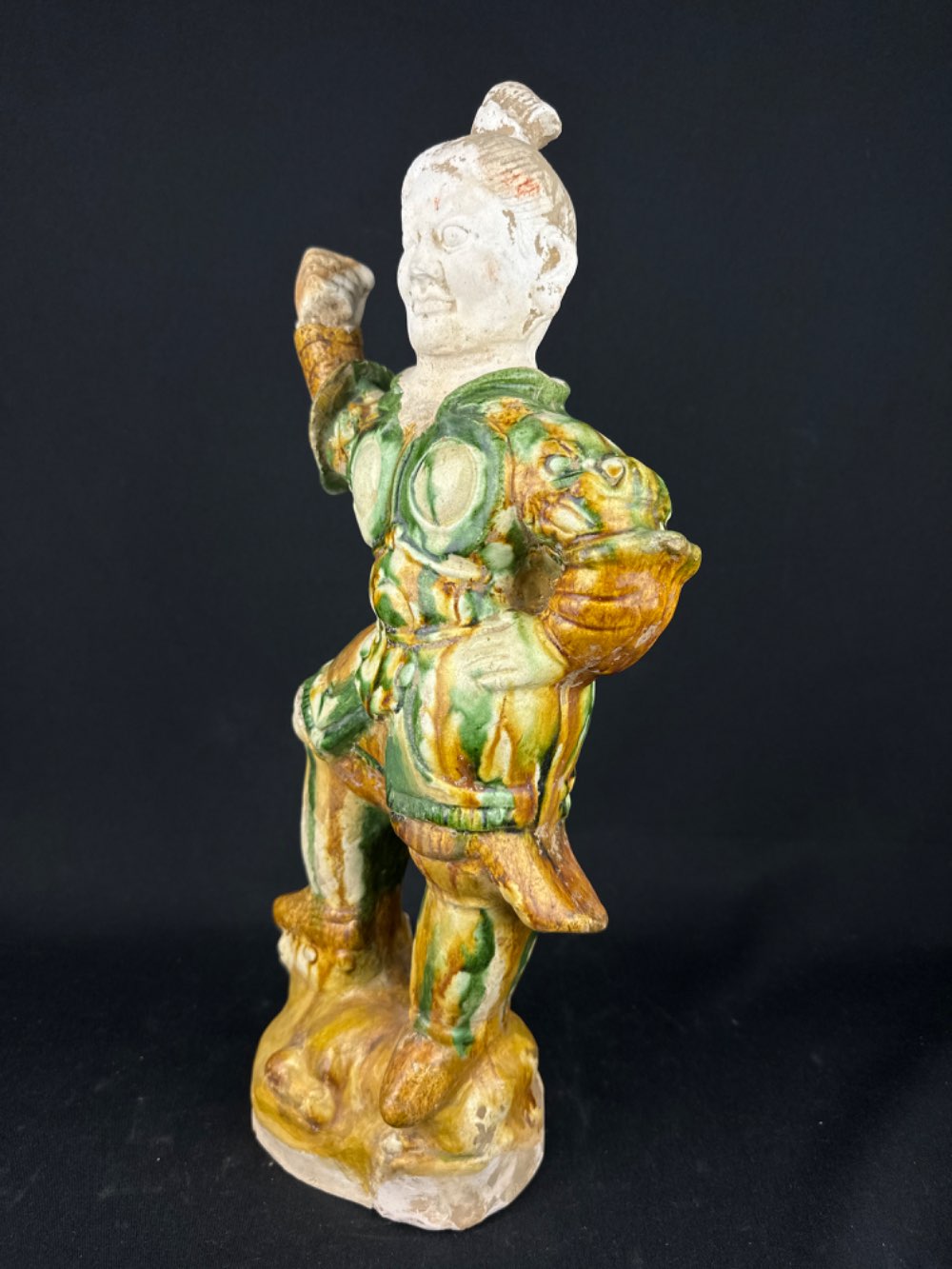
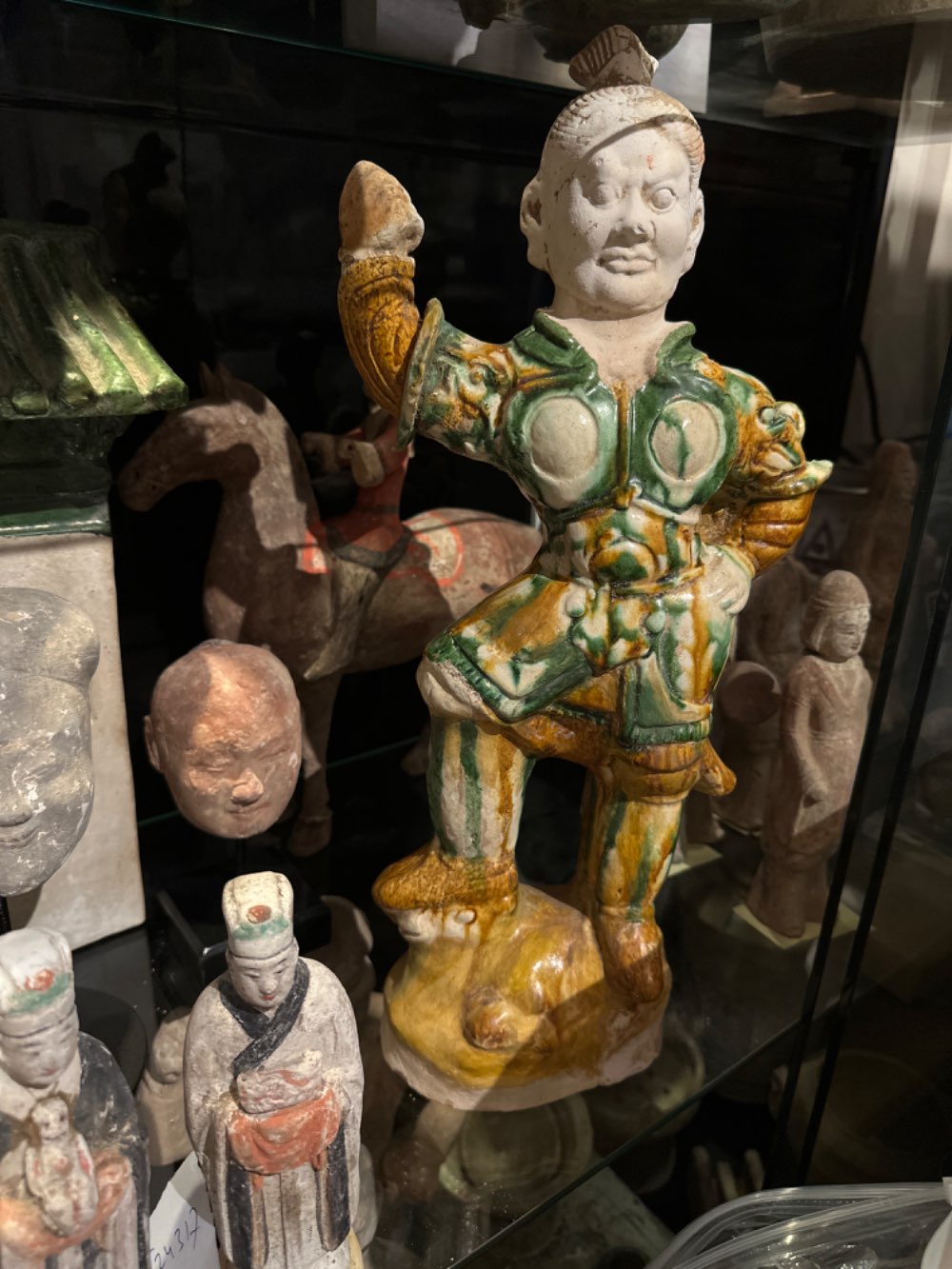
Nice sancai-glazed potter figure of a lokapala from the Tang Dynasty (618-907 AD), TL tested
Nice sancai-glazed potter figure of a lokapala from the Tang Dynasty (618-907 AD), TL tested
- Country: China
- Period: Tang Dynasty (618-907 AD)
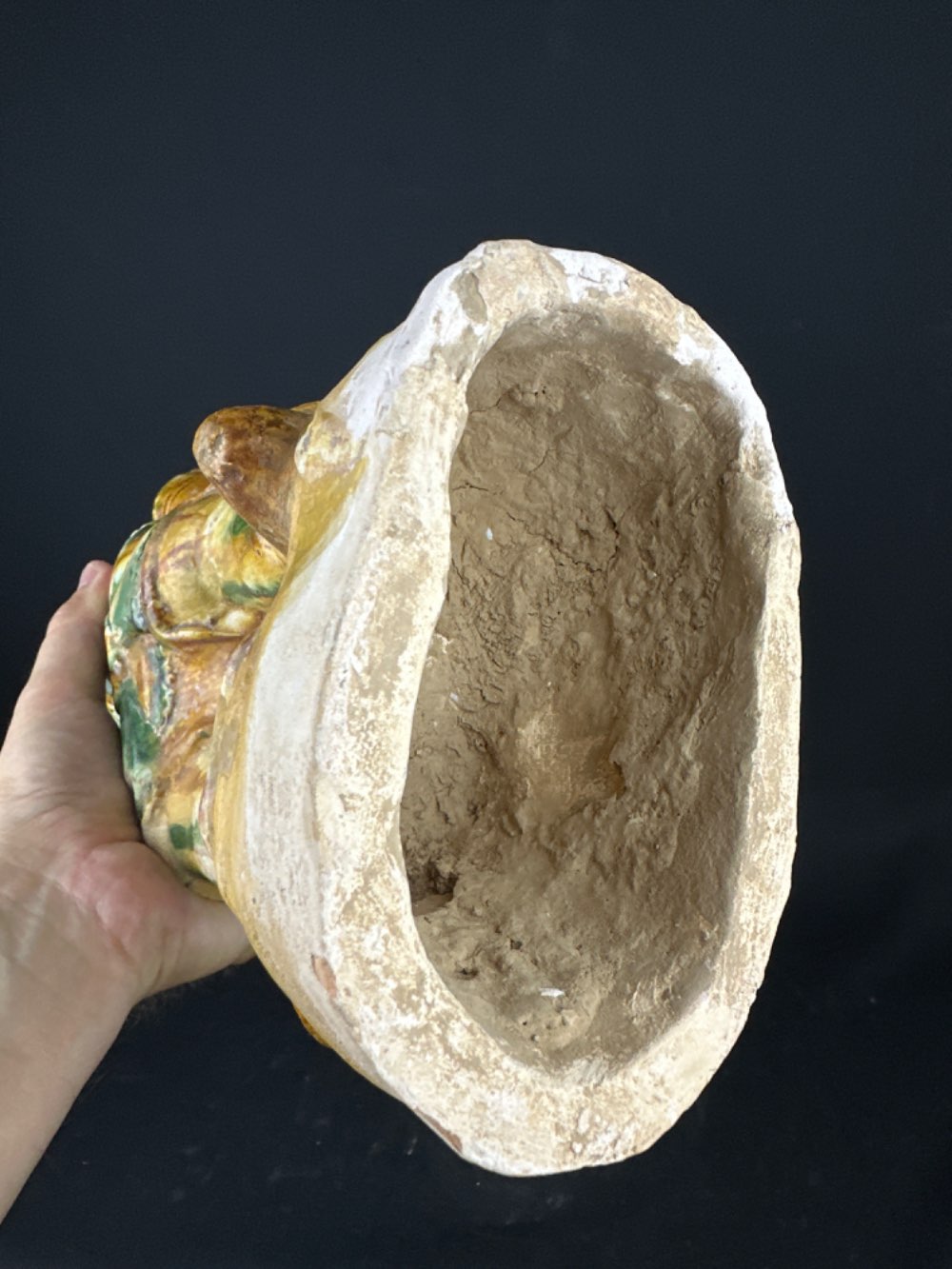
- Material: White terracotta and brown, green and off white glazed
- Size: 43 cm
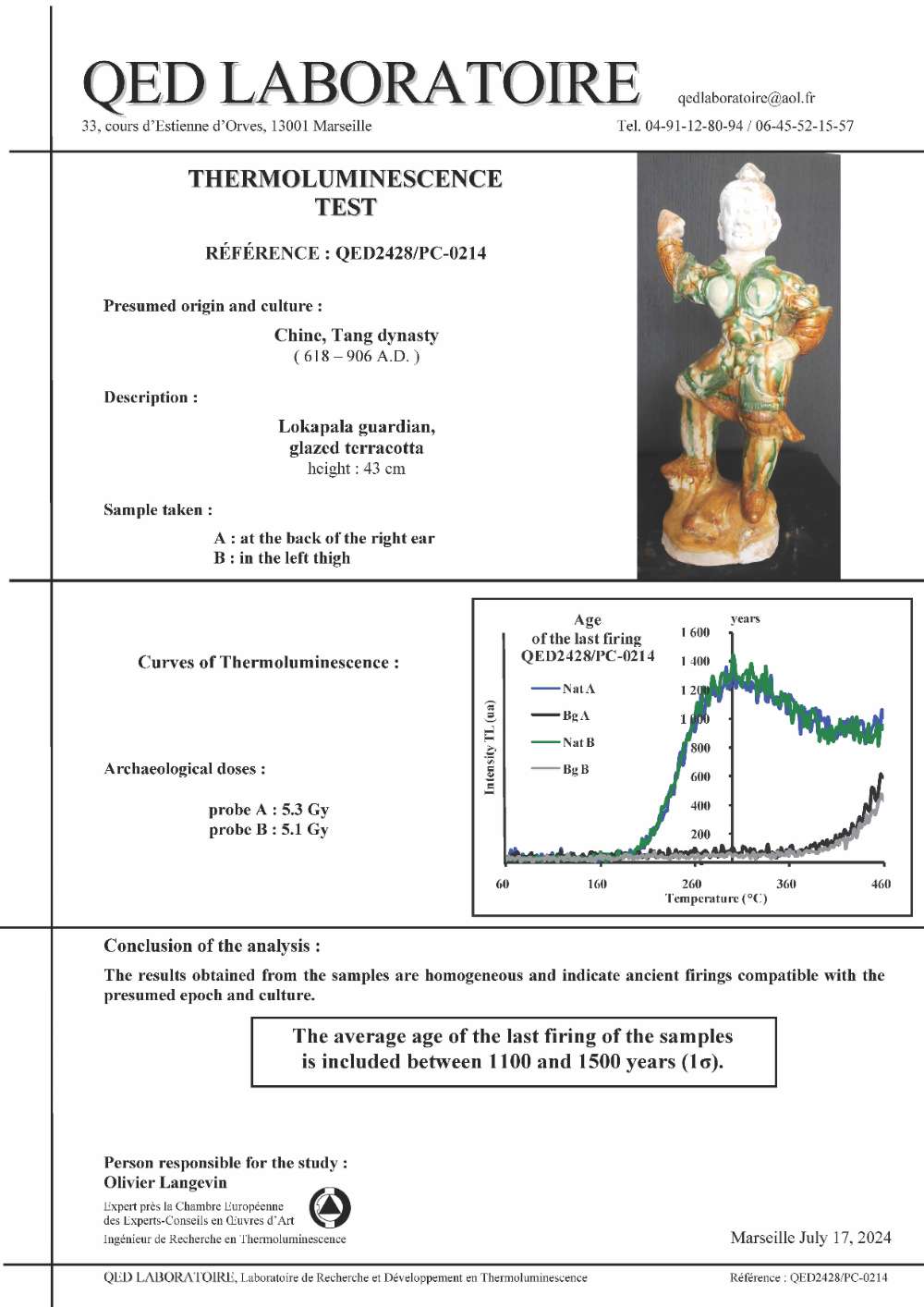
- TL test picture included
- Comes out of an old Dutch collection
More detailed information about this statue and Lokapala's in general
Material and Technique
- Material: The figure is made from earthenware, a common medium for Tang Dynasty pottery.
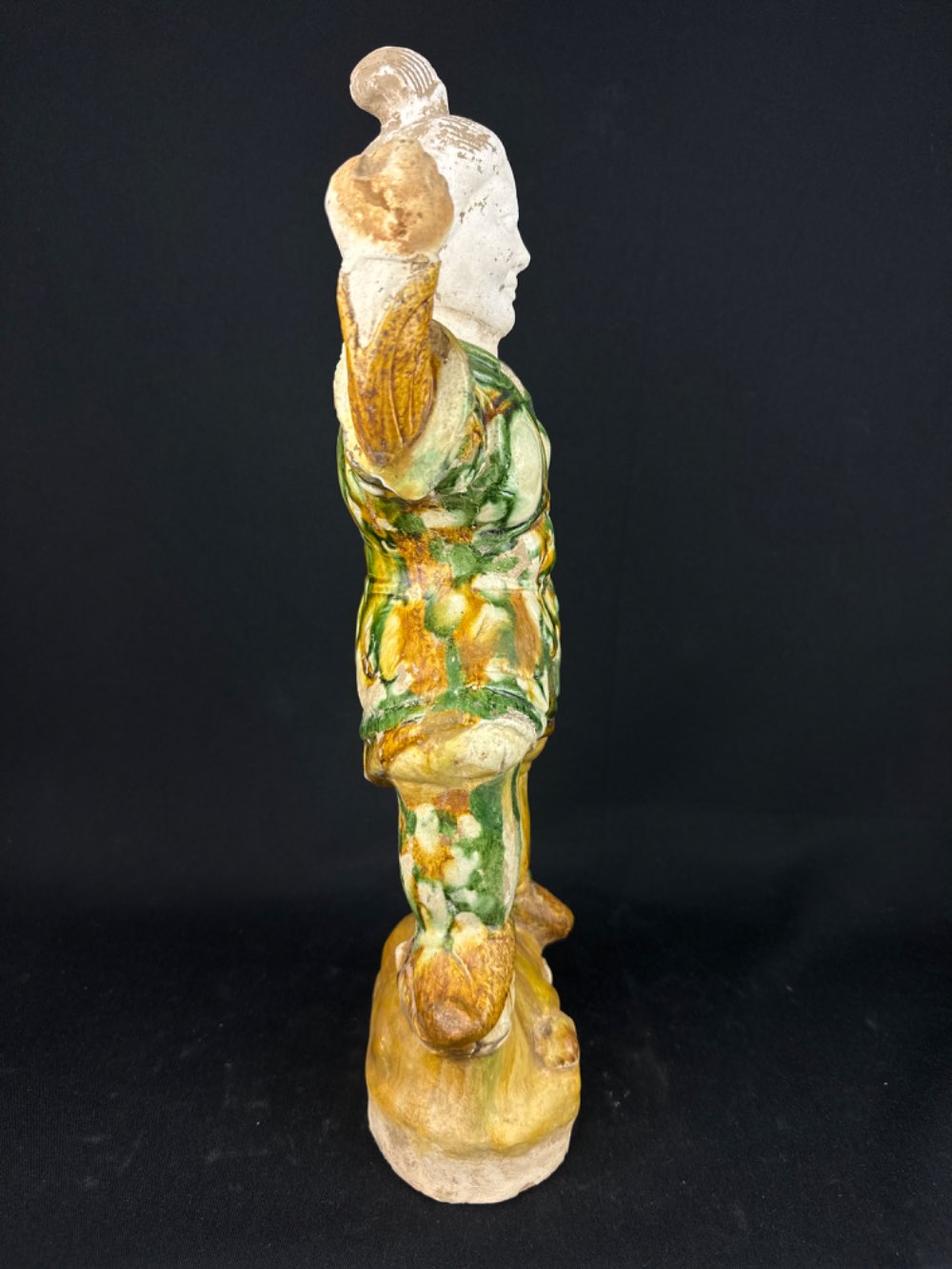
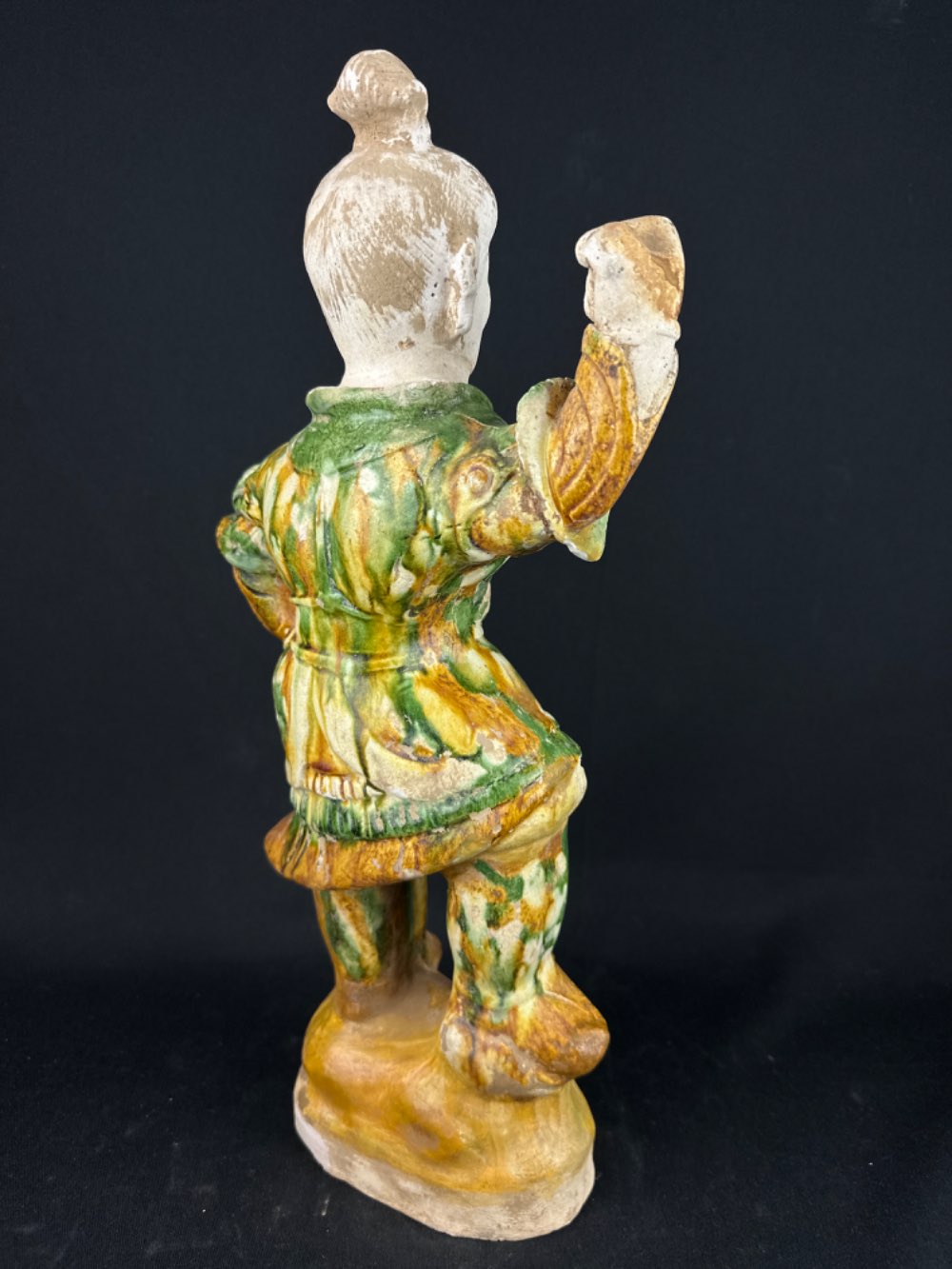
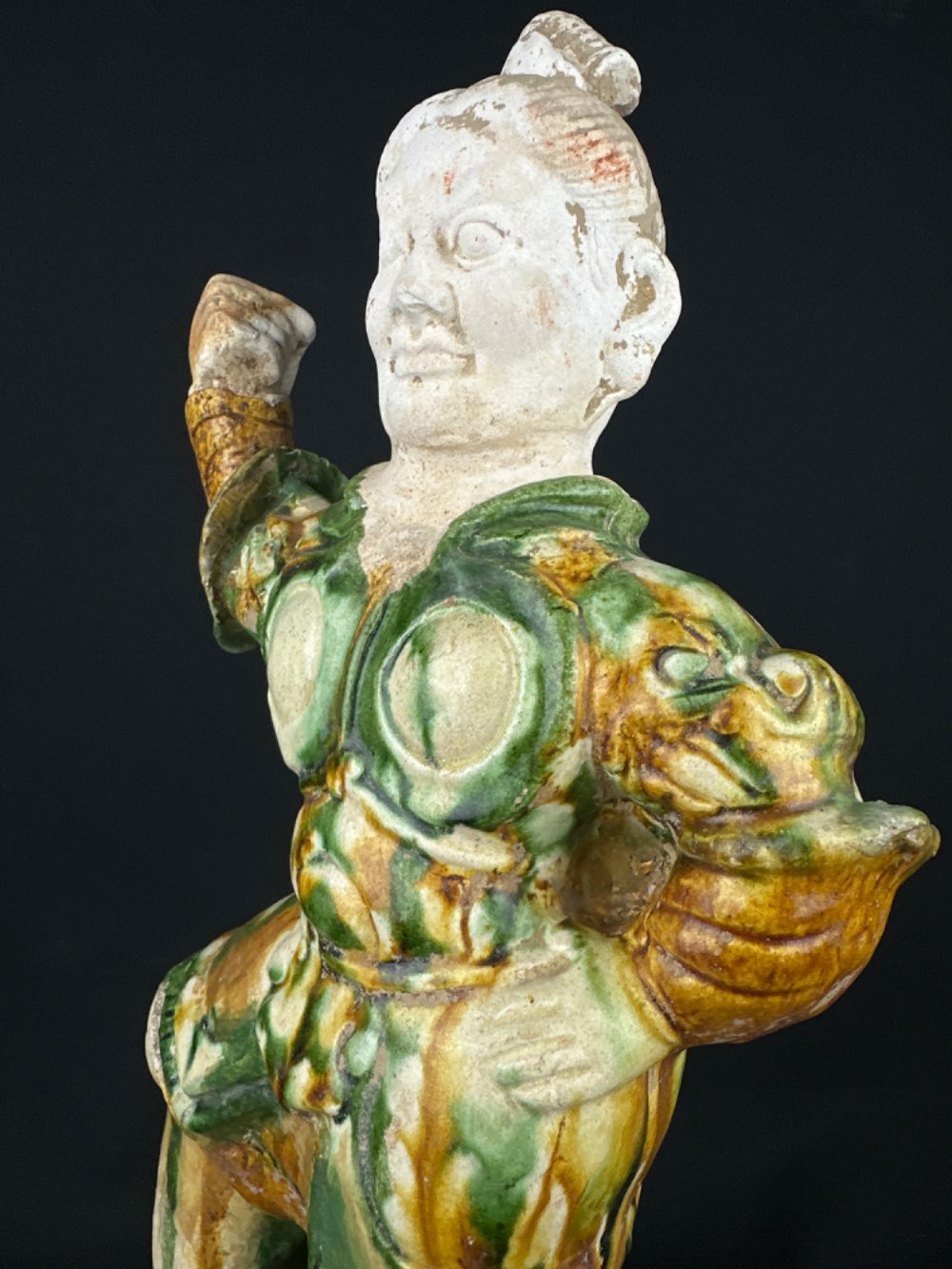
- Glazing: The sancai technique is evident with the use of green, amber (yellow-brown), and white glazes. The colors blend together in a typical sancai manner, creating a dynamic and vibrant surface.
Design and Features
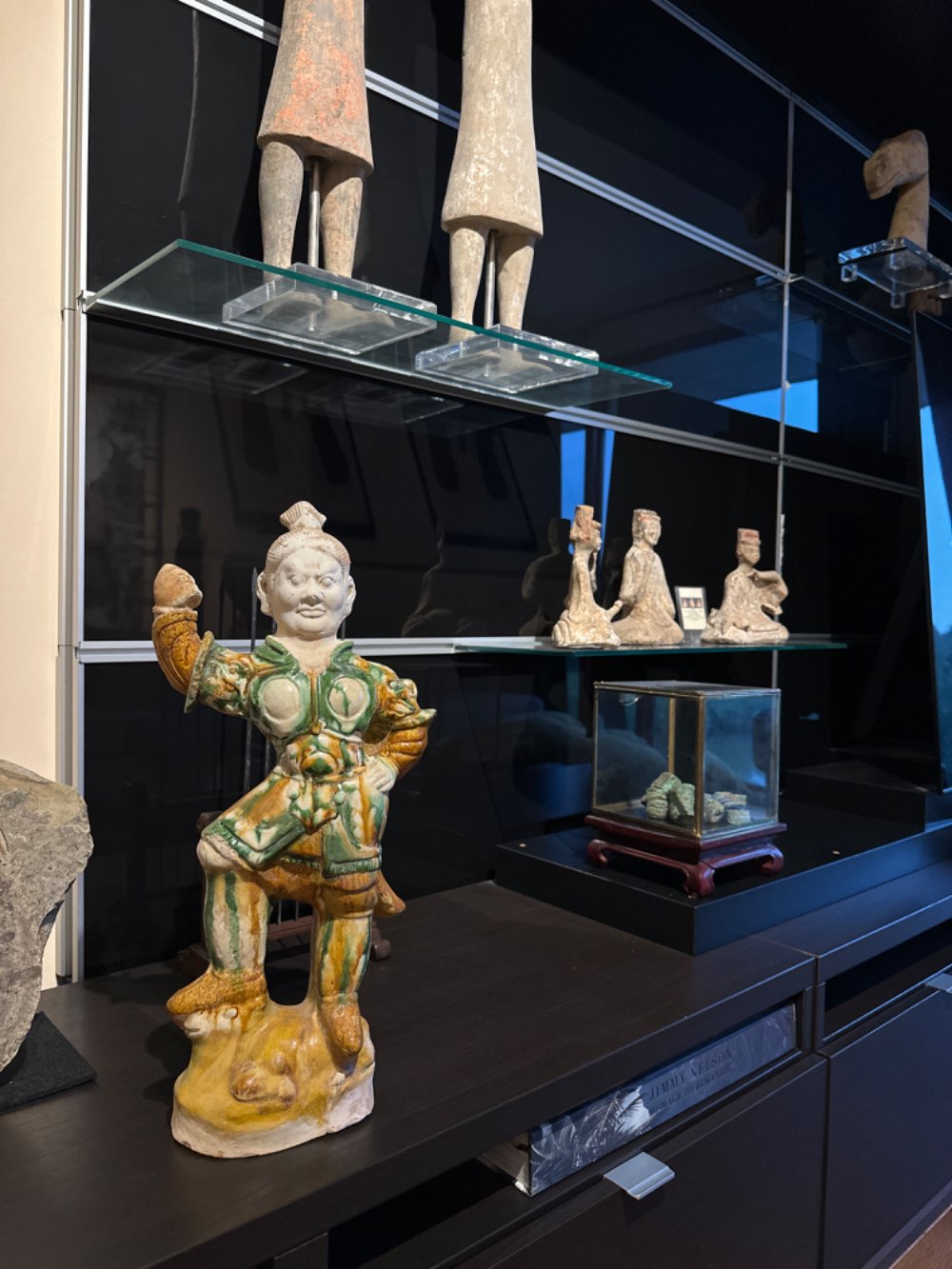
- The figure stands in a dynamic pose with one arm raised and the other arm on the hip, conveying strength and readiness.
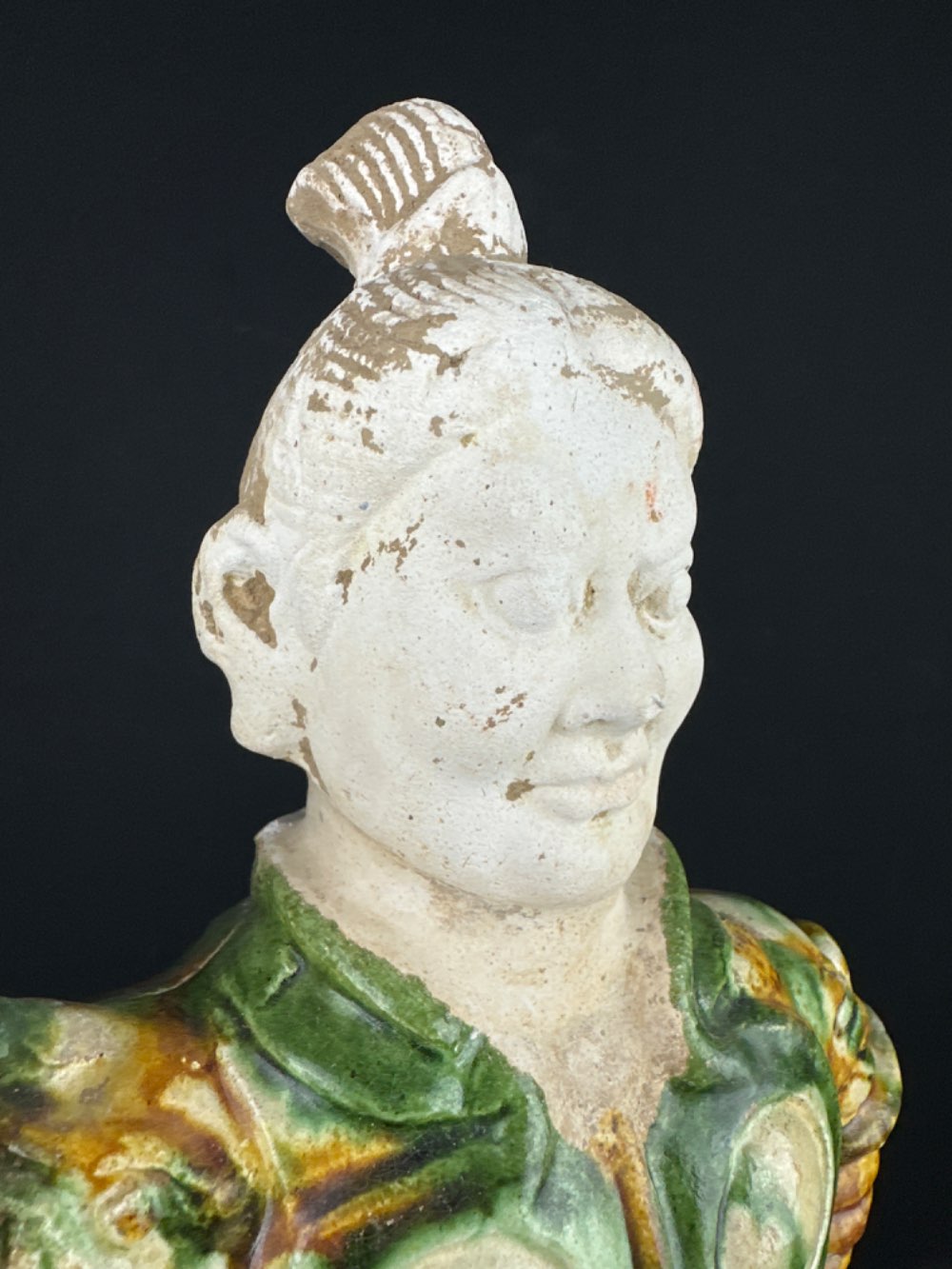
- The facial expression is fierce which is typical of Lokapala figures.
- The figure is adorned in elaborate armor with detailed work on the chest and limbs. The armor is accentuated with green and amber glazes, indicating the high status and importance of the figure.
- The raised knee suggests a stance of vigilance and action, reinforcing the guardian role of the Lokapala.
- The figure stands on an animal what is most likeley a ram.
Cultural and Historical Context
- Tang Dynasty period is renowned for its artistic innovation and cultural exchange, largely due to the Silk Road. The sancai technique was a significant development in ceramics during this time.
- Buddhist Influence: The Tang Dynasty was a golden age for Buddhism in China. Lokapala figures are derived from Buddhist tradition, serving as temple guardians and protectors of the faithful.
- Funerary Art: Many sancai figures were made for tombs to protect the deceased in the afterlife. This Lokapala likely served a similar purpose, ensuring the safe passage and protection of the tomb’s occupant.
Significance
- Artistic Value: This figure exemplifies the high craftsmanship and aesthetic qualities of Tang Dynasty sancai pottery.
- Cultural Insight: It provides insight into the religious practices, funerary customs, and artistic achievements of the Tang Dynasty.
- Historical Importance: Such figures are valuable for understanding the integration of Buddhist iconography into Chinese art and the role of guardian deities in ancient China.
This Lokapala figure is a fine representation of Tang Dynasty sancai pottery, reflecting both the artistic prowess and the spiritual beliefs of the time.
Please send an e-mail via below form, WhatsApp or call to order or get more information about this object.
We can communicate in English, Deutsch and Nederlands!
Nice sancai-glazed potter figure of a lokapala from the Tang Dynasty (618-907 AD), TL tested