
Double click image to enlarge
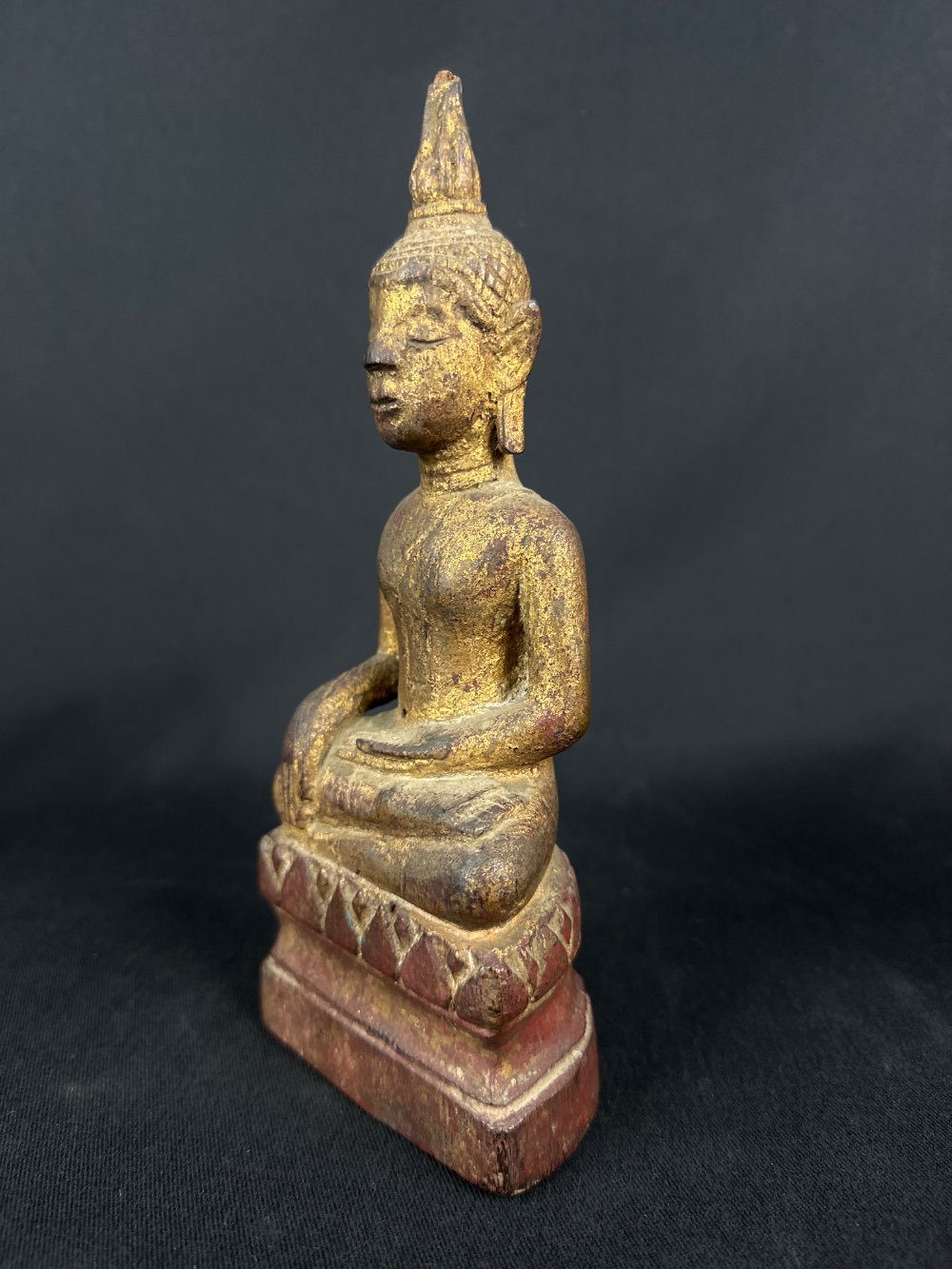
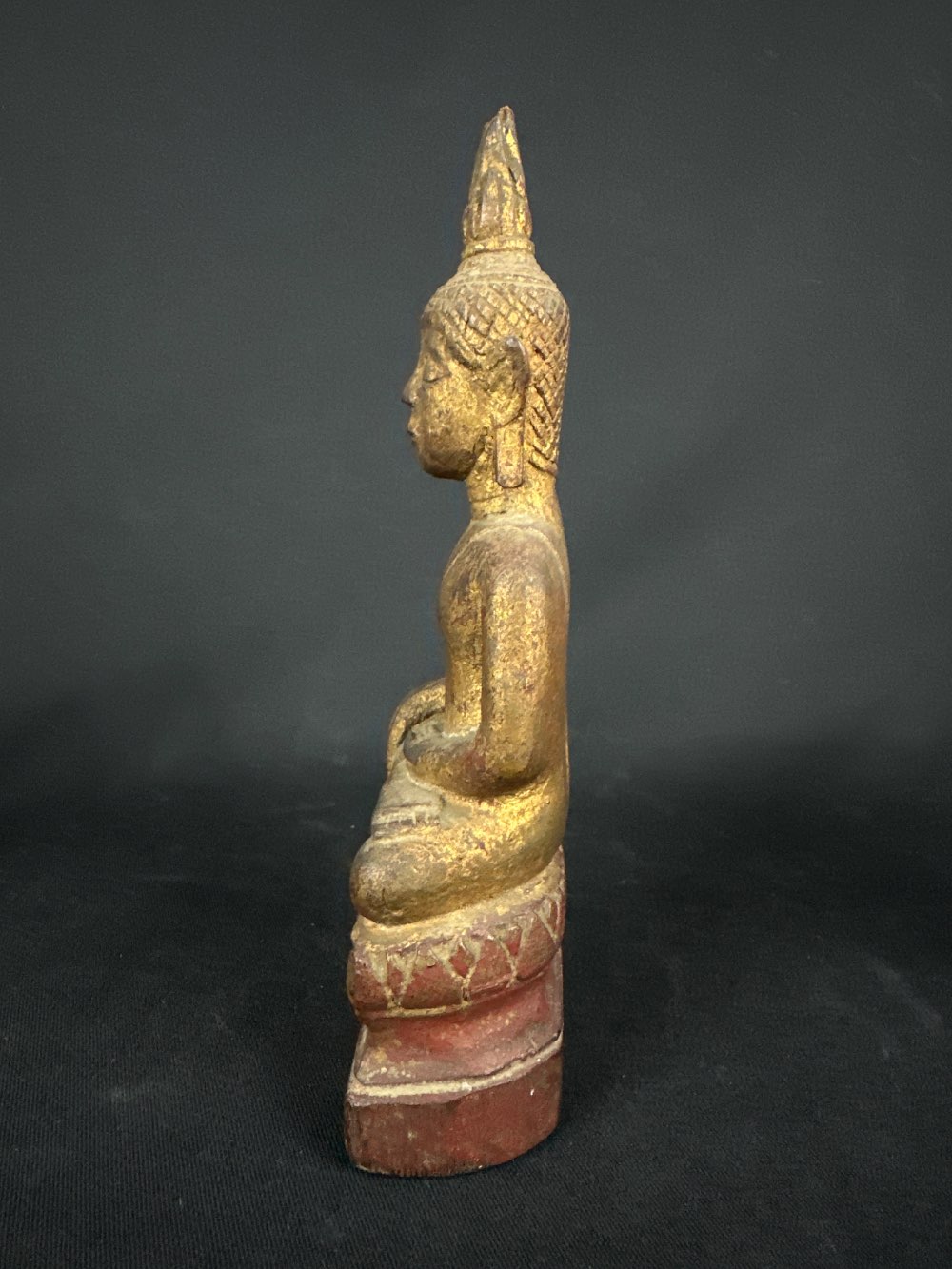
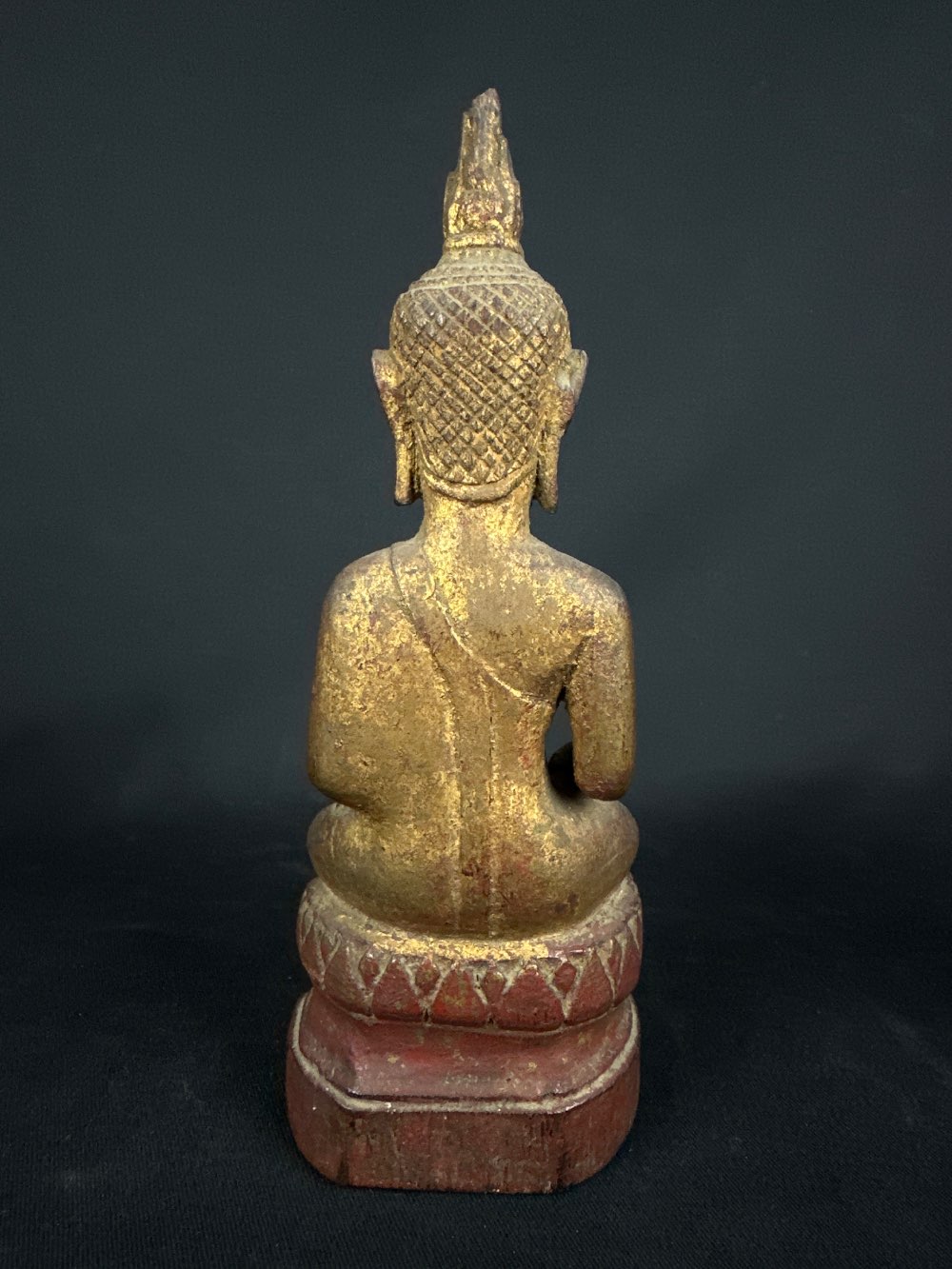
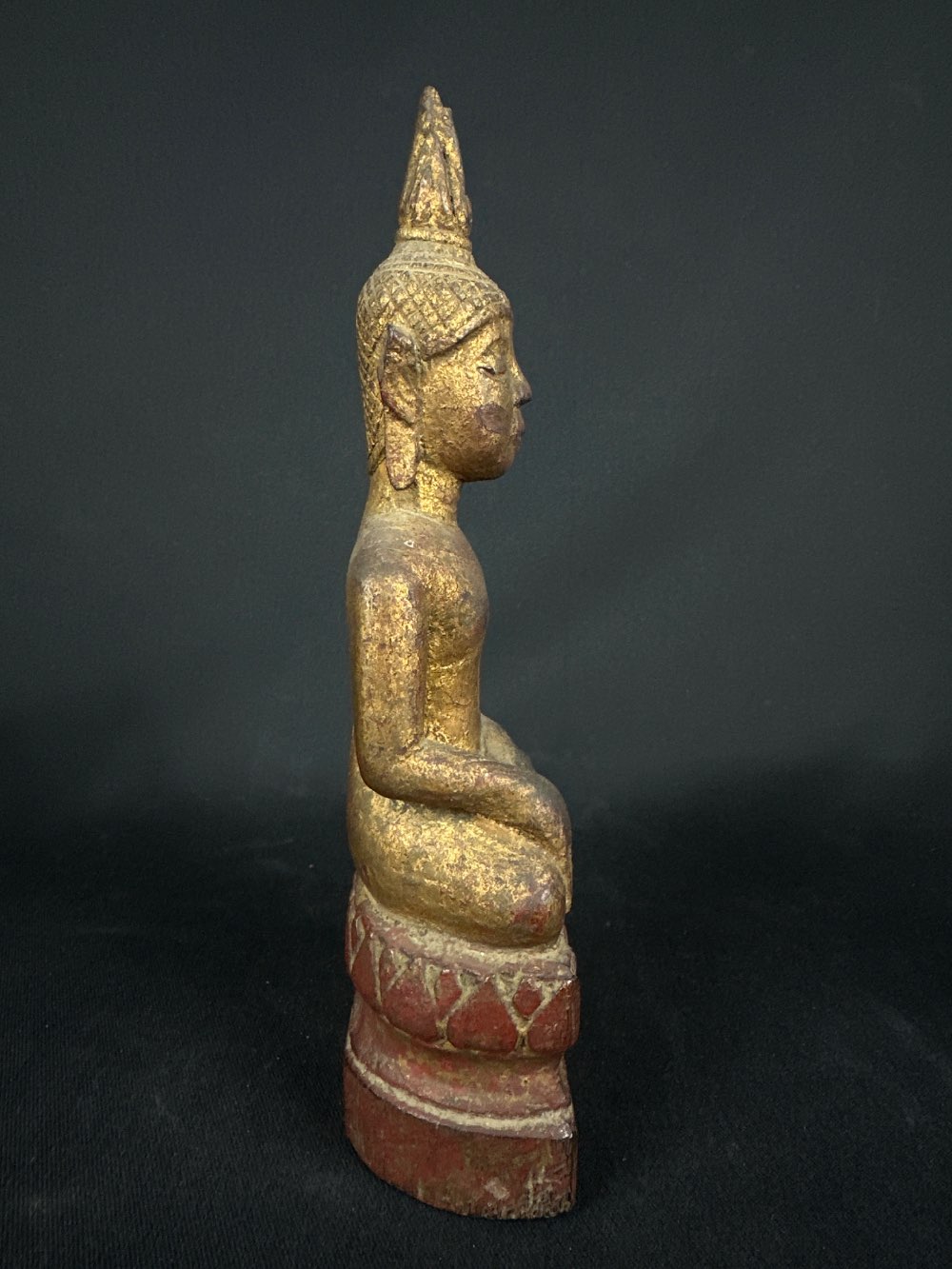
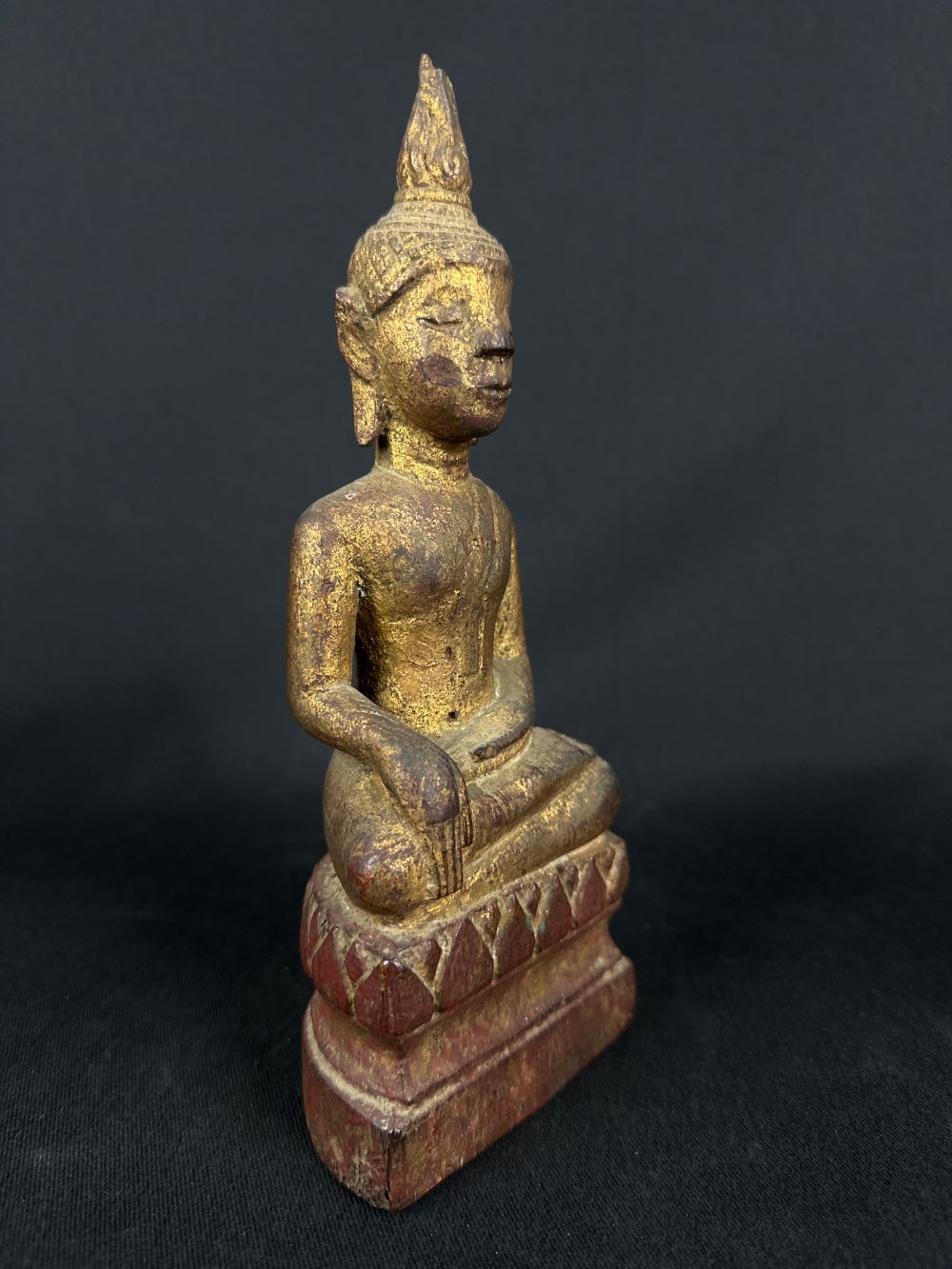
Nice Wooden Thai Lanna Buddha from 19th century
Nice Wooden Thai Lanna Buddha from 19th century
- Country: Thailand
- Period: 19th century Lanna
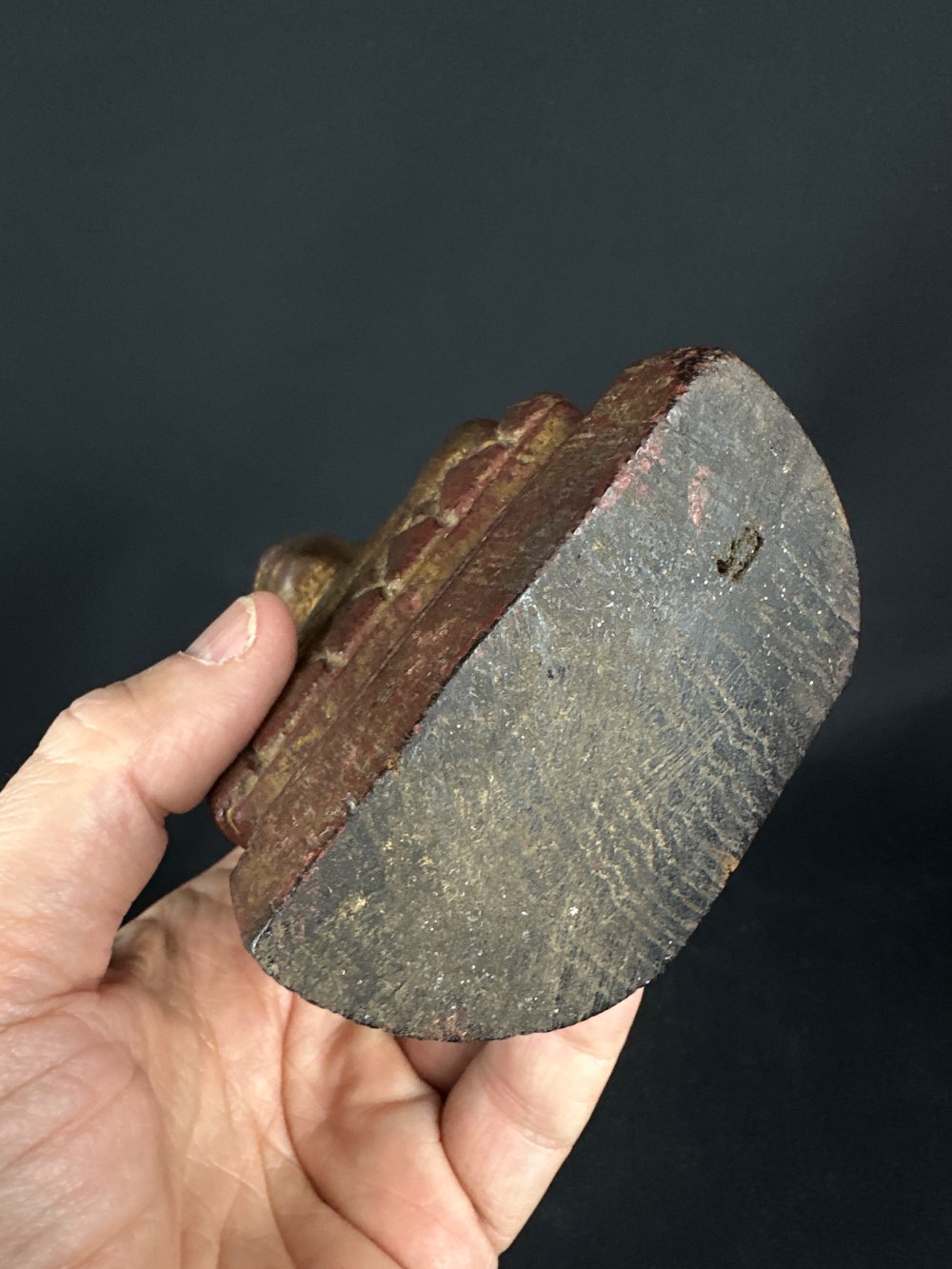
- Material: Wood with traces of gold leave and red paint
- Size: 21 x 8.2 cm
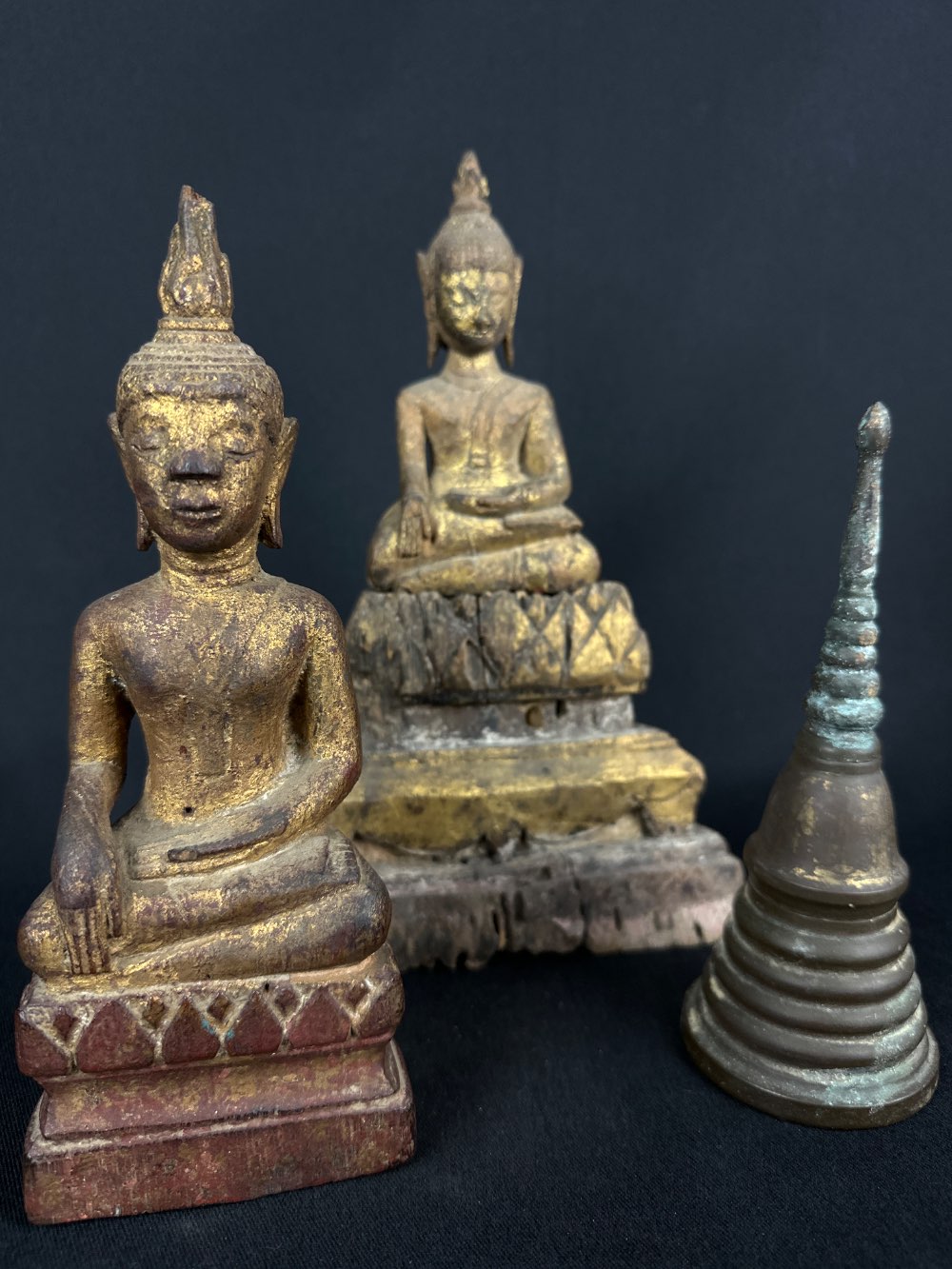
- Buddha and base/throne probably didn't originally belong together.
- Buddha is sitting on a lotus in the Bhumisparsha mudra.
The image of Buddha sitting on a lotus in the Bhumisparsha Mudra is one of the most iconic and spiritually significant depictions in Buddhist art and iconography, rich with symbolism reflecting profound philosophical and spiritual meanings. The lotus flower in this imagery represents purity, spiritual enlightenment, and resilience. It grows in muddy water, yet emerges pristine and beautiful, symbolizing the ability to rise above defilements and suffering. The lotus is often associated with the purification of the body, speech, and mind. Seeing the Buddha seated on a fully bloomed lotus signifies his awakened state and the realization of Nirvana.
The Buddha is typically shown in a cross-legged position (Padmasana), which represents a stable and grounded meditative state. His posture conveys tranquility, inner peace, and unwavering focus, symbolizing the Buddha’s deep meditative absorption.
The Bhumisparsha Mudra, or "Earth Touching Gesture," is performed by the Buddha sitting with his right hand reaching down to touch the ground, while his left hand rests on his lap, palm facing upward. This mudra symbolizes the moment of the Buddha's enlightenment under the Bodhi tree, where he called upon the Earth to witness his attainment of enlightenment. According to Buddhist tradition, before achieving enlightenment, the Buddha (then Siddhartha Gautama) was confronted by Mara, the personification of temptation and illusion. To dispel Mara's doubts and claim his right to enlightenment, Siddhartha reached down and touched the Earth with his right hand, calling upon it to bear witness to his countless lifetimes of virtuous actions. The Earth responded, quelling Mara and his forces, thereby affirming the Buddha's resolve and purity. The Bhumisparsha Mudra symbolizes unshakable faith, determination, and the Buddha’s victory over temptation and distractions. It represents the moment when Siddhartha transcended worldly attachments and achieved enlightenment, becoming the Buddha. The gesture also emphasizes the interconnectedness of all beings with the Earth, highlighting a deeper ecological and spiritual unity.
The combination of the Buddha on a lotus with the Bhumisparsha Mudra is a representation of transcendence over worldly suffering and the achievement of spiritual awakening. Artists often depict the Buddha with a serene and compassionate expression, emphasizing his state of bliss and wisdom. Surrounding elements like halos, bodhi leaves, or a calm background might be included to further enhance the sacred atmosphere.
This depiction of the Buddha is not just a piece of art but a visual meditation on the path to enlightenment, encouraging practitioners to stay grounded, pure, and determined in their spiritual journey.
_________________________________________________________________
The Lanna period represents a significant chapter in the history and culture of Northern Thailand, with the Lanna Kingdom flourishing between the 13th and 18th centuries, especially during its golden age from the 13th to the 16th century. The name "Lanna" translates to "Land of a Million Rice Fields," reflecting the region's fertile lands and agricultural abundance. The Lanna Kingdom was founded by King Mangrai in 1292, who established the capital city of Chiang Mai in 1296, turning it into a cultural and political hub. Before Lanna's rise, the region was composed of smaller city-states influenced by neighboring empires like the Khmer, Mon, and Haripunchai.
Please send an e-mail via below form, WhatsApp or call to order or get more information about this object.
We can communicate in English, Deutsch and Nederlands!
Nice Wooden Thai Lanna Buddha from 19th century