




Double click image to enlarge
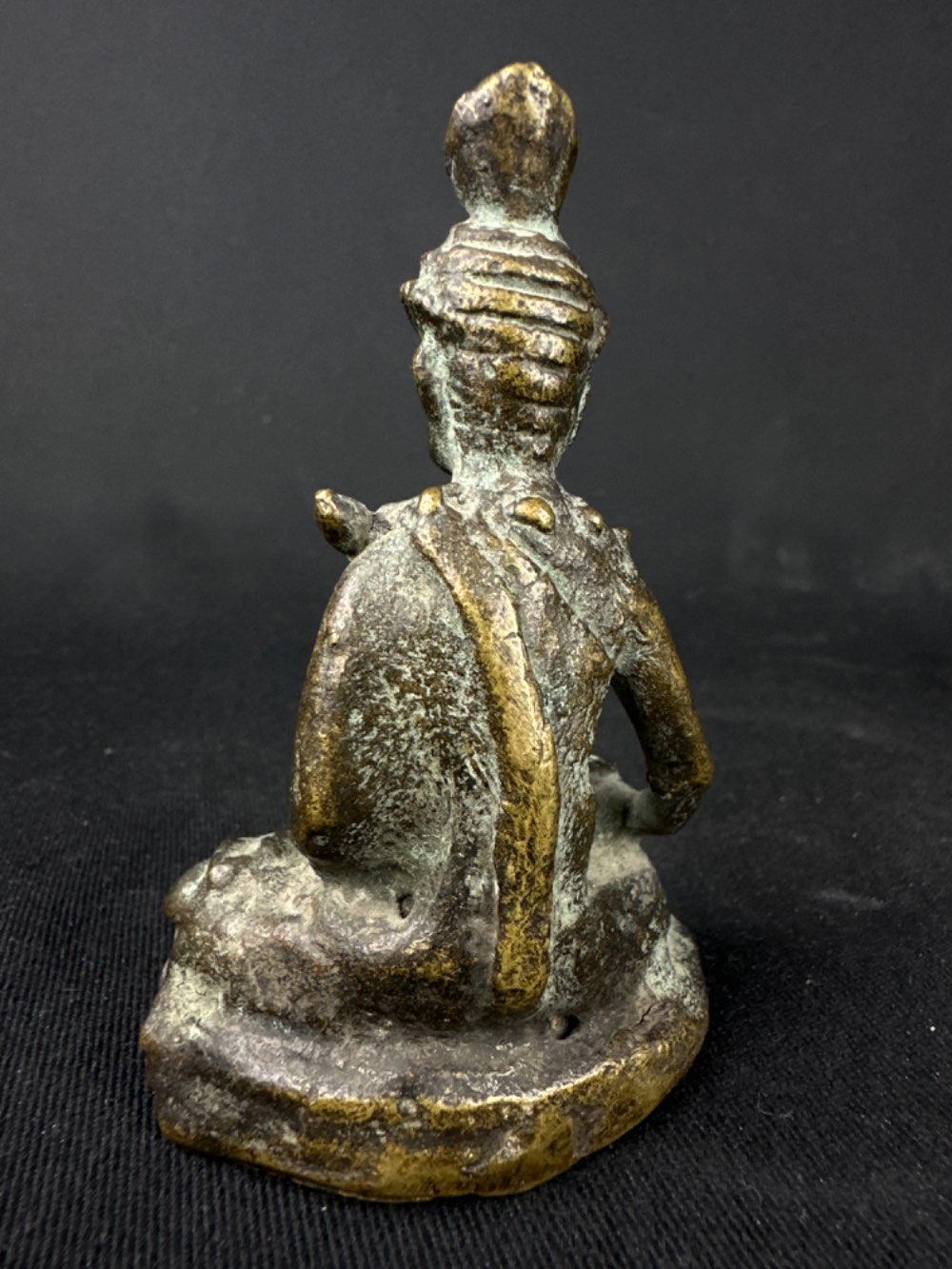
Old Bronze Thai hermit amulet with animal face
Old Bronze Thai hermit amulet with animal face
- Country: Thailand
- Period: 19th/20th century
- Material: Bronze
- Size: 9 cm
- Thai hermit with animal head, bowl in the right hand and lotus bud in the left
- The bottom base is partly missing
- Comes from an old Dutch collection.
In Thai culture, hermits hold a unique and revered position. Known as "Ruesi" (ฤๅษี) in Thai, these figures have long been part of the country's religious, cultural, and mystical traditions. The term "Ruesi" derives from the Sanskrit word "Rishi", meaning sage or ascetic, which reflects the influence of ancient Indian spiritual practices on Southeast Asian culture. Hermits in Thailand are associated with asceticism, wisdom, and supernatural powers.
Historical and Cultural Roots
The tradition of hermits in Thailand can be traced back to the influences of Hinduism and Brahmanism, which predate Buddhism in the region. In early Thai kingdoms, particularly the Dvaravati and Sukhothai periods, Brahmanical rituals and beliefs were prevalent, and the figure of the Ruesi, as a learned mystic or sage, became prominent. These hermits were often regarded as advisors to kings, healers, and spiritual guides.
With the rise of Theravada Buddhism, the role of hermits evolved but persisted. While they were not officially part of the Buddhist monastic tradition, hermits were respected for their pursuit of spiritual enlightenment outside of established religious institutions. Many hermits practiced a blend of Hindu, animist, and Buddhist rituals, bridging various belief systems and maintaining a vital role in Thai spiritual life.
Role and Significance in Thai Culture
Ruesi are typically depicted as wise sages living in isolation, practicing meditation and self-discipline to attain higher knowledge and spiritual power. Their role is multifaceted:
-
Advisors and Protectors: Historically, Ruesi were believed to have profound wisdom and foresight. They were sought after by rulers and warriors for guidance and blessings. In Thai folklore, hermits often appear as protectors of sacred knowledge and wielders of amulets or magical talismans.
-
Healers and Herbalists: Many Ruesi were known for their mastery of traditional medicine and herbal remedies. They are believed to possess knowledge of natural healing, and in some cases, their amulets or tattoos (sak yant) are thought to provide protection and health.
-
Spiritual Practitioners: Although Ruesi are not monks, they are known for their deep meditation practices and often practice forms of magical rituals or occult teachings. Many people believe in the Ruesi’s supernatural abilities, such as seeing into the future, controlling natural elements, or manipulating fate. This mysticism has played a large role in shaping the perception of hermits in Thailand as being individuals who have transcended the ordinary.
-
Cultural Icons: The figure of the Ruesi has become iconic in Thai cultural symbolism. Statues of hermits are often seen at temples or shrines, where people come to pay their respects and seek blessings for wisdom or protection. During festivals or rituals, the image of a Ruesi, often depicted with a long beard and a tiger-skin robe, is sometimes included to invoke blessings of knowledge or spiritual power.
-
Tattoo Masters: In modern times, Ruesi have become especially associated with the art of sak yant—sacred tattooing. Many Thai people believe that these tattoos, when created by a skilled Ruesi or spiritual master, provide powerful protection, bring good luck, or enhance personal attributes like courage and charisma.
Modern-day Influence
Although the traditional role of hermits has diminished over time, the Ruesi continue to have a significant presence in Thai popular culture and spirituality. Many Thais, including government officials, businesspeople, and even celebrities, seek the blessings or guidance of hermits for prosperity and protection.
Modern Ruesi are often not entirely isolated; they may engage with society by providing consultations, performing rituals, or crafting protective amulets. Some are seen as masters of Buddhist magic or ritualistic experts who perform ceremonies for success, fortune, or healing. Although the deeply spiritual and ascetic lives of ancient Ruesi have largely disappeared, their legacy remains alive through a combination of respect, ritual, and myth.
In popular Thai media, the image of the Ruesi still appears in movies, dramas, and novels, often representing the epitome of spiritual power and wisdom. Additionally, the influence of the Ruesi tradition can be seen in the popularization of Thai martial arts and other cultural practices where the hermit is honored as the originator of ancient techniques and teachings.
Please send an e-mail via below form, WhatsApp or call to order or get more information about this object.
We can communicate in English, Deutsch and Nederlands!
Old Bronze Thai hermit amulet with animal face