Double click image to enlarge
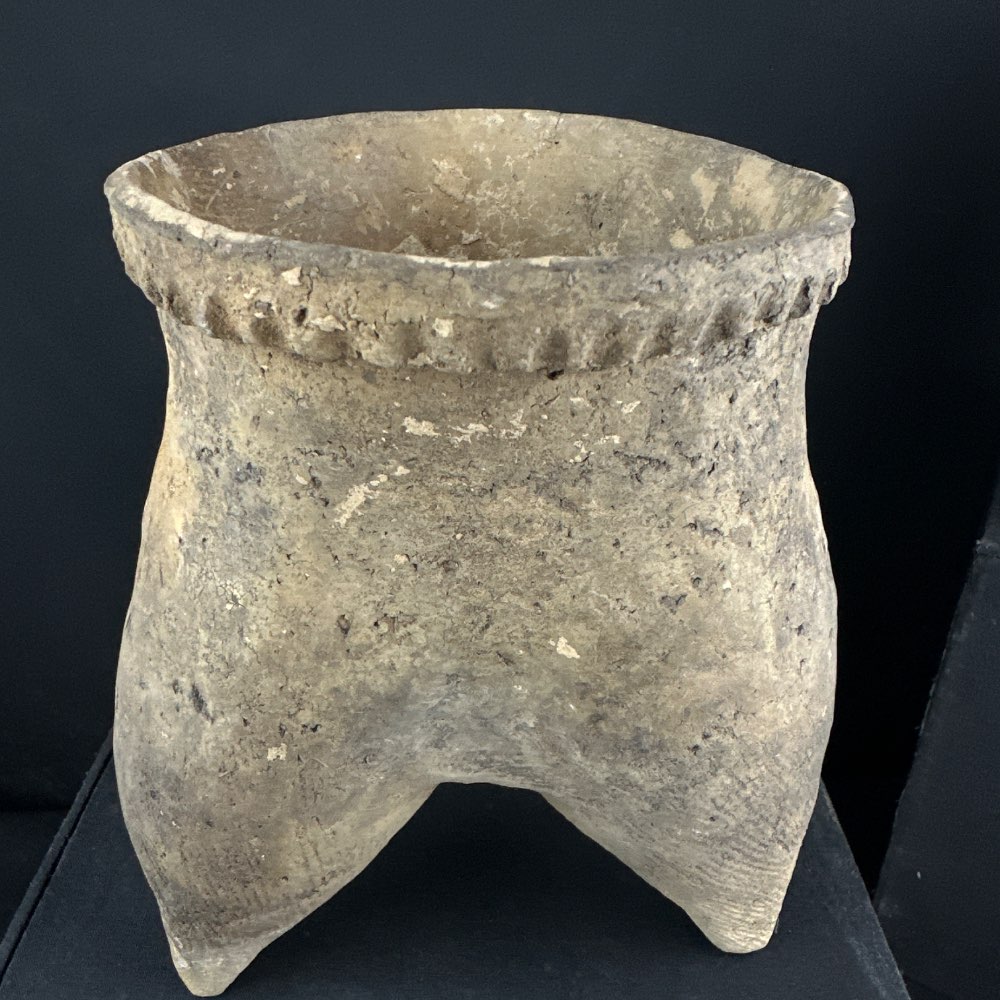
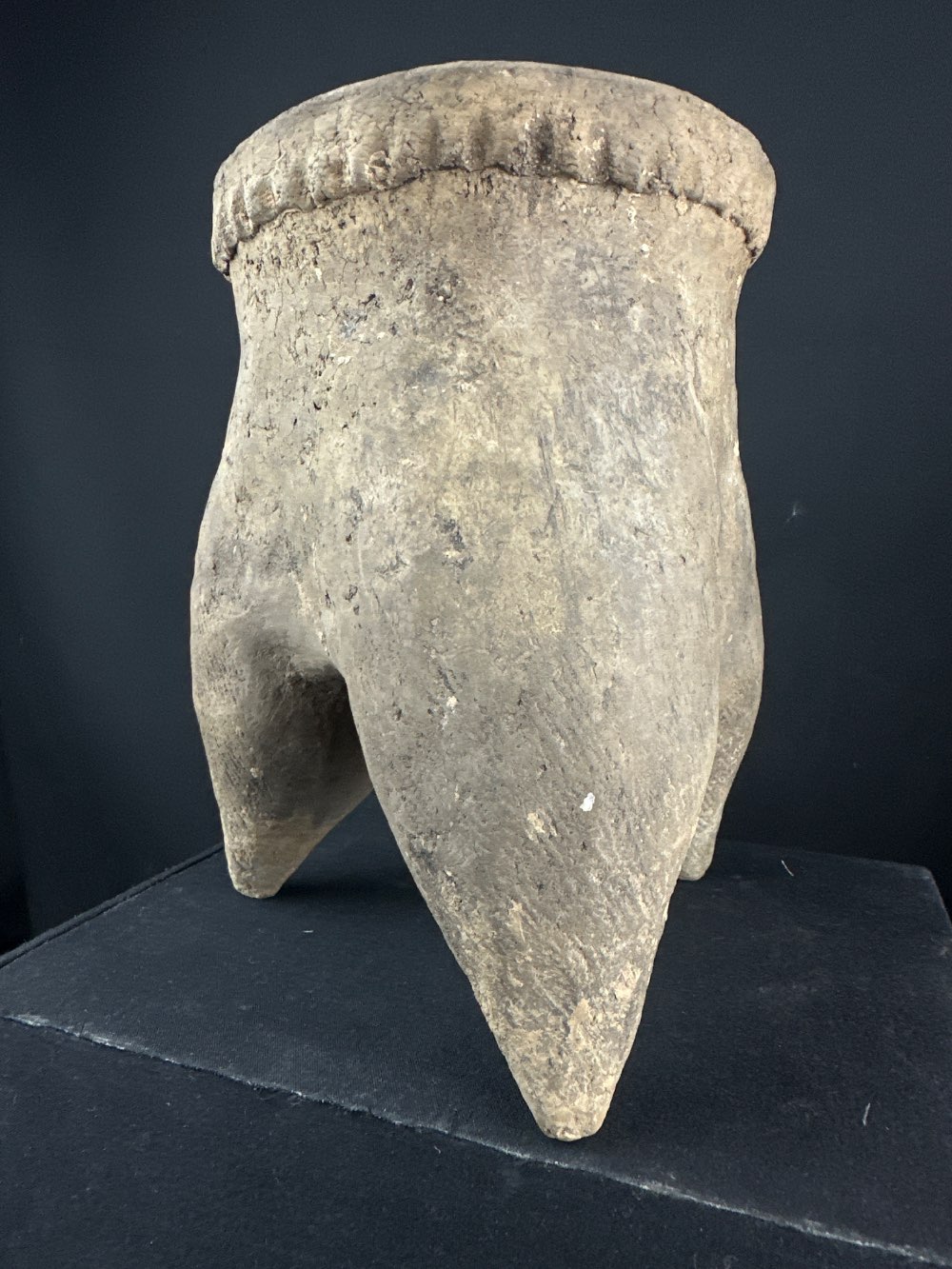
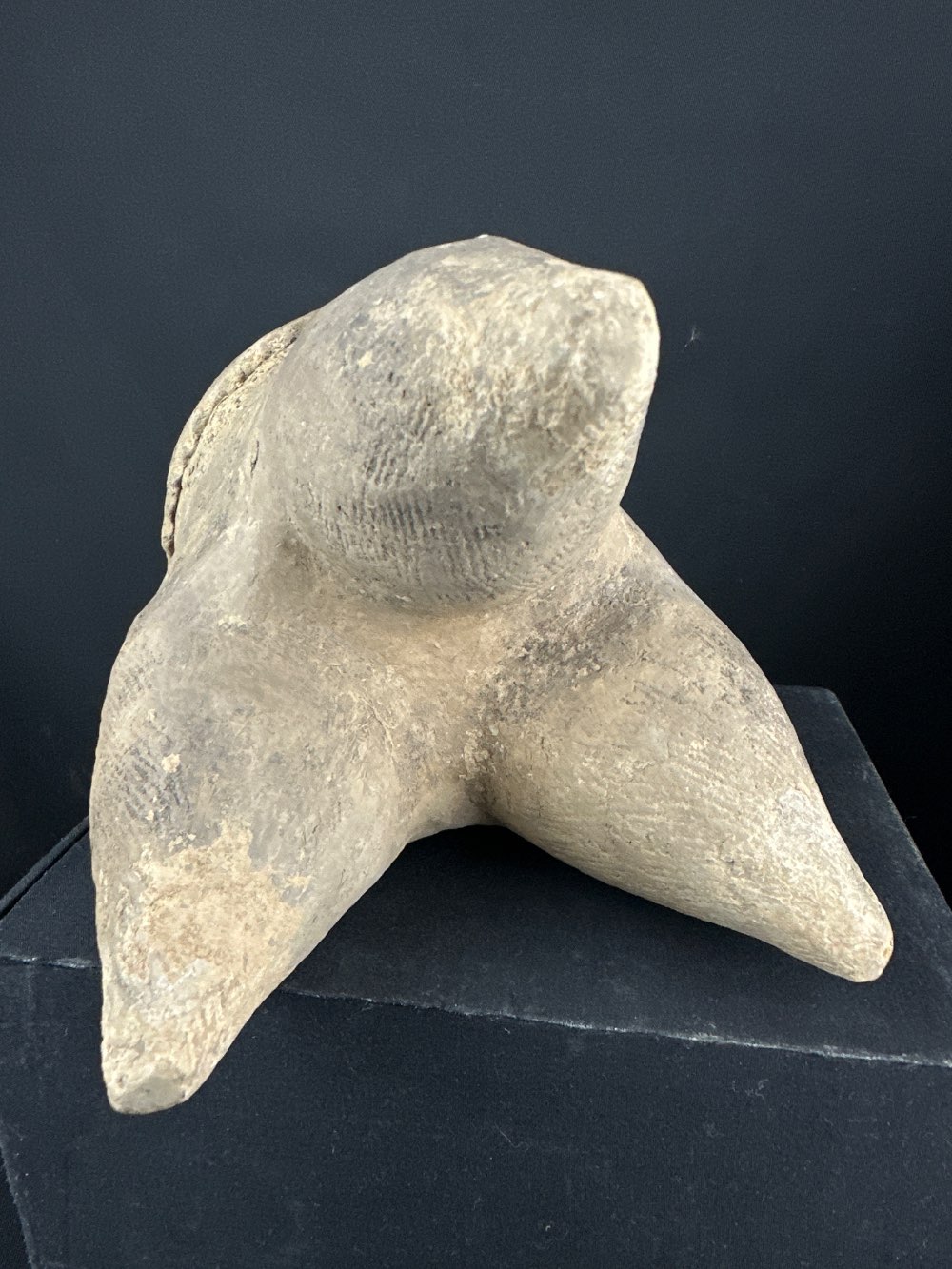
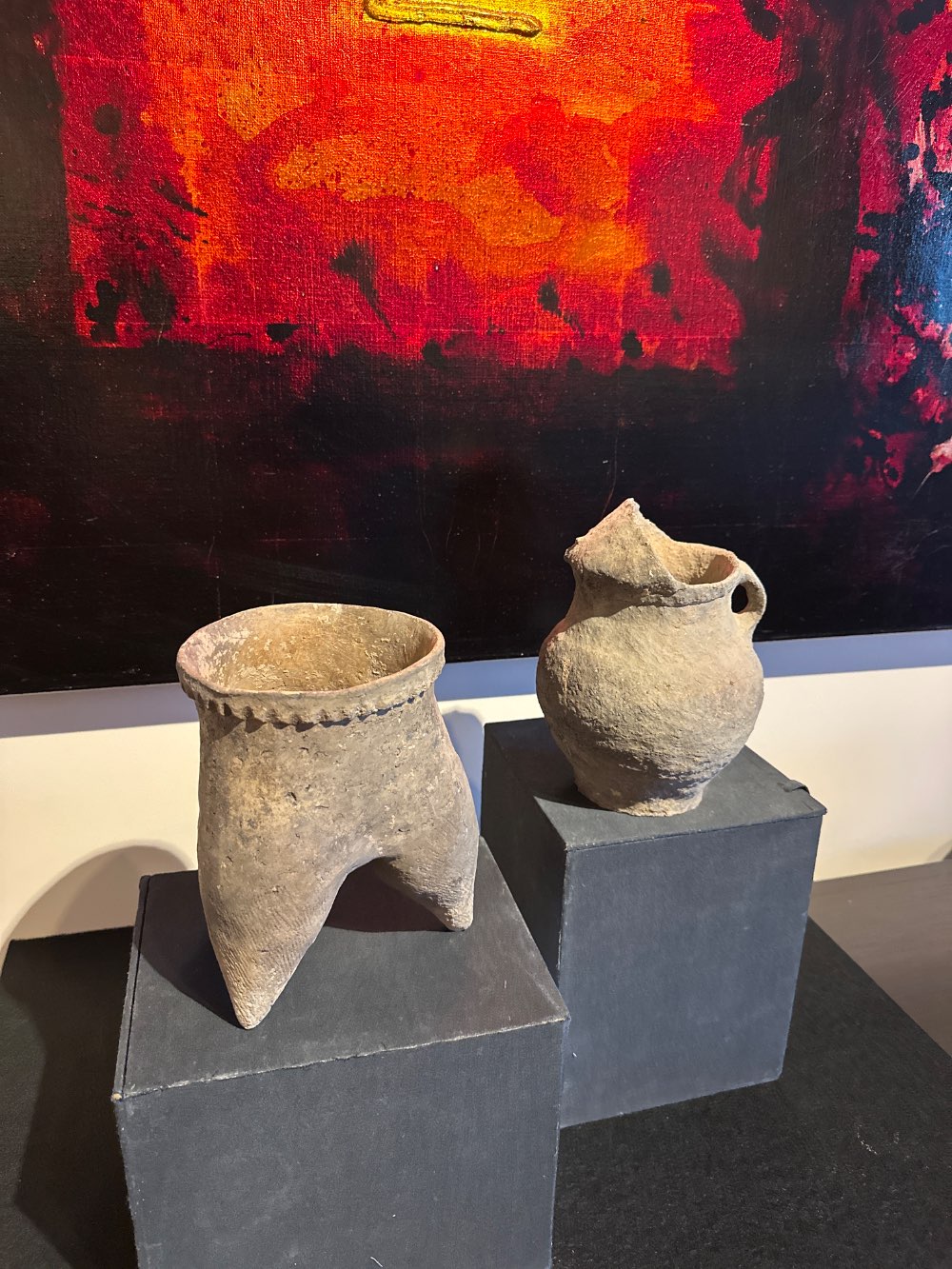
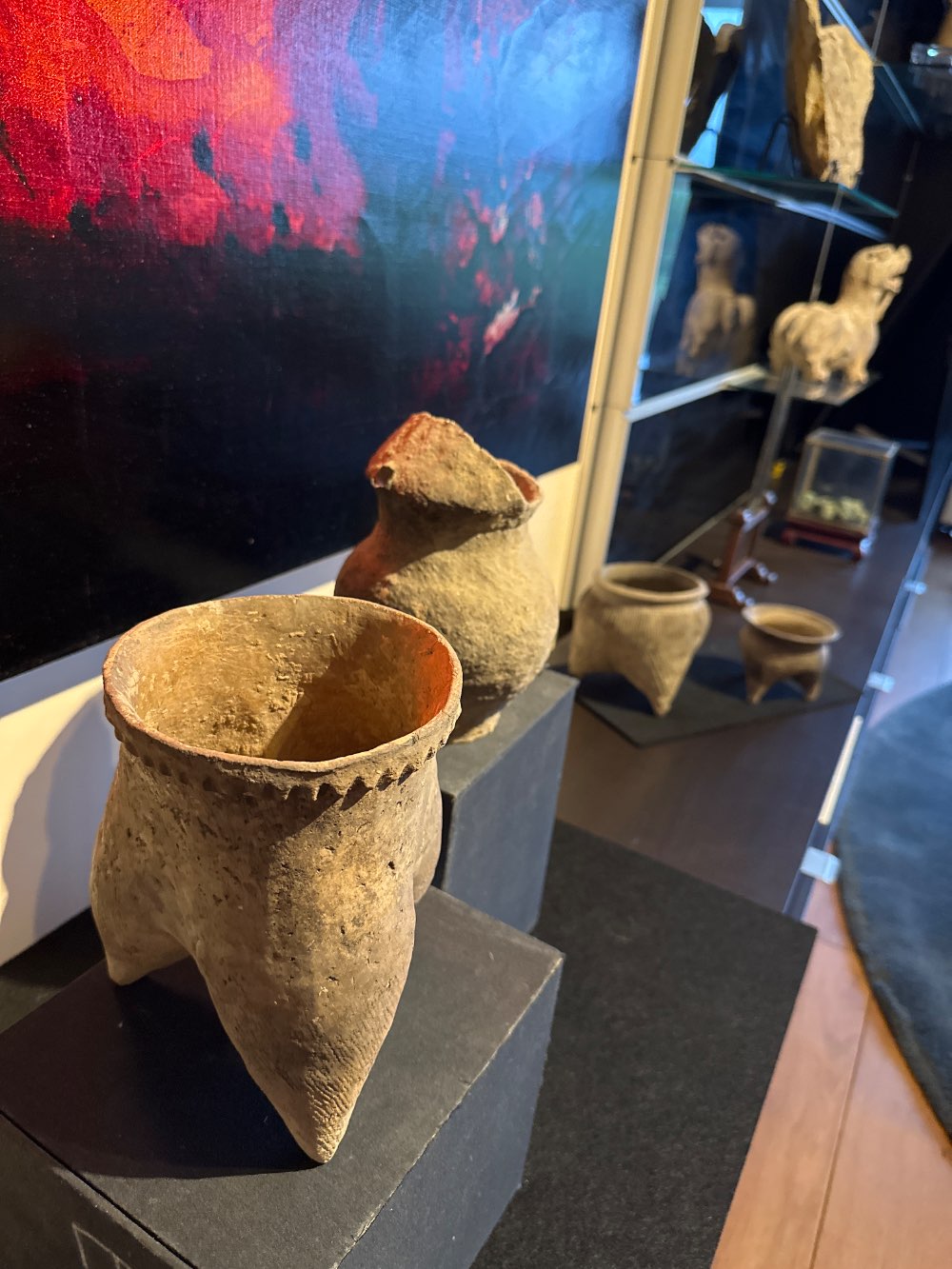
Pottery tripot (called Li) from neolithic period (2000-1000 BC) China
Pottery tripot (called Li) from neolithic period (2000-1000 BC) China
- Country: China
- Period: Neolithic period (2000-1000 BC)
- Size: 18.5 + 15.5 cm
- Comes with a black box
- Comes out of an old Italian collection
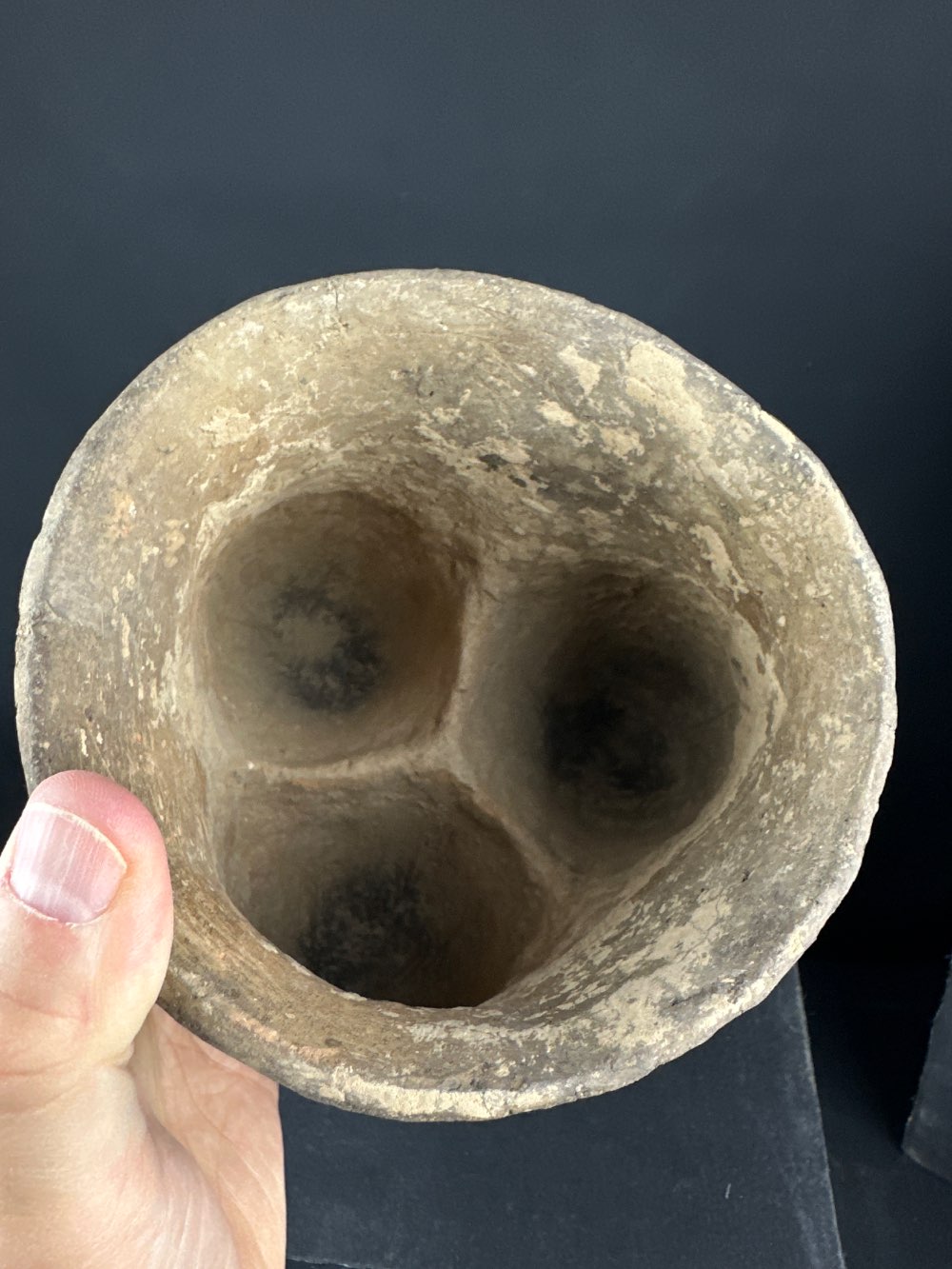
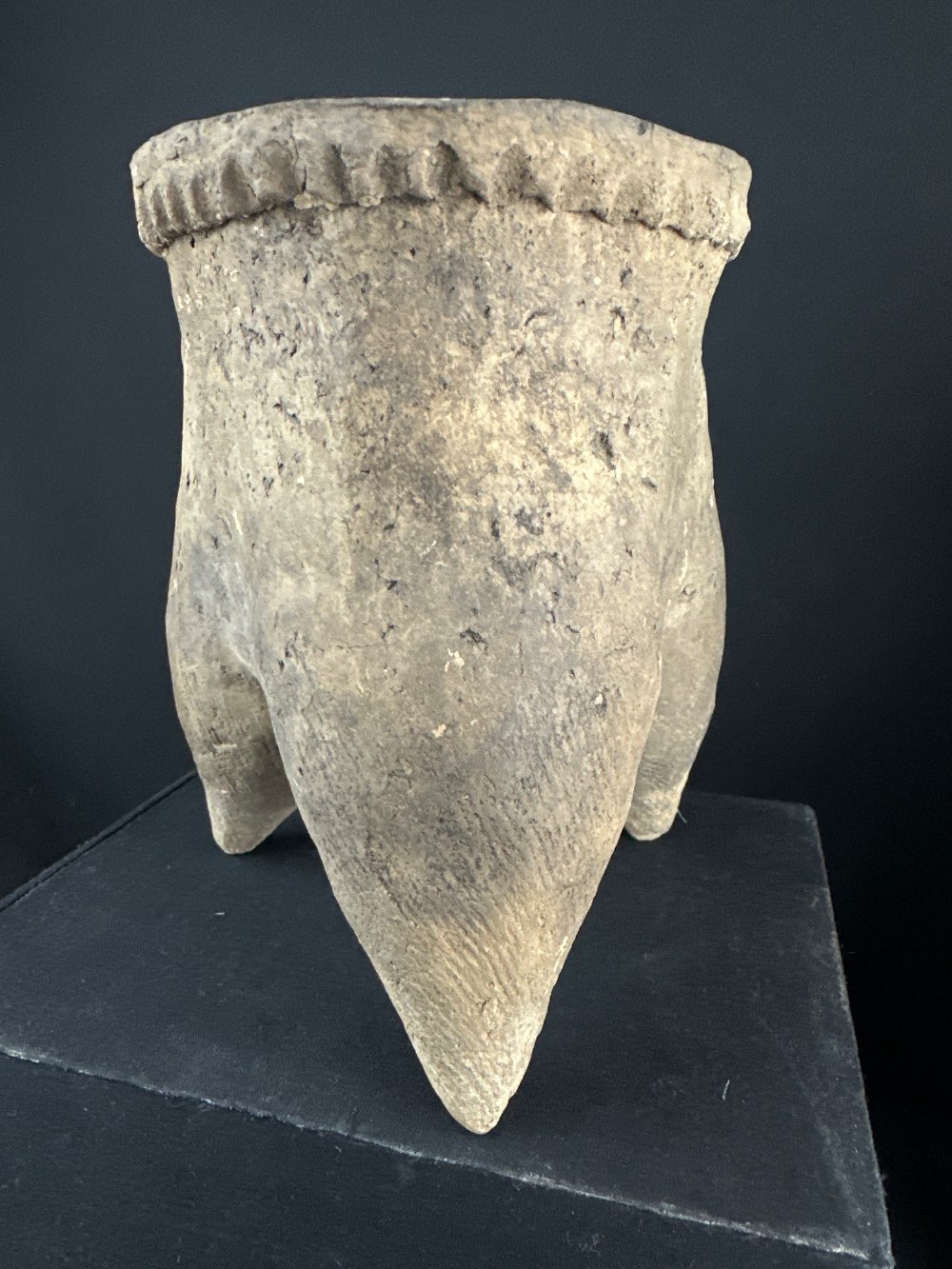
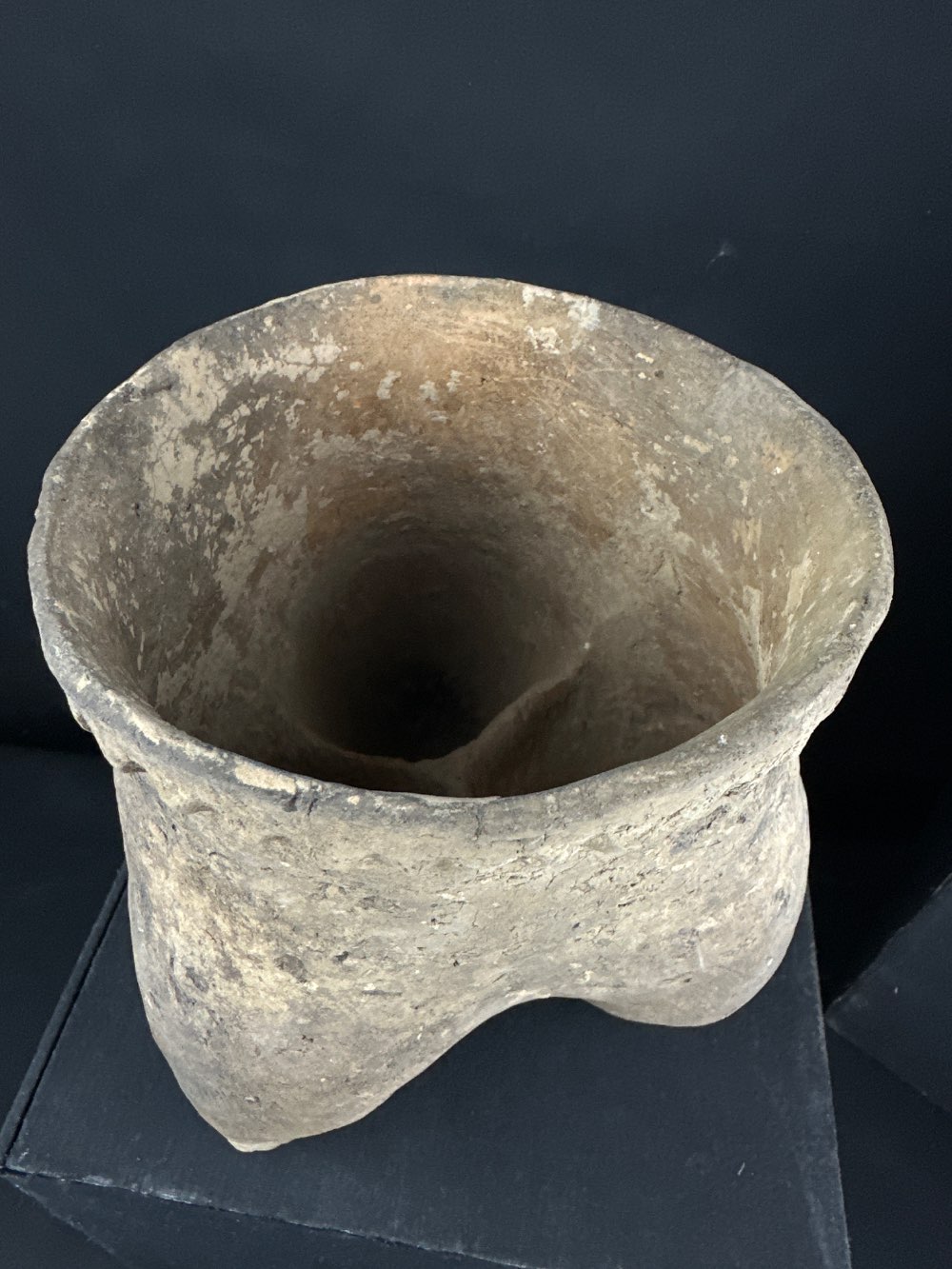
The li (鬲) is a distinctive type of ancient Chinese pottery vessel with a characteristic tripod shape, featuring three hollow, pointed legs that allowed it to be placed directly over an open fire, making it highly practical for cooking. The design of the li dates back to early periods such as the Neolithic and early Bronze Age, and similar vessels were produced by various regional cultures across China.
Its body typically has a rounded, bowl-like shape designed to hold liquids or grains, while the three wide, udder-shaped legs provide both stability and efficient heat transfer when placed in a fire. This design ensured that as much heat as possible was transmitted to the contents of the vessel.
Early li vessels were generally plain and functional, used in everyday cooking. Over time, variations in size and form appeared, with some vessels intended for communal use and others for more individual purposes. Beyond its practical function, the li also held cultural significance, as cooking and food preparation were closely connected to ritual practices in ancient Chinese societies, particularly in offerings to ancestors and deities.
Today, li vessels are important archaeological artifacts that provide valuable insight into early Chinese daily life, technological development, and the relationship between domestic activities and ritual traditions.
Please send an e-mail via below form, WhatsApp or call to order or get more information about this object.
We can communicate in English, Deutsch and Nederlands!
Pottery tripot (called Li) from neolithic period (2000-1000 BC) China