


Double click image to enlarge
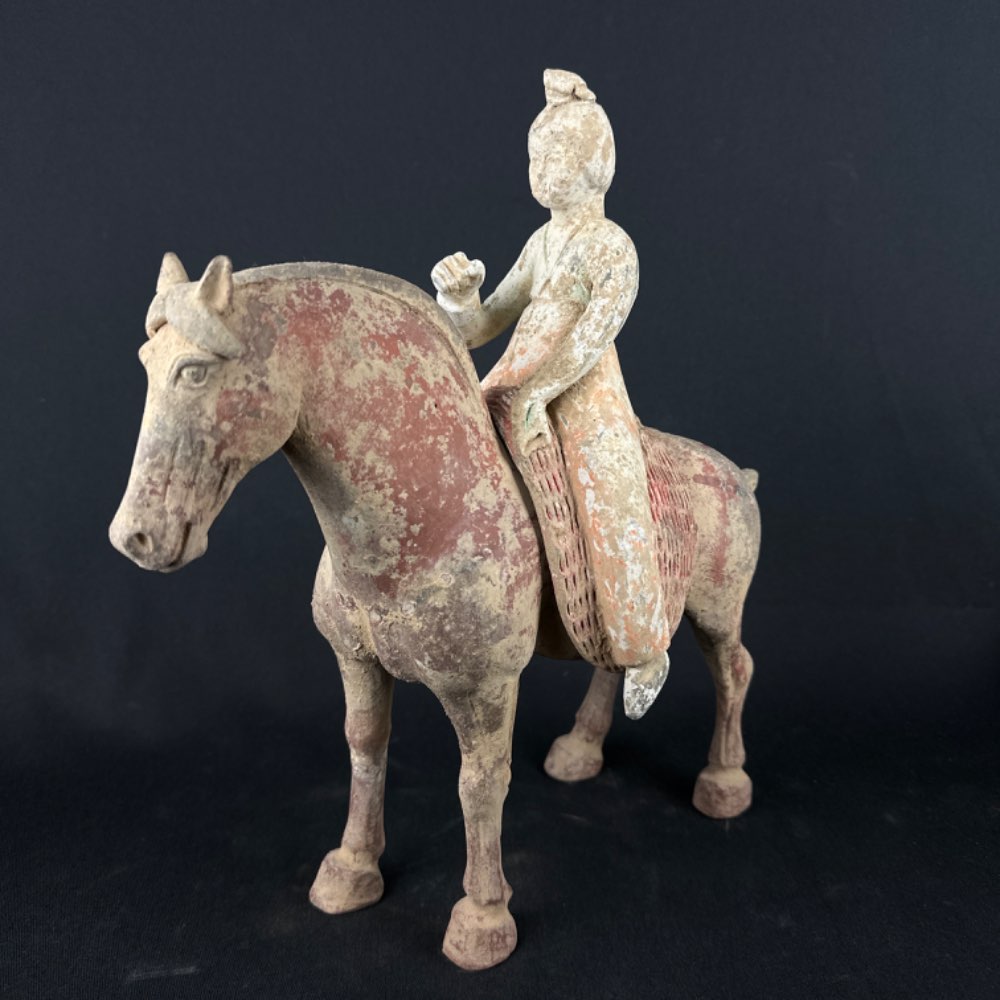
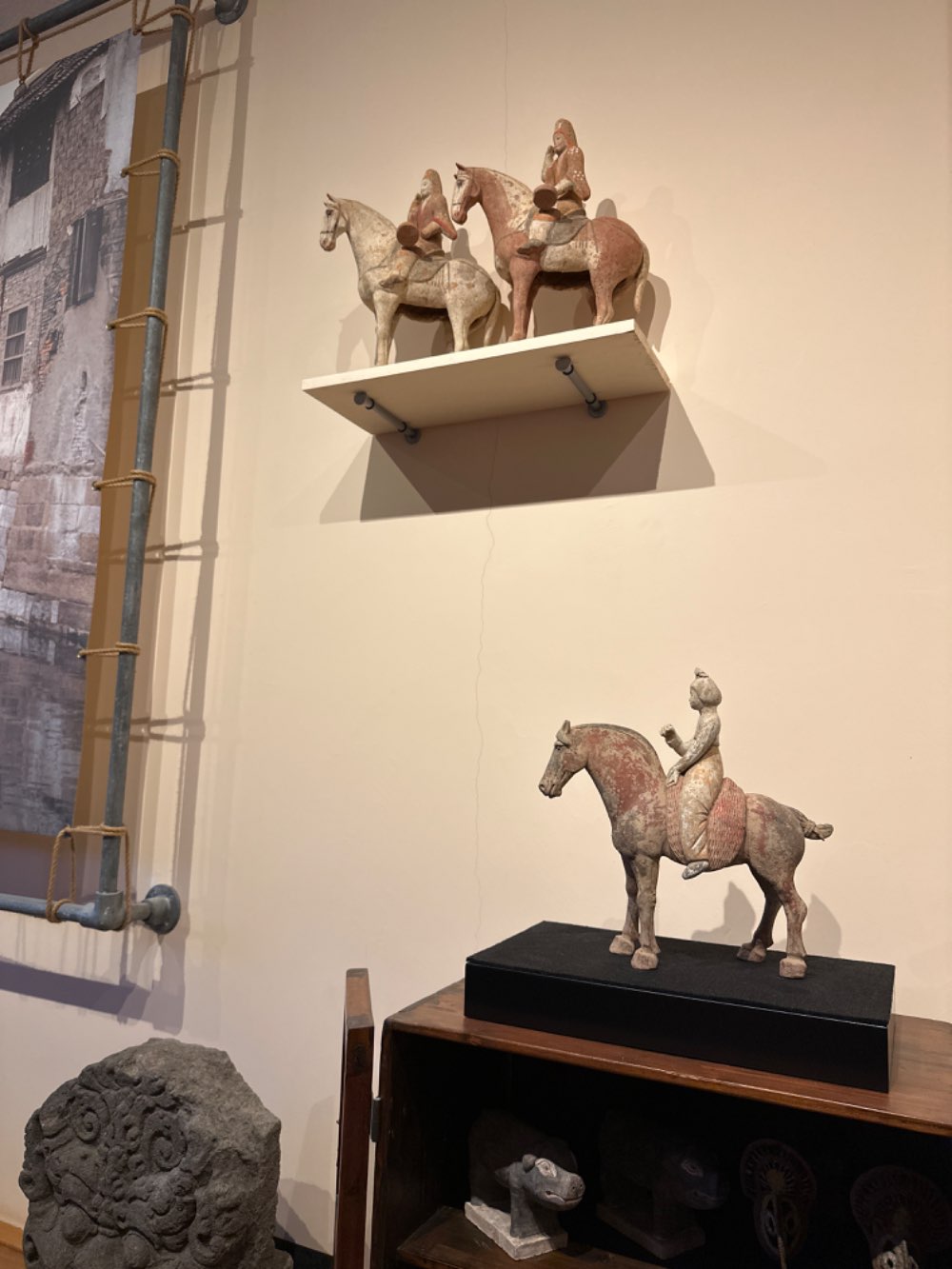
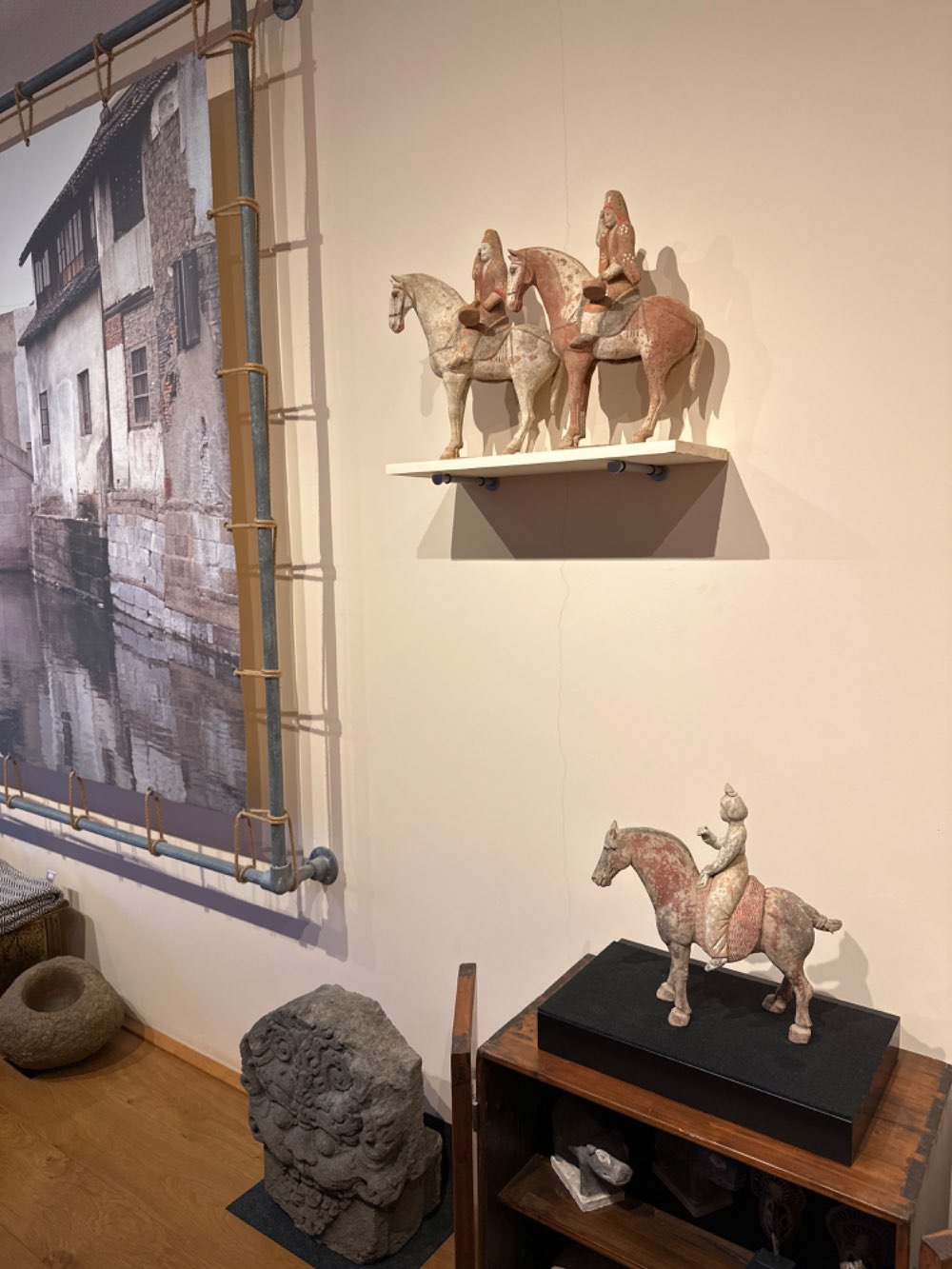
Rare horse with noblewoman of terracotta from the Tang Dynasty (618-907 AD) TL tested
Rare horse with noblewoman of terracotta from the Tang Dynasty (618-907 AD) TL tested
- Country: China
- Province: Shaanxi
- Period: Early Tang Dynasty (618-907 AD)
- Material: Terracotta with brown, white, red, green and orange pigments
- Size: 32 x 30.5 cm
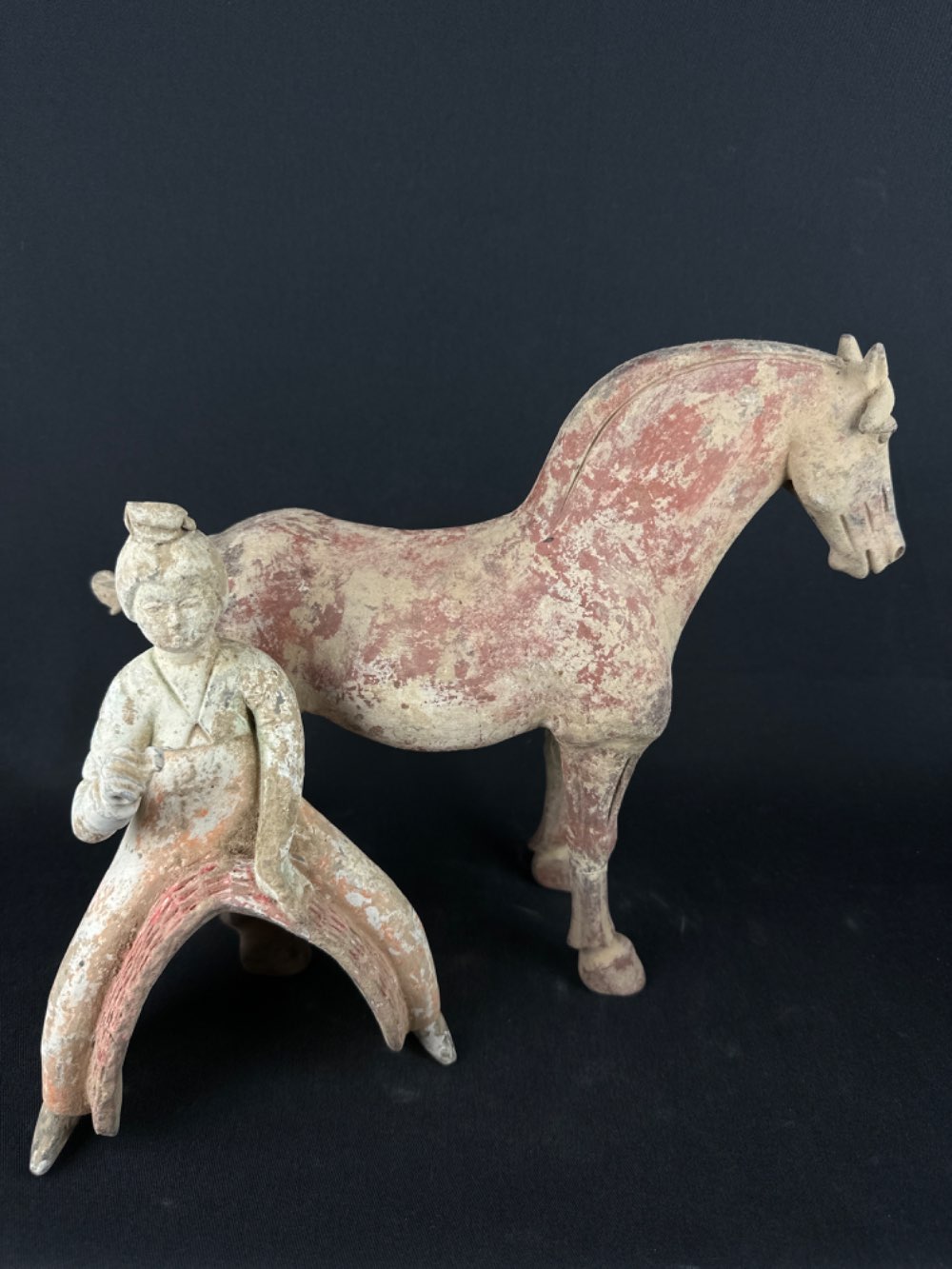
- Beautiful and rare statue
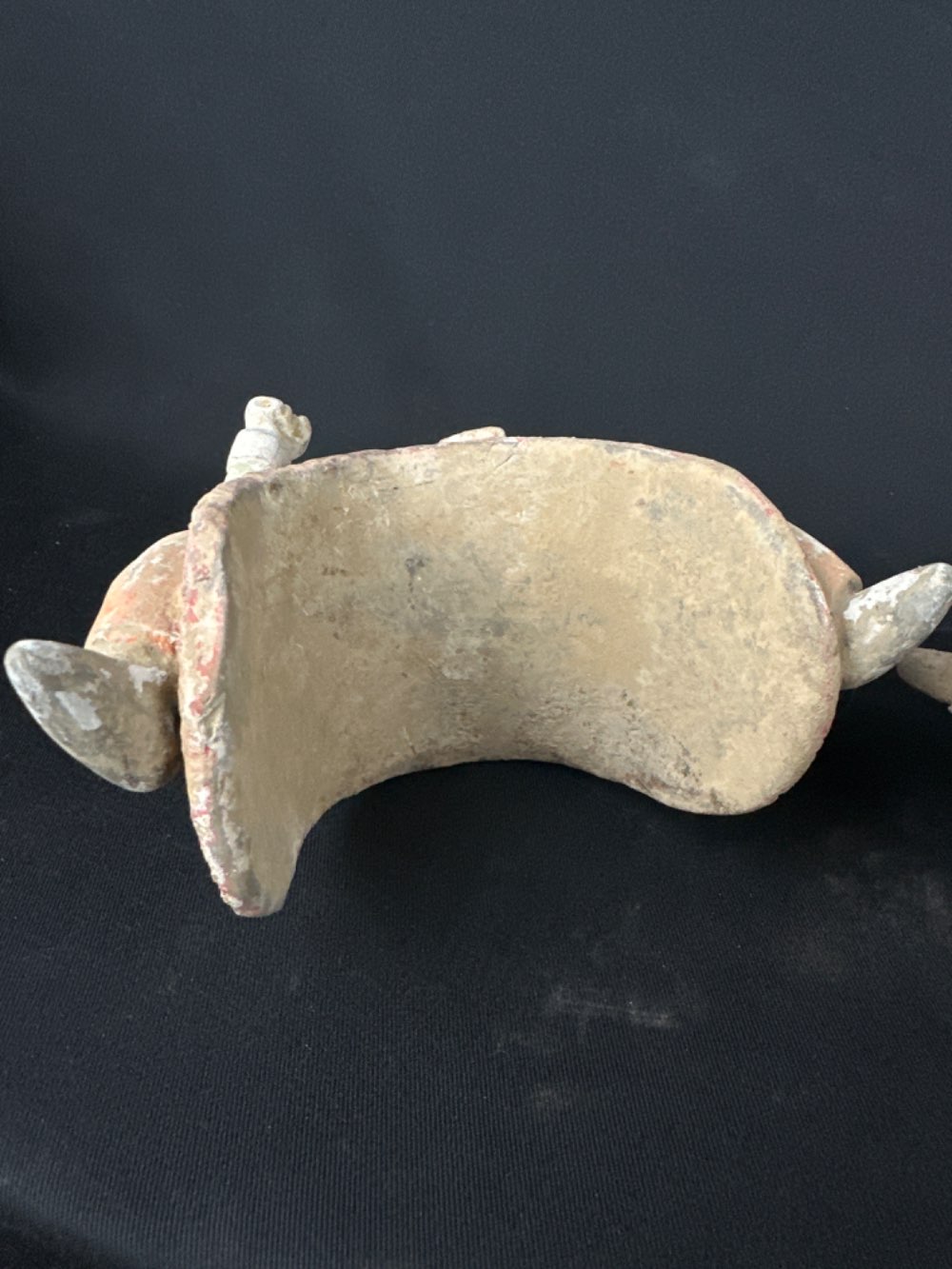
- The lady is sitting on a seperate saddle and blanked which fits perfectly on the horse.
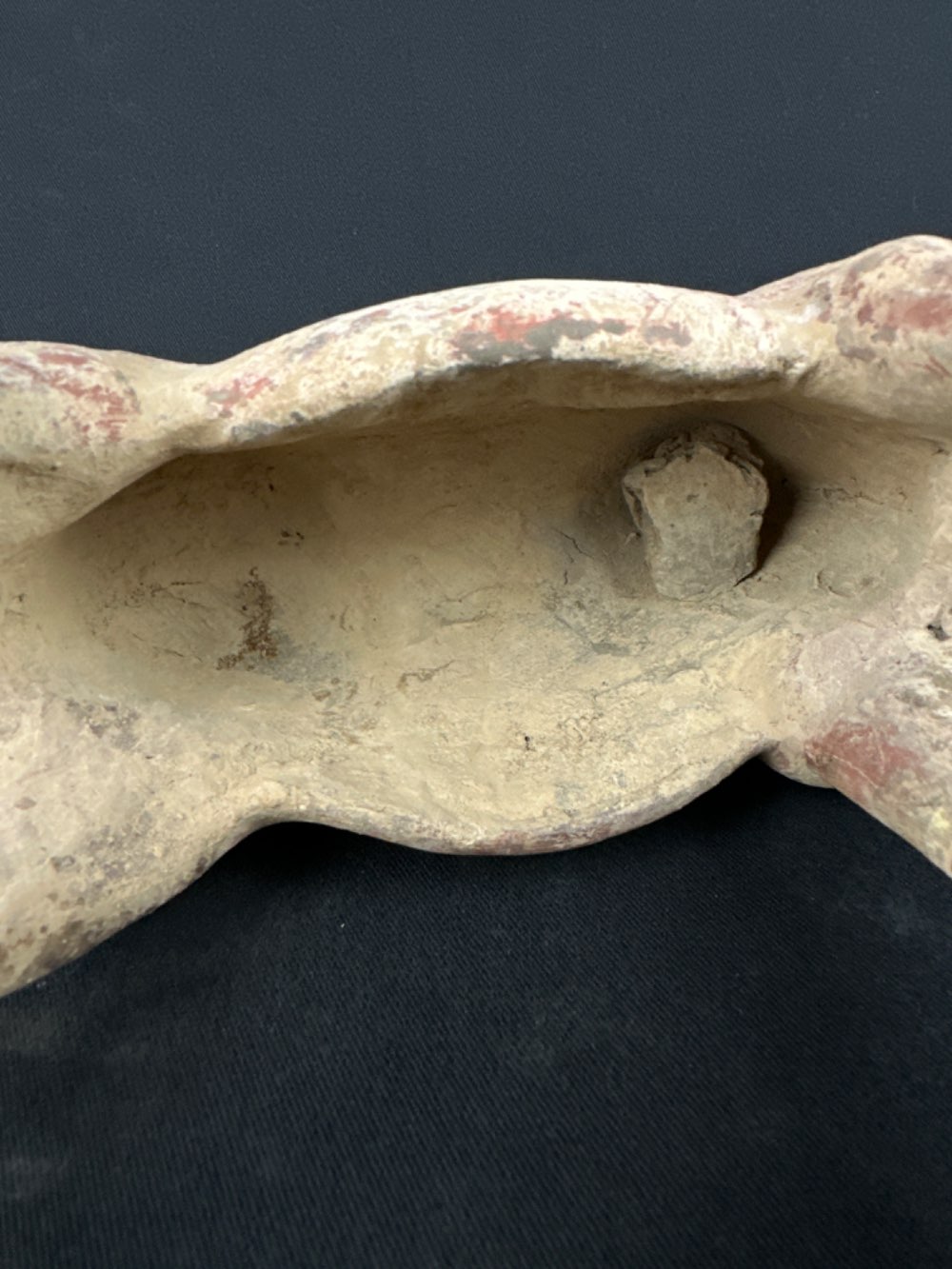
- There is some sort of plug inside under the head, it looks like the head is reinforced.
- TL tested shown in the pictures.
- Comes from an old Spanish collection.
A good book about the changes in styles of the horses during 2000 years of Chinese history is "Horses for Eternity" of Victor Choi which I can highly recomment. ISBN-10: 9628601997 (see picture of the book as well).
______________________________________________________________________________
Horses played a crucial role in Chinese history, influencing military strategies, trade, agriculture, and cultural exchanges. Their importance can be appreciated in several key areas:
Military Significance
Horses were indispensable for the military. They were used to enhance the mobility and effectiveness of the cavalry, which became a cornerstone of the military strategy. The introduction of the cavalry unit allowed army to conduct rapid movements, surprise attacks, and extensive patrols, which were essential in defending the vast borders of the empire.
They still invested significantly in breeding and acquiring horses. They engaged in wars and diplomatic negotiations to secure high-quality horses from the western regions, especially the Ferghana horses, renowned for their endurance and speed.
Trade and the Silk Road
Horses were integral to the development and expansion of the Silk Road. This network of trade routes facilitated the exchange of goods, culture, and ideas between China and the Western world. The demand for horses drove much of the trade with Central Asia, as these animals were exchanged for Chinese silk, tea, and other goods. The acquisition and breeding of superior horses from Central Asia not only boosted the military but also strengthened trade connections, promoting economic prosperity.
Agricultural and Economic Contributions
In agriculture, horses were used to pull plows and carts, enhancing the efficiency of farming and transportation. This use of horsepower improved agricultural productivity, which was crucial for sustaining the large population of the Empire. Horses facilitated the movement of goods and people, contributing to the internal economy and enabling the government to maintain control over its territories.
Cultural Impact
Horses also held significant cultural and symbolic value in China. They were seen as symbols of power, speed, and prestige. The rulers often showcased their prized horses in parades and ceremonies to display their wealth and power. Horses appeared in art, literature, and mythology, underscoring their esteemed status in society.
The importance of horses during the Dynasty's is reflected in various archaeological findings, including pottery, sculptures, and tomb murals depicting horses and cavalry. These artifacts highlight the deep integration of horses into the daily life and culture of the Chinese.
Conclusion
The role of horses in the Tang Dynasty was multifaceted, encompassing military, economic, agricultural, and cultural aspects. Their contribution was pivotal in shaping the Tang Dynasty's ability to defend its borders, expand its trade networks, and enhance its agricultural productivity. The legacy of horses in China is a testament to their enduring significance in the broader tapestry of Chinese history.
Please send an e-mail via below form, WhatsApp or call to order or get more information about this object.
We can communicate in English, Deutsch and Nederlands!
Rare horse with noblewoman of terracotta from the Tang Dynasty (618-907 AD) TL tested