



Double click image to enlarge
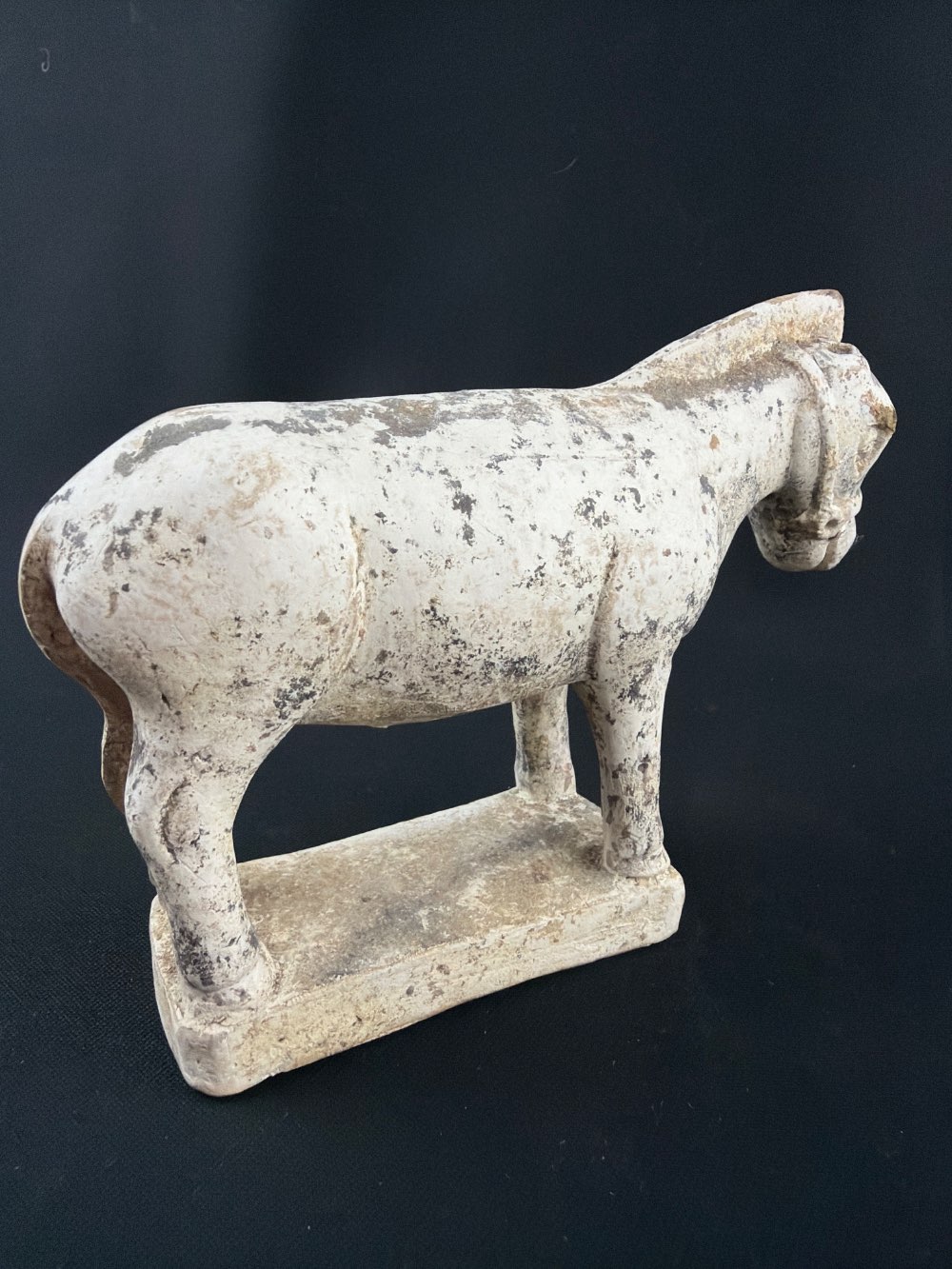
Rare pottery donkey from the Ming Dynasty (1368-1644 AD), TL tested
Rare pottery donkey from the Ming Dynasty (1368-1644 AD), TL tested
- Country: China
- Period: Ming Dynasty (1368-1644 AD)
- Material: Terracotta with white and black pigments
- Originally cold painted in black
- Size: 10 x 13.5 cm
- TL test is included
A well-modelled pottery figure of a standing donkey, dating to the Ming dynasty (1368–1644). The animal is depicted standing four-square on a rectangular integral base, its head lowered slightly in a naturalistic and relaxed pose. The robust body is rendered with a broad barrel-shaped torso, sturdy legs and a gently rounded rump, while the long, slightly arched neck leads to a characteristically elongated head.
The facial features are simply but effectively articulated, with small projecting ears, a prominent muzzle and carefully indicated eyes. The ears are held upright, giving the animal an alert yet placid appearance. The modelling of the body is deliberately restrained, with subtle ridges and incised lines suggesting the musculature of the shoulders, flanks and hindquarters. The legs are comparatively slender but strongly constructed, terminating in clearly defined hooves.
The donkey's lowered head and quiet stance convey a sense of everyday domesticity rather than the ceremonial grandeur associated with many Chinese tomb animals. Donkeys were important working animals in China, valued particularly for transportation and the carrying of goods. Their inclusion among funerary furnishings reflects the desire to provide the deceased with the practical necessities and comforts of earthly life in the afterlife.
The compact composition, integral rectangular plinth and simplified yet expressive modelling are characteristic of Chinese funerary pottery. The figure is particularly appealing for the way in which the potter has captured the characteristic proportions and gentle temperament of the donkey with a minimum of detail.
Please send an e-mail via below form, WhatsApp or call to order or get more information about this object.
We can communicate in English, Deutsch and Nederlands!
Rare pottery donkey from the Ming Dynasty (1368-1644 AD), TL tested