

Double click image to enlarge
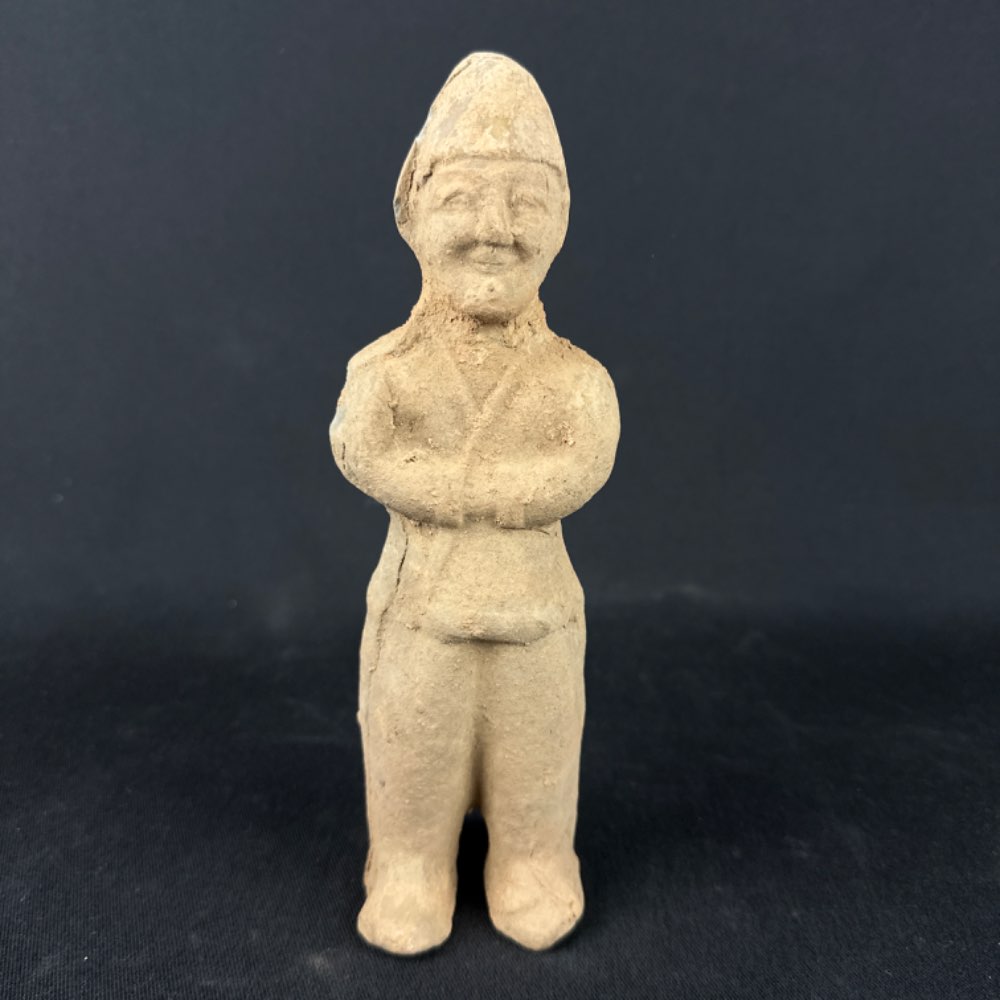
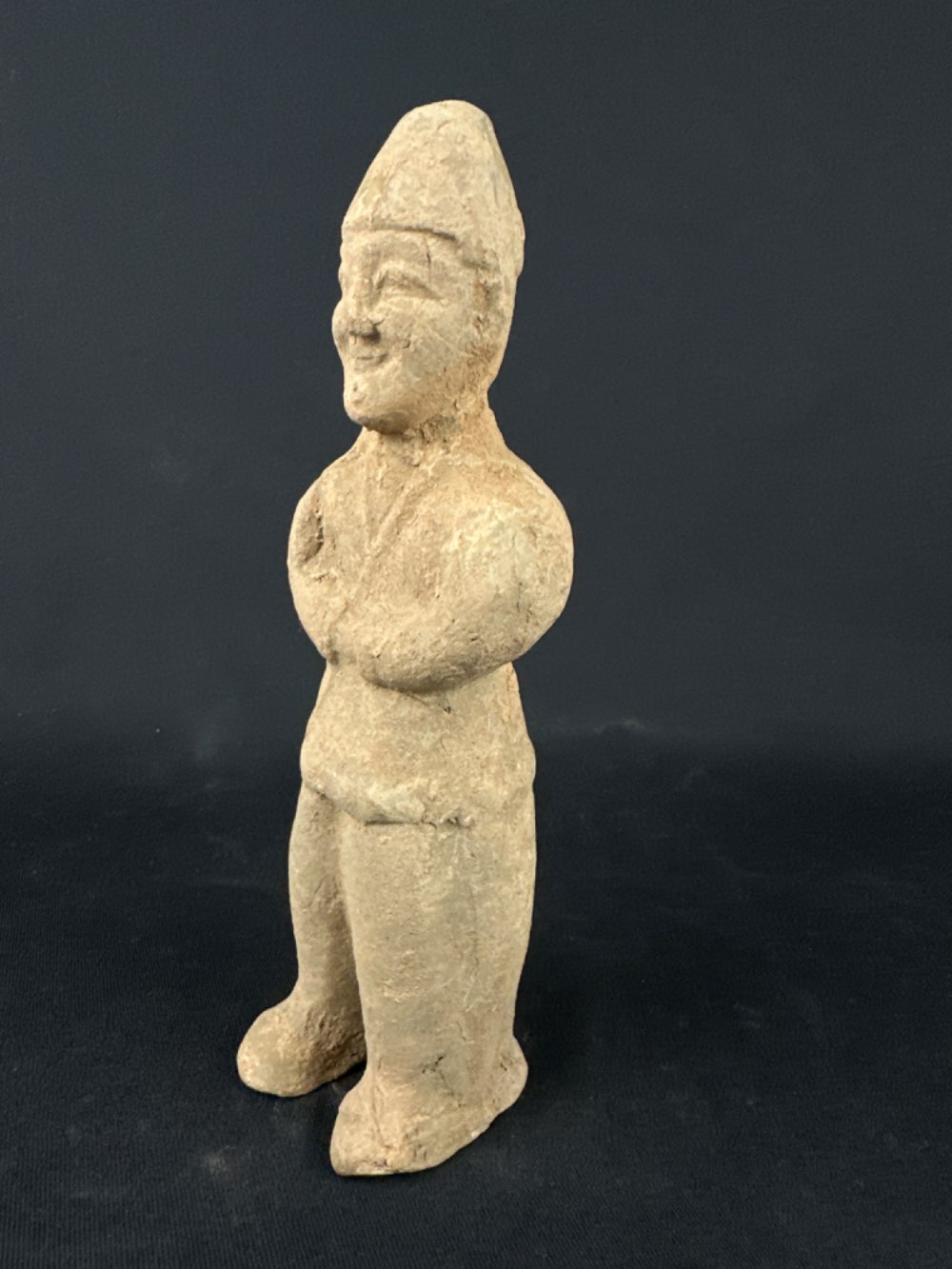
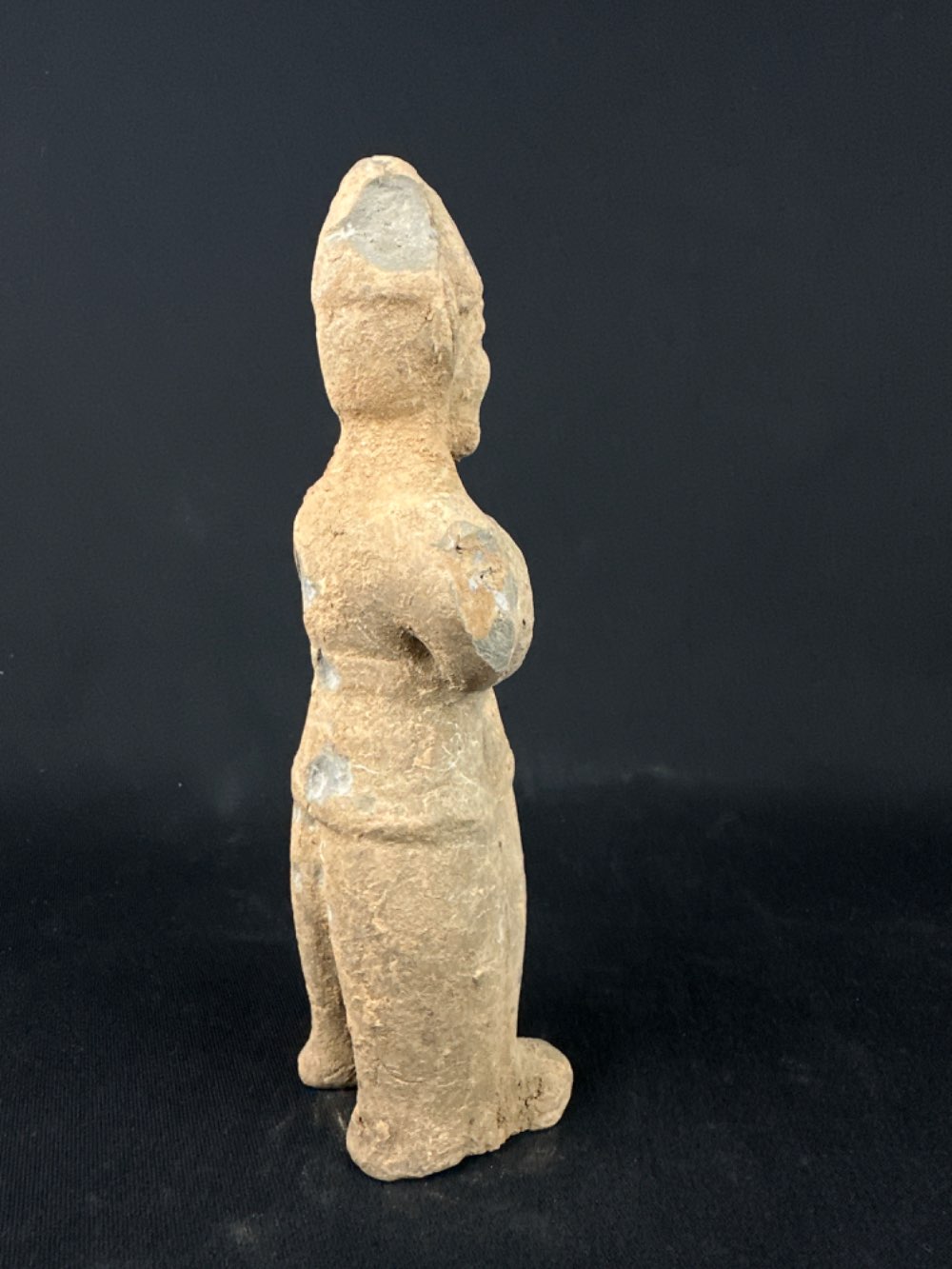
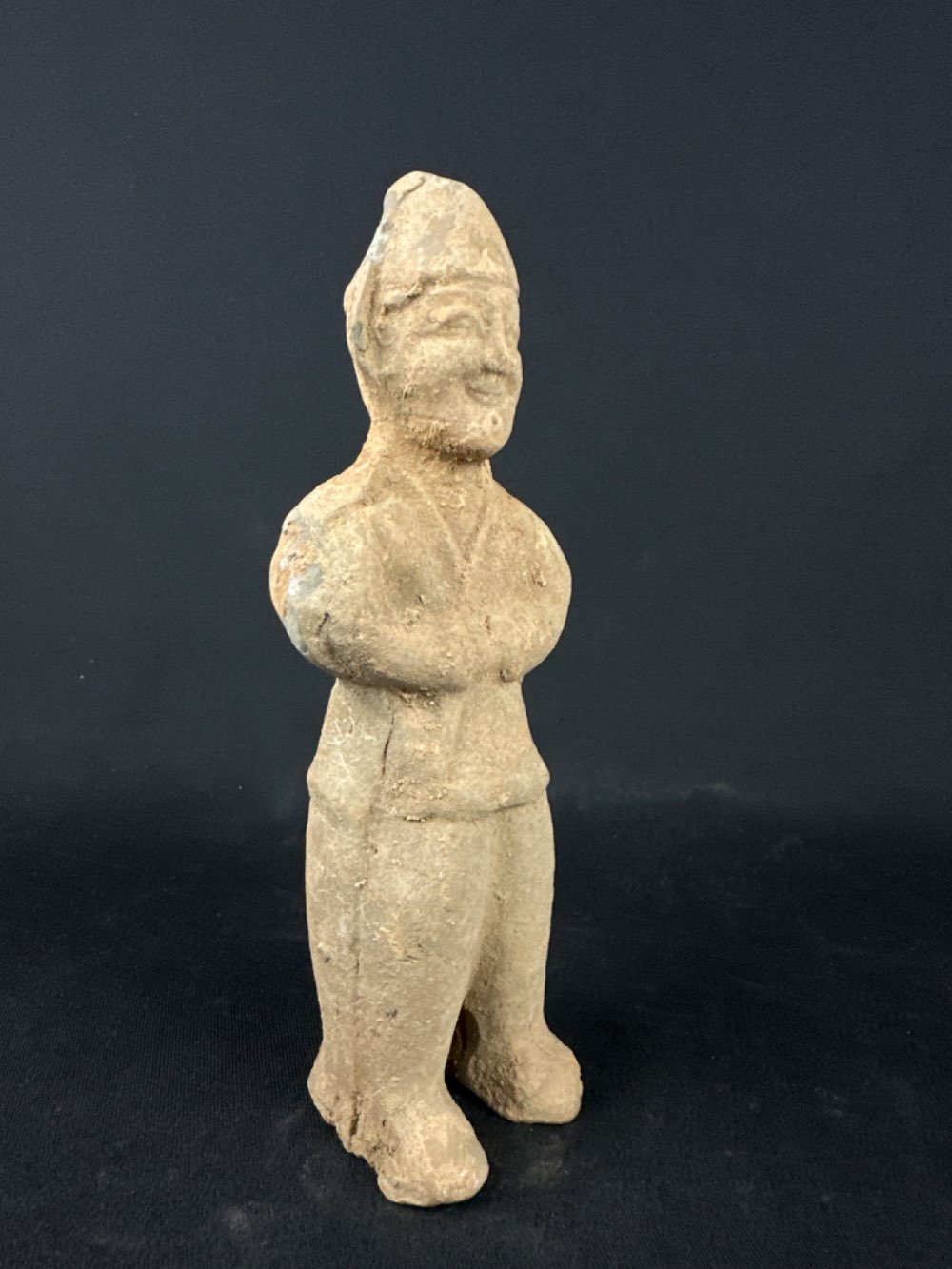
Rare pottery male figure from the Jin Dynasty (265-420 AD) China
Rare pottery male figure from the Jin Dynasty (265-420 AD) China
- Country: China
- Period: Jin Dynasty (265-420 AD)
- Material: Terracotta
- Size: 19.5 cm
- Rare statue of a smiling man
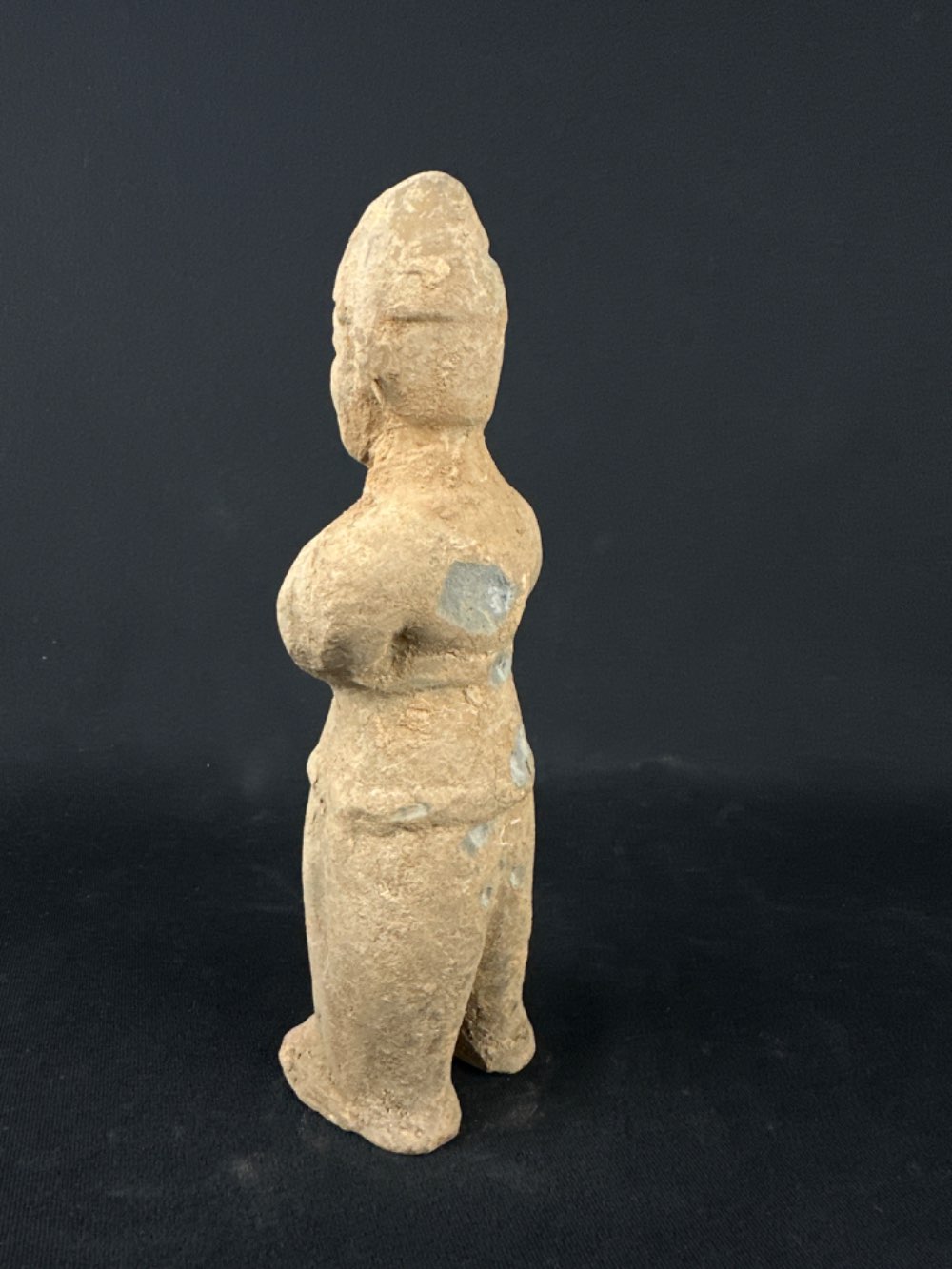
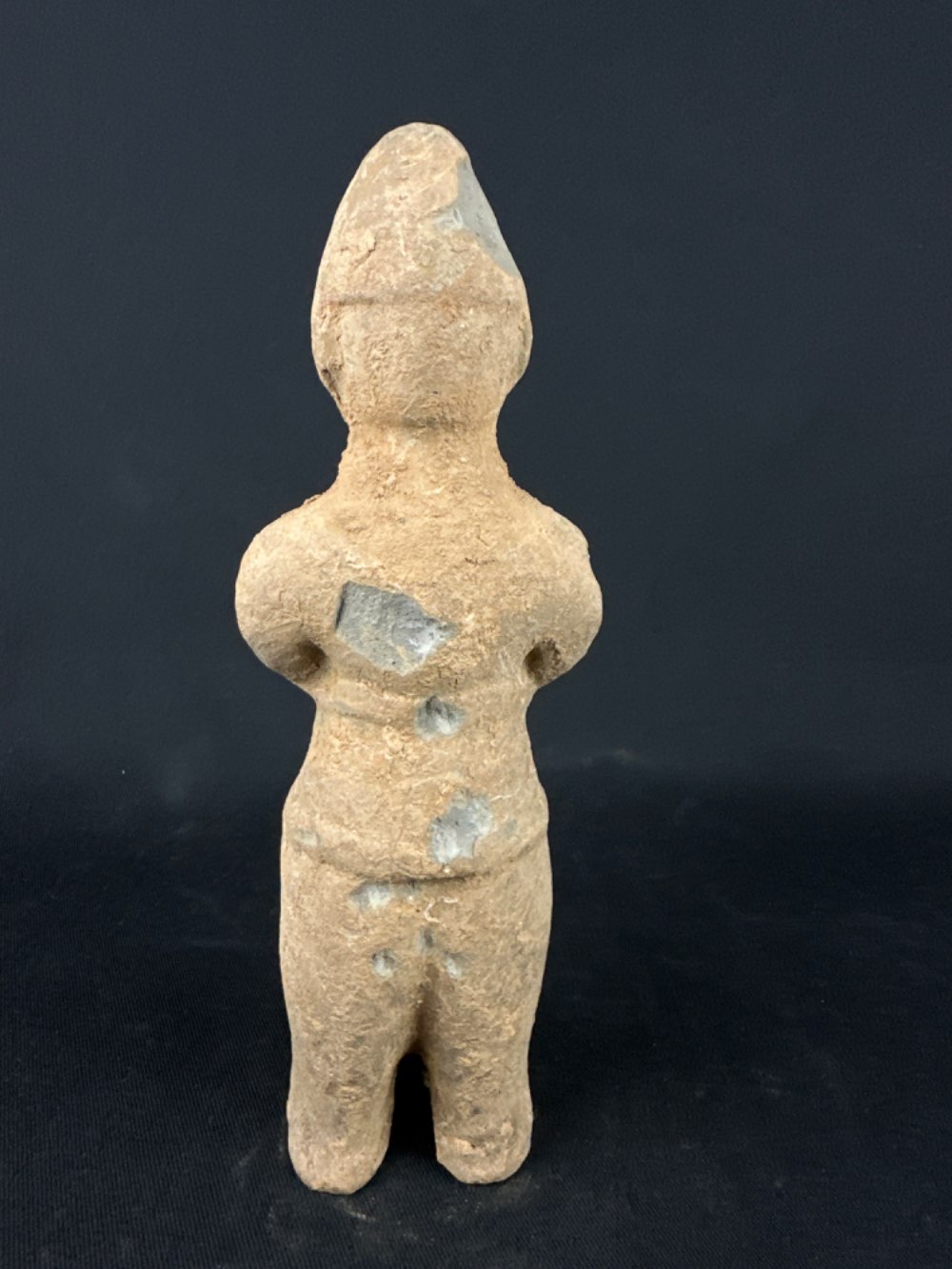
- At the back some damages which is probably from something like a shovel digging in the ground and hit the statue a few times.
The Jin Dynasty (265–420 AD) was a significant era in Chinese history, divided into two periods: the Western Jin (265–316 AD) and the Eastern Jin (317–420 AD). It was established by the Sima family, following the fall of the Wei Dynasty during the Three Kingdoms period. Sima Yan, the dynasty's founder, declared himself Emperor Wu of Jin and successfully reunified China in 280 AD by defeating the rival kingdoms of Shu and Wu.
The early Western Jin period was marked by relative stability and prosperity, but internal strife soon destabilized the empire. The "War of the Eight Princes" (291–306 AD) was a devastating civil war among members of the royal family, which severely weakened the dynasty and led to widespread unrest. This internal chaos, combined with invasions by northern nomadic tribes such as the Xiongnu, resulted in the fall of the Western Jin in 316 AD, when the capital, Luoyang, was sacked.
Following the collapse of the Western Jin, remnants of the royal family fled south and established the Eastern Jin Dynasty, with its capital at Jiankang (modern-day Nanjing). The Eastern Jin controlled southern China and maintained relative stability for over a century, thanks to skilled leadership and a more defensible position south of the Yangtze River. However, it was constantly challenged by both internal rebellions and pressure from northern nomadic states.
Culturally, the Jin Dynasty is notable for its contributions to Chinese art, literature, and philosophy. The era saw the development of early Chinese painting and a flourishing of Daoist and Confucian thought. Despite its political turmoil, the Jin Dynasty played a crucial role in shaping China’s cultural and historical landscape, acting as a bridge between the chaos of the Three Kingdoms and the later dynasties that followed.
Please send an e-mail via below form, WhatsApp or call to order or get more information about this object.
We can communicate in English, Deutsch and Nederlands!
Rare pottery male figure from the Jin Dynasty (265-420 AD) China