Double click image to enlarge
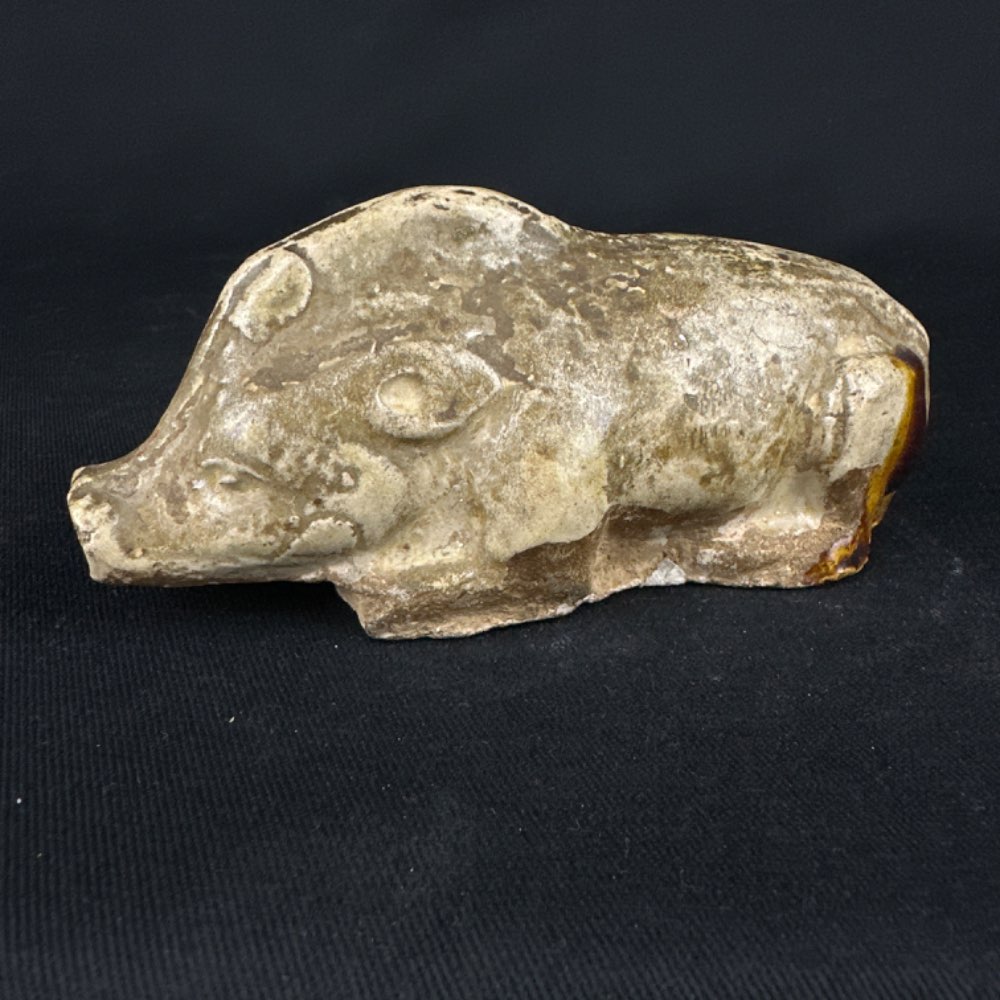
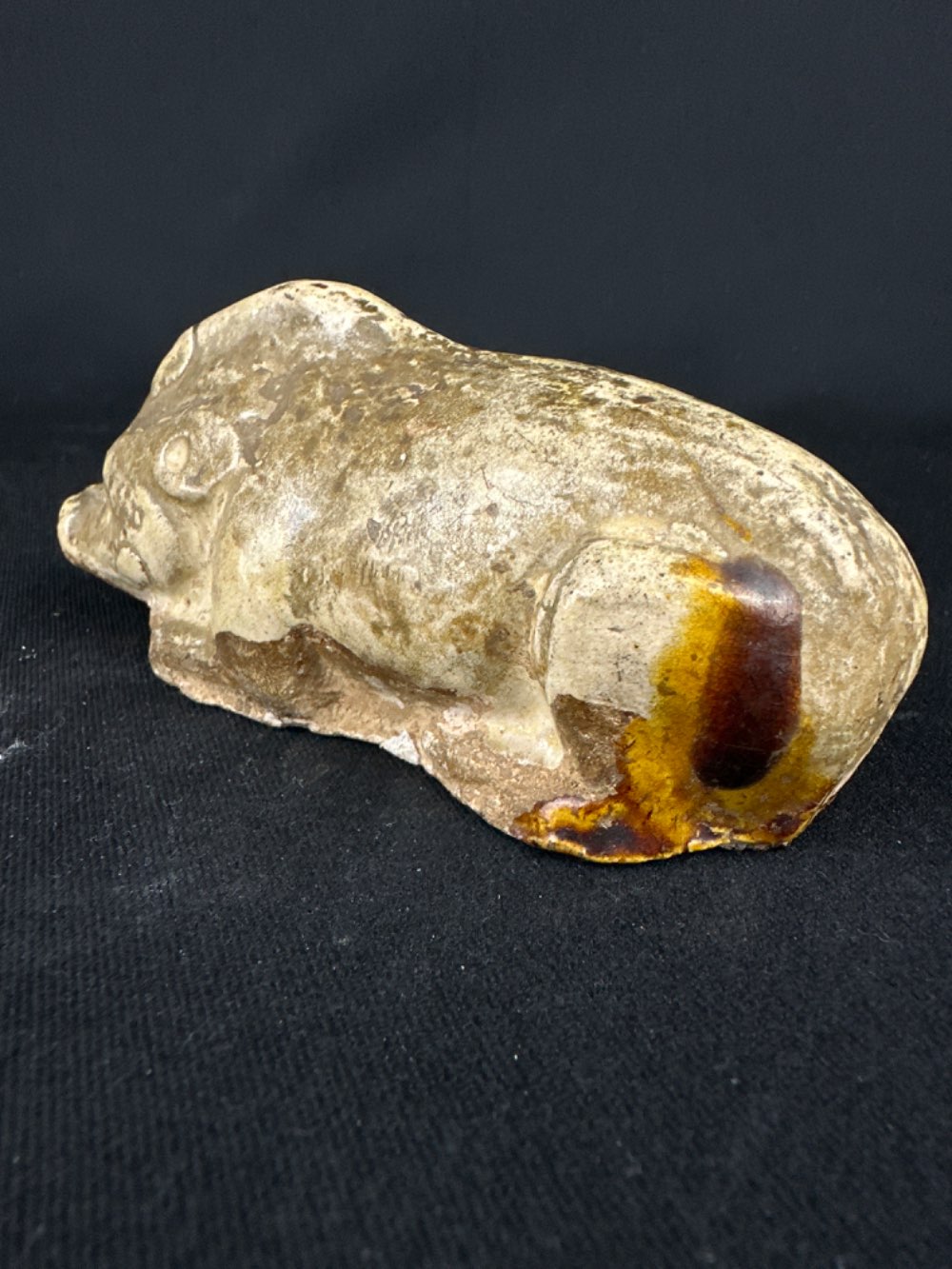
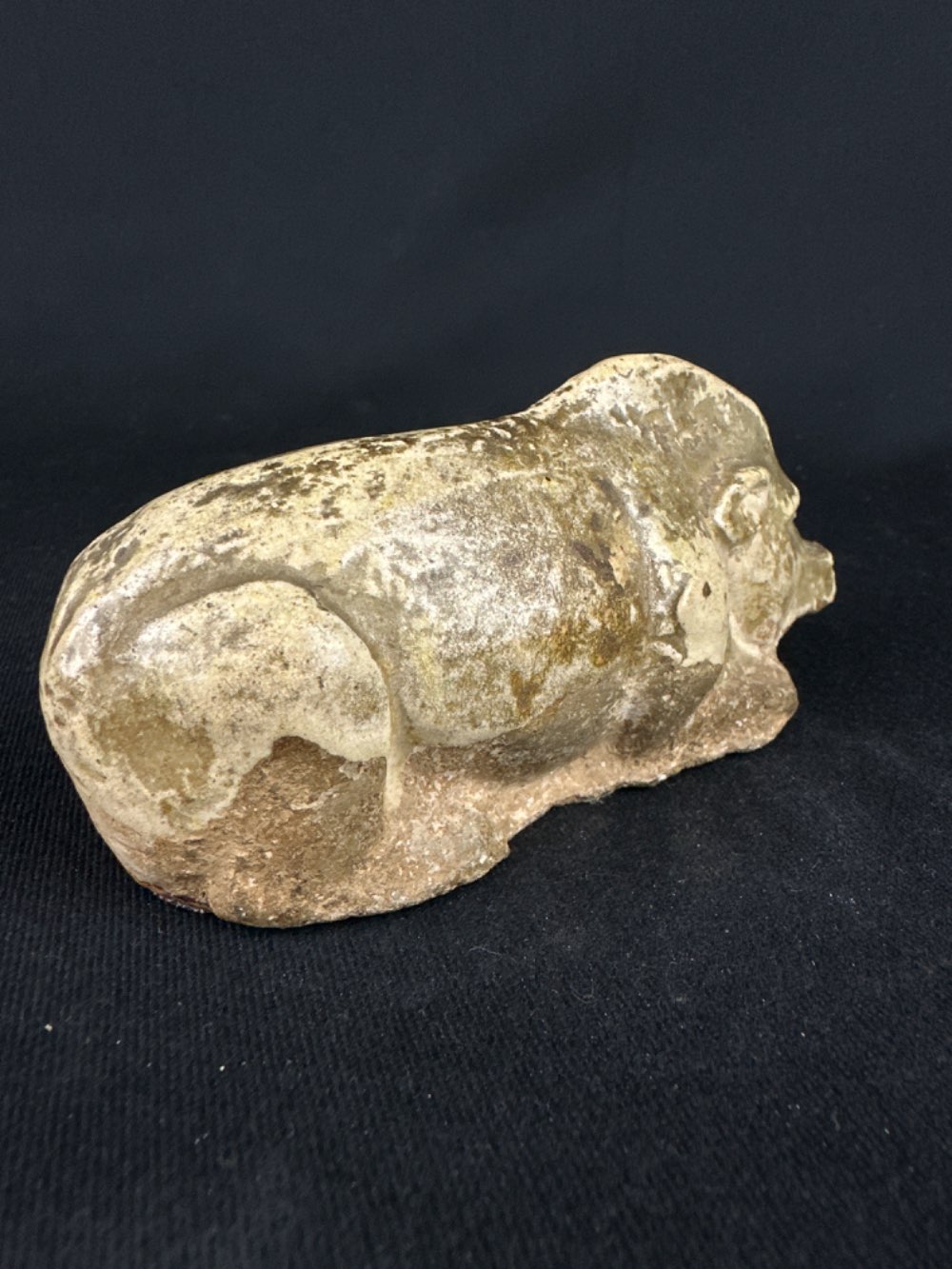
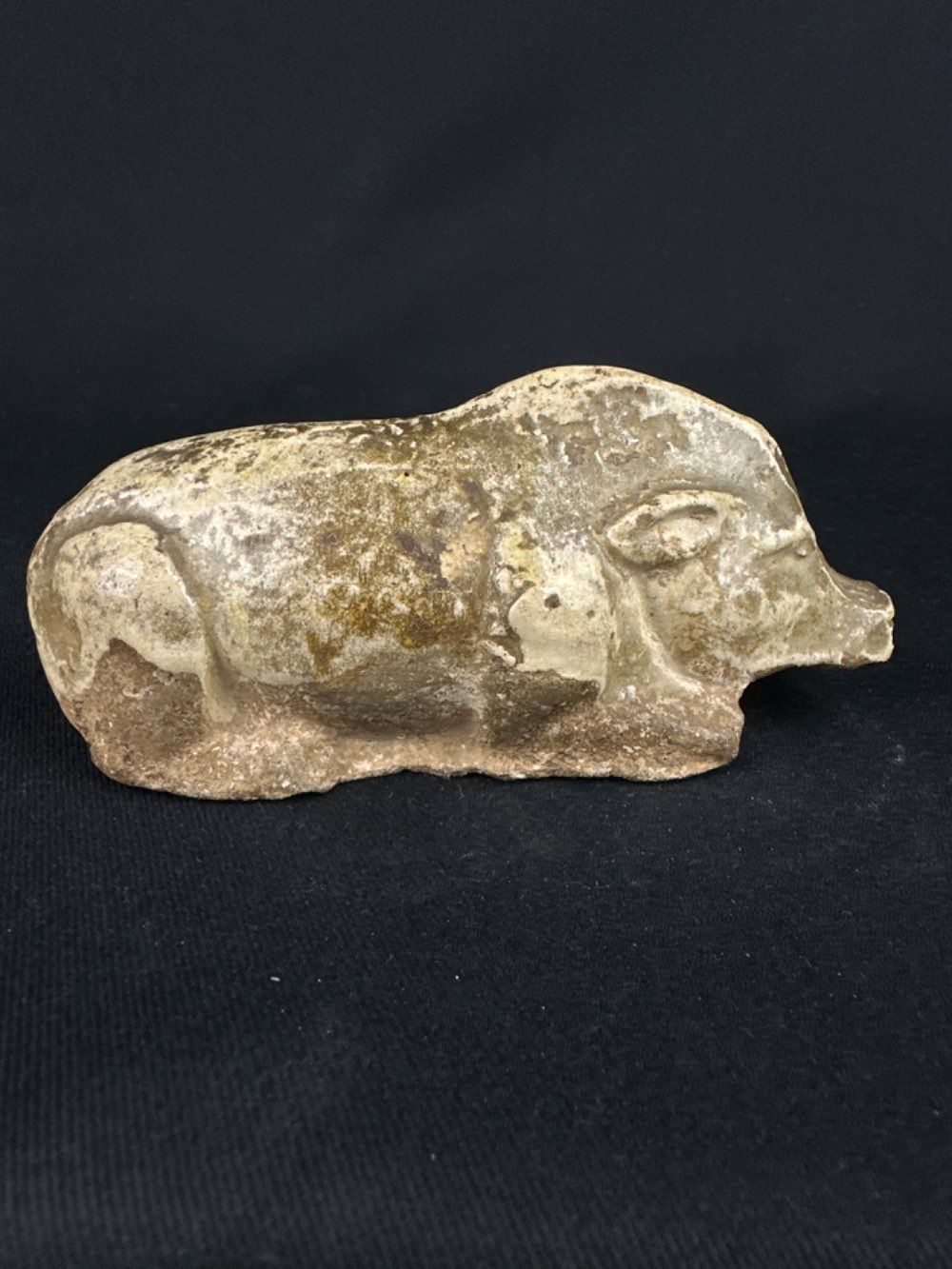
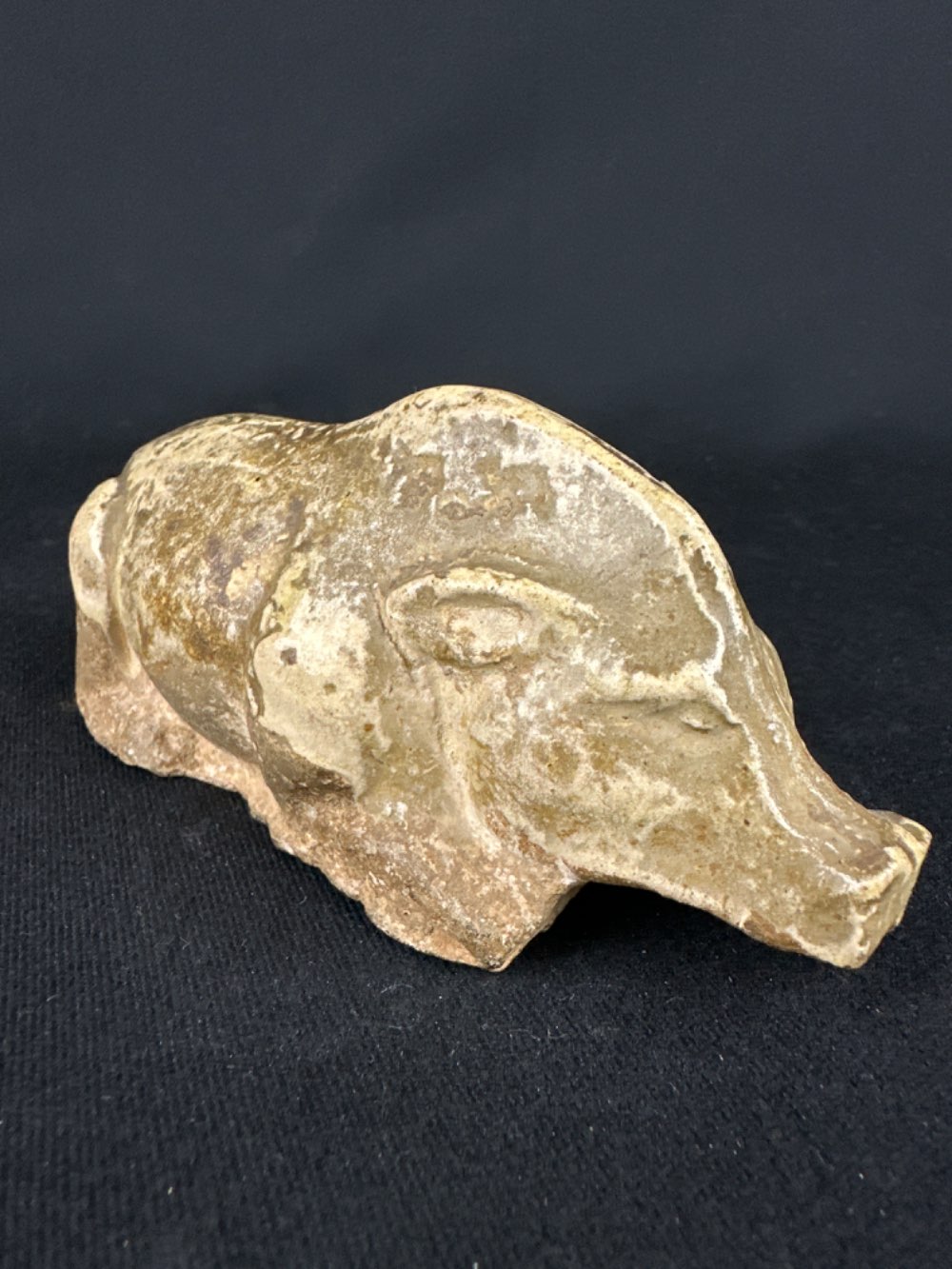
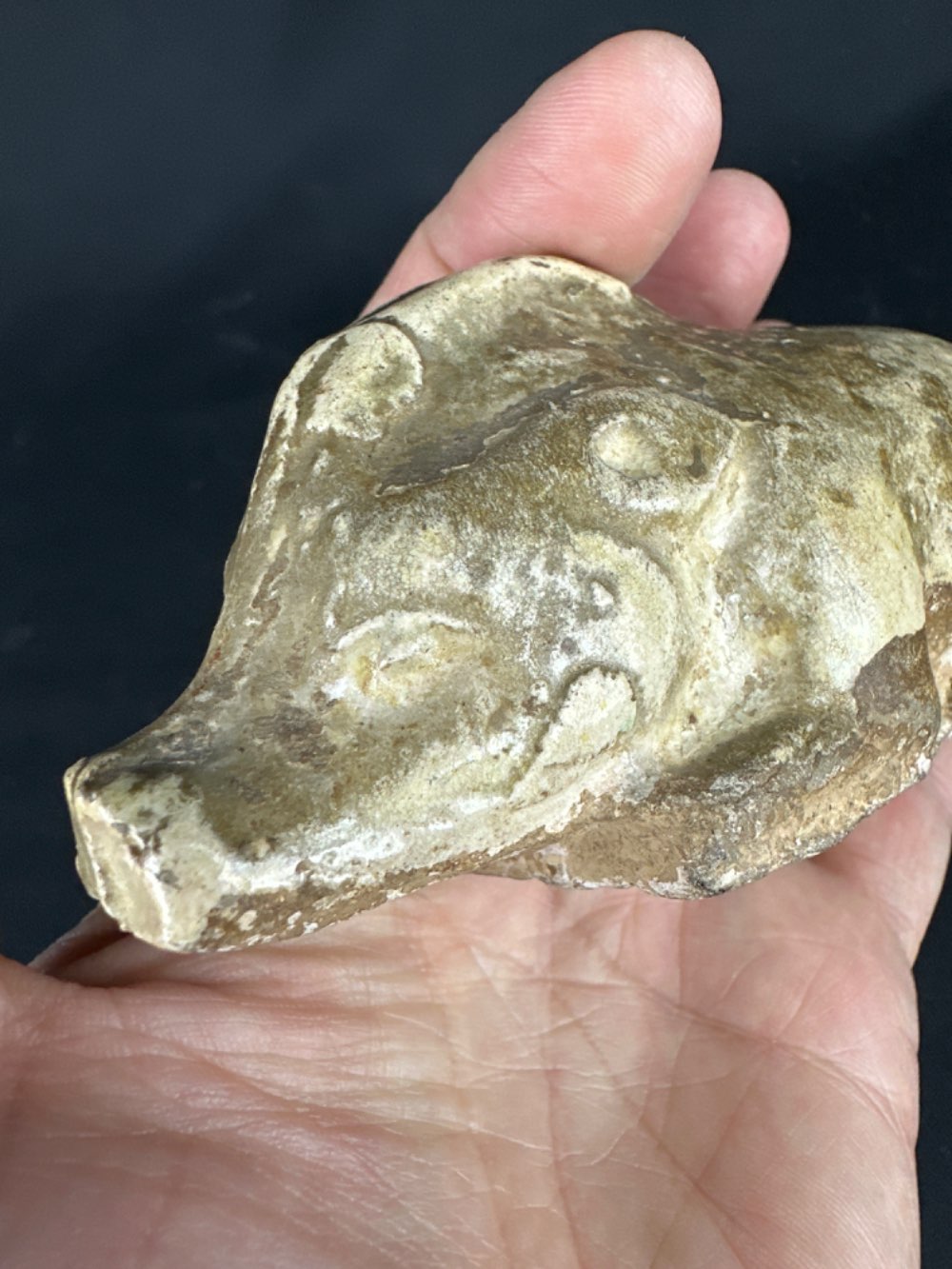
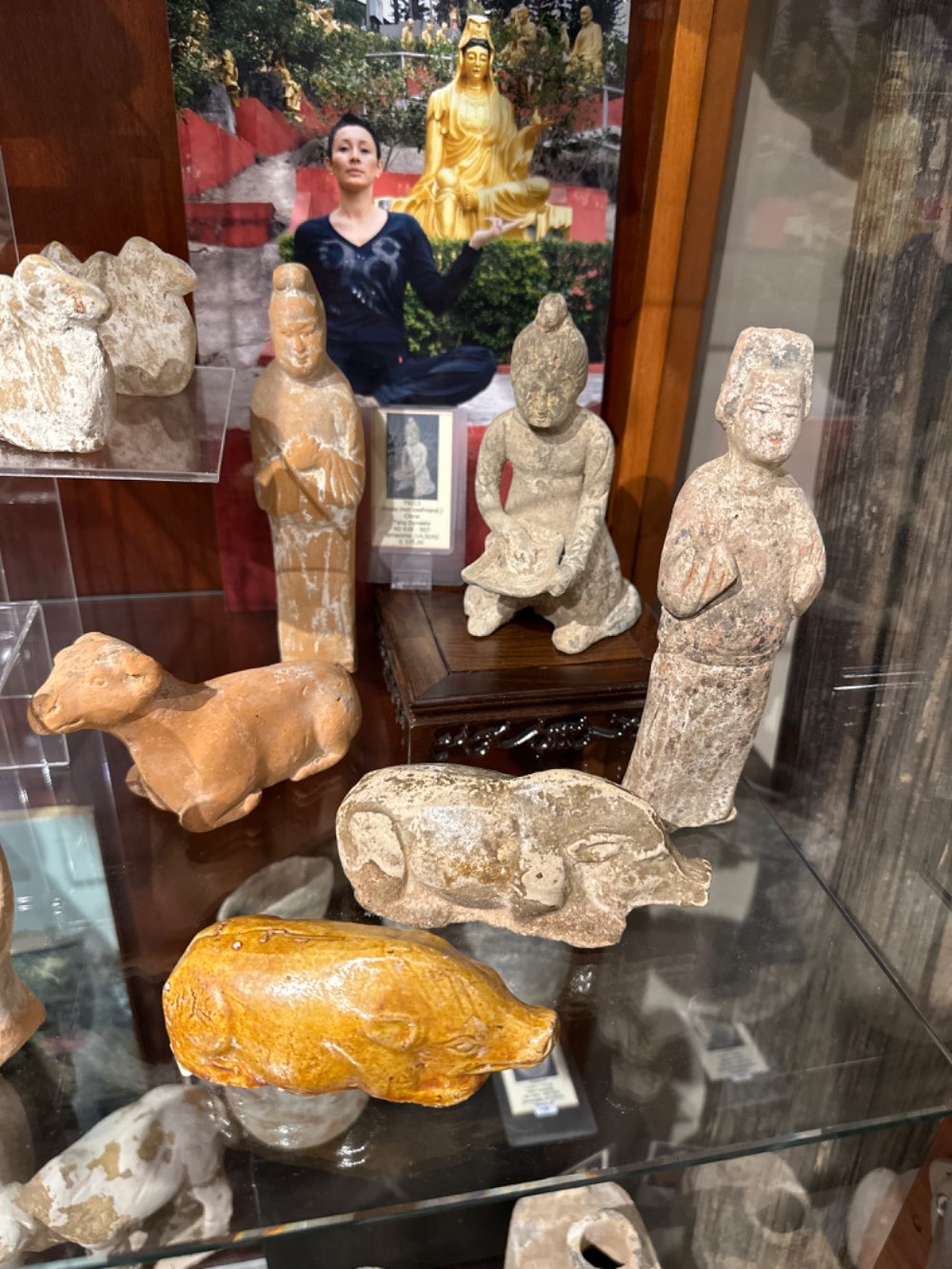
Rare Tang Dynasty pottery recumbent glazed boar (618-907 AD)
Rare Tang Dynasty pottery recumbent glazed boar (618-907 AD)
- Country: China
- Period: Tang Dynasty (618-907 AD)
- Material: White pottery with cream glaze
- Size: 5.5 x 12.5 cm
- This is a very rare statue of a recumbent boar
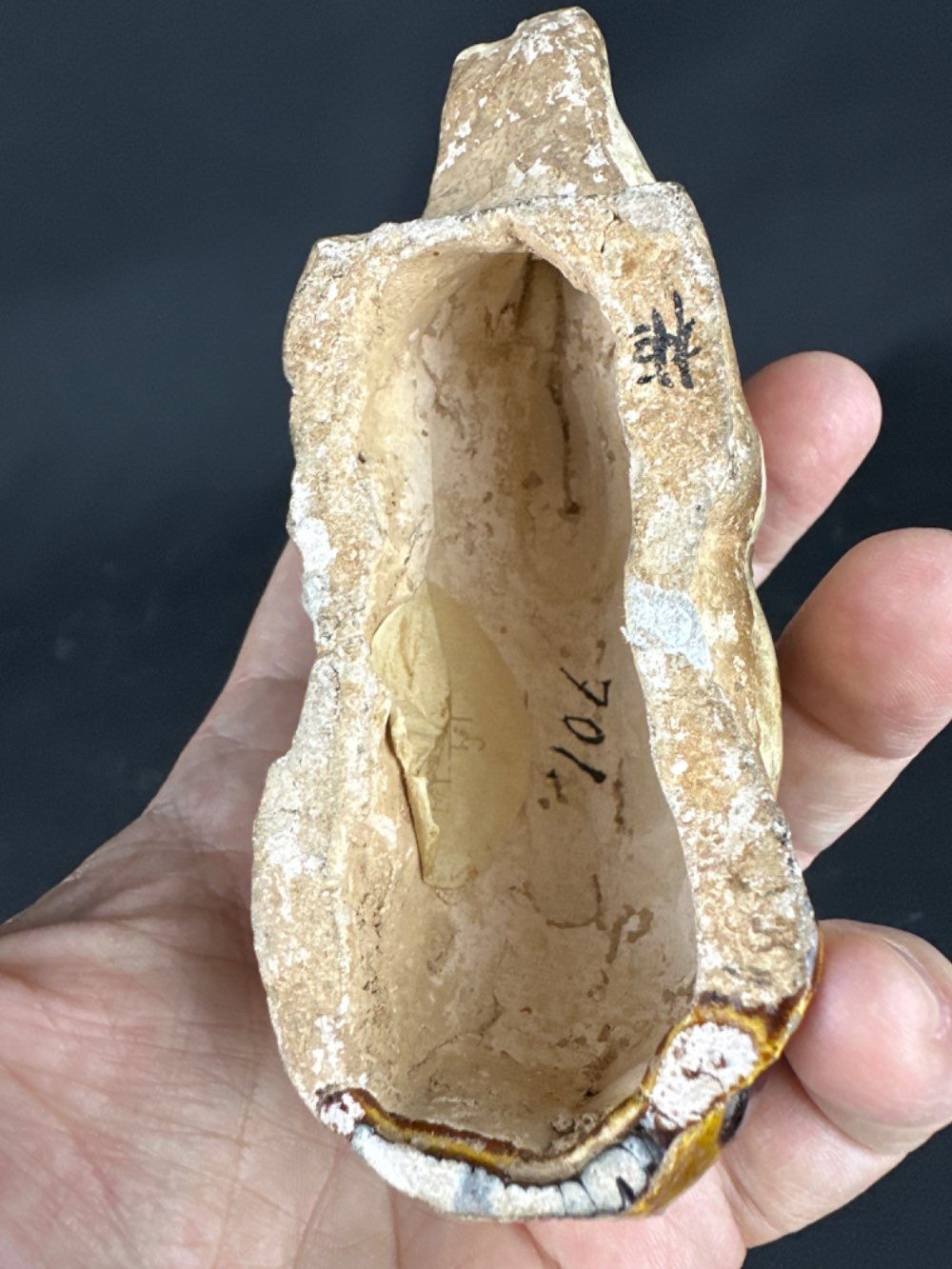
- A collectors label and markings inside.
- Comes out of an old German collection.
During the Tang Dynasty in China, pottery held significant cultural and ritualistic importance, often found as burial objects in tombs, offering insights into the beliefs and practices surrounding funerary customs of that era.
Use of Red Pottery in Tombs:
-
Funerary Offerings: Pottery items, such as jars, vessels, figurines, and other utilitarian objects, were commonly included as burial goods in tombs. These items served as offerings to accompany the deceased into the afterlife, reflecting the belief in an afterlife and the continuity of life beyond death.
-
Symbolism and Beliefs: The choice of pottery in tombs might have held symbolic significance. The reddish-brown hues of the pottery were associated with vitality, auspiciousness, and protection in ancient Chinese beliefs. The inclusion of these items aimed to ensure the well-being and prosperity of the deceased in the afterlife.
-
Ceremonial and Ritualistic Purposes: Pottery found in tombs might have been part of burial rituals and ceremonies conducted to honor and pay respects to the departed. These objects were considered essential in facilitating the deceased's journey into the next world, embodying cultural and spiritual significance.
-
Artistic and Aesthetic Appeal: While pottery in tombs served practical and ritualistic functions, it also reflected the artistic preferences and craftsmanship of the Tang Dynasty. Some pieces were crafted with attention to detail and aesthetic refinement, showcasing the artistic achievements of the period.
Archaeological Significance:
The discovery of pottery artifacts in tombs from the Tang Dynasty provides valuable insights into the material culture, religious beliefs, and burial customs of that era. Archaeological excavations of tombs have unearthed various red pottery items, contributing to our understanding of Tang Dynasty funerary practices and societal norms.
Overall, pottery in Tang Dynasty tombs served multifaceted roles, ranging from ritualistic significance to cultural symbolism. These artifacts not only speak to the funerary practices and religious beliefs of the time but also highlight the artistic and cultural heritage of ancient China.
Please send an e-mail via below form, WhatsApp or call to order or get more information about this object.
We can communicate in English, Deutsch and Nederlands!
Rare Tang Dynasty pottery recumbent glazed boar (618-907 AD)