
Double click image to enlarge
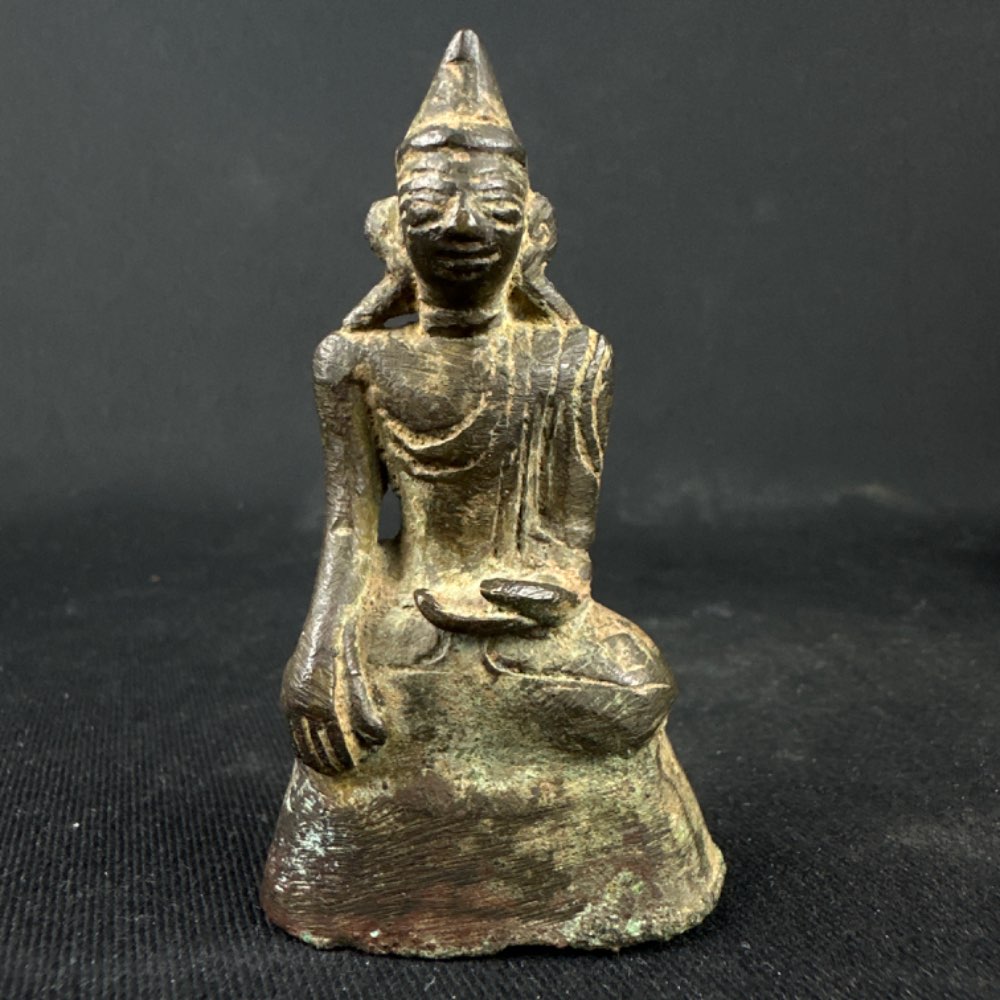
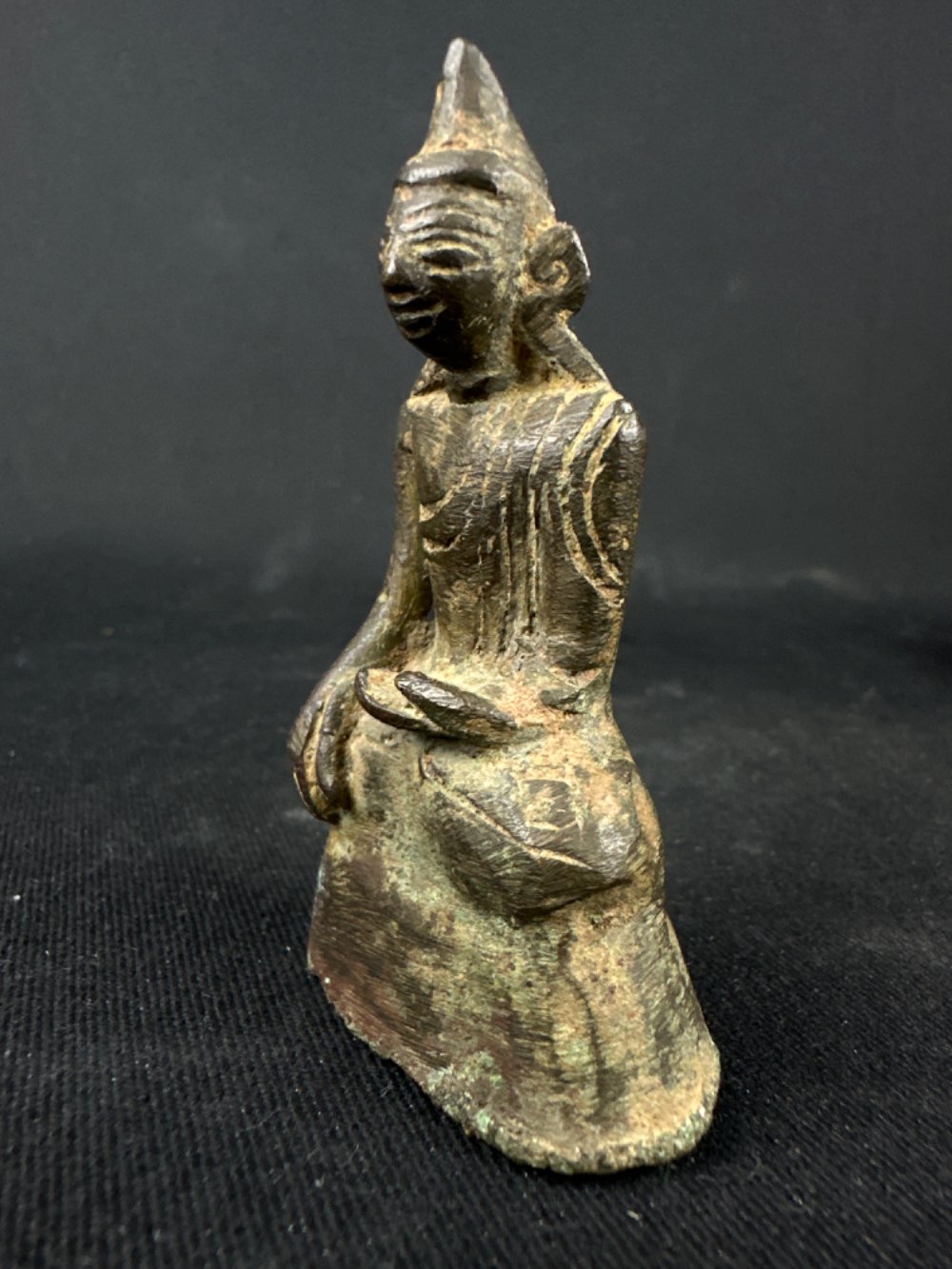
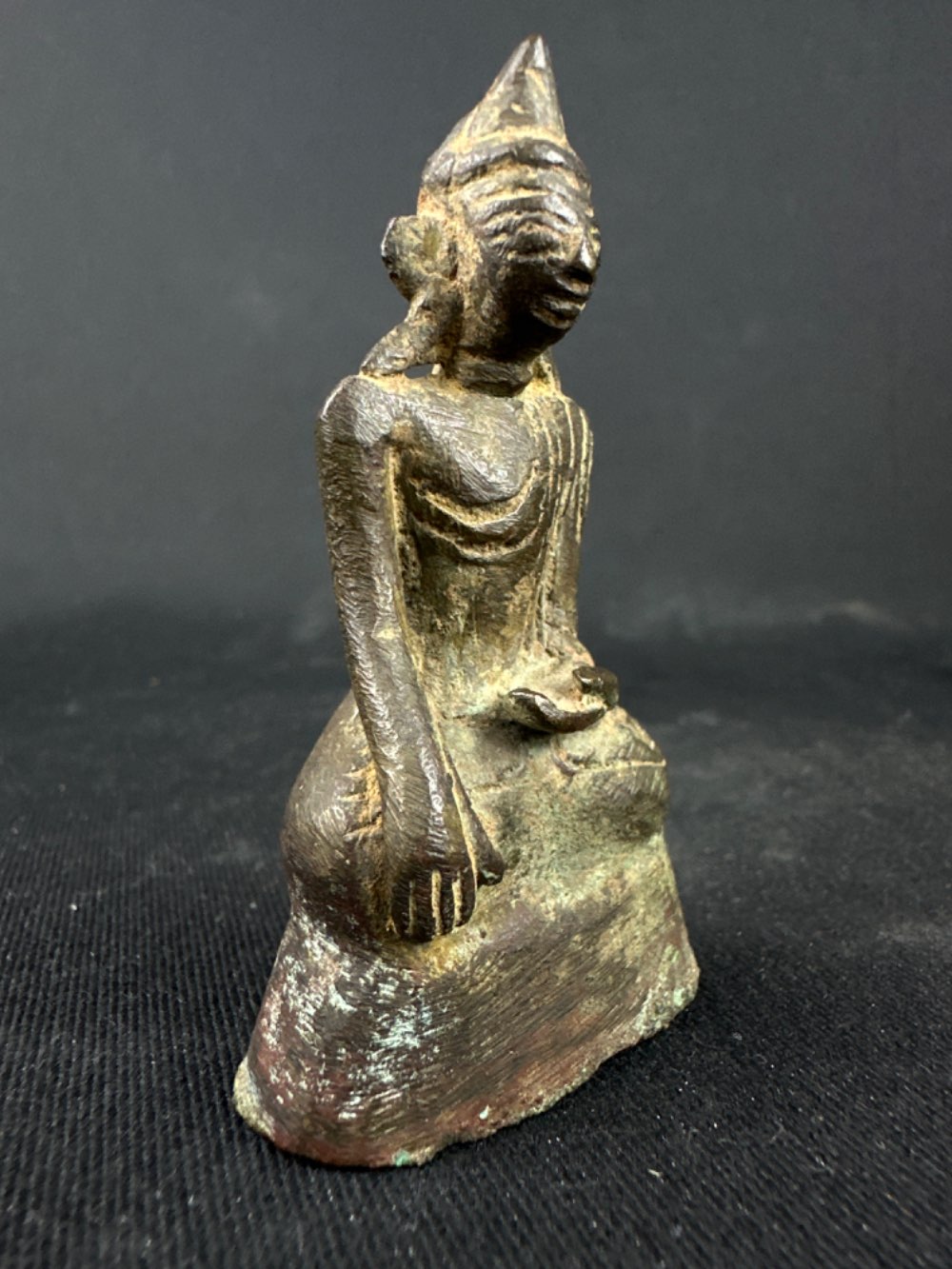
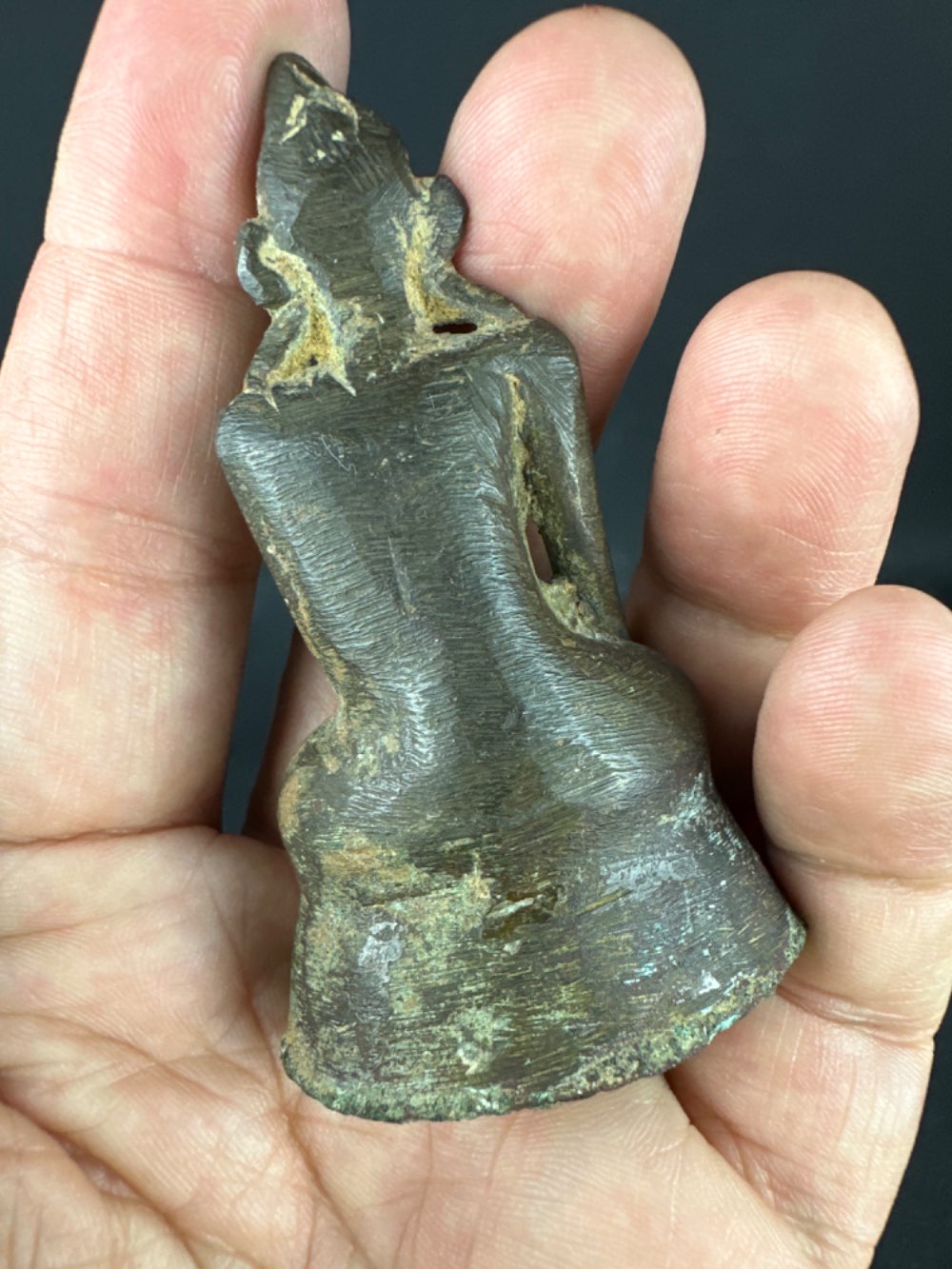
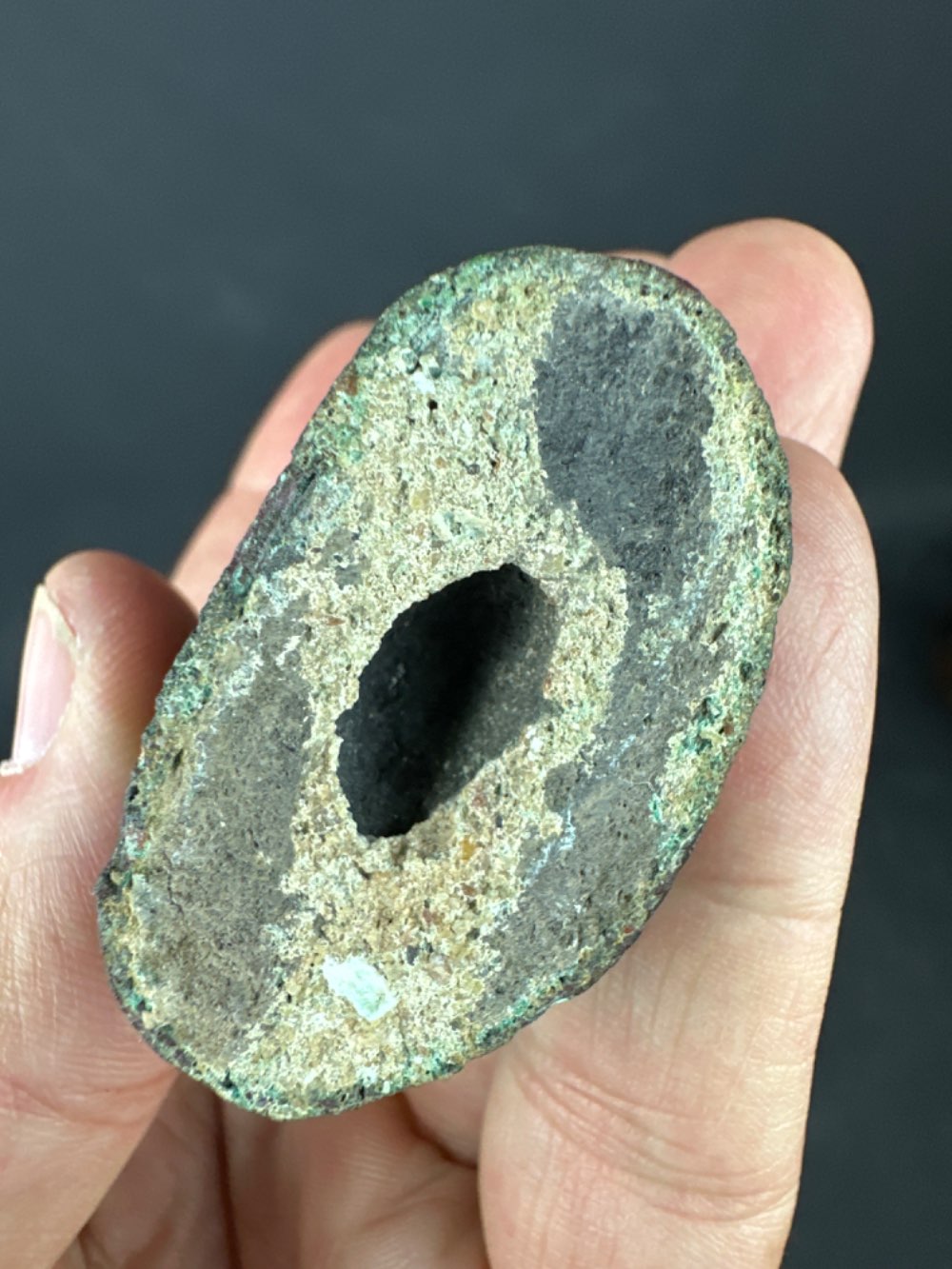
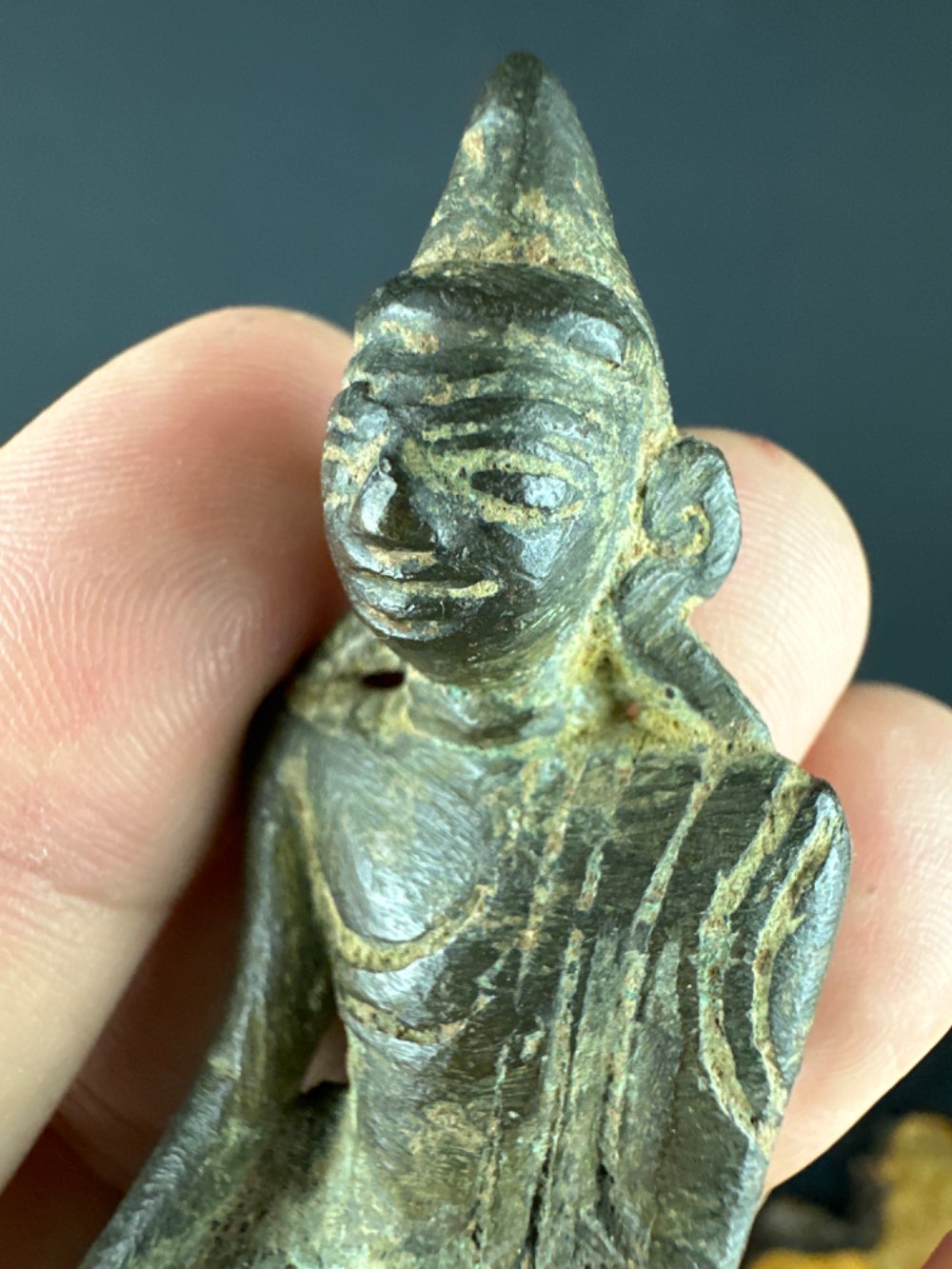
Shan Tai Yai miniature art from bronze, 18-19th century Myanmar
Shan Tai Yai miniature art from bronze, 18-19th century Myanmar
- Country: Myanmar (former Birma)
- Period: 18-19th century
- Culture: Shan (Tai Yai)
- Material: Bronze
- Size: 7.4 x 4.3 cm each
- Comes out of an old Dutch collection
- Buddha sitting in the bhumisparsha mudra earth touching position.
- Statue has been cleaned in a way that a lot of oxidation is off. I don't prefer this but sometimes it's done and we can't reverse it unfortunately.
Burmese Tai Yai Bronze Miniature Art
Burmese Tai Yai bronze miniature art is a traditional craft from the Tai Yai people, also known as the Shan, who primarily reside in Myanmar’s Shan State. These miniatures are celebrated for their intricate craftsmanship, depicting figures such as the Buddha, animals, and mythical creatures, all rooted in the region’s deep Buddhist traditions.
The artisans use the ancient lost-wax casting technique, where a wax model is crafted, encased in clay, and replaced with molten bronze to create the final figure. Despite the small size, these miniatures showcase fine details and embellishments that reflect the ornate Tai Yai artistic style.
These bronze pieces serve important religious and cultural roles, commonly placed in homes, shrines, and temples for devotional purposes. They are often seen as protective charms or offerings and are believed to bring good fortune. In addition to their religious significance, they embody the cultural identity of the Tai Yai people.
Though the practice has faced challenges due to modern changes, Tai Yai artisans continue to preserve this heritage, producing miniatures for both local use and collectors worldwide. This art form remains a symbol of the Tai Yai’s enduring cultural legacy and devotion.
The image of Buddha sitting on a lotus in the Bhumisparsha Mudra is one of the most iconic and spiritually significant depictions in Buddhist art and iconography, rich with symbolism reflecting profound philosophical and spiritual meanings. The lotus flower in this imagery represents purity, spiritual enlightenment, and resilience. It grows in muddy water, yet emerges pristine and beautiful, symbolizing the ability to rise above defilements and suffering. The lotus is often associated with the purification of the body, speech, and mind. Seeing the Buddha seated on a fully bloomed lotus signifies his awakened state and the realization of Nirvana.
The Buddha is typically shown in a cross-legged position (Padmasana), which represents a stable and grounded meditative state. His posture conveys tranquility, inner peace, and unwavering focus, symbolizing the Buddha’s deep meditative absorption.
The Bhumisparsha Mudra, or "Earth Touching Gesture," is performed by the Buddha sitting with his right hand reaching down to touch the ground, while his left hand rests on his lap, palm facing upward. This mudra symbolizes the moment of the Buddha's enlightenment under the Bodhi tree, where he called upon the Earth to witness his attainment of enlightenment. According to Buddhist tradition, before achieving enlightenment, the Buddha (then Siddhartha Gautama) was confronted by Mara, the personification of temptation and illusion. To dispel Mara's doubts and claim his right to enlightenment, Siddhartha reached down and touched the Earth with his right hand, calling upon it to bear witness to his countless lifetimes of virtuous actions. The Earth responded, quelling Mara and his forces, thereby affirming the Buddha's resolve and purity. The Bhumisparsha Mudra symbolizes unshakable faith, determination, and the Buddha’s victory over temptation and distractions. It represents the moment when Siddhartha transcended worldly attachments and achieved enlightenment, becoming the Buddha. The gesture also emphasizes the interconnectedness of all beings with the Earth, highlighting a deeper ecological and spiritual unity.
The combination of the Buddha on a lotus with the Bhumisparsha Mudra is a representation of transcendence over worldly suffering and the achievement of spiritual awakening. Artists often depict the Buddha with a serene and compassionate expression, emphasizing his state of bliss and wisdom. Surrounding elements like halos, bodhi leaves, or a calm background might be included to further enhance the sacred atmosphere.
This depiction of the Buddha is not just a piece of art but a visual meditation on the path to enlightenment, encouraging practitioners to stay grounded, pure, and determined in their spiritual journey.
Please send an e-mail via below form, WhatsApp or call to order or get more information about this object.
We can communicate in English, Deutsch and Nederlands!
Shan Tai Yai miniature art from bronze, 18-19th century Myanmar