

Double click image to enlarge
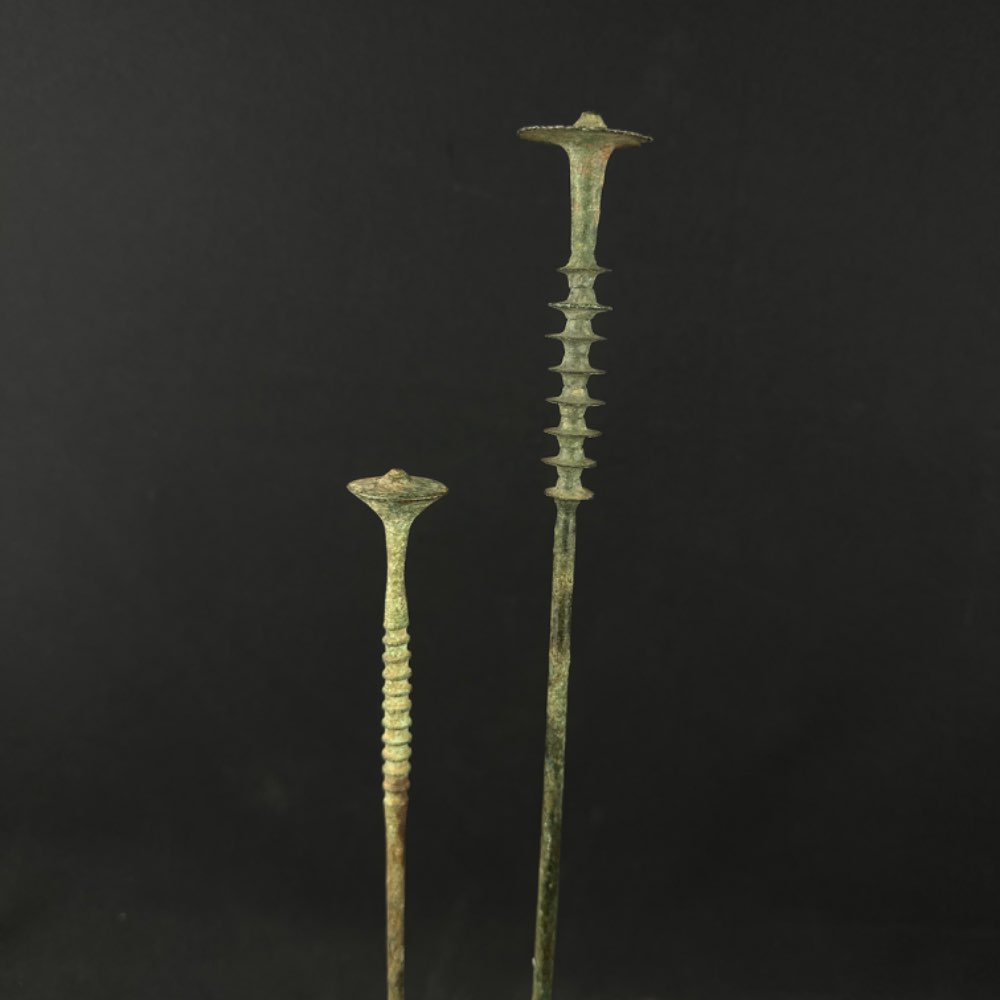
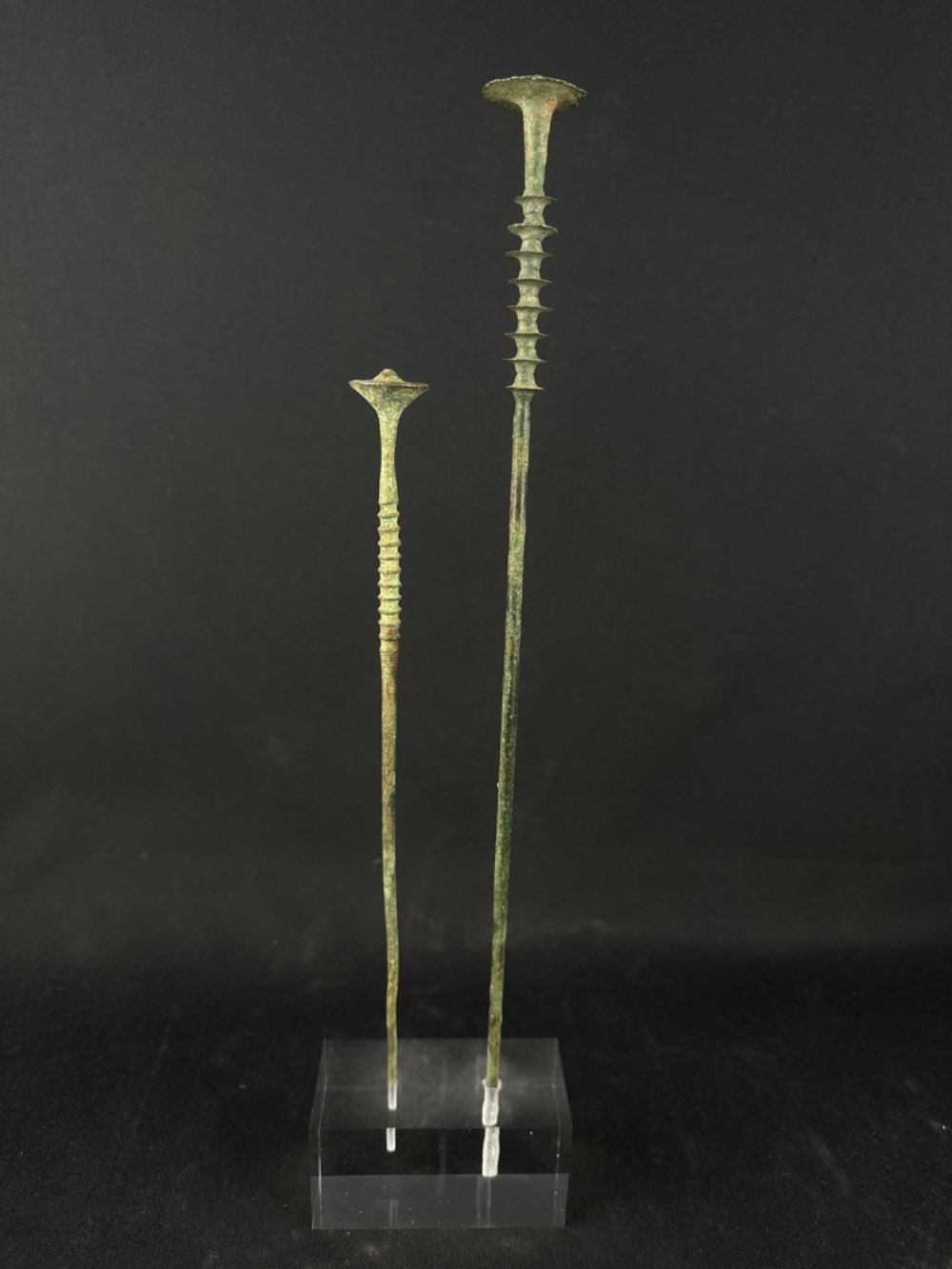
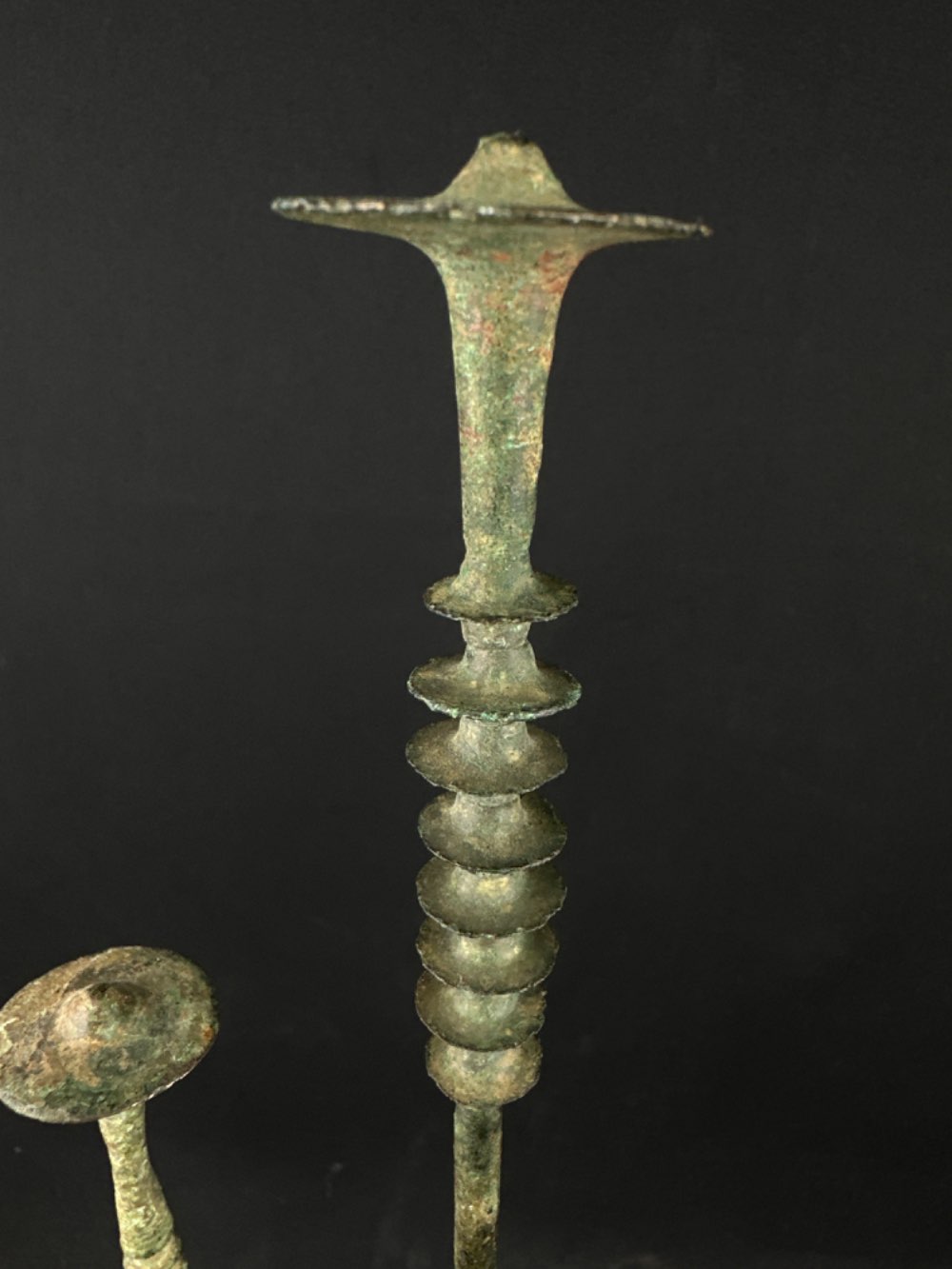
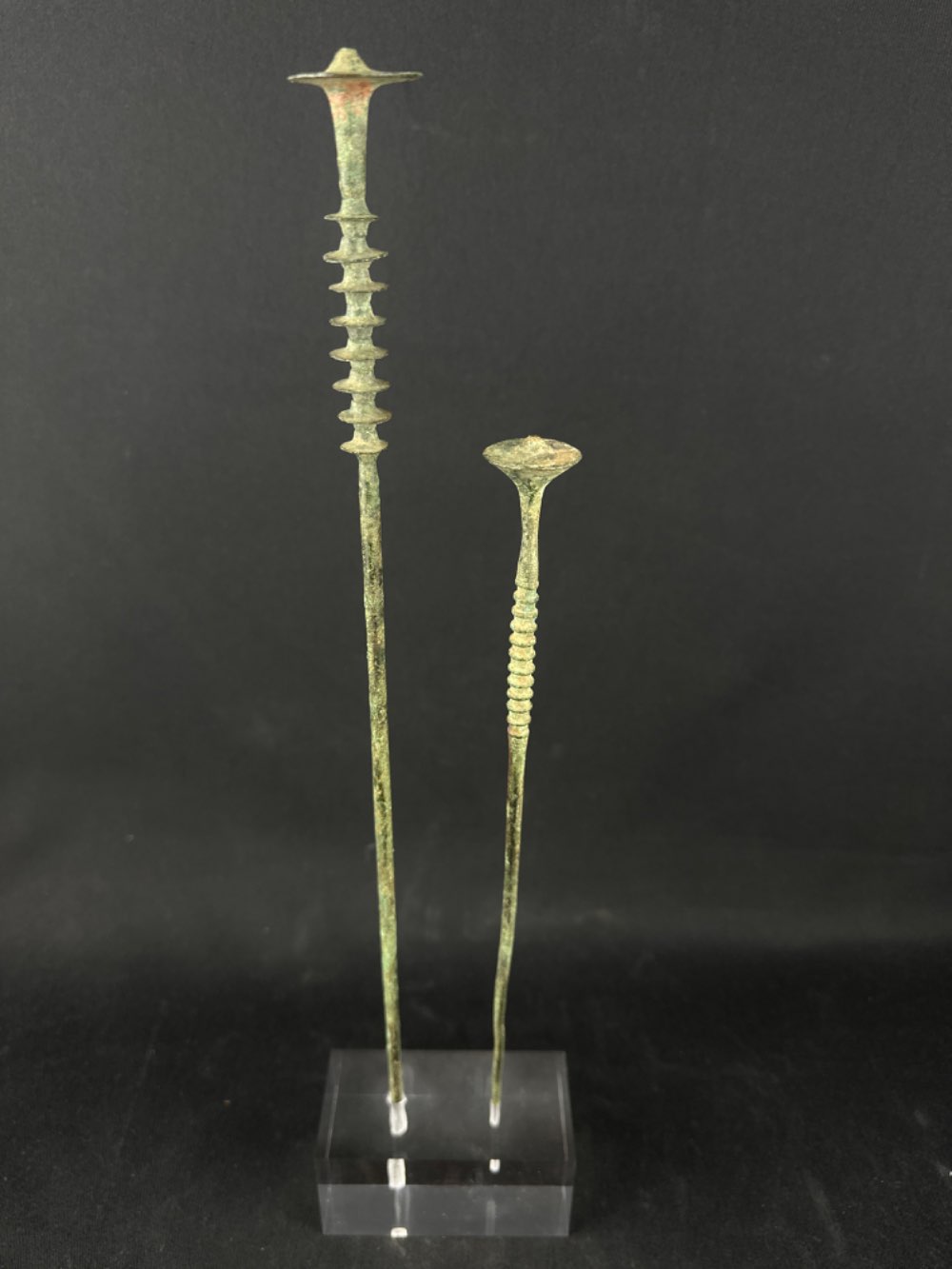
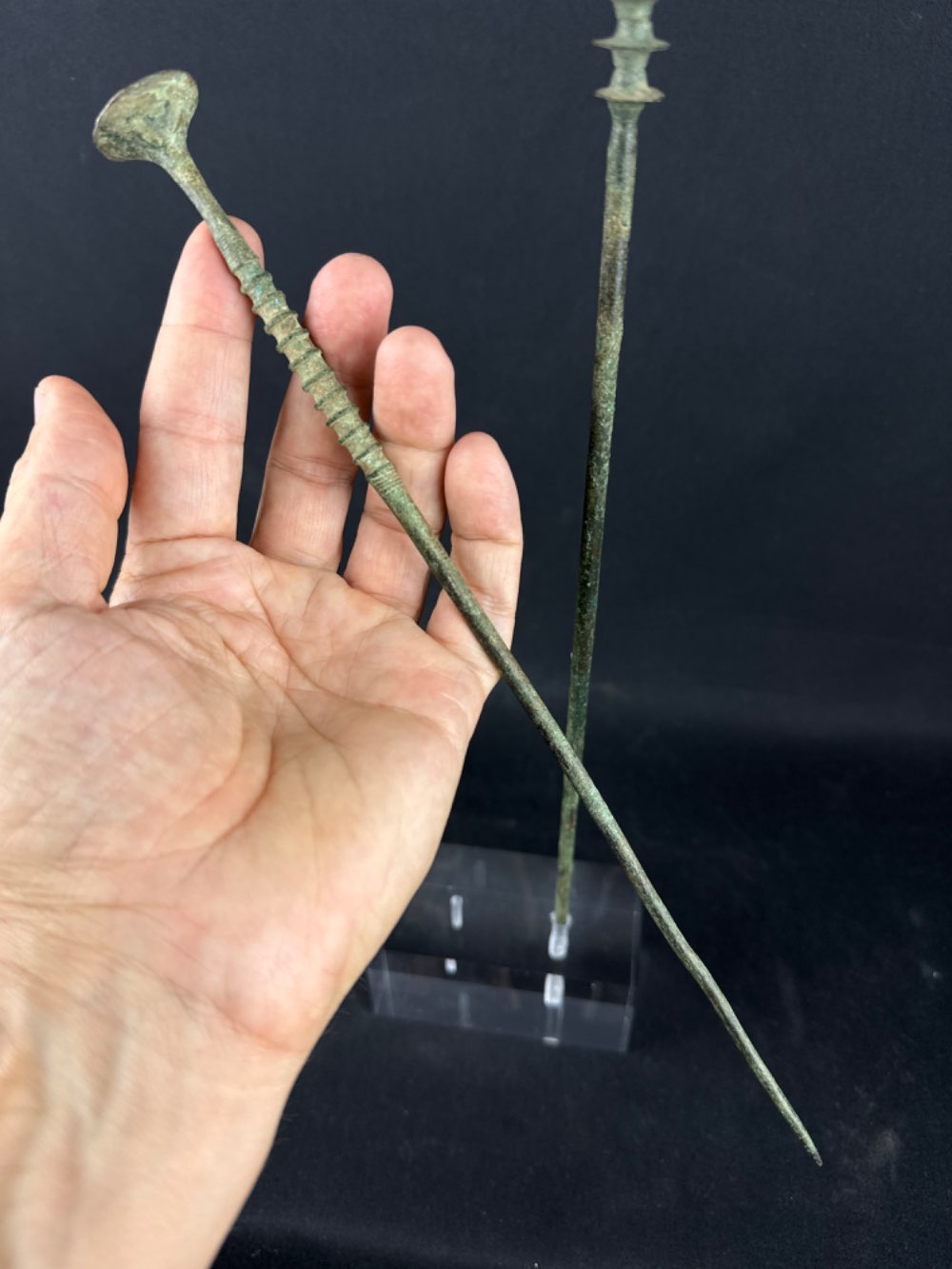
Unique bronze tattoo needles from Majapahit Indonesia, around 14th Century
Unique bronze tattoo needles from Majapahit Indonesia, around 14th Century
- Country: Indonesia
- Culture: Majapahit
- Period: around 14th century
- Material: bronze
- Size: 30 + 39 cm
-
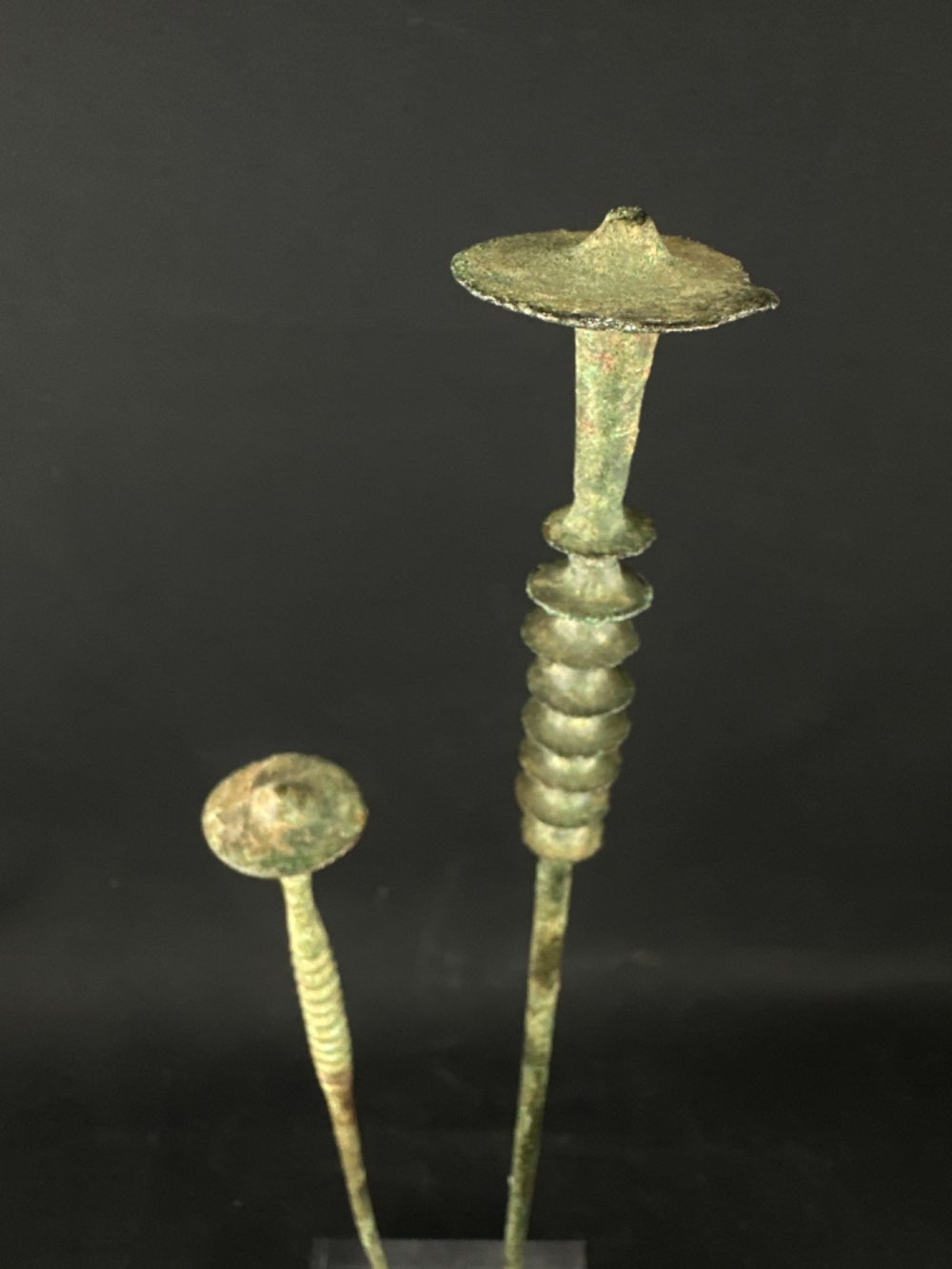
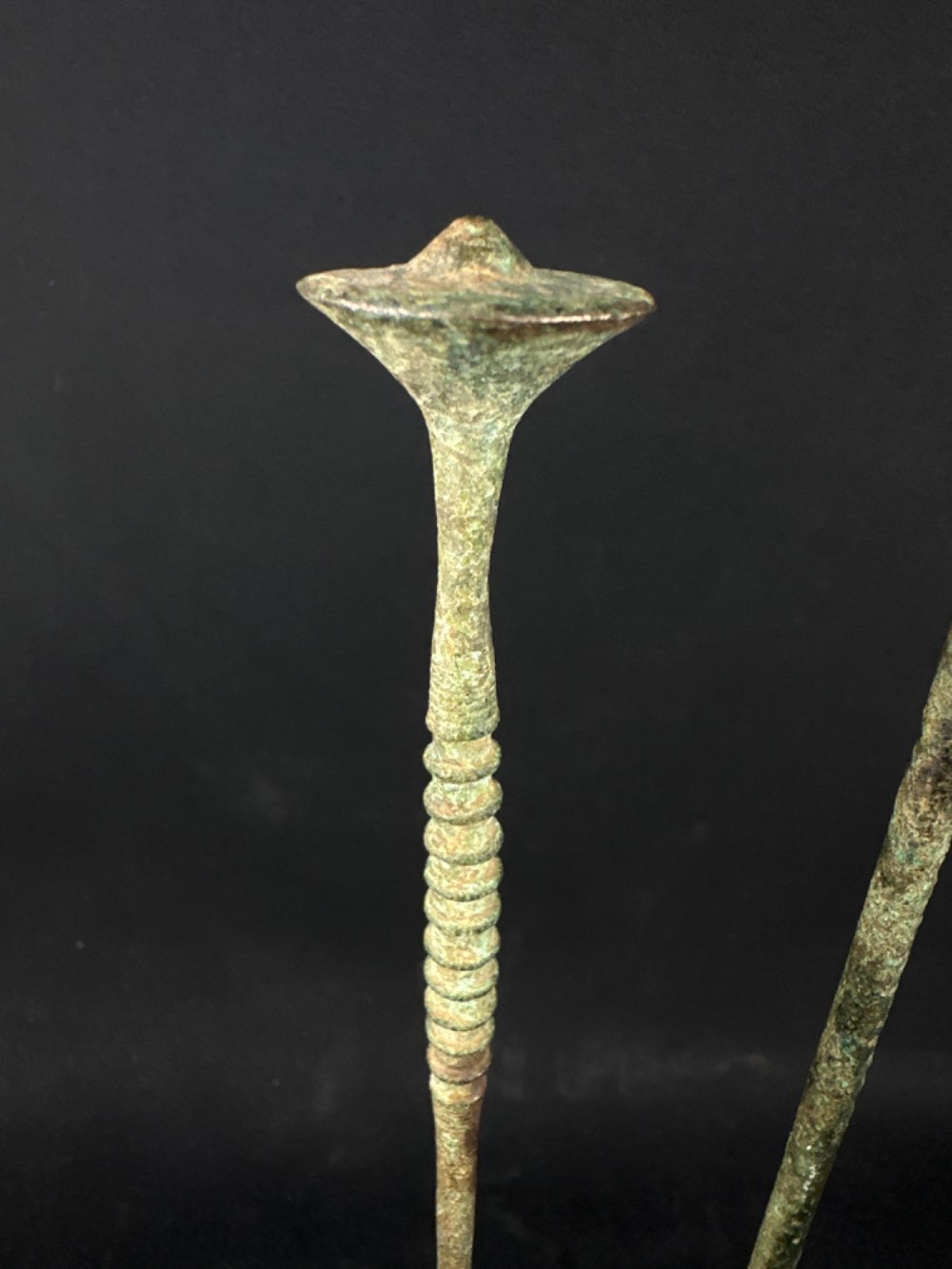
Finely cast, a set of two tattoo needles with slender shafts and topped by flat-disk finials with raised rings along the handles.
-
Comes from an old German collection.
Tattoo culture in Majapahit Indonesia (13th-15th century) likely held significant spiritual and social importance. Tattoos were used to symbolize status, tribal affiliation, and spiritual protection. Designs often featured sacred symbols, mythological creatures like Garuda and Naga, and elements from Hindu-Buddhist traditions.
Tattooing was done using hand-tapped techniques with sharp tools, and ink made from natural sources. These tattoos were a sign of endurance and devotion.
After the fall of the Majapahit Empire and the rise of Islam, tattooing declined but survives today in some tribal areas, preserving ancient practice.
The Majapahit Empire was a powerful Javanese kingdom that flourished from 1293 to the early 16th century.
- It was founded in 1293 by Raden Wijaya after the fall of the Singhasari kingdom and defeted the Mongol invasion.
- Its Golden Age came under King Hayam Wuruk (1350–1389) and his powerful minister Gajah Mada.
- Majapahit became a major maritime and trading power, with influence across much of the Indonesian archipelago.
- Hinduism, Buddhism and traditional Javanese beliefs existed together, producing a rich artistic and cultural tradition.
- The famous phrase “Bhinneka Tunggal Ika” (Unity in Diversity) comes from this period.
- From the late 14th century onward, succession conflicts and the rise of Islamic coastal kingdoms gradually weakened Majapahit.
- By the early 1500s it had largely disappeared, while much of its Hindu-Javanese culture survived in Bali.
- Terracotta figures were very common in the Majapahit period, especially around Trowulan, the presumed royal capital.
- They include human figures, heads, animals, and sometimes architectural or household objects.
- Many heads are broken because terracotta is fragile, but some may also have been deliberately separated from bodies or damaged after burial/deposition.
- Their uses are debated. Some probably had religious or ritual significance, while others may have been toys, household objects, decorative pieces, or representations of ordinary people.
- The faces and hairstyles can be especially valuable for archaeologists because they provide glimpses of Majapahit clothing, appearance, social roles, and artistic styles.
- They are usually less monumental than stone Hindu-Buddhist sculpture. The small scale and everyday character of many terracottas make them particularly useful for understanding ordinary life in Majapahit society.
Please send an e-mail via below form, WhatsApp or call to order or get more information about this object.
We can communicate in English, Deutsch and Nederlands!
Unique bronze tattoo needles from Majapahit Indonesia, around 14th Century