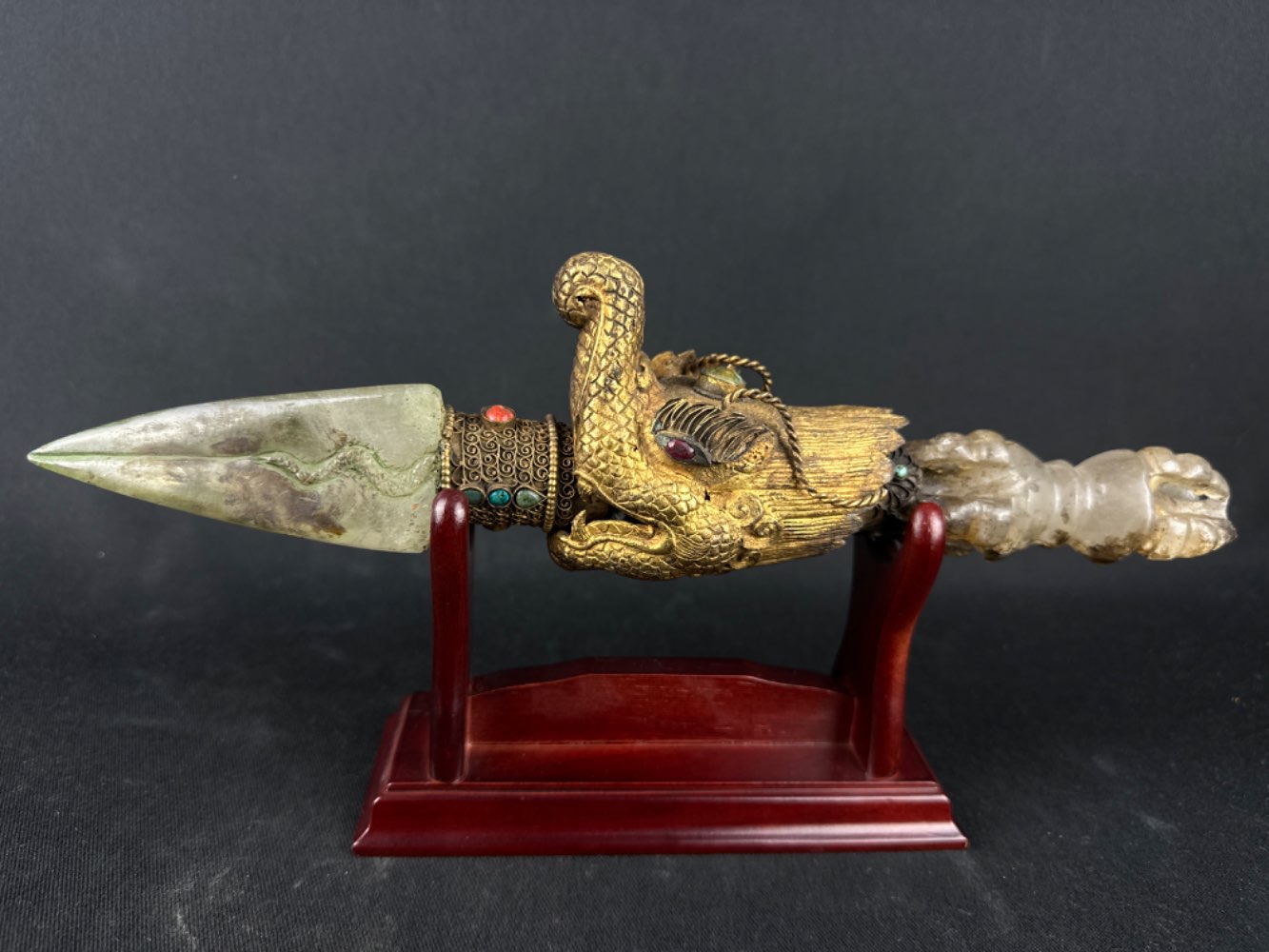
Phurbu, or Phurba (ཕུར་པ་ in Tibetan), is a ritual dagger or a symbolic tool in Tibetan Buddhism, particularly associated with the practice of Tantric Buddhism (Vajrayana). It holds significant religious, spiritual, and cultural importance in Tibet, Nepal, and other regions influenced by Vajrayana traditions. Here’s a detailed look at the Phurbu from its historical, religious, and symbolic perspectives:
Historical and Cultural Context
The Phurbu has ancient origins in Himalayan cultures and was likely adapted from earlier shamanic practices of the region. It is traditionally crafted from materials such as iron, bronze, or wood, and it consists of three distinct parts:
- Blade: The lower part, usually shaped like a three-sided blade, is used symbolically to ‘cut through’ obstacles.
- Middle Section: This part often features intricate designs of mythological figures or deities.
- Hilt: Often topped with representations of heads or wrathful deities such as Vajrakilaya, the Phurbu’s handle represents power, control, and the ability to transform.
Although the Phurbu is primarily a symbolic weapon, historically, it has also been linked to the nomadic traditions of Tibet. It is believed that Tibetan shamans used daggers resembling the Phurbu for protective rituals, exorcisms, and healing ceremonies.
Spiritual and Religious Significance
In Tibetan Buddhism, the Phurbu is mainly associated with wrathful deities, especially Vajrakilaya (Dorje Phurba), a deity who embodies the power to remove obstacles and destroy evil forces. The Phurbu itself is not viewed as a literal weapon but as a spiritual tool with immense symbolism.
Key Symbolism:
- Subjugation of Evil: The Phurbu represents the subjugation of negative forces, inner demons (such as ego, ignorance, and delusion), and external harmful influences.
- Cutting Through Delusion: The three-sided blade symbolizes the cutting away of the three poisons in Buddhism: ignorance, attachment, and aversion.
- Transformation of Energy: It transforms negative energies into positive ones and is used in rituals to heal, protect, and bless. In this way, it serves as a spiritual tool for channeling transformative energy.
Use in Rituals
The Phurbu is often used in Tantric rituals or during pujas (ceremonial offerings) to invoke divine protection and purification. Ritual practitioners or Lamas may use the Phurbu during ceremonies to:
- Consecrate sacred spaces by driving away evil spirits or negative energies.
- Exorcism rituals, where it is believed to "nail" evil entities or forces into the ground, trapping and neutralizing them.
- Healing practices, where it is used to focus energy on clearing afflictions or physical ailments.
Monks and advanced practitioners may meditate upon the Phurbu as a symbol of direct action, transforming negative mental states into compassion and wisdom.
Artistic Depictions
Phurbus are highly ornamental and richly decorated with intricate carvings. Common depictions include:
- Mythical Animals: Lions, serpents, or makaras, representing strength and protection.
- Wrathful Deities: Representing the fierce power needed to combat obstacles.
- Three-sided Blade: Represents the three root defilements (greed, hatred, and delusion) and the three doors to liberation (body, speech, and mind).
The materials and craftsmanship of the Phurbu also carry significance. Gold or silver Phurbus might be reserved for special ceremonies, while simpler versions made of iron are used in everyday rituals.
Conclusion
The Phurbu is much more than a ritual dagger; it is a powerful spiritual tool in Tibetan Buddhism, encapsulating the profound Buddhist philosophy of transformation, protection, and liberation from suffering. Its continued use today in both sacred and cultural contexts reflects its enduring importance in Tibetan spiritual life.